
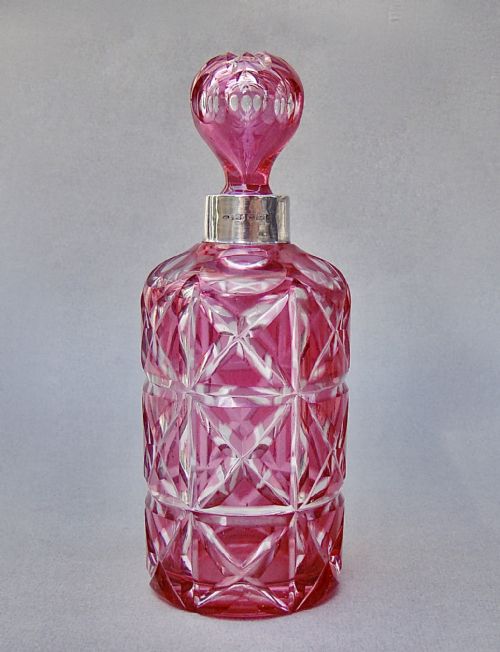


Edwardian Silver Scent Bottle
An Edwardian silver scent bottle brings miniature refinement to the dressing table, combining hallmarked metal with coloured or cut glass.
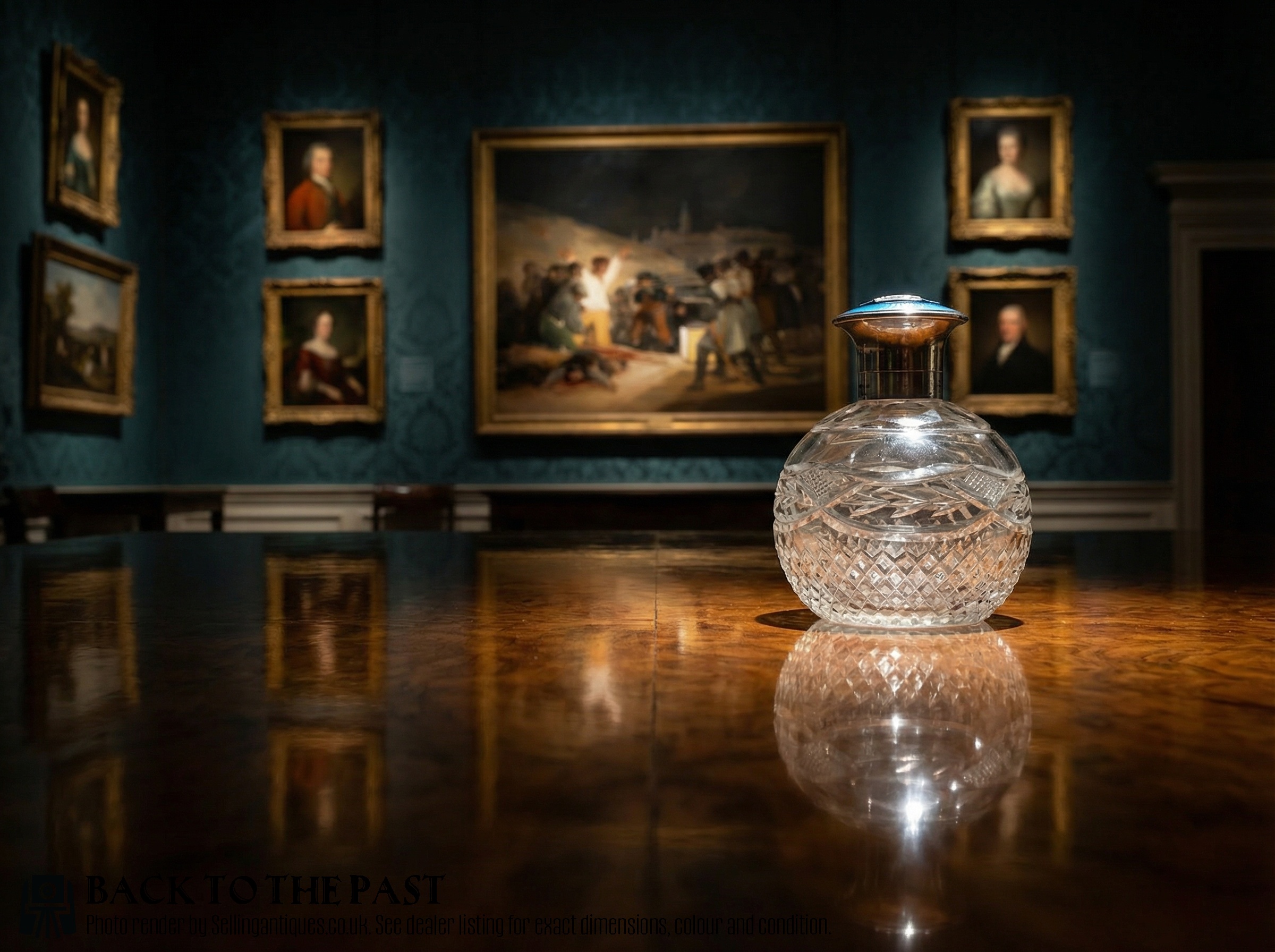
Edwardian Silver Scent Bottle
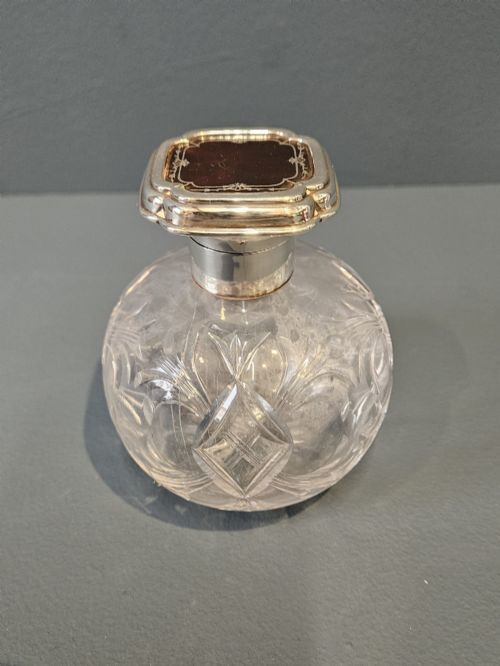
An Edwardian silver scent bottle is a small container designed to hold perfume, combining a hinged or screw-down silver lid with a glass body. These pieces served as essential dressing table accessories or portable flasks carried in chatelaines and travel cases during the early twentieth century.
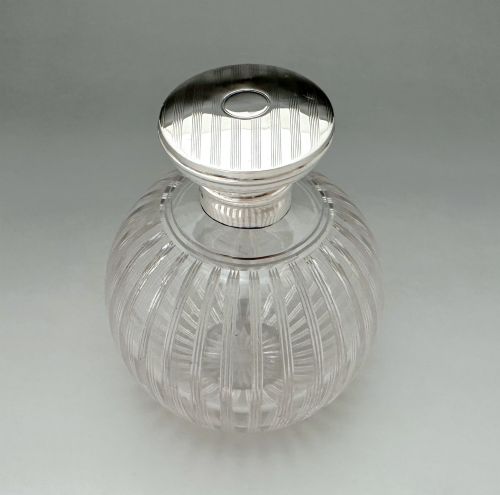
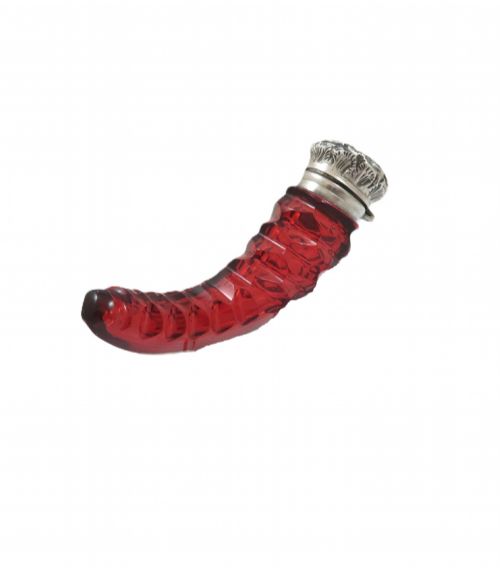
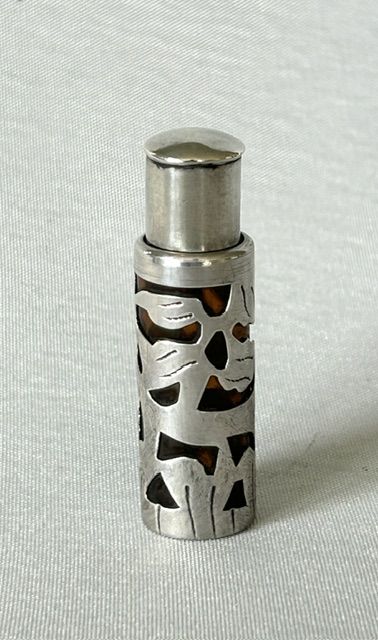
The specimens seen here span the Edwardian period alongside neighbouring Victorian, George V, and Art Deco eras. Common forms range from globular and cylindrical cut glass bottles to elongated icicle shapes and figural designs.
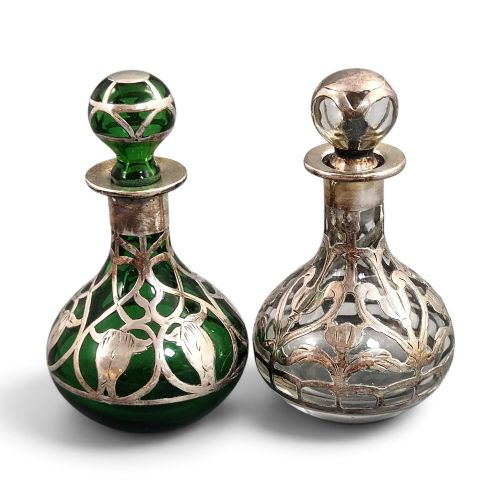
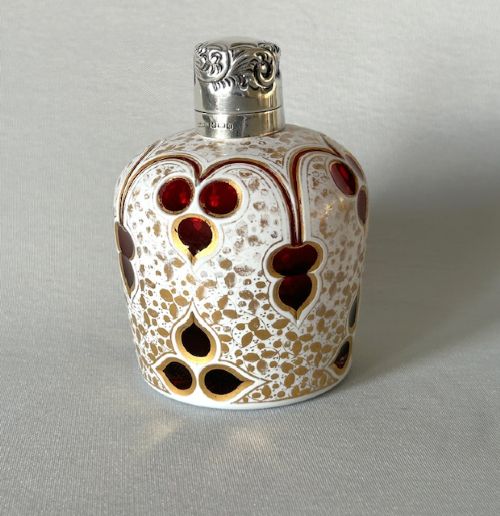
Coloured glass variations appear frequently alongside clear crystal. Pieces in cranberry glass, ruby glass, amber, and Bristol blue form a significant portion of the available designs.
How They Were Made
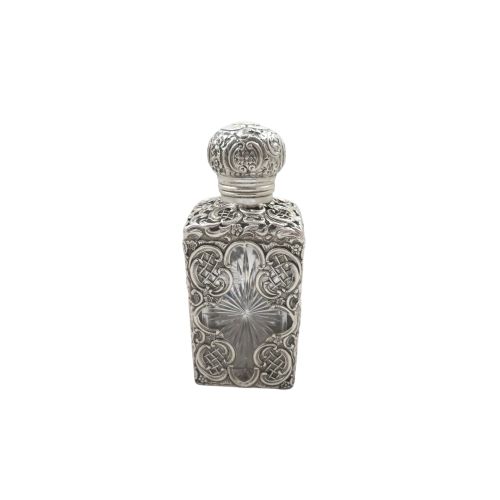
Makers combined sterling silver mounts with blown and moulded glass bodies, often enhancing the glass through deep wheel-cutting or overlay techniques. Silver collars and caps were shaped by stamping or spinning, then hand-chased or engraved with floral and geometric patterns.
Enamelling and tortoiseshell inserts added decorative colour to the metal components. Guilloche enamel and translucent coloured glass required skilled firing and polishing to achieve their reflective surfaces.
Edwardian Silver Scent Bottle Retail Price Guide 2026
Typical asking prices for edwardian silver scent bottle among the pieces listed under this phrase on Sellingantiques today, from the lower quarter to the upper quarter. They describe what is for sale here now, not the wider market.
One determined gentleman secured his cologne with a lockable silver cap, ensuring nobody else sampled his fragrance.
What Varies in Quality
The weight and gauge of the silver mount dictate much of the structural integrity, with thicker metal resisting dents on the hinged cap and collar. Crispness in the glass cutting and depth of the coloured overlay layers also separate standard production items from finer studio output.
Comprehensive hallmarks stamped clearly on both lid and collar indicate higher accountability from known silversmiths. The inclusion of complex decorative elements such as hand-painted enamel panels or intact inner glass stoppers elevates the standing of an individual piece.
Gorham·Harold Bushell & Co·G H James & Co·Barnsley & Co·George Unite·Sampson Mordan·W G Sothers & Co·The Boots Company·Britton Gould & Co·Charles May·George Edwin Walton·Henry Matthews·Griffith & Co·Arthur Fenwick·Sanders & Aguilar·Levi & Salaman·J Grinsell & Sons·George Henry James
The Edwardian Silver Scent Bottle Glossary
- Hallmark
- Official stamps applied by an assay office to indicate metal purity, the maker's mark, and the year of manufacture. These marks provide definitive proof of origin on British silver.
- Guilloche enamel
- Decorative technique where translucent enamel is layered over engine-turned metal. This creates repeating geometric patterns that shimmer beneath the coloured glass surface.
- Cranberry glass
- Transparent pinkish-red glass produced by adding gold chloride to the molten batch. It gained immense popularity during the Victorian and Edwardian periods.
- Overlay
- Layer of coloured glass applied over a clear or contrasting body, then partially cut away to reveal the underlayer. This technique produced sharp, high-contrast decorative motifs.
- Chatelaine
- Decorative belt hook with suspended chains used to carry small household items. Miniature scent bottles were frequently hung from these functional accessories.
Edwardian Silver Scent Bottle: Frequently Asked Questions
Did these bottles come with inner stoppers?
Many original designs featured a small ground-glass or cork-lined inner stopper beneath the silver cap. This secondary seal prevented evaporation of volatile perfume oils during travel.
Surviving examples frequently retain their matching inner stoppers, though replacements are common due to breakage over time.
How can I date an unmarked silver lid?
Examine the style of the glass body and the fastening mechanism of the hinge. Edwardian mounts often display neoclassical motifs, ribbon bows, or Art Nouveau whiplash lines.
Compare the overall weight and manufacturing technique with hallmarked pieces from the same decade. Minor stylistic clues in the collar mount frequently align with known production periods.
Were these bottles meant for travel or display?
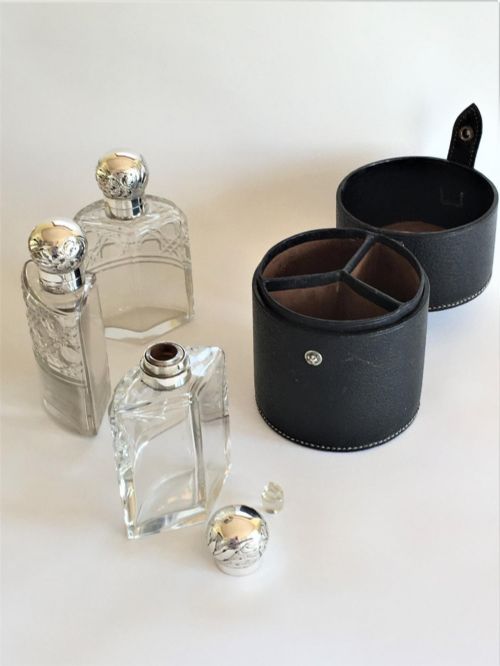
Manufacturers produced both heavy stationary bottles for dressing tables and secure, lockable flasks for luggage. Travelling versions often featured screw caps and heavy cases to prevent leaks.
Smaller chatelaine models hung from belts for immediate access during social calls and evening events.