


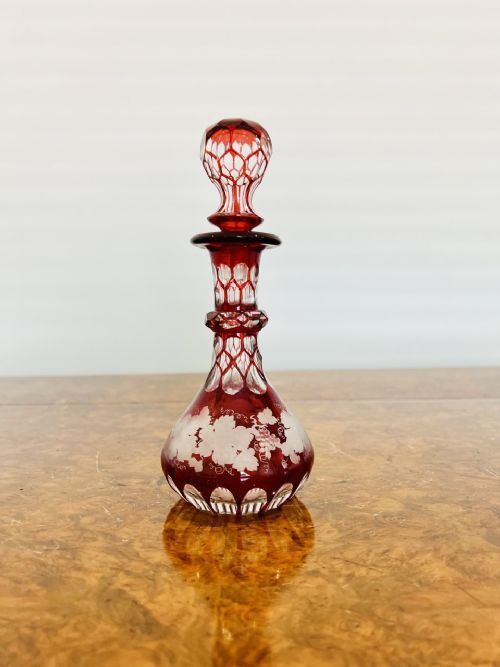


Vintage Glass Perfume Decanter
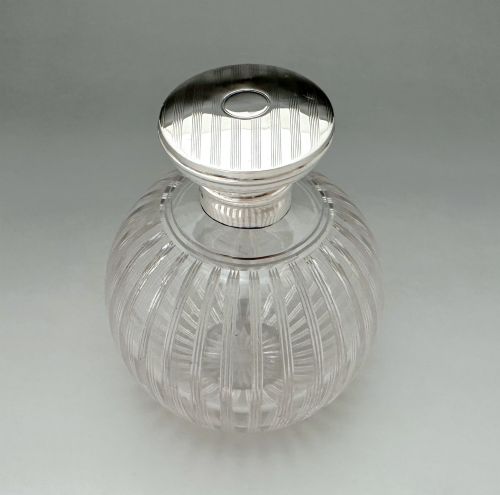
A vintage glass perfume decanter brings dressing table utility together with period craftsmanship, offering both decorative glass and precious metal mountings.
Vintage Glass Perfume Decanter
A vintage glass perfume decanter combines the practicality of a scent container with decorative glass and metal work. When searching for a vintage glass perfume decanter, collectors encounter scent bottles, vanity sets, and decanters and ewers dating from the Victorian and Edwardian eras through to the Art Deco period.
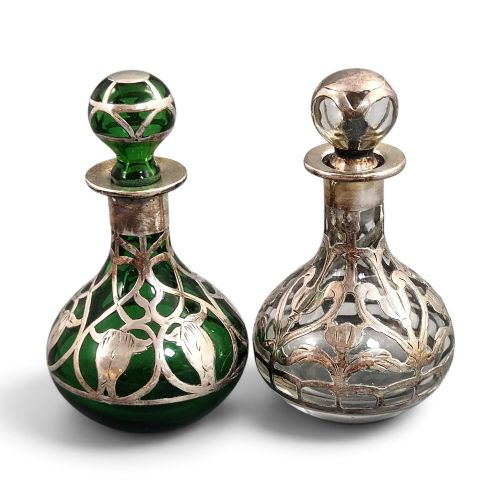
The objects span production periods including the 1860s, 1880s, 1900, 1910, 1920, and 1930. Forms range from small English scent bottles with silver collars to larger French gilt decorated bottles and green glass vessels.
Makers and styles represented on the page include Gorham, Karl Palda, and Barnsley & Co, alongside Art Nouveau, Art Deco, and George V designs. Pieces frequently feature fitted stoppers and protective metal mounts.
How they were made
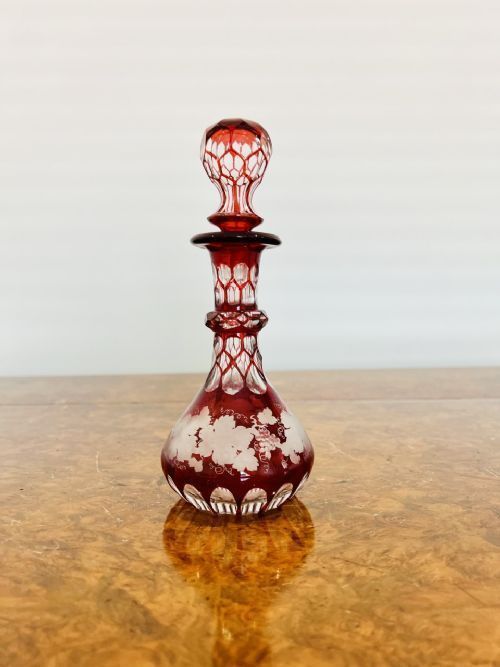
Makers utilised clear, ruby, and green glass formed through cutting, moulding, and crystal work to create the body of each vessel. Cut glass and cut crystal techniques added facets designed to catch the light on a dressing table.
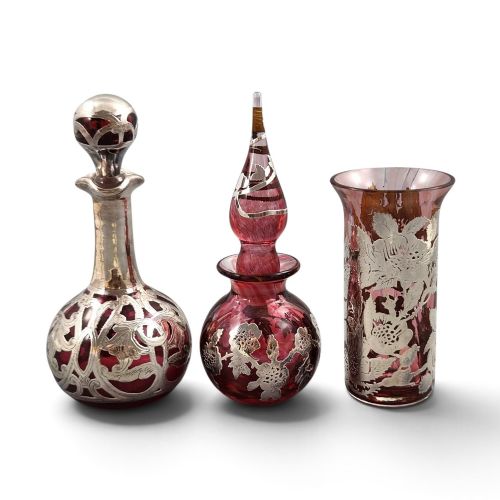
Metal components such as sterling silver collars, silver overlays, and gold leaf decorations were applied to secure stoppers and embellish the glass. Enamel details occasionally complemented the silver mounts and coloured glass.
Listings feature items from the Victorian, Edwardian, George V, and Art Deco periods, utilising sterling silver, cut crystal, ruby glass, and enamel.
What varies in quality
Quality rests in the crispness of the glass cutting and the weight of the metal mountings, such as sterling silver overlays. Heavier crystal bodies and detailed metalwork indicate superior manufacturing standards.
The integrity of the fit between the stopper and the neck differentiates standard examples from finer pieces. Maker attribution, such as work by Gorham or Karl Palda, also influences the standing of an item.
Gorham·Karl Palda·Barnsley and Co
The Vintage Glass Perfume Decanter Glossary
- Sterling Silver
- A silver alloy containing 92.5 percent pure silver by mass, frequently utilised for bottle collars and decorative overlays.
- Ruby Glass
- A deep red coloured glass produced by adding gold chloride to the molten batch during manufacturing.
- Silver Overlay
- A decorative technique where sterling silver is bonded directly onto the exterior surface of a glass vessel.
- Cut Crystal
- Glass containing lead oxide that is faceted by hand to increase brilliance and refraction.
- Ewer
- A large jug with a wide spout and circular base, sometimes adapted for use on a dressing table.
Vintage Glass Perfume Decanter: Frequently Asked Questions
What periods do these bottles come from?
The selection includes pieces from the Victorian and Edwardian periods, alongside Art Deco examples from the nineteen thirties. Specific dates span from the mid nineteenth century through to the early decades of the twentieth century.
Maker involvement and stylistic shifts from Art Nouveau curves to geometric Art Deco lines help date individual items.
Are the stoppers original to the bottles?
Many pieces retain their original matched stoppers, which is an important consideration for collectors. Ground glass necks and stoppers were often paired specifically during initial production.
Checking the fit and glass tone helps determine whether a stopper belongs to the vessel.
How do I care for silver mounted glass?
Silver mounts require careful cleaning with appropriate metal polish while avoiding harsh contact with the glass body. Preservation of enamel and gold leaf decorations demands gentle wiping with a dry or slightly damp cloth.
Store the bottles away from direct sunlight to protect coloured ruby and green glass.
What materials were used in these decanters?
Vessels are constructed from glass, cut crystal, ruby glass, and green glass. Mountings and decorations incorporate sterling silver, silver overlay, enamel, and gold leaf.
Combination materials reflect the decorative priorities of different manufacturing decades.