


Art Nouveau Claret Jug
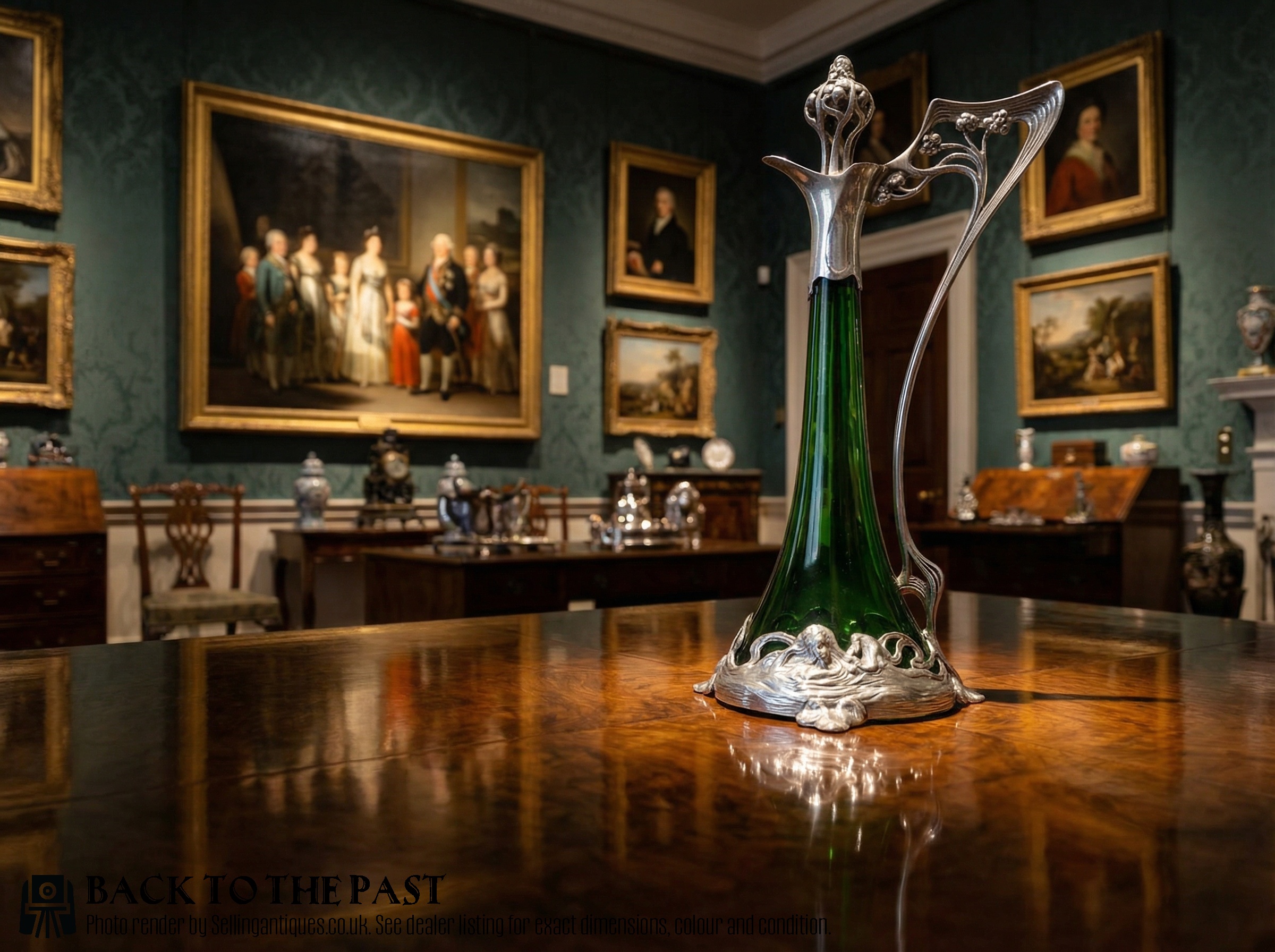
These art nouveau claret jug pieces bring flowing organic contours and graceful maiden handles directly to the formal dining table.
What an art nouveau claret jug is
An art nouveau claret jug is a sophisticated vessel designed specifically for serving wine during late nineteenth and early twentieth century dining. These pieces combine slender vessels with elaborate metal mounts that embody the fluid, organic lines characteristic of the period.
Buyers browsing this selection encounter varied forms including pitchers, ewers, and decanters. The most common versions feature blown glass bodies complemented by mounts of silver plate, sterling silver, or silvered pewter.
Materials and construction
The body of each piece typically utilises clear, green, or cut glass, often shaped into tapering cylinders or bulbous forms. Metalwork components consist of silver plate, 800 grade German silver, sterling silver, or silvered pewter.
Mounts and handles are cast with intricate figural motifs such as maidens and cherubs, reflecting the sculptural ambition of the era. Makers integrated the metal collars and hinged lids directly onto the glass necks to create a seamless silhouette.
Retail Price Guide 2026
Typical UK retail prices for art nouveau claret jug, calculated from the Sellingantiques database of over a million retail prices indexed since 2003. This retail price guide relies exclusively on Sellingantiques data; no external sources or auction records are used, so the figures do not describe the wider market.
Mermaids and cherubs frequently cling to the handles, ensuring your wine service comes with a full supporting cast.
Distinctions in quality
The material composition of the mount also dictates distinction, with heavy sterling silver or robust silvered pewter mounts commanding greater regard than standard silver plate. Additionally, the harmony between the glass vessel and the metal mount separates standard production from exceptional artistry.
WMF·Mappin & Webb
The Art Nouveau Claret Jug Glossary
- Ewer
- A large jug with a wide spout traditionally used for carrying water or wine. In this context, it describes vessels with pronounced pouring lips and ornate handles.
- Silvered Pewter
- A tin-based alloy treated with a silver coating to provide the lustre of solid silver without the weight. This material allowed makers to achieve deep, sculptural reliefs.
- Silver Plate
- A base metal coated with a thin layer of silver through electroplating or other chemical processes. It became widely utilised during the Victorian era for decorative tableware.
- Cut Glass
- Glass shaped and patterned by grinding wheels to create faceted surfaces that catch the light. This technique enhances the visual texture of the vessel body.
- Figural Mount
- Metalwork shaped into human or animal forms, such as maidens or cherubs, integrated into the handle or collar. These elements define the character of the design.
Frequently Asked Questions
What is an art nouveau claret jug?
An art nouveau claret jug is a decorative serving vessel featuring organic, flowing metal mounts applied to a glass body. These pieces date primarily from the late nineteenth and early twentieth centuries.
They were created to hold and pour wine during formal meals, functioning as both practical tableware and sculptural ornaments.
How do I identify a WMF piece?
WMF pieces typically feature distinctive silvered pewter mounts incorporating sculptural figures like maidens, cherubs, or mermaids. Many examples also carry manufacturer stamps on the metal components.
The German metalwork firm was renowned for its intricate interpretation of organic styles during this period.
Were these jugs used for wine?
These vessels were specifically designed for serving claret and other fine wines at the dining table. The glass body held the vintage while the metal spout facilitated clean pouring.
Today, collectors continue to use them for entertaining or display them as decorative interior objects.
How do I date a claret jug?
Dating relies on stylistic markers, hallmarks, and the specific materials used in construction. Pieces associated with the Victorian era or around nineteen hundred display characteristic flowing plant motifs and figural handles.
Archival records and maker stamps further help narrow down the production period.