

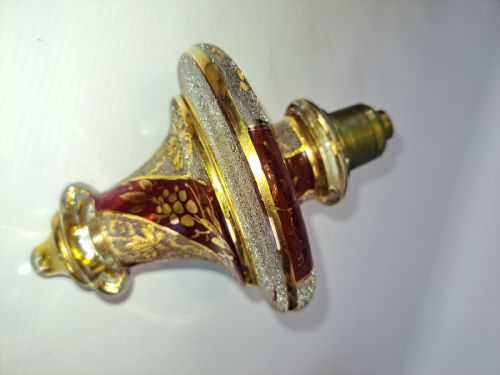


Bohemian Glass Decanter
A bohemian glass decanter brings rich colour, deep overlay, and intricate hand-painted detail to a sideboard or table.
Bohemian Glass Decanter
A bohemian glass decanter represents centuries of European glassmaking tradition, spanning the vibrant coloured and overlaid vessels of the nineteenth century to the geometric silhouettes of the Art Deco period. Buyers seeking this phrase typically encounter tall spirit jugs, decanter sets paired with matching glasses, and perfume bottles.
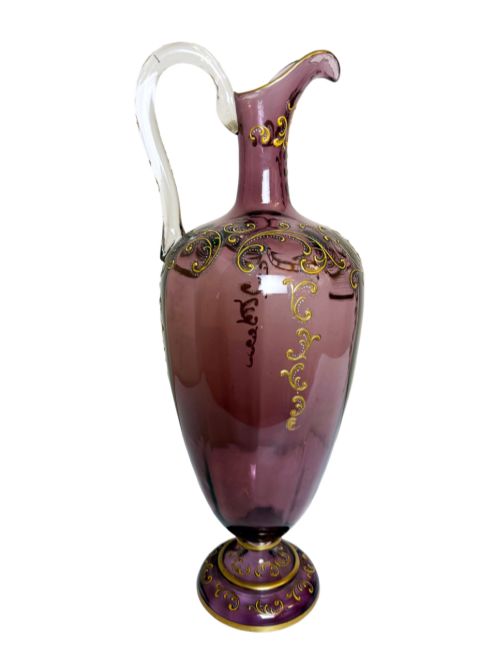
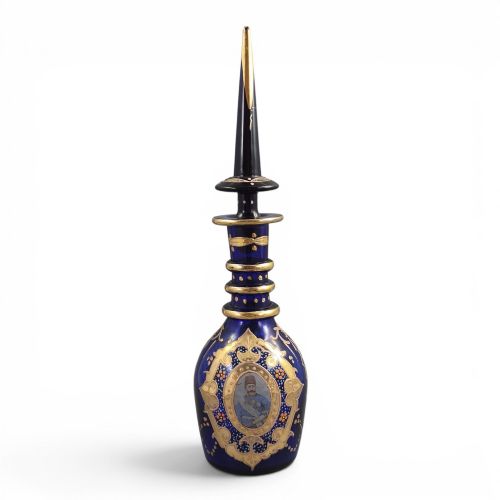
The selection ranges from eighteenth-century white opaline and painted bottles to Victorian cranberry, ruby, and amethyst vessels, alongside twentieth-century Czech crystal sets. Pieces made for specific export markets, such as the Persian Qajar trade, also appear alongside domestic European tableware.
How they were made
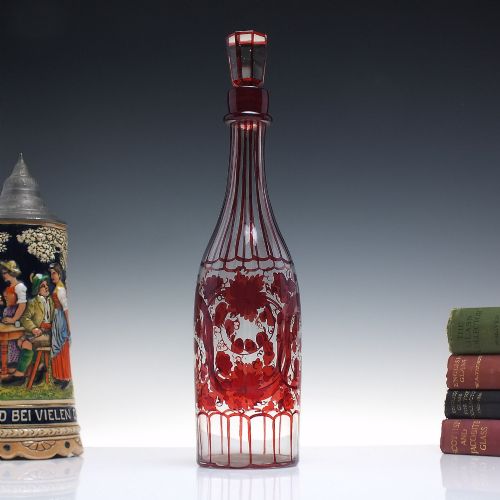
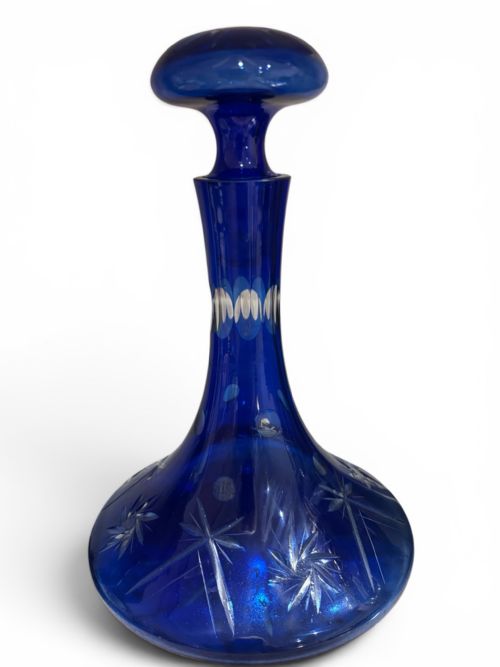
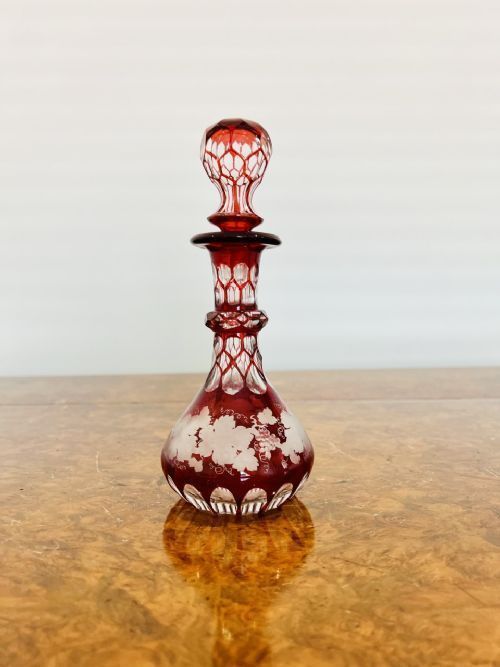
Makers utilised blown and crystal glass, frequently creating overlaid vessels where a coloured layer of glass is cut away to reveal the clear or contrasting ground beneath. This complex cutting technique exposes the brilliant depths of ruby, green, or blue glass.
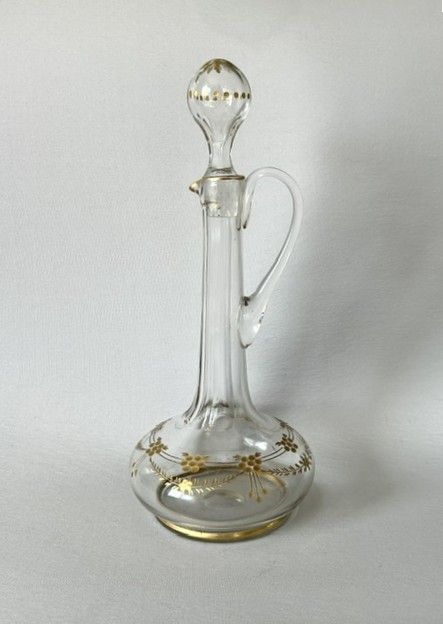
Decoration relied on hand-painted enamel, gold leaf gilding, and precise etching. Artisans applied polychrome enamel details, floral motifs, and geometric patterns directly onto the surface before firing.
Bohemian Glass Decanter Retail Price Guide 2026
Typical asking prices for bohemian glass decanter among the pieces listed under this phrase on Sellingantiques today, from the lower quarter to the upper quarter. They describe what is for sale here now, not the wider market.
Listings feature periods from the eighteenth century through the Victorian era up to 1930s Art Deco Czech designs.
What varies in quality
The distinction between ordinary and exceptional work rests on the precision of the glass cutting and the refinement of the surface decoration. Deeply carved overlay creates sharp relief and multi-layered visual depth, whereas shallow cutting lacks this dimensional weight.
Hand-painted enamel and gold leaf application reveal the skill of the decorator. Crisp, clean brushwork and intricate geometric lines on Art Deco sets or nineteenth-century armorial designs separate standard production from master craftsmanship.
Karl Palda·Moser·Salviati·Latham & Morton
The Bohemian Glass Decanter Glossary
- Overlay
- A technique where a layer of coloured glass is fused over clear or contrasting glass and partially cut away. This method produces high-contrast designs and deep facet patterns.
- Opaline glass
- An opaque, pale glass variant popular in white and pastel tones during earlier periods. It provides a smooth ground for delicate enamel painting.
- Finial
- The decorative upper knob or termination fitted to the top of a stopper or lid. It acts as both a functional handle and a stylistic accent.
- Ewer
- A large jug featuring an expansive spout and a looped handle, traditionally used for pouring water or wine. Many Victorian examples share display characteristics with standard decanters.
- Enamel
- A fused glassy substance applied as decoration to the exterior of the vessel. Artisans utilise coloured enamels to build up opaque floral or abstract patterns.
Bohemian Glass Decanter: Frequently Asked Questions
How do I date a bohemian glass decanter?
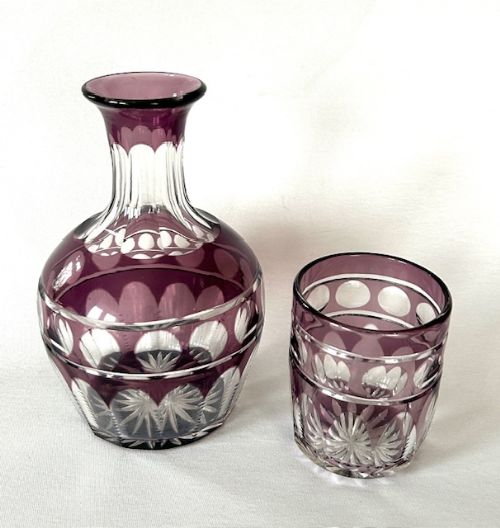
Dating relies heavily on style, colour palettes, and manufacturing techniques. Nineteenth-century examples often feature heavy cut crystal with ruby or amethyst overlay, whereas twentieth-century pieces lean towards geometric Art Deco silhouettes.
Maker attribution and specific export clues, such as nineteenth-century pieces made for the Persian market, also help narrow down the production era.
Are these decanters safe for holding drinks?
Most antique decanters were designed for serving wine, spirits, and cordials during dinner parties and gatherings. However, historic pieces featuring heavy gilding or lead crystal composition require careful hand washing.
Modern use depends on the interior condition and whether any historic enamelling extends inside the neck of the vessel.
What is the difference between a decanter and a carafe?
Decanters traditionally include a fitted stopper designed to seal the contents and preserve spirits or wine. Carafes often function as open-topped serving vessels, frequently paired directly with a matching drinking tumbler.
Both forms appear across Victorian and twentieth-century European glass production.
Why do some decanters have matching glasses?
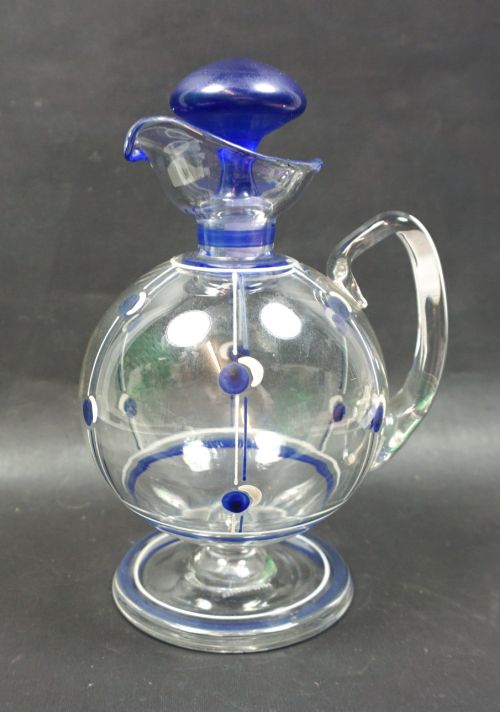
Many sets were manufactured as complete table services intended for entertaining guests at home. Art Deco productions by makers like Karl Palda frequently include matching trays, shot glasses, or spirit tumblers.
Finding a complete set with its original accompanying glassware remains a desirable feature for collectors.