




Gilded Glass Decanter
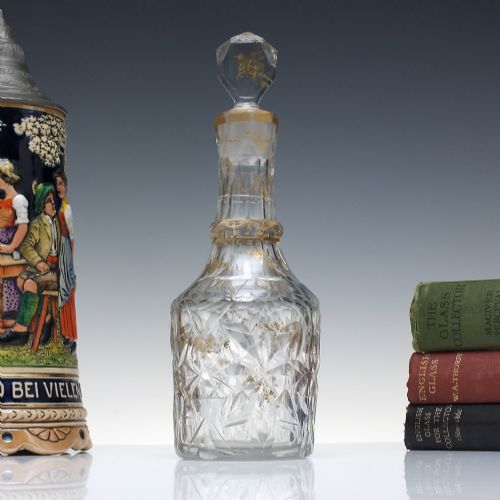
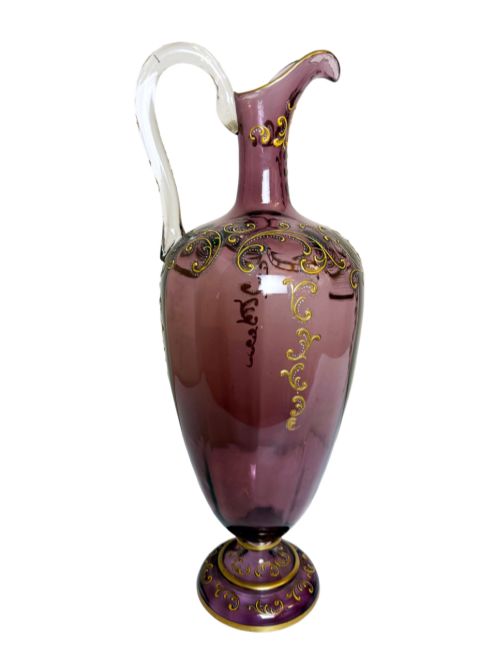
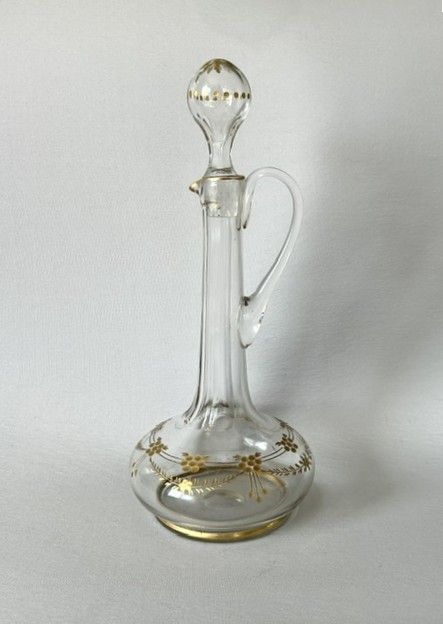
These gilded glass decanter pieces combine hand-applied gold leaf with rich coloured glass, designed to display spirits on a formal dining table.
Gilded Glass Decanter
A gilded glass decanter serves as a vessel for serving and holding spirits, combining functional tableware with decorative surface ornament. These objects appear in Georgian and Victorian forms, spanning clear glass, lead crystal, and richly coloured bodies.
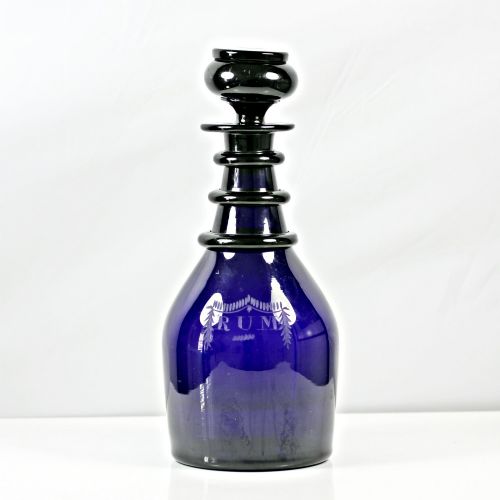
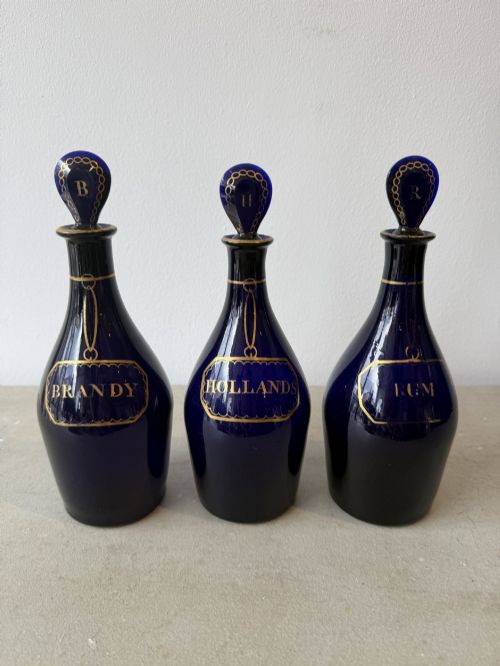
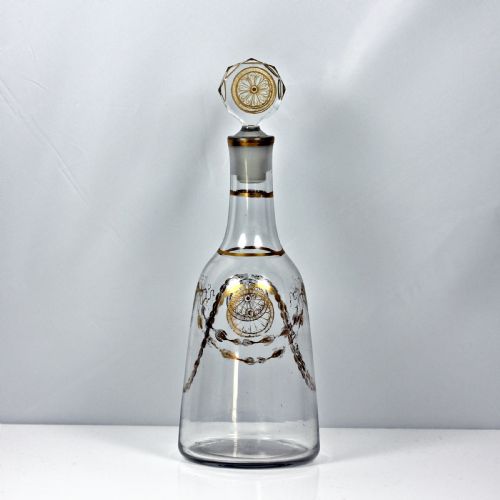
The versions most common on this page include Georgian Bristol blue vessels with painted labels, alongside 19th-century Bohemian and French pieces decorated with gold leaf. Forms range from club decanters and ringed spirit bottles to wine jugs and liqueur sets.
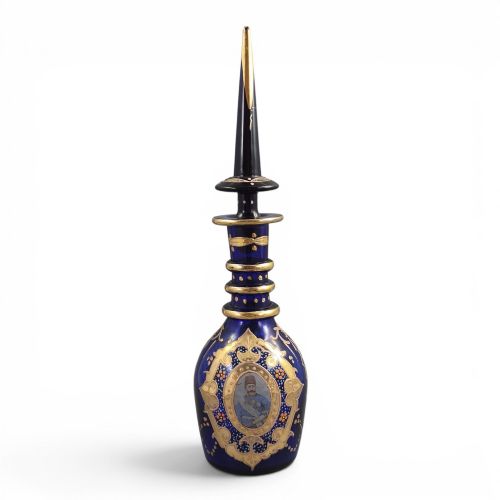
Makers utilised distinct regional styles, from English cut glass to Persian market exports and French crystal carafes. Collectors encounter various formats, including pairs, individual campaign bottles, and matching sets housed in frames.
How they were made
Artisans formed these vessels using traditional glassblowing techniques, shaping lead crystal, clear glass, and coloured metals such as cobalt, ruby, and violet. Skilled workers then cut, etched, or polished the glass bodies to catch the light.
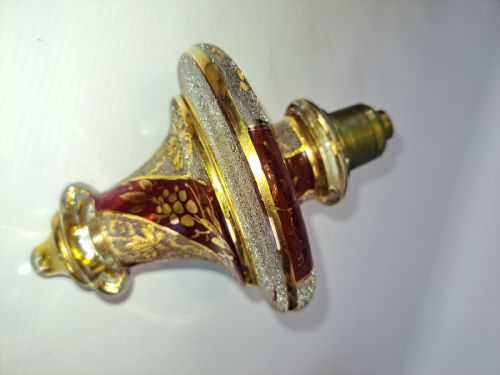
Makers applied gold leaf and hand-painted gilt ornamentation directly onto the glass surface, often combining the metalwork with enamel details. Some pieces incorporate brass fittings, silver-plated frames, or fitted stoppers known as finials.
An adventurous officer once packed a large gold-decorated decanter into a campaign set for travels far from home.
What varies in quality
The standard of a gilded glass decanter depends on the precision of the glass cutting and the durability of the gold application. Finer examples display crisp wheel-cut facets and securely adhered gold leaf that resists rubbing over generations of handling.
The depth and consistency of the coloured glass, whether Bristol blue, ruby, or amber, distinguish ordinary vessels from superior studio or atelier production. Intricate hand-painted enamel work and original matching stoppers further elevate the standing of a piece.
Atelier of James Giles·Josephinenhutte·Salviati
The Gilded Glass Decanter Glossary
- Club decanter
- A heavy-bottomed bottle shape with a rounded body designed to remain stable on ship tables or sideboard trays.
- Finial
- The decorative knob or stopper that caps the top of a decanter.
- Mell decanter
- A specific bottle form with a broad shoulder tapering down to a flat base, frequently seen in Georgian tavern and domestic settings.
- Lead crystal
- A high-clarity glass containing metal oxides that allows for deep facet cutting and a resonant ring when struck.
- Cave a liqueur
- A fitted box or case containing a set of small decanters and matching glasses for serving liqueurs.
Gilded Glass Decanter: Frequently Asked Questions
How were gilded glass decanters used?
These vessels held and served spirits such as rum, whiskey, and wine during formal meals and evening gatherings. Hosts displayed them on sideboards or dining tables, often paired with matching glasses.
In domestic and institutional settings, they also served as decorative containers for cordials and liqueurs. Fitted sets in frames allowed for easy transport between rooms or for secure storage.
How do I clean an antique decanter?
Cleaning requires warm water and mild soap, avoiding harsh abrasives that can damage the delicate gold leaf and enamel decorations. Rinsing should be done by hand without submerging metal mounts or frames.
Interior residue is best addressed with specialised bottle brushes or non-scratch cleaning beads. Extreme temperature changes must be avoided to protect antique glass from thermal shock.
How can I tell a Georgian decanter from a Victorian one?
Georgian decanters typically feature hand-cut geometric patterns, onion or club silhouettes, and painted gold labels designating specific spirits. They often date from the late 18th to early 19th centuries.
Victorian pieces frequently display bolder colours like cobalt or ruby, alongside more ornate enamel work, gilt appliqués, or complex matching trays. Production methods shifted towards industrial techniques later in the 19th century.
What is a Bristol blue decanter?
A Bristol blue decanter is made from deep cobalt-coloured glass produced in English glassworks, particularly around Bristol. These vessels often feature gilt inscriptions naming spirits like rum or gin.
They became popular during the Georgian period and remain distinct due to their intense, dark blue hue. Collectors prize them for their striking visual contrast against applied gold decoration.