


Cobalt Glass Decanter
A cobalt glass decanter brings deep blue colour and striking presence to a table, offering both function and rich display.
Cobalt Glass Decanter
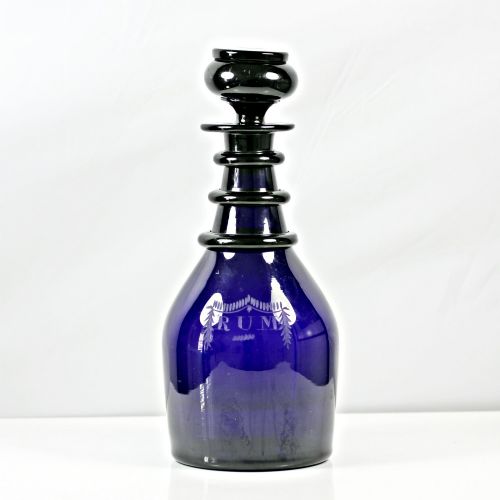
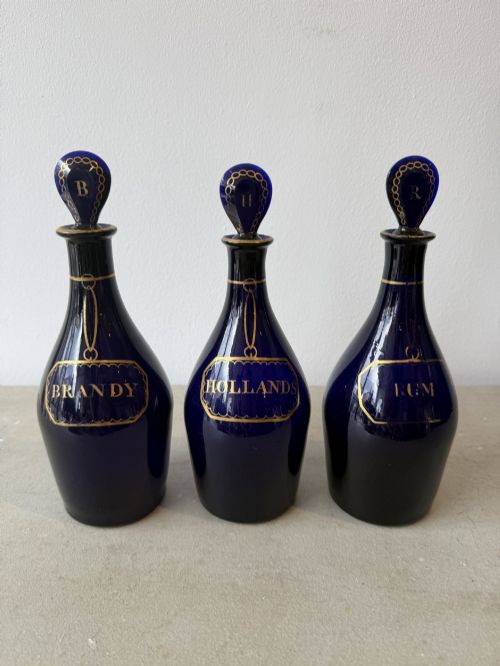
When you search for a cobalt glass decanter, you are looking at deep blue vessels primarily originating from the Georgian, Victorian, and later nineteenth-century periods. These pieces include mell decanters, three-ring spirit bottles, apothecary vessels, and wine bottles, often shaped for serving or preserving spirits.
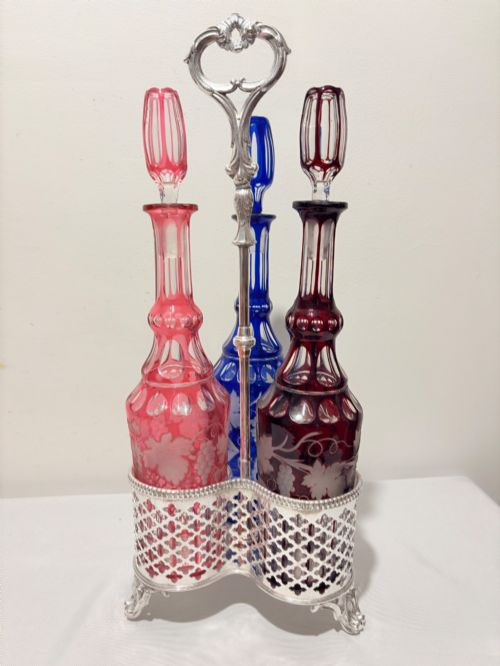
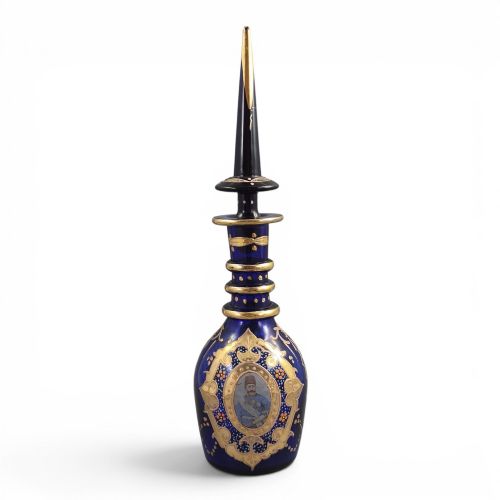
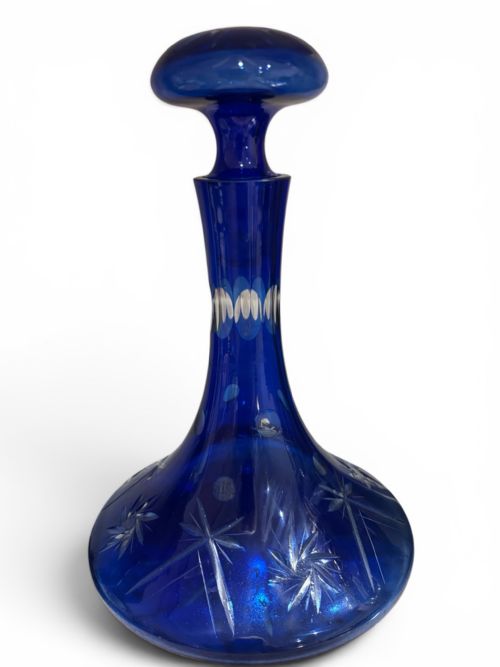
The version you are most likely to meet on this page is the nineteenth-century Bristol blue decanter, alongside Bohemian export pieces and silver-mounted examples. Forms range from heavy cut crystal to hand-blown serving bottles fitted with silver plate, gold leaf, or enamel decoration.
How they were made
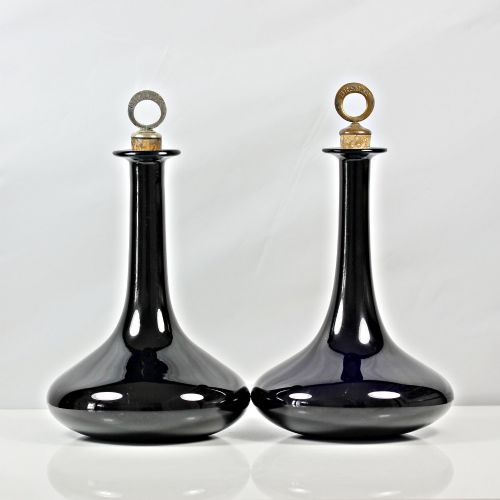
Makers produced these vessels through hand-blowing glass, shaping molten cobalt glass into specific profiles such as the tapering mell form or ringed necks designed for a secure grip. Artisans then applied applied metal mounts, silver plate, or cork stoppers to complete the utility of the bottle.
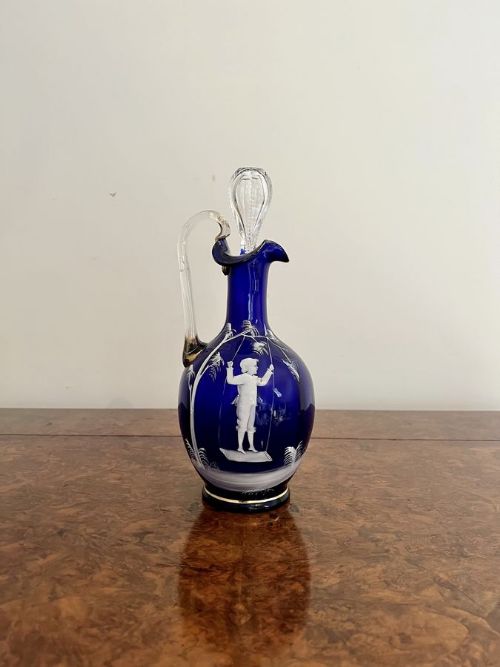
Decoration on these pieces often involved hand painting, enamel work, and gold leaf detailing, particularly on Bohemian exports destined for the Persian Qajar market. Mary Gregory styles also appear, utilising white enamel painting techniques directly onto the blue surface.
Listings span the Georgian, Victorian, and Art Deco periods, utilising materials such as cobalt glass, silver plate, gold leaf, and enamel.
What varies in quality
The distinction between standard production and finer examples lies in the depth and clarity of the cobalt hue, alongside the crispness of any hand-cut rings or facets. Superior pieces display heavier, more resonant glass with precise proportions and intact original stoppers or mounts.
Surface ornamentation also dictates quality, where delicate gold leaf or detailed enamel work requires high skill. Pieces featuring integrated silver plate mounts or specific regional attributes like Scottish or Irish attributions command closer attention from collectors.
The Cobalt Glass Decanter Glossary
- Mell decanter
- A decanter with a rounded body and a tapering neck resembling a mallet. This form became popular during the Georgian and Victorian eras for storing spirits.
- Bristol blue
- A deep, vivid cobalt blue glass historically produced in the Bristol area. It gained widespread popularity during the late eighteenth and nineteenth centuries.
- Three-ring decanter
- A spirit bottle featuring three distinct glass rings applied around the neck. These rings provided a secure grip for pouring when hands were damp.
- Qajar Era
- A historical period in Persia associated with distinct export trades. European makers produced specific glasswares tailored to this specific overseas market.
- Apothecary bottle
- A functional glass container used by chemists and pharmacists to store medicines. These often featured painted white labels directly on the cobalt surface.
Cobalt Glass Decanter: Frequently Asked Questions
What is a cobalt glass decanter?
A cobalt glass decanter is a serving vessel made from deep blue glass, designed for holding and pouring wine, whiskey, or rum.
These pieces date primarily from the Georgian and Victorian periods, often featuring decorative elements like silver necks or enamel work.
How do I identify a Georgian decanter?
Georgian decanters typically show specific hand-blown characteristics, including pontil marks on the base and three-ring necks for gripping.
They often appear in deeper Bristol blue shades and heavier glass weights compared to twentieth-century alternatives.
Were these decanters used for wine?
These vessels served various alcoholic beverages, including wine, rum, and Irish whiskey, depending on their specific shape.
Mell shapes and standard spirit bottles were common choices for dining tables and cellarets during the nineteenth century.
What is a mell decanter?
A mell decanter is a specific bottle shape with a rounded, mallet-like body that tapers toward the top.
This practical nineteenth-century form sat securely on shipboard surfaces and dining sideboards alike.
How should I clean my decanter?
Cleaning antique glass requires gentle hand washing with warm water and mild soap, avoiding harsh abrasive materials.
Care must be taken around fragile silver mounts, enamel decoration, and original cork stoppers.