



Blue Glass Carafe
A blue glass carafe brings deep colour and period weight to a table, spanning Georgian Bristol glass to Art Deco Bohemian crystal.
Blue Glass Carafe
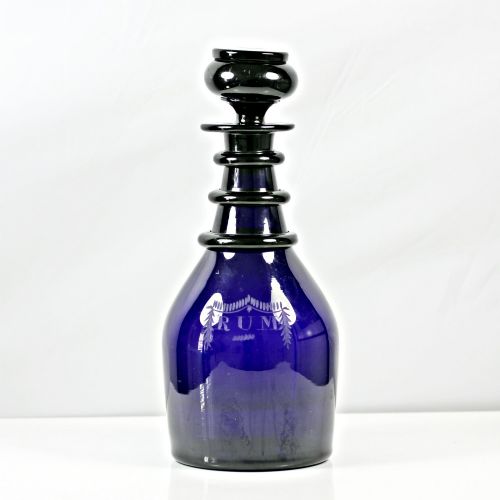
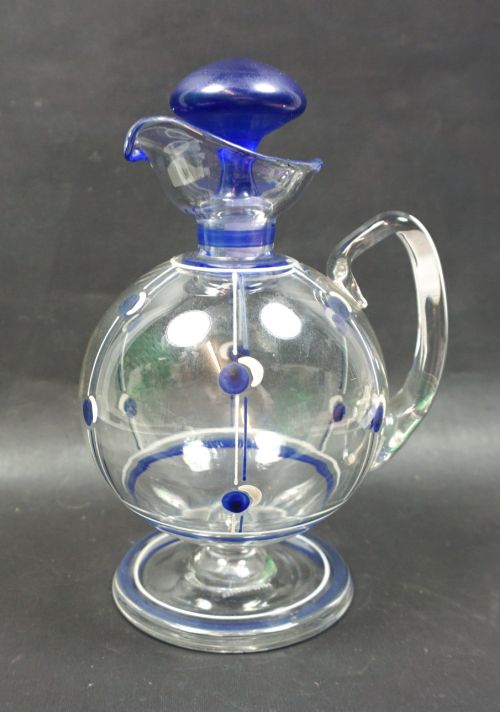
When you search for a blue glass carafe, you encounter vessels produced primarily across the Georgian, Victorian, and early twentieth-century periods. These range from heavy three-ring rum decanters to delicate wine jugs and water pitchers.
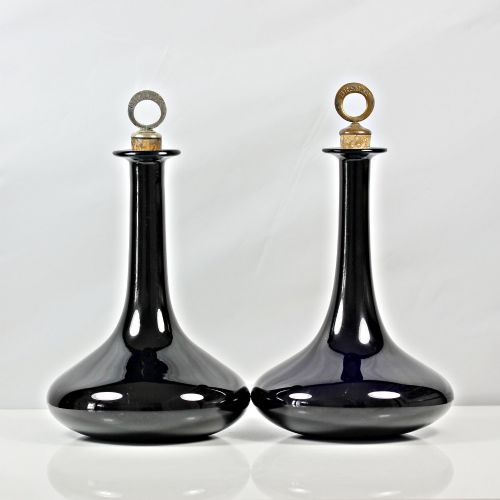
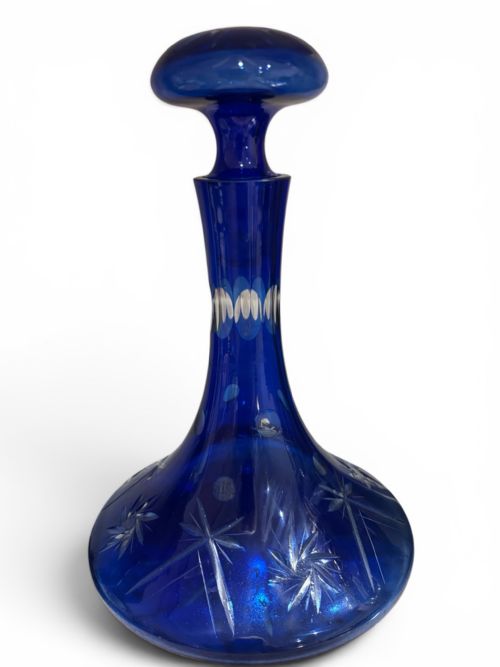
The most common examples on this page belong to the Victorian era and the nineteenth century, particularly Bristol blue and Bohemian cobalt pieces. Forms include mell decanters, serving bottles, and handled jugs designed for wine, water, and spirits.
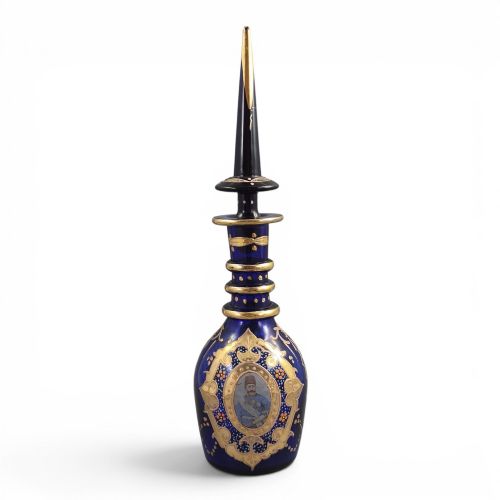
Origins stretch from British glasshouses in Bristol and Scotland to continental centres in Bohemia, France, and Austria. Makers and exporters tailored these objects for diverse markets, including Persian Qajar export wares and domestic dining tables.
How they were made
Production relied on hand-blowing molten glass infused with cobalt or metal oxides to achieve rich blue, teal, or green-blue tones. Artisans shaped these vessels using traditional blowing irons, often incorporating applied rings or threaded trails.
Decoration involved multiple specialist techniques such as hand-painting with enamel and gold leaf, glass engraving, and metal mounting. Some pieces feature fitted silver plate, old Sheffield plate, or cork stoppers complementing the glass body.
Listings feature 19th-century, Victorian, Georgian, and Art Deco periods, utilising cobalt glass, crystal, enamel, and silver plate.
What varies in quality
The distinction between ordinary utility vessels and superior examples rests on the depth of the metal oxides in the glass and the crispness of the hand-blown form. Superior pieces exhibit precise wheel-engraving, clean pontil marks, and heavier, more resonant crystal.
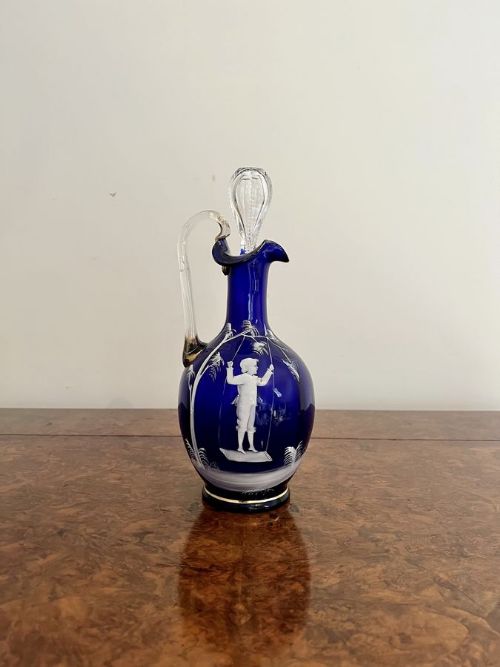
Applied ornamentation such as polychrome enamel, gilt leaf work, and metal mounts dictate the upper tier of the range. Intricate decorative programmes, including figurative Mary Gregory scenes or Islamic style engravings, indicate specialist workshop production.
The Blue Glass Carafe Glossary
- Bristol blue
- A deep cobalt glass traditionally associated with eighteenth and nineteenth-century production in Bristol. It gained renown for its rich coloration used in spirit decanters and serving bottles.
- Mell decanter
- A mallet-shaped decanter with a wide base and tapering body, popular during the Georgian and Victorian eras. This sturdy silhouette prevented tipping on dining tables aboard ships or in homes.
- Nailsea glass
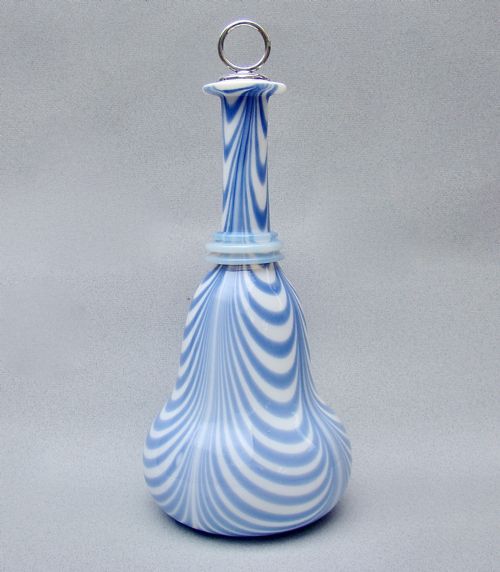
- Glassware characterised by looped, trailed, or splashed opaque white threads across a coloured ground. It originates from the Nailsea glassworks near Bristol and nineteenth-century Scottish houses.
- Old Sheffield plate
- A composite material made by fusing a thin sheet of silver to a thicker copper base. It appears on nineteenth-century wine carafe necks and mounts before the invention of electroplating.
- Qajar era
- A Persian historical period influencing nineteenth-century Bohemian glass exports. Factories produced enamelled cobalt wares specifically styled for the Persian market.
Blue Glass Carafe: Frequently Asked Questions
How do I date a blue glass carafe?
Dating relies on combining the pontil mark, the shape of the neck rings, and the style of decoration. Georgian and early Victorian examples often display deep kick-ups and hand-cut rings, while twentieth-century pieces show smoother finishes and Art Deco contours.
Material evidence also helps establish age, as nineteenth-century pieces frequently utilise old Sheffield plate mounts or hand-painted enamel before industrial production standardised manufacturing methods.
What were blue glass carafes used for?
These vessels served water, wine, rum, and whiskey at the dining table or sideboard. The dark cobalt glass helped protect light-sensitive contents from spoilage while adding a decorative element to formal settings.
Heavier three-ring decanters were designed for secure handling by stewards and servants during pouring, whereas smaller jugs and carafes functioned at individual place settings.
Are these carafes safe for serving wine?
Most antique glass carafes remain structurally sound for holding liquids and serving beverages. Care must be taken with older hand-blown glass, avoiding extreme thermal shocks from hot water or harsh cleaning implements.
Metal mounts, silver plate, and cork stoppers require gentle hand-washing to preserve the original materials without damaging the aged surfaces.
What is the difference between a carafe and a decanter?
Decanters traditionally feature fitted stoppers and served to hold and pour spirits or aged wines from larger storage vessels. Carafes and jugs often feature open pouring lips or handles designed for immediate table service of water or table wine.
In historical listings, these terms frequently overlap depending on whether the vessel retains its original stopper or incorporates a handle and spout.