





Engraved Glass Decanter
When choosing an engraved glass decanter, collectors find practical vessels that display intricate wheel-cut decoration, botanical motifs, and period spirit labels.
Engraved Glass Decanter
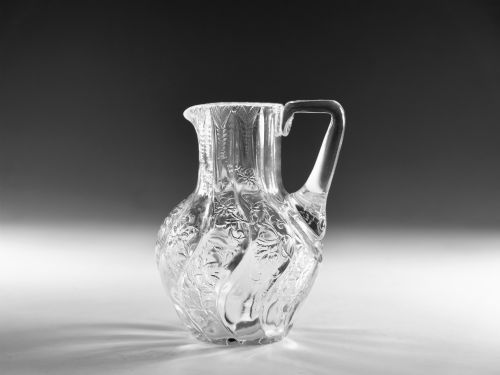
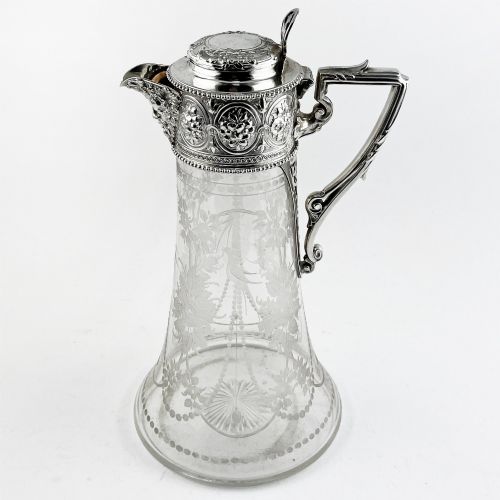
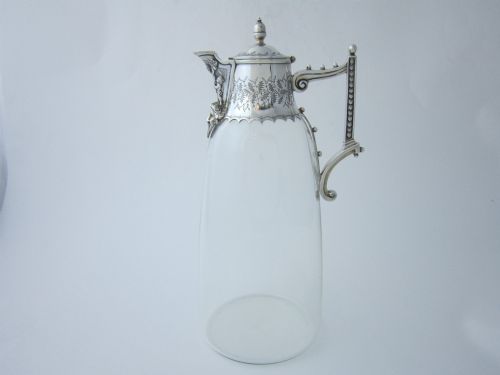
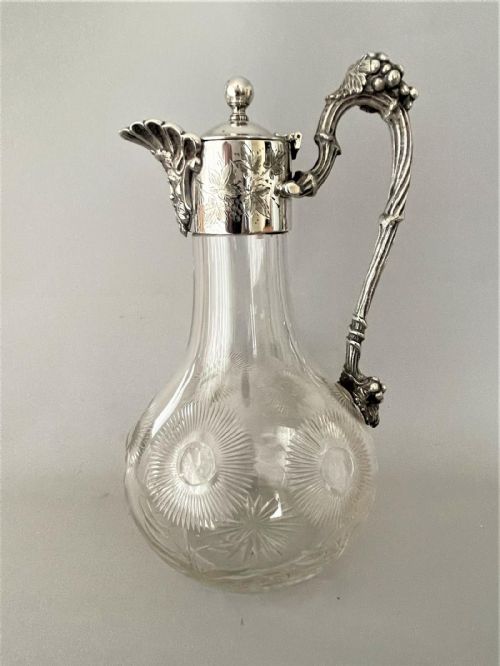
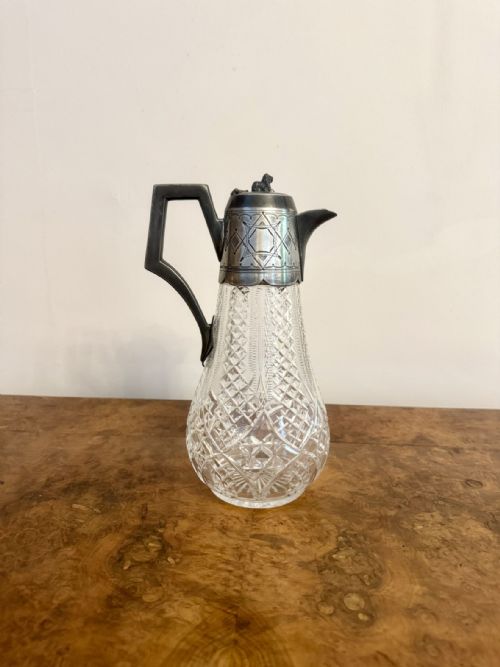
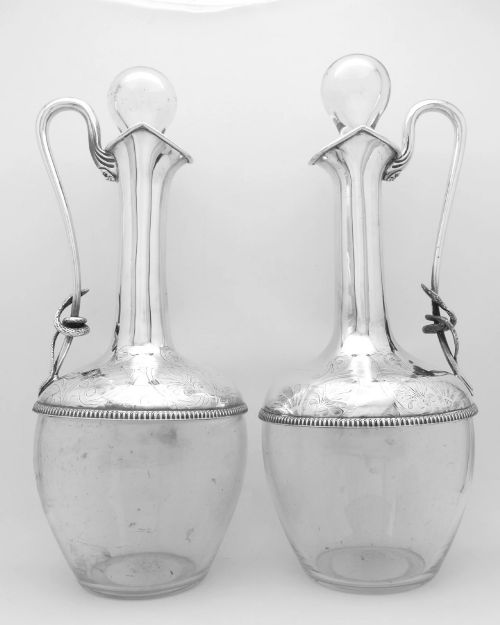
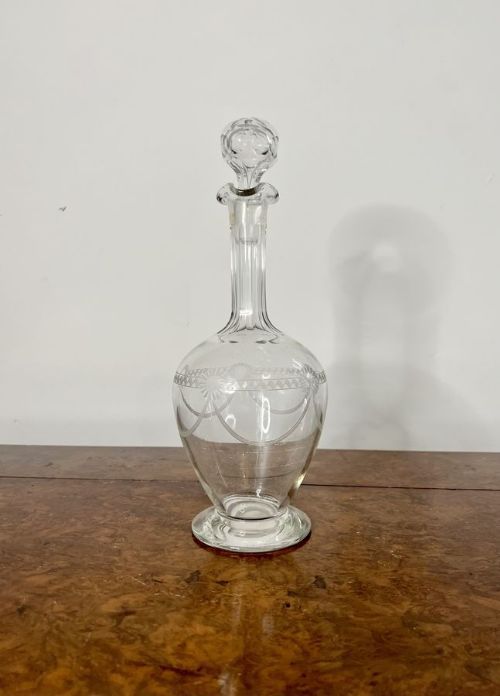
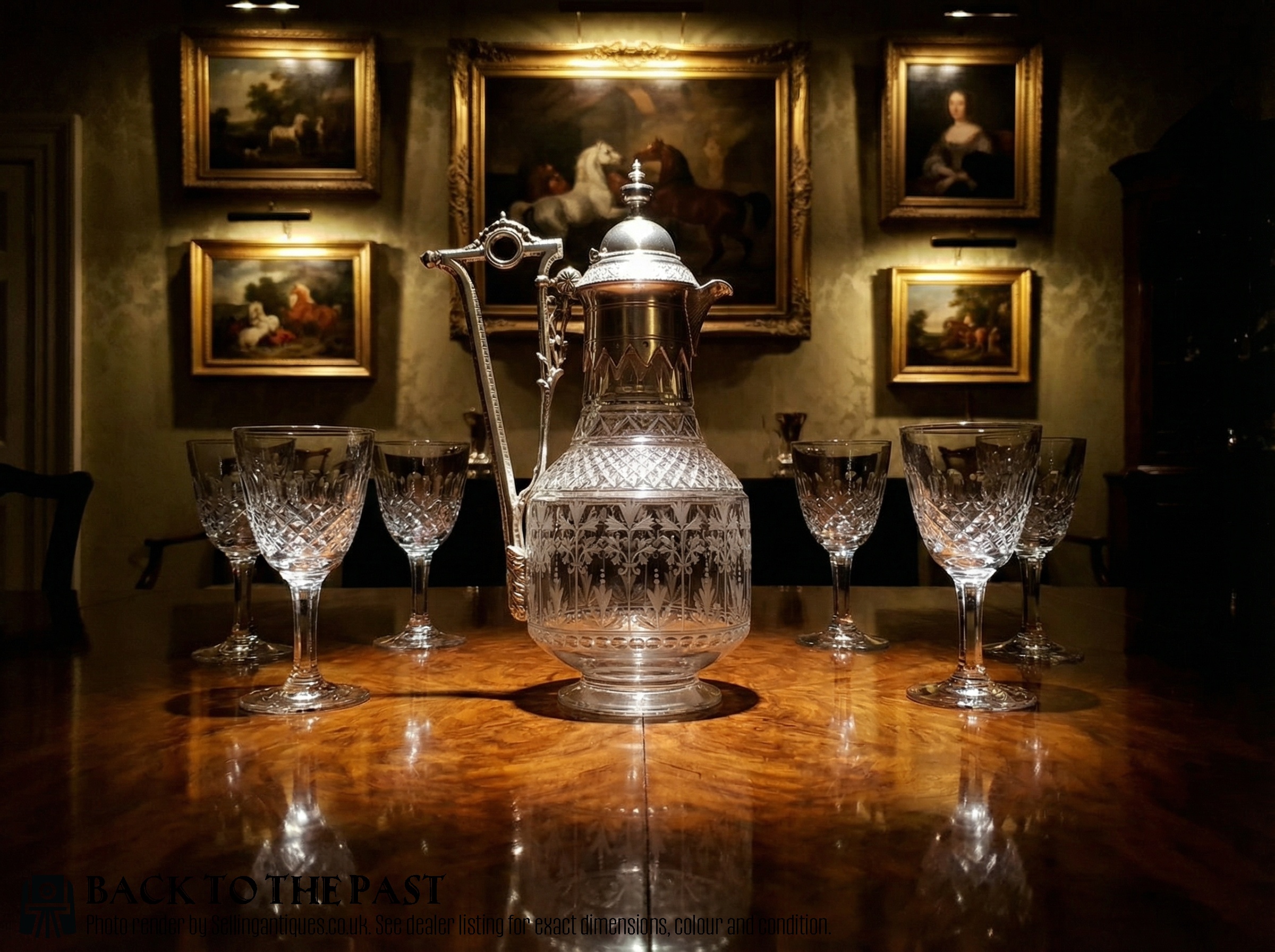
An engraved glass decanter is a serving vessel designed for wine, spirits, and cordials, featuring surface decoration carved directly into the material. These pieces range from Georgian mallet and shaft-and-globe shapes to Victorian claret jugs fitted with silver plate and sterling silver mounts.
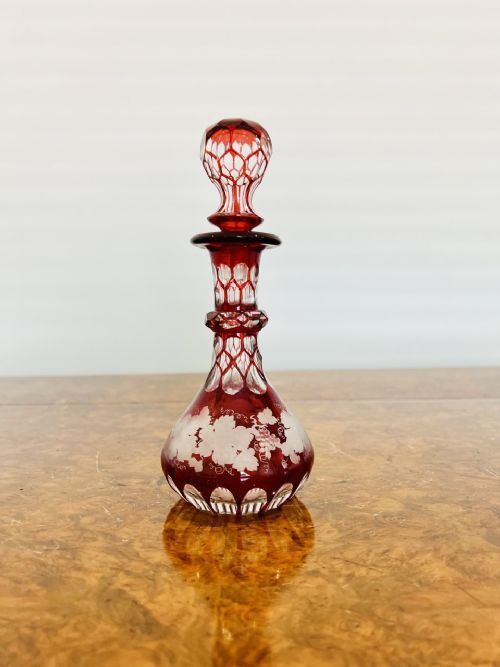
Buyers meet examples spanning the eighteenth, nineteenth, and early twentieth centuries, with Victorian and Georgian pieces forming the bulk of the selection. Coloured glass varieties - including green, blue, amber, cranberry, and ruby hues - frequently appear alongside clear crystal.
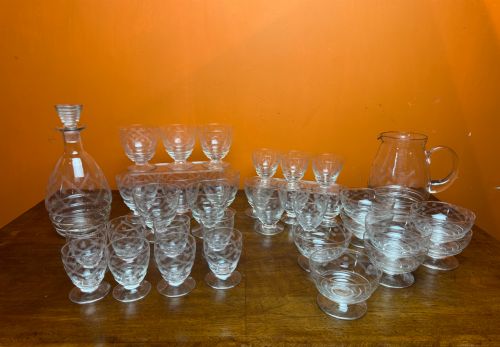
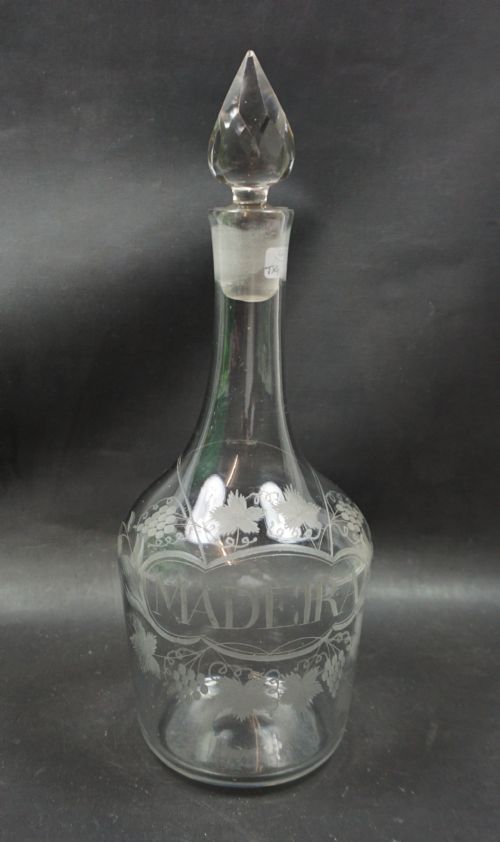
Forms vary from heavy sugarloaf and square box decanters to slender carafes, ewers, and bar dispensers. Many retain period spirit inscriptions such as Madeira, Port, Brandy, and Whisky etched across the body.
Materials and technique
Maker utilise lead crystal, lead glass, and clear or coloured glass, blown by hand into moulds or shaped freely on the pontil. Optical blowing and heavy cutting provide the structural blank required for subsequent surface work.
Craftsmen apply wheel engraving and intaglio techniques using rotating copper or stone wheels of varying sizes to cut floral sprays, birds, crests, and vines into the exterior surface. Polishing restores transparency to the cut recesses, creating contrast against frosted or matte details.
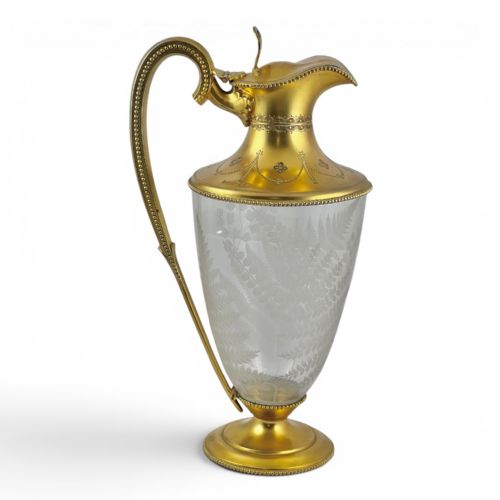
Metal mounts in silver plate, sterling silver, and silver gilt incorporate hinged lids, collars, handles shaped like serpents or Bacchus masks, and wrought iron frameworks. These mounts secure tightly around the glass neck or shoulder.
Engraved Glass Decanter Retail Price Guide 2026
Typical asking prices for engraved glass decanter among the pieces listed under this phrase on Sellingantiques today, from the lower quarter to the upper quarter. They describe what is for sale here now, not the wider market.
Coloured glass varieties recorded include cranberry overlay, Bristol green, ruby, and amber shades.
What varies in quality
Quality rests in the depth, precision, and crispness of the wheel engraving, where fine detailing on motifs like butterflies, fruiting vines, or armorial crests distinguishes skilled handwork from mechanical etching. The clarity and weight of the underlying lead crystal or coloured glass directly influence tactile substance.
The integration of metal hardware defines the upper tier of production, particularly when solid sterling silver or silver gilt mounts bear clear hallmarks from known makers and silversmiths. Well-balanced proportions between the blown glass body, handle design, and stopper create cohesive visual harmony.
Stevens and Williams·Webb Corbett·James Powell·Richardsons·William Davenport·Asprey and Co. Ltd
The Engraved Glass Decanter Glossary
- Mell decanter
- A mallet-shaped eighteenth or nineteenth-century bottle with a wide base tapering toward the neck, frequently found in green or blue glass.
- Shaft and globe
- A decanter silhouette featuring a spherical lower body beneath a long, slender neck, popular during the Victorian period.
- Claret jug
- A pouring vessel with a handle and hinged metal lid, intended specifically for serving red wine at the dining table.
- Intaglio
- A technique where designs are carved into the glass surface rather than left in relief, producing a recessed impression.
- Lead crystal
- Heavy, high-refractive-index glass containing lead oxide, providing the clarity and density necessary for deep cutting and engraving.
Engraved Glass Decanter: Frequently Asked Questions
How do I identify a Georgian decanter?
Georgian examples often feature mallet, taper, or mell silhouettes in deep green, blue, or clear lead glass. Their hand-engraved motifs tend to be simpler, sometimes displaying specific wine labels or Jacobite symbols.
Stoppers should match the vessel in wear and colour, and pontil marks on the base confirm hand-blown manufacture from the eighteenth or early nineteenth century.
What are shaft and globe decanters?
Shaft and globe decanters possess a rounded spherical body paired with a long, narrow neck that resembles a shaft. These pieces emerged in various sizes, including large magnum capacities intended for heavy entertaining.
Victorian makers frequently engraved these vessels with thistles, ferns, or geometric patterns, pairing them with heavy star-cut bases.
Are coloured glass decanters authentic?
Coloured glass decanters in shades of amber, emerald green, Bristol blue, cranberry, and ruby were widely produced throughout the Georgian and Victorian eras. These colours derived from metallic oxides added during the melting process.
Authentic pieces show appropriate base wear, tiny bubbles within the hand-blown glass, and period-appropriate wheel engraving techniques.