
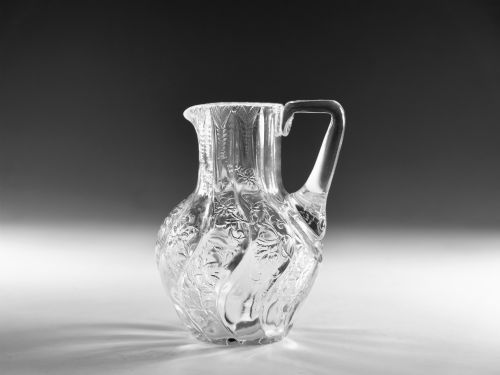


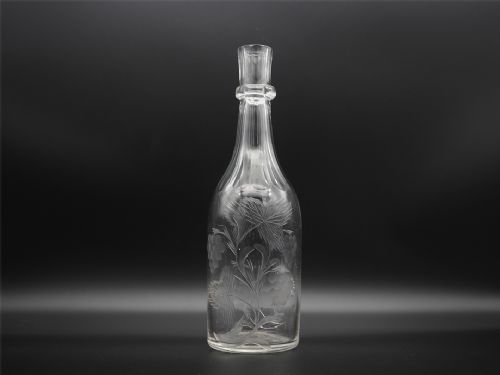
Wheel Engraved Decanter
These wheel engraved decanter pieces bring tactile weight and crisp historic glasswork to your sideboard, offering genuine period craftsmanship.
Wheel Engraved Decanter
When you search for a wheel engraved decanter, you are looking at functional glassware shaped by hand across the Georgian, Victorian, and Edwardian eras. These vessels range from sugarloaf beer decanters and mell decanters to claret jugs, serving bottles, and pint-sized pitchers.
On this page, you are most likely to meet 19th-century and Georgian examples fashioned from clear crystal, lead glass, or richly coloured amethyst and ruby glass. Their forms combine practical pouring capacity with detailed surface decoration executed by skilled hands.
How they were made
The makers formed these vessels using lead glass, crystal, and coloured glass media such as amethyst and ruby glass, sometimes paired with silver mounts. Artisans shaped the hot metal by hand before applying surface depth.
Decoration relied on abrasive wheels of varying sizes pressed against the glass to carve distinct motifs like fruiting vines, stars, crests, and flowers of the union. This technique demanded steady control to cut deep, clean lines into the vessel walls.
Listings feature lead crystal, amethyst glass, and ruby glass across Victorian, Edwardian, and Georgian periods.
What varies in quality
Quality rests upon the precision of the wheel work and the depth of the glass medium. Superior pieces display crisp, sharply defined motifs where the cuts catch the light clearly, whereas lesser examples show shallow or hesitant incisions.
The choice of material also dictates distinction, with heavy lead crystal and deep coloured glass bodies providing a more substantial hand-feel than standard utility glass.
Stevens & Williams·Webb Corbett
The Wheel Engraved Decanter Glossary
- Wheel engraved
- Glass decorated by holding the vessel against a rotating abrasive disc to carve designs into the surface. This method creates characteristic shallow or deep concave cuts depending on the wheel size.
- Lead crystal
- A high-clarity glass containing metallic oxides that increase weight and refractive index. It provides the heavy, resonant body typical of finer serving vessels.
- Mell decanter
- A specific historic bottle form featuring a bulbous body tapering toward the neck. These shapes were often utilised for storing and serving wine.
- Amethyst glass
- Coloured glassware imbued with manganese or other minerals during melting to produce a purple hue. It was particularly favoured for decorative serving bottles during the nineteenth century.
Wheel Engraved Decanter: Frequently Asked Questions
What periods do these decanters come from?
The pieces span the Georgian, Victorian, and Edwardian eras, encompassing production dates through the eighteenth, nineteenth, and early twentieth centuries.
Specific decades represented include the eighteen-fifties, sixties, eighties, and nineteen-hundreds.
How were these vessels used originally?
They served to hold, decant, and pour wine, beer, and other beverages at the dining table or sideboard. Their decorative surfaces also made them display pieces in period interiors.
Many incorporate spouts, handles, or matching stoppers to assist with pouring during formal meals.
How do I tell clear glass from crystal?
Crystal contains lead content that gives it greater weight, a brighter refractive clarity, and a distinct ringing sound when gently tapped. Standard glass feels lighter and appears less dense under light.
Examining the heft and brilliance of the vessel helps clarify its material composition.