



Engraved Glass Carafe
When you search for an engraved glass carafe, you are seeking a vessel that combines functional pouring with detailed wheel-cut or hand-etched ornament.
Engraved Glass Carafe
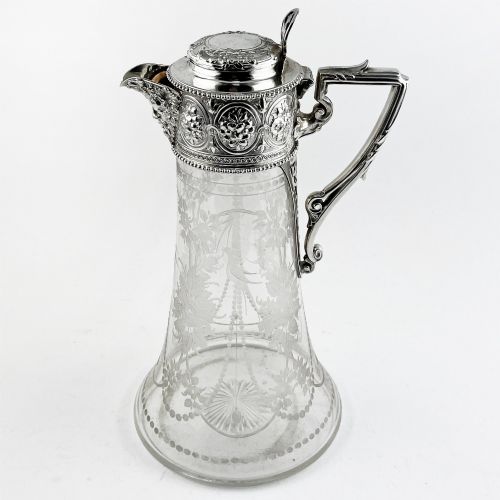
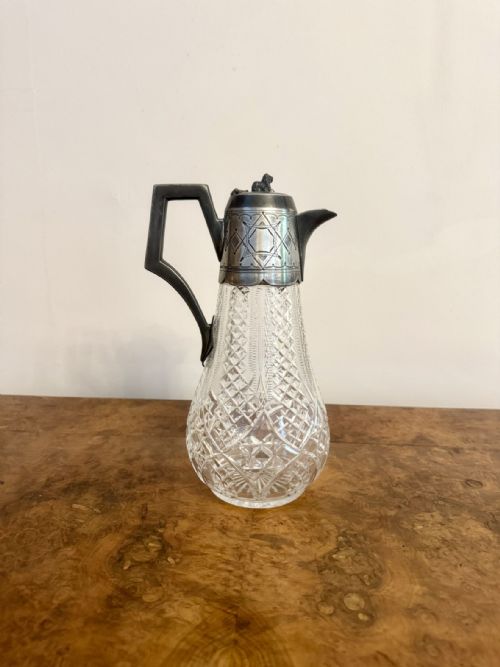
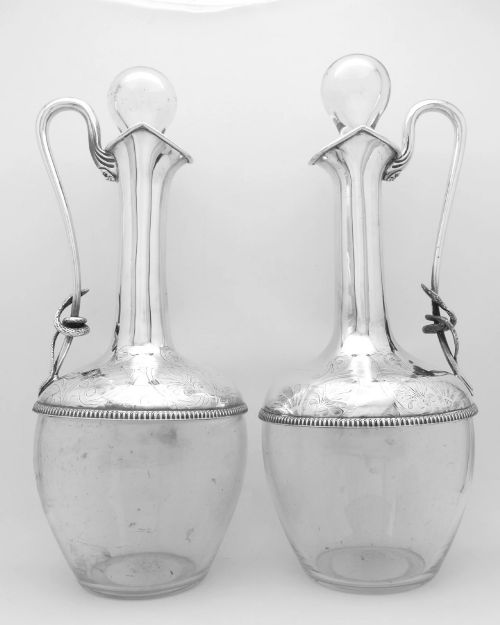
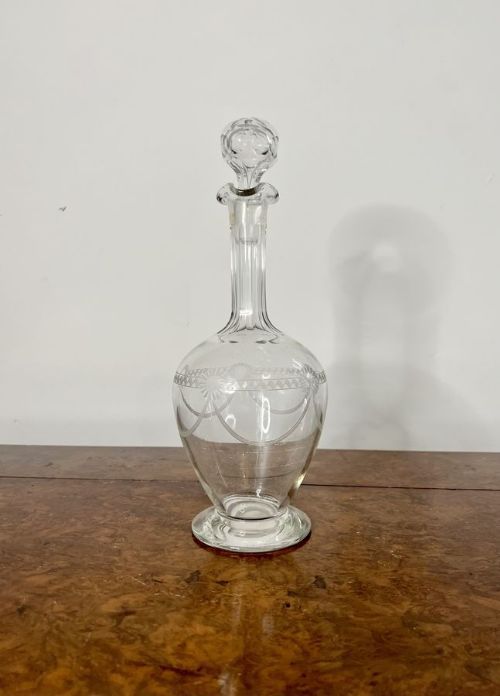
An engraved glass carafe functions as a serving vessel for wine, water, or spirits, appearing in forms ranging from nineteenth-century Victorian wine carafes and shaft-and-globe decanters to Georgian mell decanters. These pieces frequently surface paired with sterling silver, silver-plated, or wrought iron mounts, though many exist as standalone glass ewers and jugs.
The aesthetic reaches across various historical revivals and movements, spanning Georgian simplicity, Victorian floral work, Edwardian refinement, Islamic Revival styling, and organic Art Nouveau contours. Buyers will encounter both clear crystal and coloured glass bodies - including cranberry, ruby, amethyst, and teal - decorated with botanical motifs, crests, and beverage labels.
How they were made
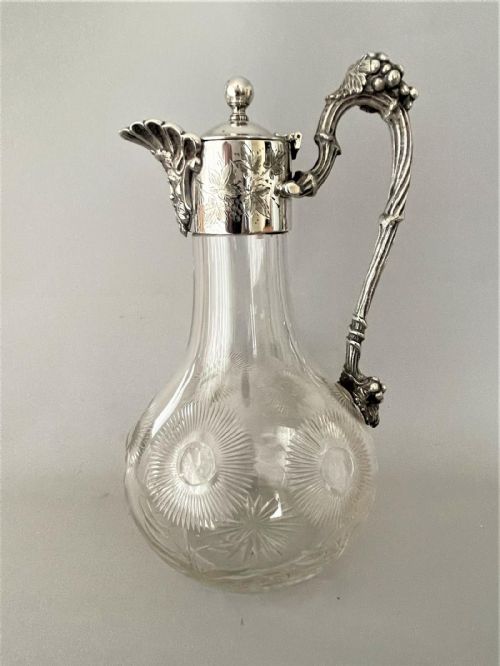
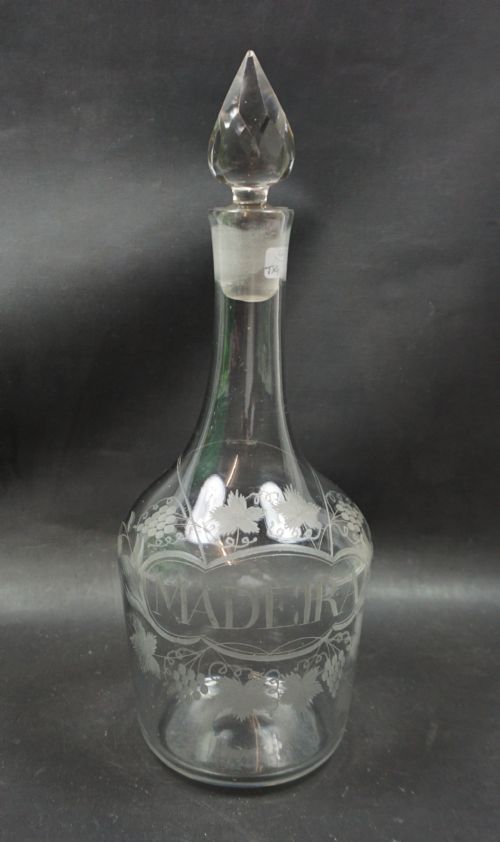
Maker-houses shaped these vessels using lead glass or crystal, often employing optical blowing techniques to create ribbed or patterned bodies before applying wheel engraving, hand etching, or intaglio cutting. The resulting surface designs depict fruiting vines, dolphins, stars, and floral sprays.
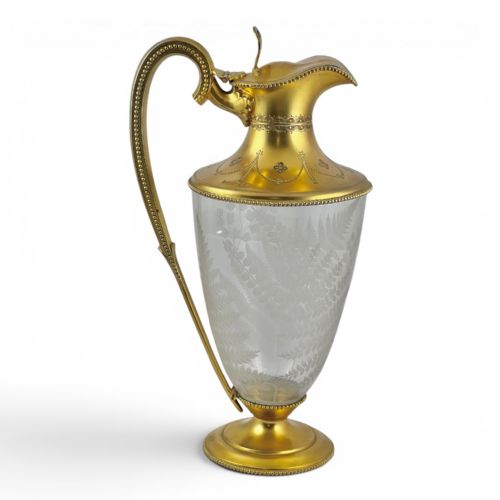
Metalwork components such as collars, handles, and hinged lids utilised sterling silver, silver plate, or solid silver gilt, frequently hallmarked in manufacturing centres like Sheffield and Birmingham. Wrought iron and 950 silver collars also appear on continental pieces, fixed securely to the glass necks.
Periods represented span from Georgian mallet forms through Victorian silver-mounted claret jugs to Edwardian and Art Nouveau designs.
What varies in quality
The crispness and depth of the wheel engraving dictate visual merit, distinguishing shallow surface scratching from deeply carved, detailed motifs executed by skilled hands. Stourbridge and other notable glassworks achieved superior clarity and weight in their crystal bodies.
The integration of metal mounts affects overall standard, where substantial silver-plated or sterling mounts fit the glass contours precisely without movement. Maker attribution, such as signed Lobmeyr work or documented pieces by Richardsons and James Powell, elevates the standing of an individual vessel.
Asprey and Co. Ltd·Richardsons·James Powell·William Davenport·Lobmeyr
The Engraved Glass Carafe Glossary
- Mell decanter
- A Georgian decanter shape characterised by a rounded body tapering towards the base, resembling a mallet. These early vessels held wine on the dining table.
- Claret jug
- A serving pitcher specifically designed for red wine, featuring a handle, a spout, and a hinged metal lid. They combine glass bodies with silver or silver-plated mounts.
- Lead crystal
- Glass containing a high percentage of lead oxide, which increases weight, brilliance, and refractive index. This material allows for deeper, sharper facet cutting and engraving.
- Shaft and globe
- A decanter silhouette defined by a long, slender neck rising above a globular body. This form became popular during the Victorian era for serving various table wines.
- Silver gilt
- Silver objects coated with a thin layer of gold on the interior or exterior surfaces. This technique provided a rich two-tone appearance on metal mounts and interiors.
Engraved Glass Carafe: Frequently Asked Questions
What is an engraved glass carafe used for?
These vessels served primarily for decanting and pouring wine, spirits, or water at the dining table. The addition of engraved labels identified specific contents like Madeira, brandy, or whisky.
Beyond functional dining use, many pieces functioned as decorative ewers or presentation items. Their detailed wheel-cut surfaces allowed them to sit prominently on sideboards and serving tables.
How do I date an antique glass carafe?
Dating relies on examining the combination of glass tint, cutting style, and metal mounts where present. Georgian examples often display pontil marks and simpler mallet shapes, while Victorian pieces incorporate elaborate silver-plated mounts and dense floral engraving.
Maker marks stamped on silver collars provide precise manufacturing years and locations. Stylistic indicators like Art Nouveau whiplash lines or Edwardian restraint further narrow the production window.
What is the difference between a carafe and a decanter?
Carafes generally feature open tops designed for immediate table service of wine or water. They present simpler silhouettes without stoppers.
Decanters incorporate fitted stoppers and often heavier glass bodies to preserve spirits or aged wine over longer periods. Many nineteenth-century hybrid forms bridge these definitions by serving both functions.
How should I clean an antique engraved carafe?
Gentle hand washing with warm water and mild detergent preserves the historical glass and delicate engraved surfaces. Avoid harsh abrasives that can scratch the crystal or damage silver-plated mounts.
Soaking with specialised cleaning beads or vinegar helps remove interior residue without mechanical pressure. Metal components require separate, careful polishing to prevent chemical contact with the glass.