


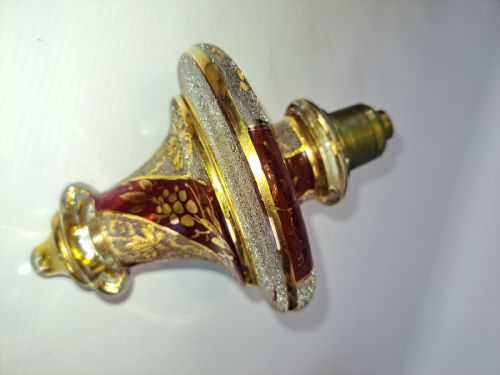


Etched Glass Decanter
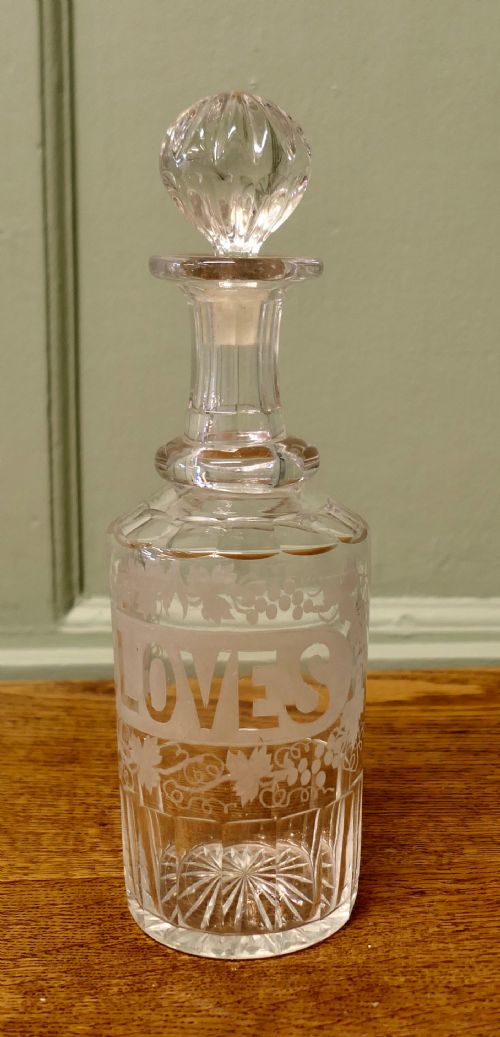
These etched glass decanter pieces combine nineteenth-century vessel forms with delicate wheel-cut or acid-etched botanical motifs to serve wine and spirits with period elegance.

Etched Glass Decanter
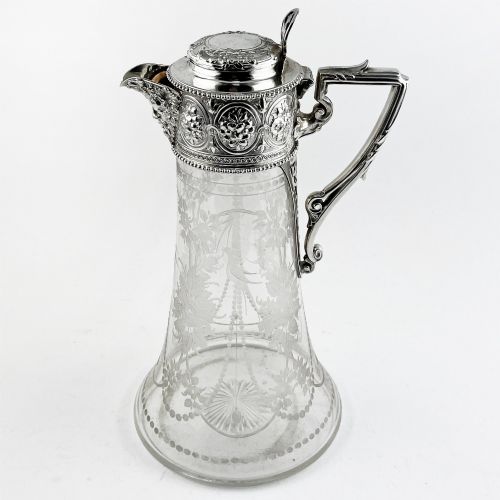
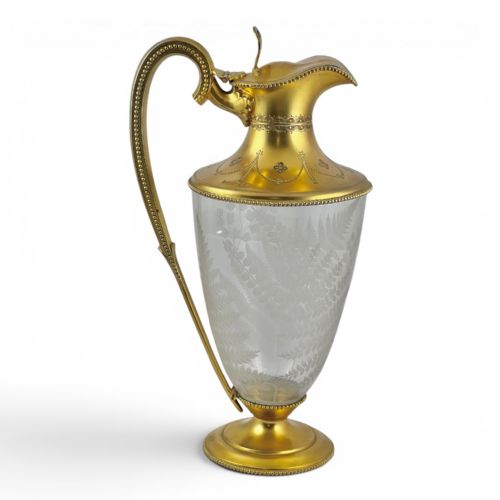
When you search for an etched glass decanter, you encounter functional serving vessels originating primarily from the Victorian and Edwardian eras, alongside pieces spanning the nineteenth century into the Art Deco period. These objects take the form of standard decanters, tall claret jugs, and handled ewers designed for wine, spirits, or liqueurs.
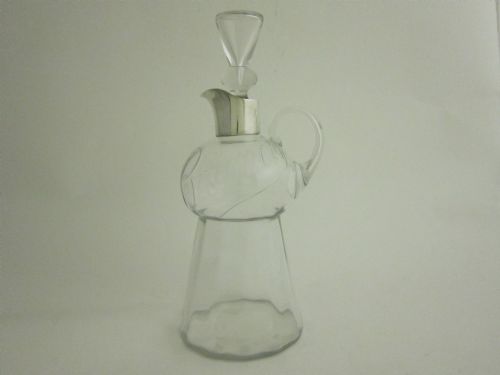
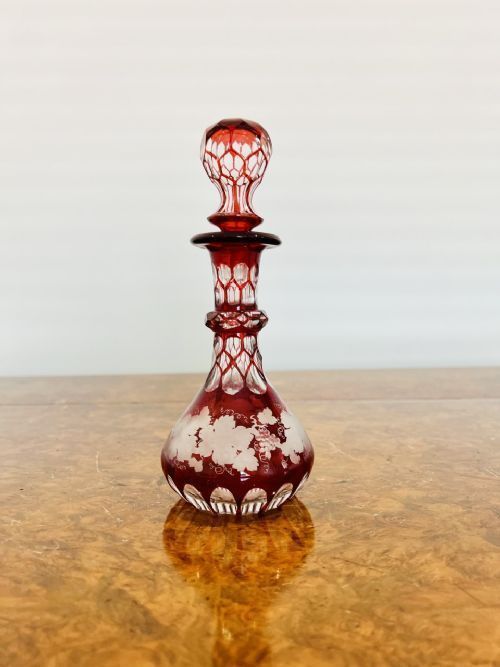
The selections on this page are most commonly Victorian or Edwardian productions, frequently augmented with silver-plated or sterling silver mounts, collars, and stoppers. Alongside standard clear vessels, you will find coloured examples in ruby, green, amber, and cranberry glass.
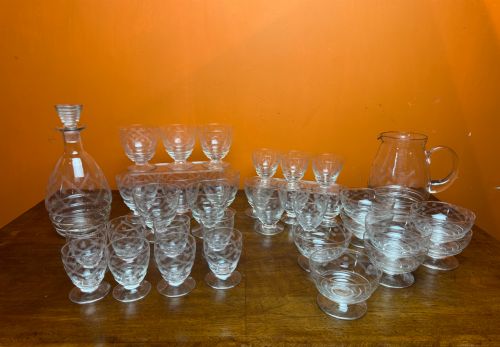
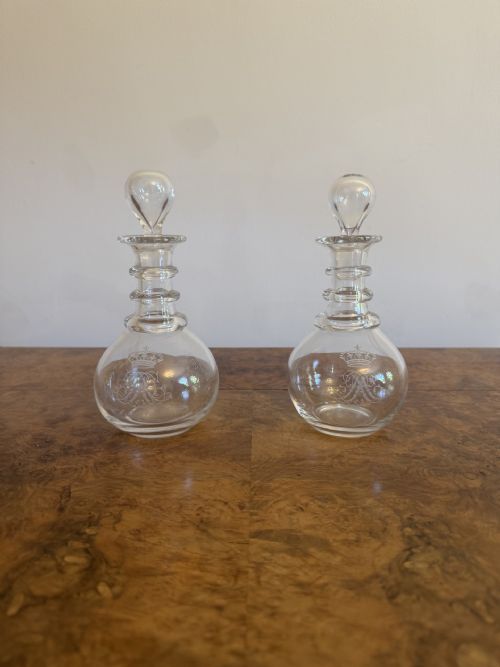
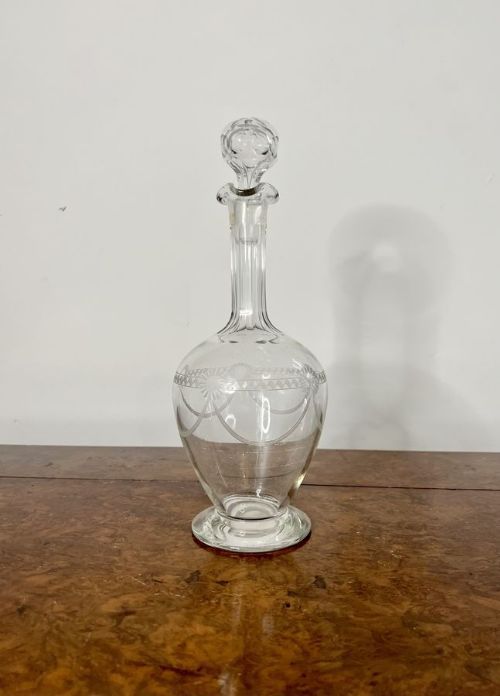
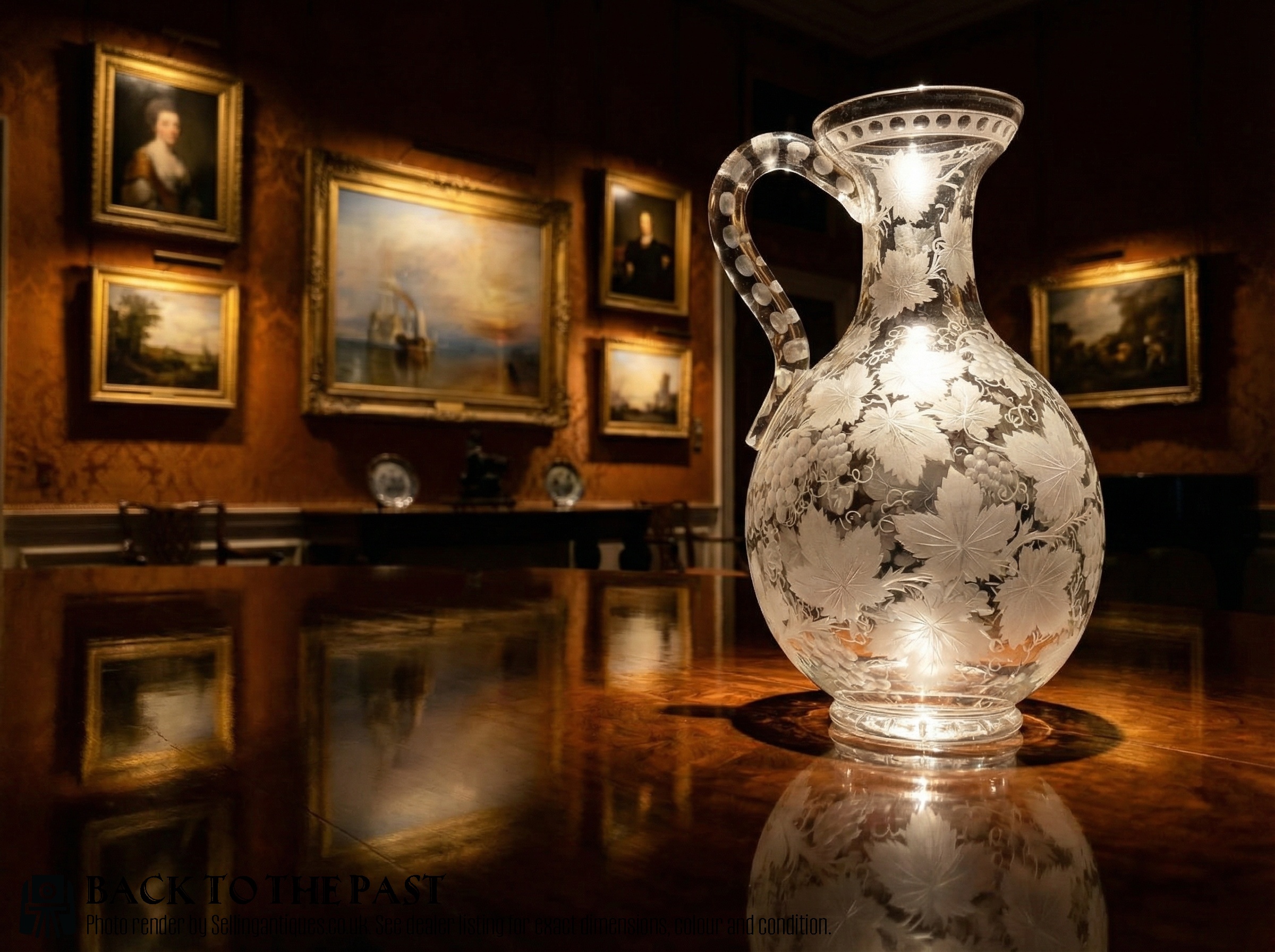
Forms range from simple hourglass silhouettes to heavy cut glass and overlay crystal bodies decorated with floral sprays, grape vines, or thistles. Many survive as individual items, while others appear in pairs or complete sets accompanied by matching drinking glasses.
Glassblowing and Surface Decoration
The foundational vessels were mouth-blown from lead crystal or clear and coloured glass, often shaped into heavy moulds before receiving hand-finished details. Coloured variants frequently utilise a cased technique, where a thin layer of coloured glass covers a clear core, allowing the decorator to cut through the outer layer.
Surface ornamentation relies on wheel-engraving or acid-etching to produce frosted motifs such as leaves, geometric patterns, and landscapes. Silversmiths and metalworkers then added cast mounts, hinged lids, bacchus masks, and figural finials secured to the glass necks.
Etched Glass Decanter Retail Price Guide 2026
Typical asking prices for etched glass decanter among the pieces listed under this phrase on Sellingantiques today, from the lower quarter to the upper quarter. They describe what is for sale here now, not the wider market.
Listings feature nineteenth-century decanters and ewers in ruby, green, and amber glass alongside clear lead crystal.
Subtlety of Engraving and Weight of Metal
The distinction between standard vessels and finer examples rests on the depth and precision of the glass cutting and etching. Crisp, deeply incised botanical motifs demonstrate greater artisan skill than shallow surface acid work.
The quality of the accompanying metalwork also defines the tier of the piece, with heavy cast silver collars and hallmarked mounts indicating superior manufacturing origins compared to standard plated alternatives.
Asprey and Co. Ltd·Elkington·James Collins
The Etched Glass Decanter Glossary
- Claret Jug
- A specialised pouring vessel designed specifically for serving red wine, typically featuring a handle and a hinged metal lid. These items often combine glass bodies with silver-plated mounts.
- Overlay Glass
- A technique involving two or more distinct layers of glass fused together during blowing. The outer layer is partially cut away to reveal the contrasting colour beneath.
- Finial
- The decorative knob or sculptural figural top attached to the stopper of a decanter. They frequently depict fruit, foliage, or masks.
- Cased Glass
- Glass made in multiple layers of different colours, allowing carvers to create striking contrast through deep surface cutting. It is also known as flash glass.
Etched Glass Decanter: Frequently Asked Questions
How do I date an etched glass decanter?
Dating relies primarily on the silhouette of the vessel, the style of the etching, and any accompanying metal hallmarks. Victorian examples often feature heavy cut crystal bodies and naturalistic floral motifs, whereas Edwardian and Art Deco pieces display more streamlined or geometric tendencies.
Silver collars frequently bear assay office marks and date letters which provide a precise year of manufacture for the metal mount. When mounts are absent, the weight of the glass, the pontil mark on the base, and the style of the stopper offer reliable chronological indicators.
Can I use these decanters for serving wine?
Most antique glass decanters remain entirely functional and suit the aeration and serving of modern wines. Period vessels designed for claret or port perform this task admirably.
Care must be taken with pieces featuring delicate silver-plated mounts or internal residue from historic use. Gentle hand washing without harsh detergents preserves both the glass clarity and the historic metalwork.
Are stoppers usually original to the decanter?
Finding a decanter with its original matching stopper is common but not guaranteed, as stoppers suffered frequent breakage over centuries of domestic use. Original stoppers typically share the same glass tint, wear patterns, and grinding marks on the peg as the interior neck of the vessel.
Slight variations in fit or cut pattern suggest a replacement gathered at a later date. Collectors nonetheless accept well-matched period stoppers when original components are missing.
What is cranberry glass?
Cranberry glass is a transparent red-pink decorative ware produced by adding gold chloride to the molten glass batch. It enjoyed immense popularity during the Victorian era for tableware and decorative decanters.
The rich hue ranges from a pale pink to a deep crimson depending on the gold concentration and manufacturing technique. These pieces are frequently found paired with delicate wheel-etched floral ornamentation.