



19th Century Glass Carafe
A 19th century glass carafe brings heavy lead crystal, vibrant coloured glass and silver mounts to the table for serving wine and spirits.
19th Century Glass Carafe
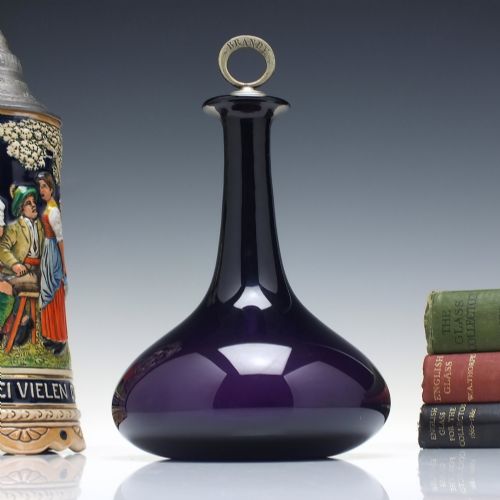
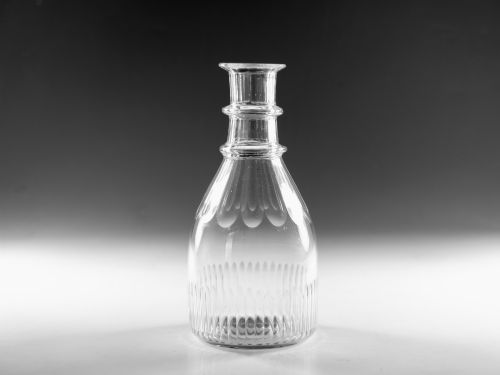
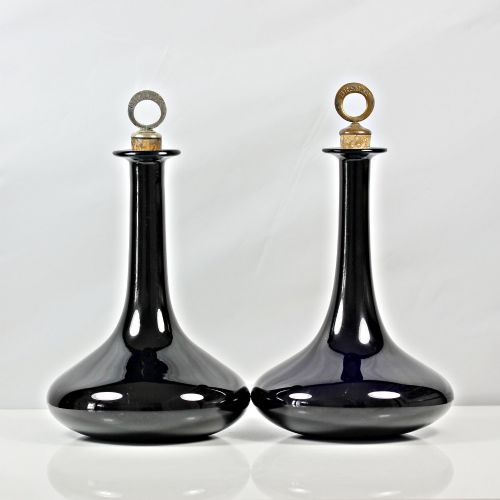
A 19th century glass carafe appears under various functional names in the evidence, including decanters, claret jugs, water pitchers and serving bottles. These vessels range from compact amethyst mell decanters and pale blue Nailsea flasks to tall, heavily cut Victorian table pieces and Bohemian overlay jugs.
Most examples originate from English, Scottish, Irish, French and Bohemian makers, spanning periods from the Georgian and Regency eras through the height of the Victorian age. Collectors encounter these vessels shaped as shaft and globe forms, flat-bottomed ship decanters designed for stability at sea, and novelty animal forms.
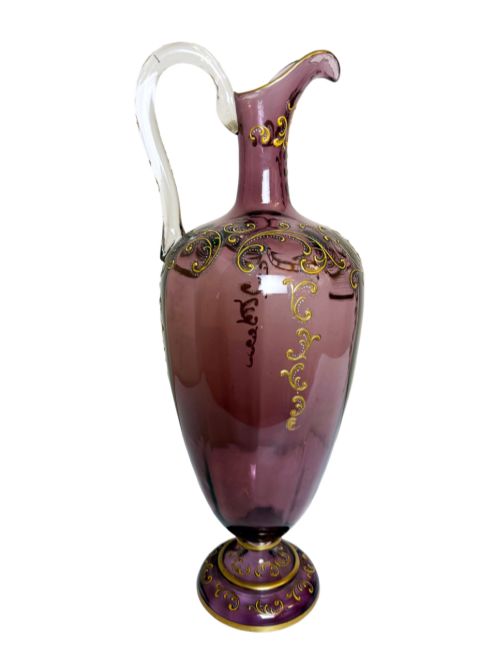
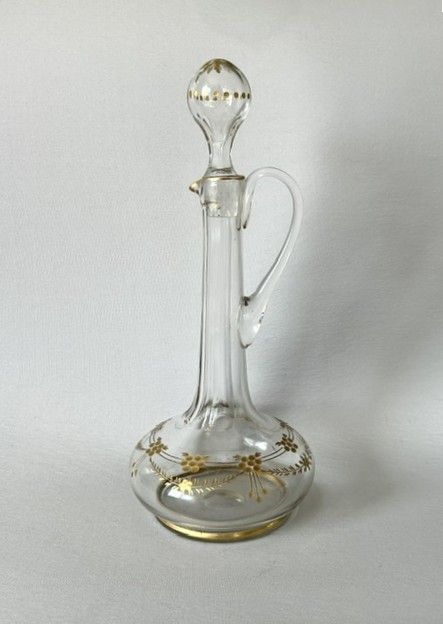
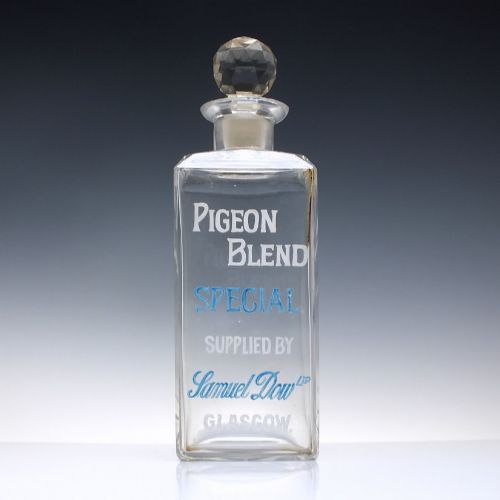
Makers often personalised these vessels with enamel lettering for Scottish whisky blends, hand-painted gilt foliage, or engraved crests like the Prince of Wales feathers. Many survive as pairs or matched sets accompanied by drinking glasses.

Materials and production methods
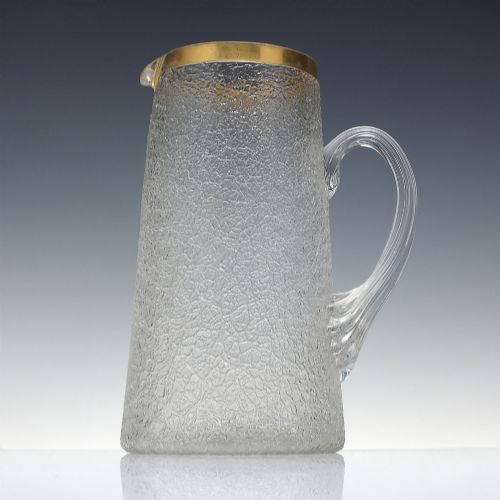
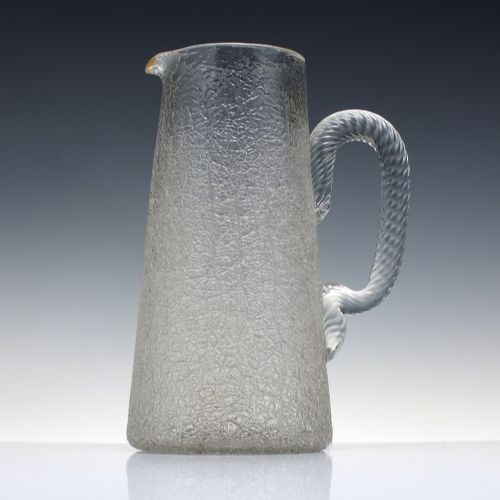
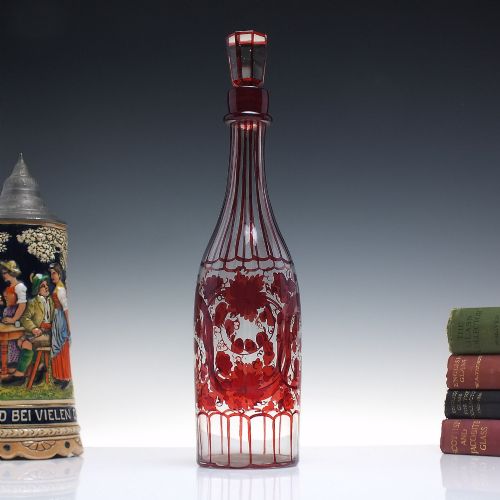
Makers utilised heavy lead crystal and clear glass, alongside distinctive coloured varieties such as ruby, green, cranberry, Bristol blue and amethyst glass. Overshot glass techniques created a textured, icy surface layer, while overlay methods fused layers of contrasting coloured glass together before cutting.
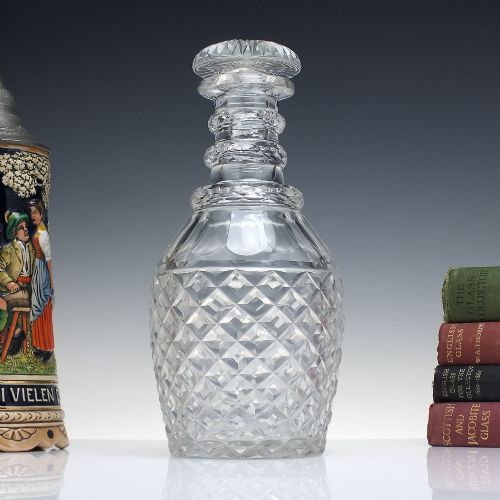
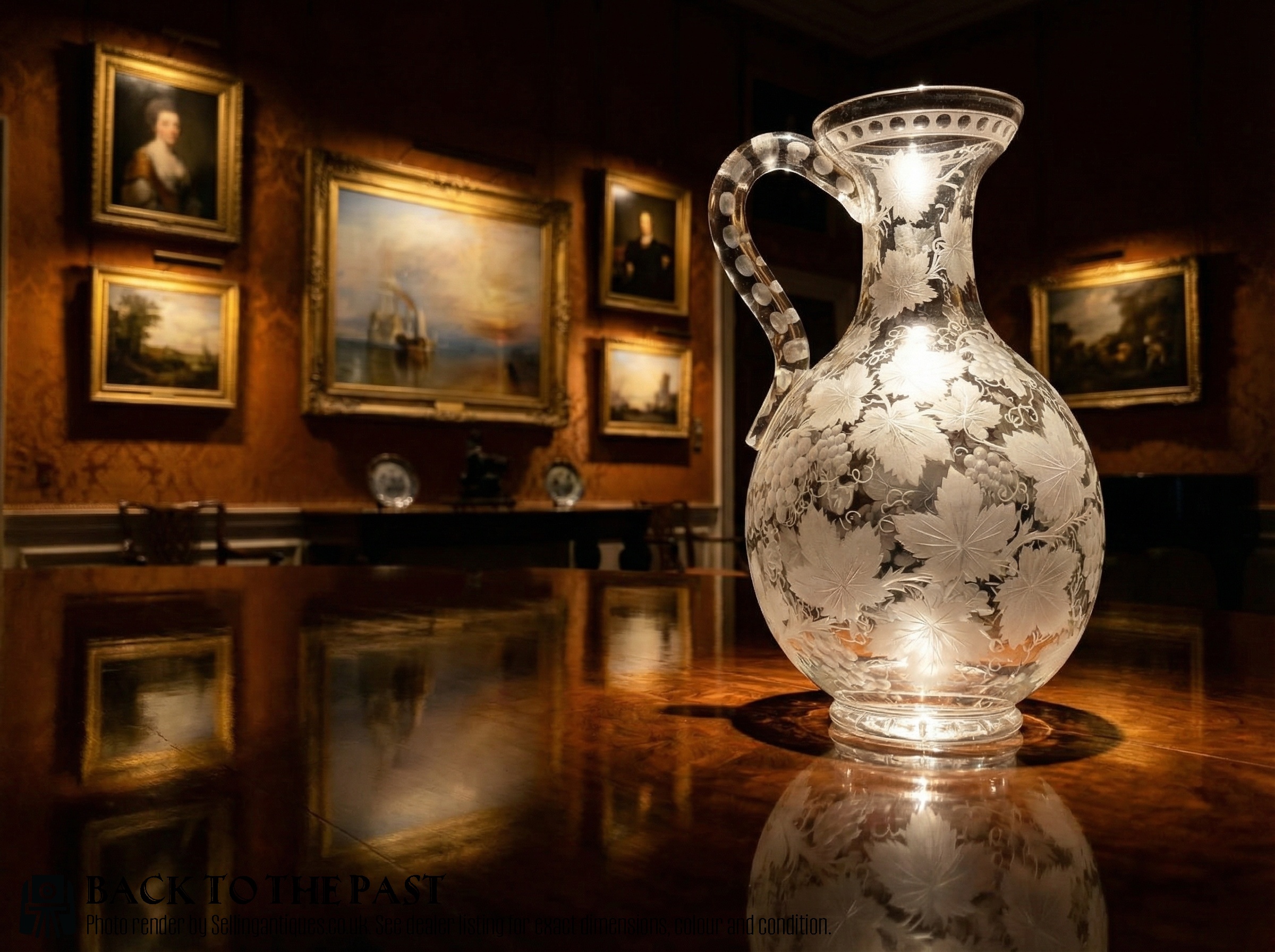
Hot glass was shaped using blowing techniques, including optical blowing and pillar moulding, then left smooth or deeply faceted with wheel-cut pillar, panel and geometric patterns. Artisans added surface decoration through hand-painted enamel, gilt appliques, etching and wheel engraving depicting fruiting vines.
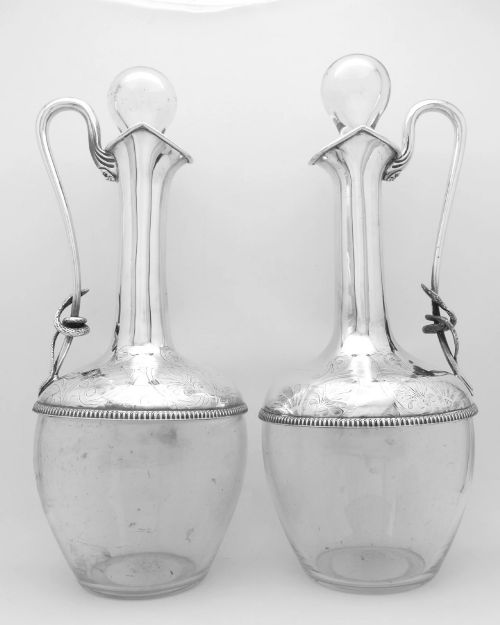
Many vessels incorporated functional and decorative metalwork, including solid silver necks and mounts, silver-plated handles, and elaborate serpent mounts associated with firms such as Elkington.
The archive includes works by prominent makers such as Baccarat, Richardson, and Stevens and Williams alongside Bohemian and French pieces.
Assessing craftsmanship and execution
The weight and purity of the lead crystal dictate the foundational quality of a piece, with superior vessels offering sharp, crisp refraction in their cut facets and perfect clarity in the glass body. Heavy, deep wheel-cutting requires immense skill from the glasscutter to maintain uniform depth and symmetry across complex geometric or pillar patterns.
Surface ornamentation reveals the tier of the maker, distinguishing standard production items from exhibition pieces with finely hand-painted enamels, dense gilt appliques, or detailed heraldic and royal engravings. The integration of mounts also defines standard, where heavy cast silver or plated hardware fits flush to the glass neck without excess adhesive.
James Powell·Stevens and Williams·Richardson·Baccarat·Elkington
The 19th Century Glass Carafe Glossary
- Mell decanter
- A mallet-shaped decanter with a broad base and tapered neck, popular during the Georgian and early Victorian periods for holding wine or spirits securely.
- Nailsea glass
- Glassware characterised by opaque white loopings or splashes embedded within a coloured or clear glass ground, originating from the Nailsea glassworks near Bristol.
- Overshot glass
- A technique where fine threads of hot glass are trailed over the surface of a blown vessel to create a textured, frosted exterior.
- Ship's decanter
- A low, wide-based decanter with a heavy flat bottom and flared sides, specifically designed to prevent tipping aboard a rolling ship.
- Overlay glass
- A method where a vessel of one colour is cased in a second layer of contrasting glass, allowing craftsmen to cut through the outer layer to expose the base colour underneath.
- Claret jug
- A pouring vessel designed specifically for serving red wine, typically featuring a handle and a hinged metal mount at the rim.
19th Century Glass Carafe: Frequently Asked Questions
What is a 19th century glass carafe used for?
These vessels were primarily utilised for serving wine, claret, water and whisky at the dining table or sideboard. They allowed hosts to decant spirits from storage bottles into presentable glass containers.
Many examples feature specific labelling or crests identifying particular Scottish whisky blends or royal houses, indicating they held proprietary spirits for special dining occasions.
How do I care for antique glass?
Antique glass requires gentle hand washing in warm water with mild detergent, avoiding harsh scrubbing or sudden temperature changes that can stress old material. Metal mounts should be kept dry to preserve silver plating or solid silver components.
Display these vessels away from direct sunlight to prevent fading in coloured glass varieties such as cranberry, amethyst and ruby overlay.
How can I distinguish Regency from Victorian pieces?
Regency decanters, dating from the early 19th century, typically feature heavy crystal with wide pillar cutting, deep saucer rings around the neck, and restrained, classic proportions. Victorian examples from later decades often embrace richer colours like green, blue and cranberry, alongside ornate enamel painting, gilt appliques, and elaborate silver-plated serpent handles.
Examining the depth of the cut facets and the presence of stylistic revivals such as French Rococo helps separate the earlier Regency aesthetic from later Victorian production.
Are these items suitable for everyday use?
While structurally sound, antique carafes benefit from careful handling due to their age and delicate applied elements like gilt rims or enamel painting. Collectors generally reserve them for special occasions or display them as part of a dining room interior.
Hand-washing is essential, as modern dishwashers can permanently damage the surface polish and delicate metal mounts.