



Clear Glass Wine Jug
A clear glass wine jug brings practical elegance to the table, combining transparency with the weight of historic manufacture.
Clear Glass Wine Jug
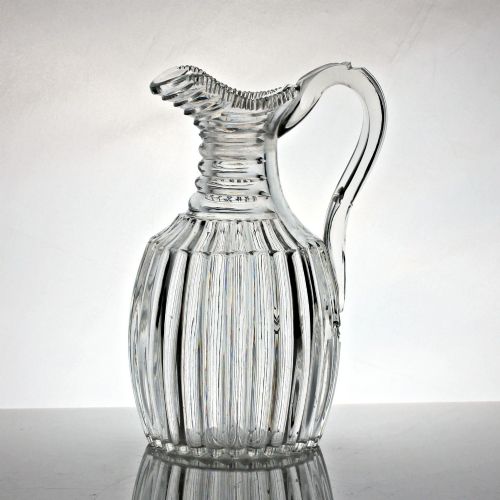
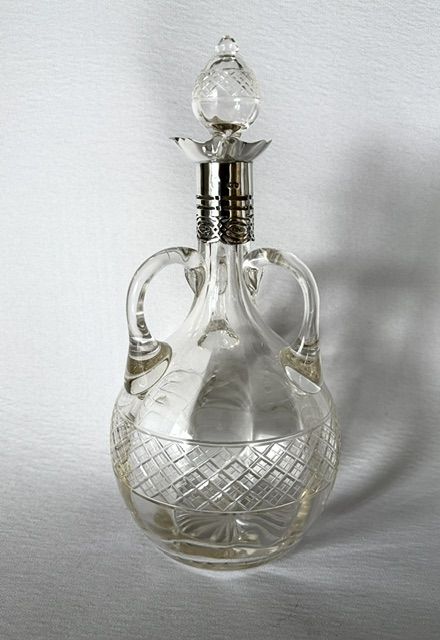
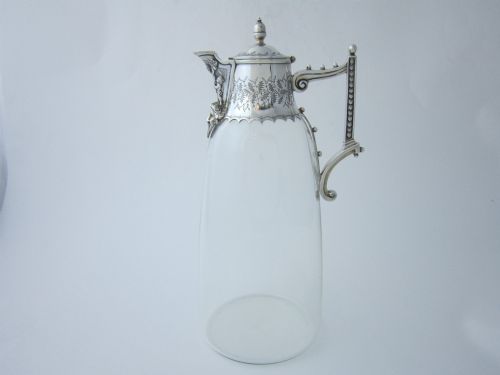
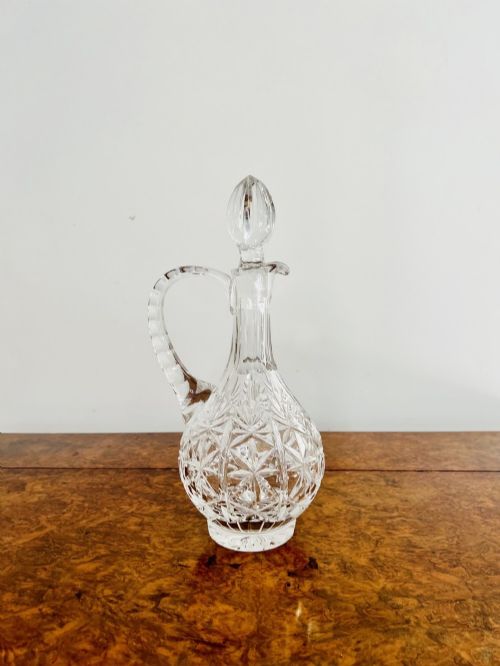
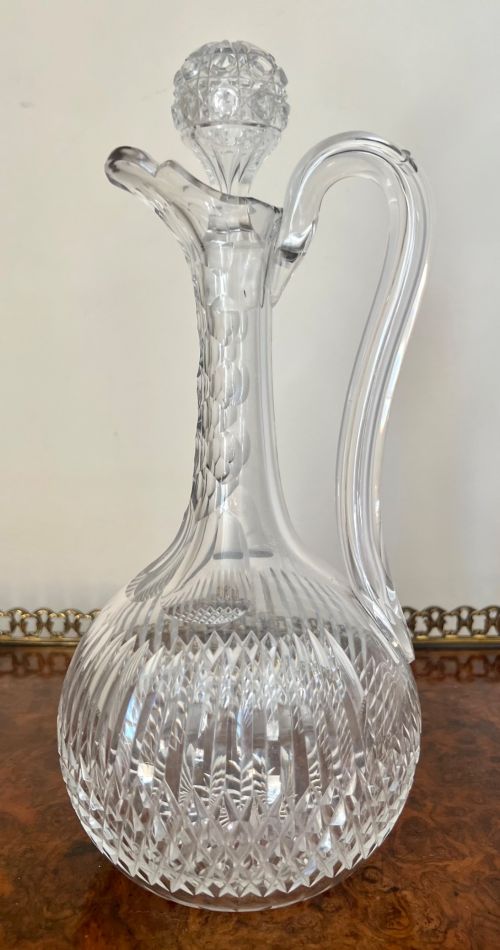
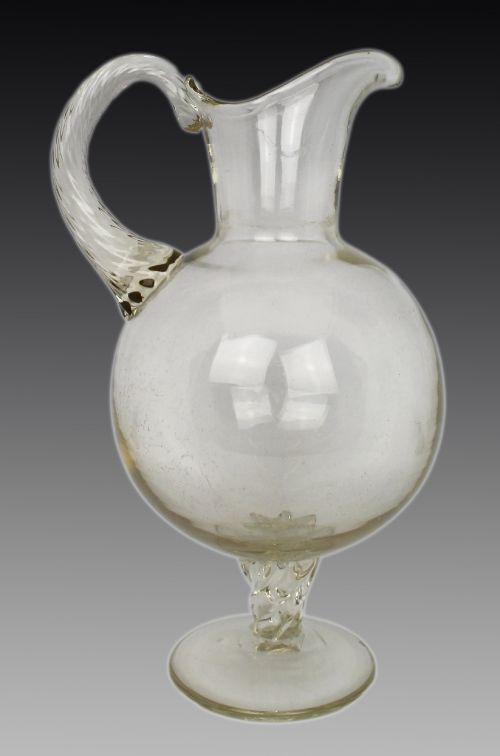
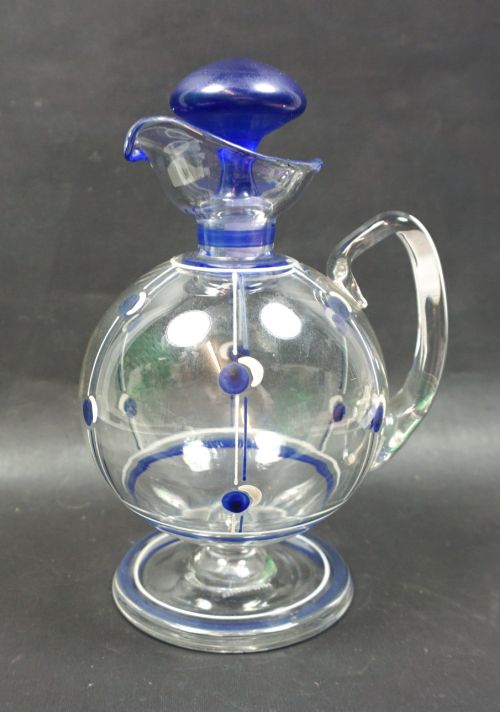
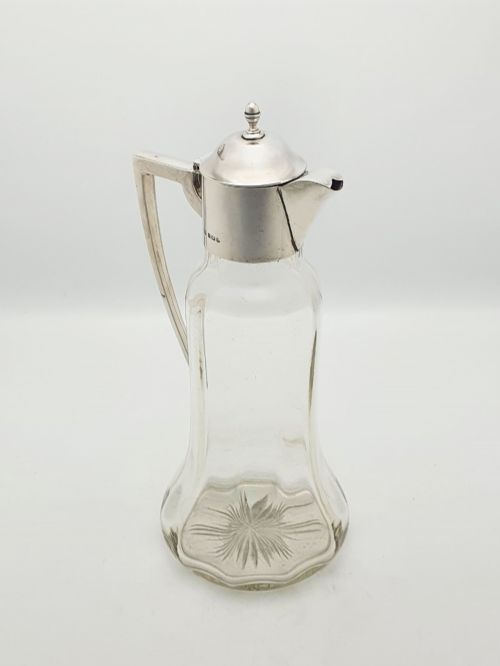
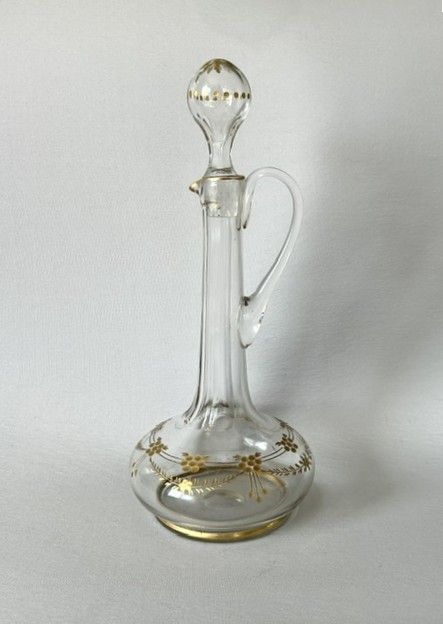
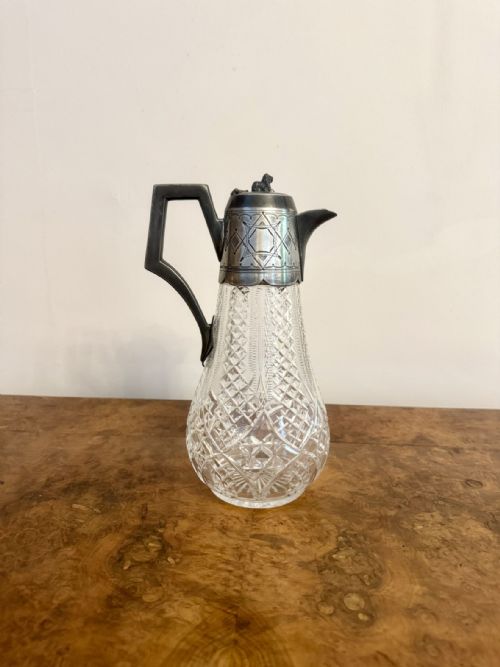
A clear glass wine jug serves as a vessel for decanting and serving wine, appearing across this page in forms ranging from tall ewers to heavy claret jugs. These pieces date principally from the Victorian and Edwardian eras, alongside select examples from the nineteenth century and the Art Deco period.
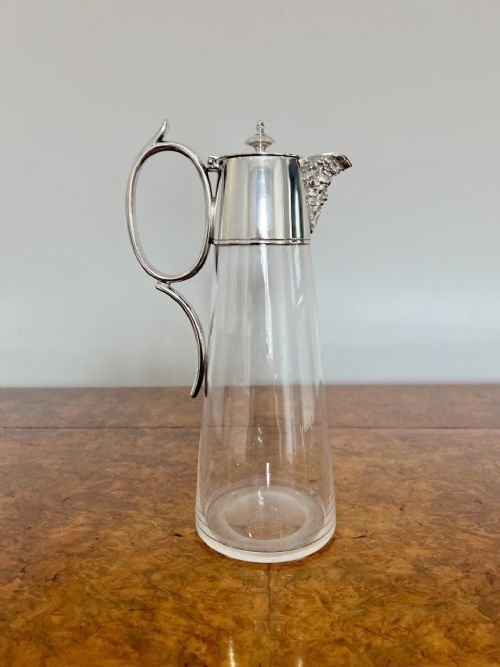
Buyers encounter distinct regional and stylistic variations, including Bohemian cut glass, Italian hand-blown vessels, and English crystal mounted in silver or silver plate. The selection encompasses everyday dining pitchers alongside elaborately decorated presentation pieces bearing etched or overlaid ornamentation.
How They Were Made
Makers utilised free-blowing and mould-blowing techniques to shape the clear glass bodies, frequently employing lead crystal for enhanced brilliance and weight. Skilled artisans then applied wheel-cutting, pillar and prism cutting, or chemical etching to decorate the outer surfaces.
Metal mounts, hinged lids, and handles in sterling silver or silver plate were produced separately and affixed to the glass necks. Workshops combined these materials using secure collars and specialised adhesives to ensure stability during pouring.
Several pieces include fitted hinged lids designed to keep dining room insects away from the claret.
What Varies in Quality
The clarity and weight of the glass set the foundation for quality, with heavy lead crystal and deep, crisp wheel-cutting marking superior examples over thin, plain glass. The execution of surface decoration, from delicate intaglio engraving to precise overlay work, distinguishes master production from standard commercial output.
The quality of the metal mounts and the craftsmanship of the silver or silver-plated handles and hinged lids determine the overall caliber of the jug. Well-balanced proportions, secure joints between glass and metal, and maker-marked silver components indicate higher status pieces.
Elkington·Hukin & Heath·Webb Corbett
The Clear Glass Wine Jug Glossary
- Claret Jug
- A specialised vessel designed specifically for serving red wine, typically fitted with a pourer and a hinged metal lid. These items often combine glass bodies with silver plate or sterling silver mounts.
- Ewer
- A large jug with a wide spout and a looped handle, traditionally used for holding and pouring liquids. In this collection, ewers lean towards decorative forms with substantial handles.
- Lead Crystal
- Glass manufactured with the addition of lead oxide, which increases the material's weight, refractive index, and clarity. This composition allows for deeper and sharper cuts during decoration.
- Silver Plate
- A base metal, such as copper or Britannia metal, coated with a thin layer of pure silver. This technique provided the appearance of solid silver at a lower cost for nineteenth-century dining wares.
- Intaglio
- A design carved into the surface of the glass rather than standing out in relief. This technique creates a sunken image that catches the light from within the material.
Clear Glass Wine Jug: Frequently Asked Questions
What is a claret jug?
A claret jug is a vessel specifically formed for serving red wine at the dining table. These containers combine a glass body with a metal handle and a hinged lid.
Most historic examples feature silver or silver-plated mounts paired with cut or etched glass. They originated to facilitate the proper aeration and presentation of mature wines.
How do I date a glass wine jug?
Dating relies on observing the combination of glass-forming techniques, cutting styles, and metal mount characteristics. Victorian and Edwardian pieces often display distinct registration marks or hallmarks on the silver components.
Stylistic cues such as Art Nouveau floral motifs or Art Deco geometric lines further narrow the period of manufacture. Examining the base for pontil marks and wear patterns also helps establish age.
Can I use these jugs for serving wine today?
These historic vessels function well for decanting and serving modern wines. Their clear glass construction allows the colour and clarity of the liquid to be fully appreciated.
Careful hand washing is required to preserve both the historic glass and any silver-plated mounts. Sudden temperature changes should be avoided to protect the material integrity.
What is the difference between crystal and glass?
Crystal contains lead oxide, which adds weight, brilliance, and acoustic resonance compared to standard glass. This heavier material permits deeper and sharper cutting without fracturing.
Standard glass lacks this metallic oxide content and generally feels lighter in the hand. Both materials appear across nineteenth and twentieth-century dining wares.