
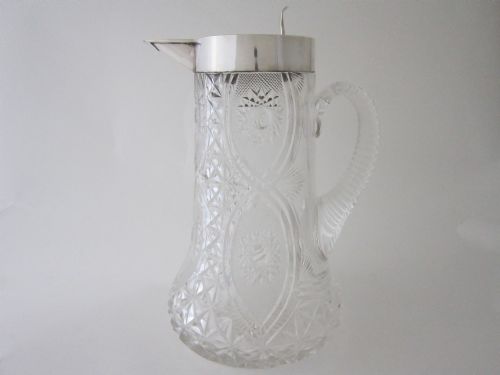
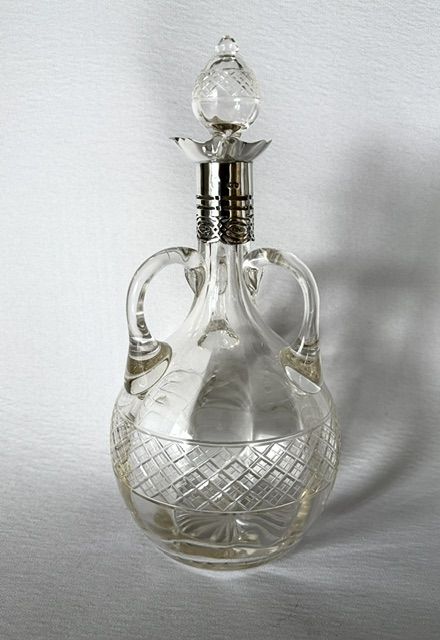
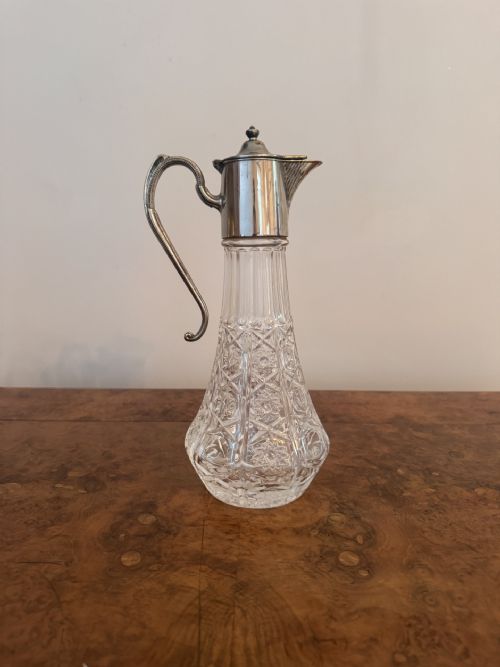
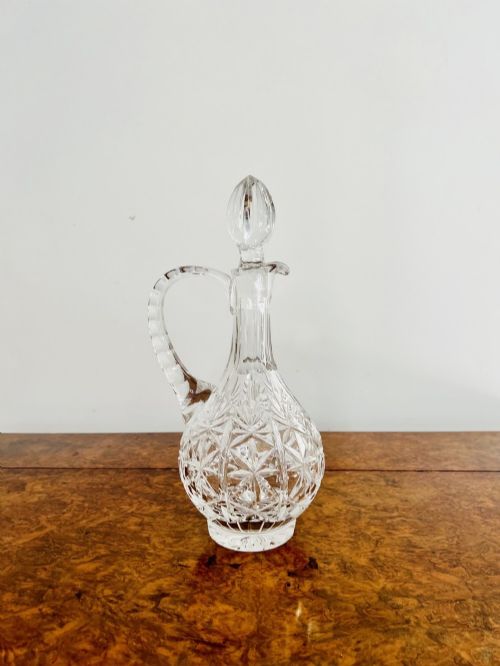


Edwardian Claret Jug
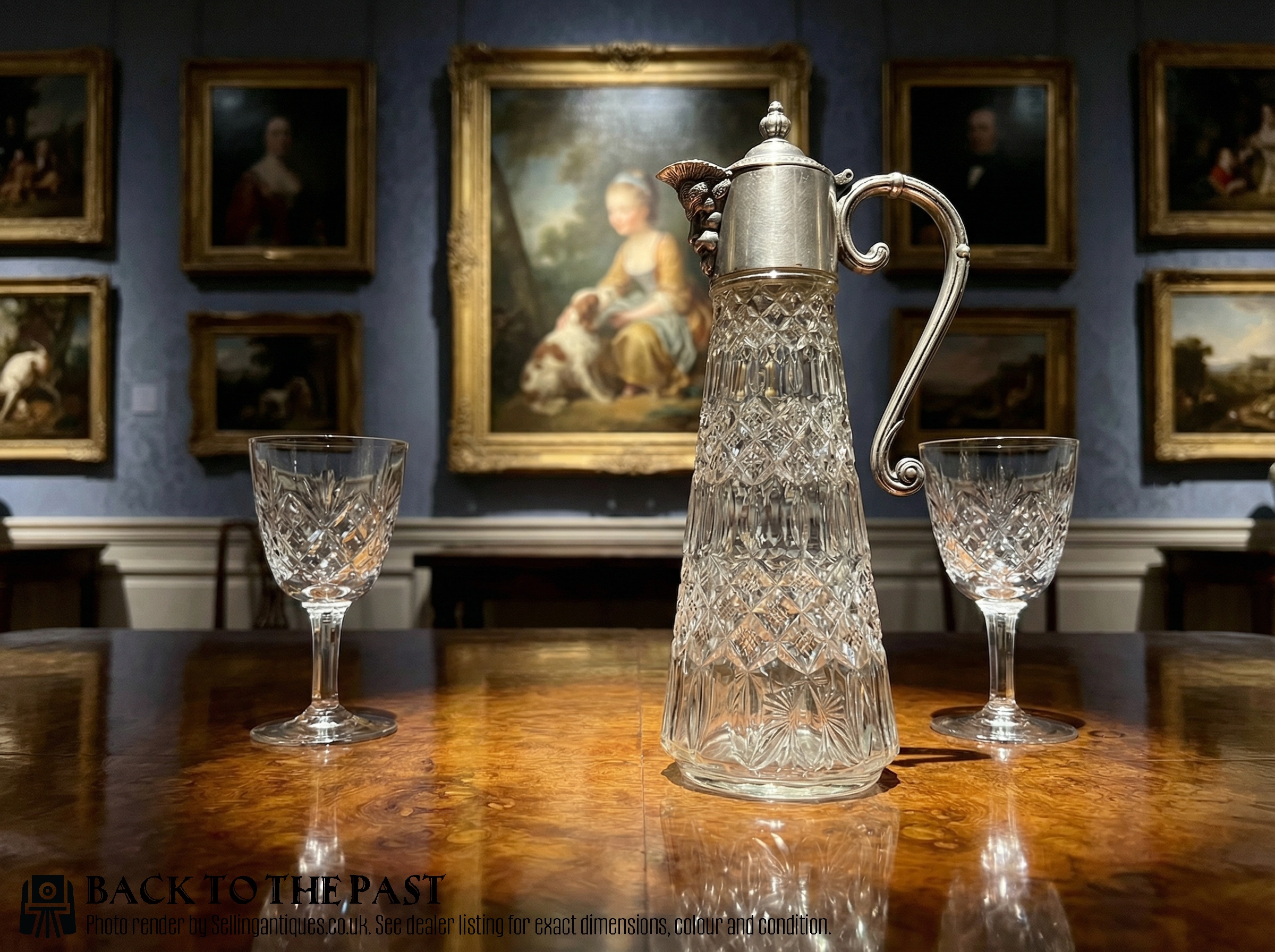
An Edwardian claret jug brings table service alive through crisp cut glass and gleaming silver mounts designed for pouring wine with theatre.
Edwardian Claret Jug
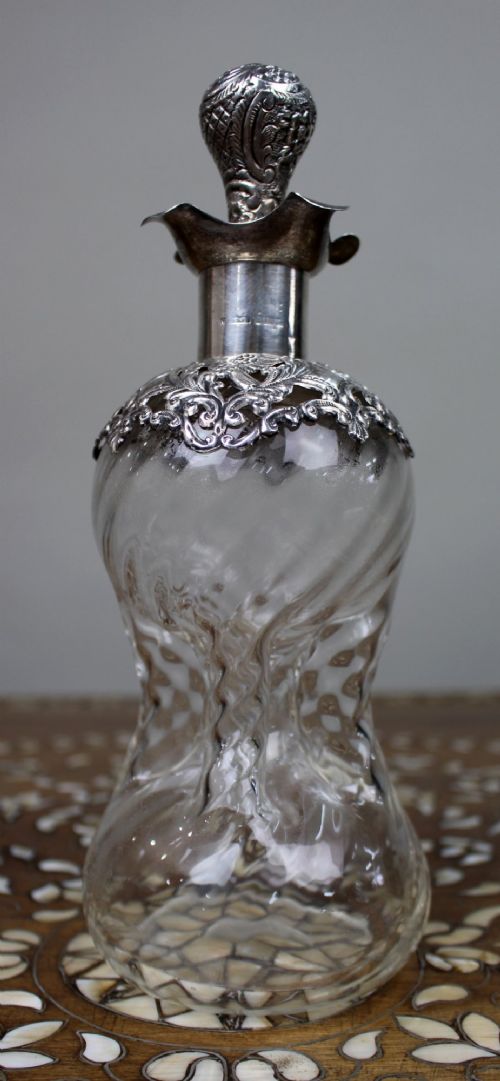
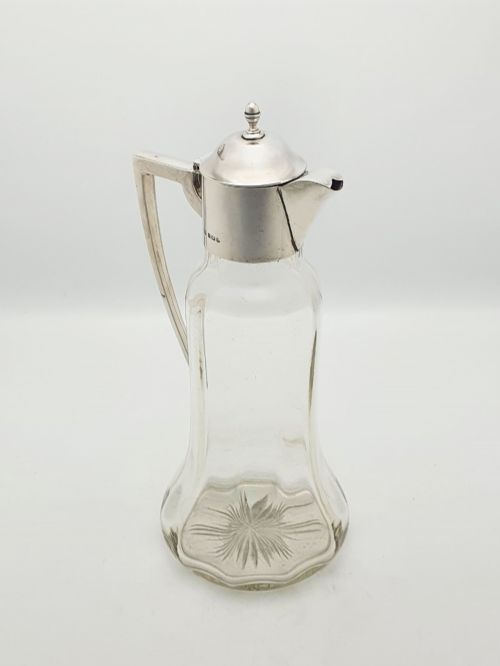
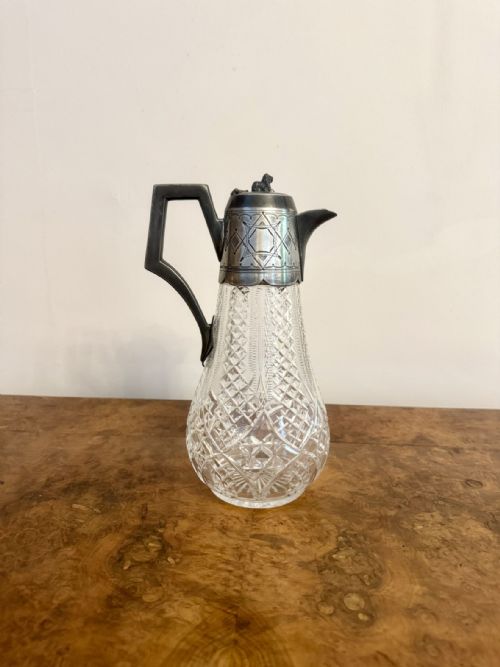
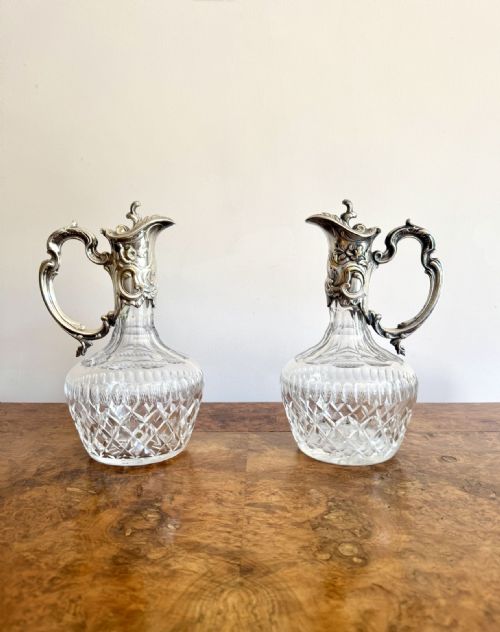
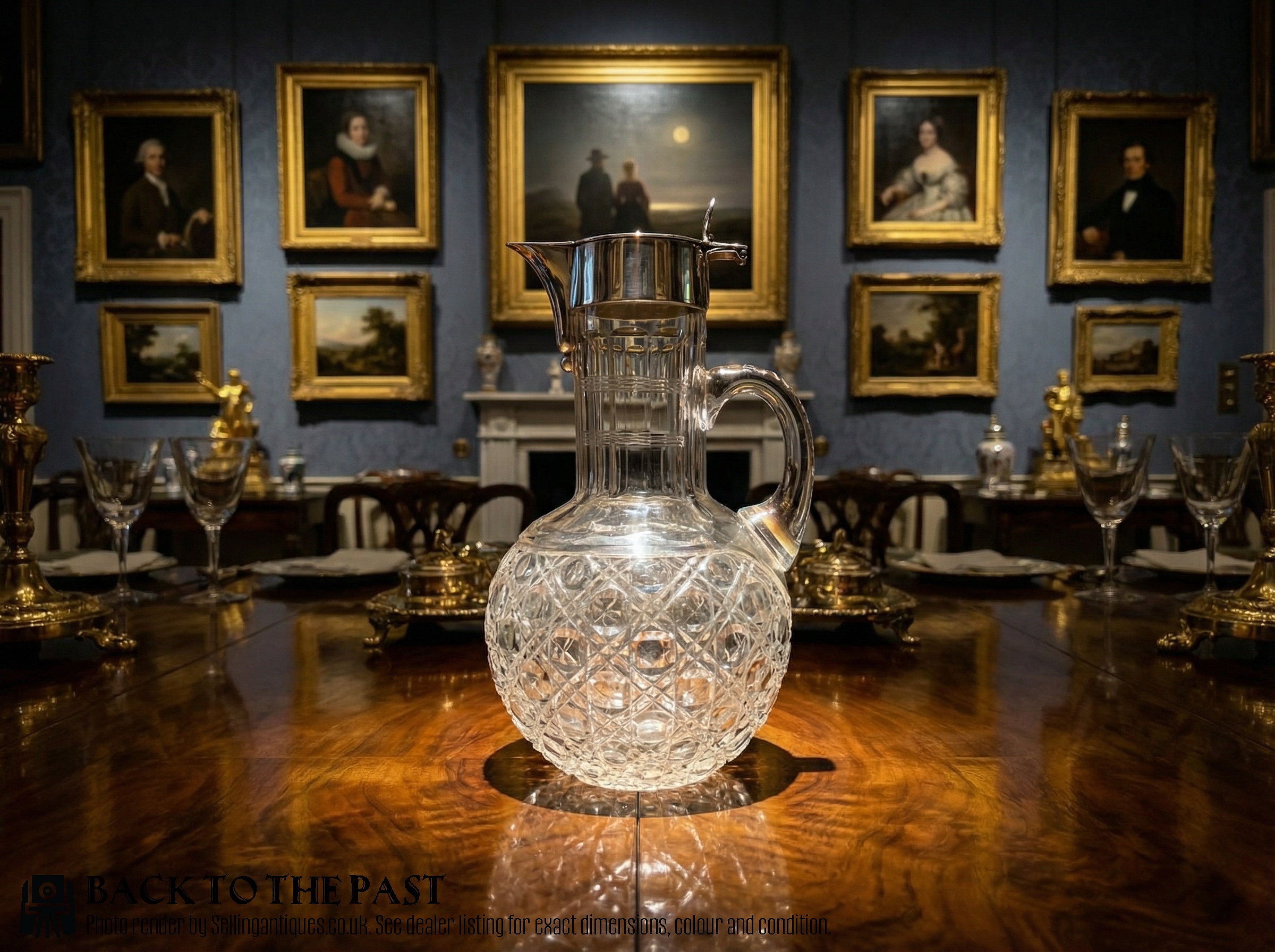
An edwardian claret jug is a table vessel created to hold and pour wine during formal dining. Most examples on this page date from the Edwardian period and Victorian eras, combining glass bodies with metal fittings.
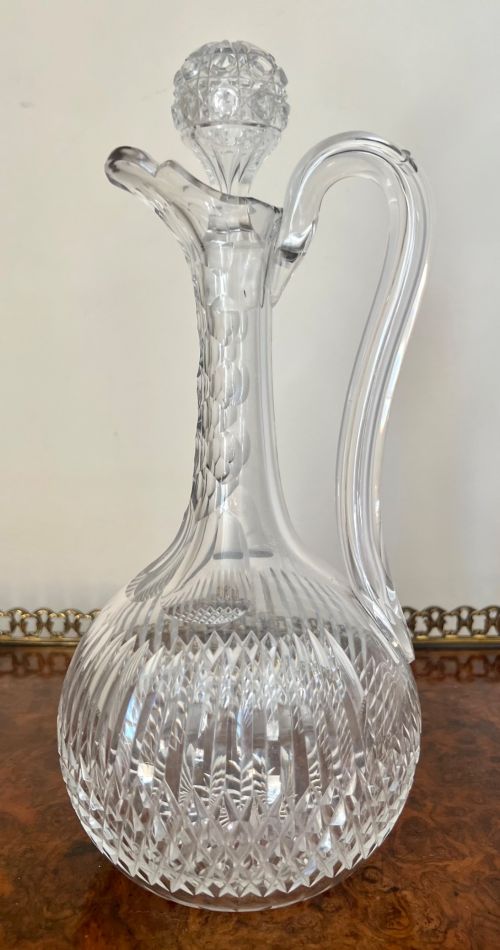
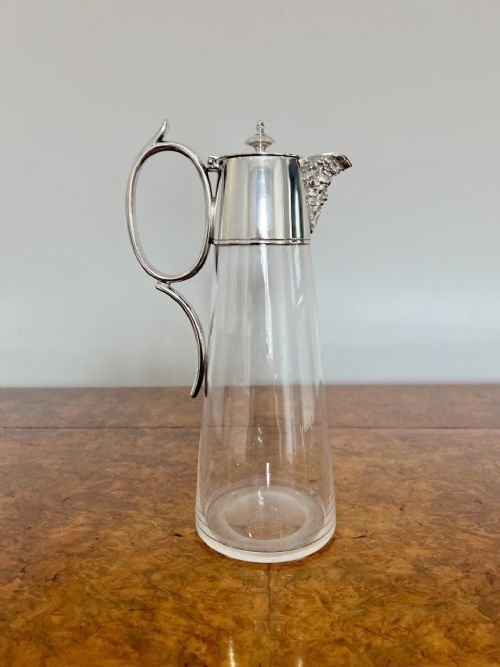
The dominant form pairs a bulbous or cylindrical glass body with a hinged silver or silver plated mount and handle. Buyers also encounter pieces executed in cranberry glass, amber glass, and Tudric pewter.
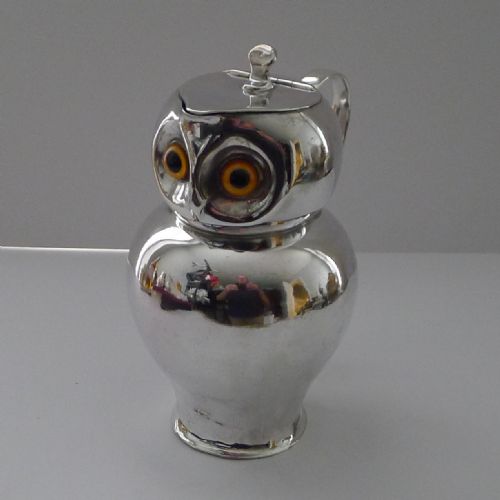
Designs range from straightforward cut glass cylinders to sculptural novelties shaped like owls or incorporating Art Nouveau pewter mounts. These vessels connect modern dining rooms to nineteenth and early twentieth century hospitality traditions.
What Varies in Quality
The weight and purity of the glass body dictate the foundational standard of the vessel, with thick hand cut crystal sitting at the upper end. Inferior pieces rely on thinner moulded glass with shallower facet cutting.
Metal mounts reveal craftsmanship through the rigidity of the hinge and the crispness of any chased or engraved decoration. Solid sterling silver mounts command higher regard than standard silver plate over base metal.
The harmony between the metal collar and the glass neck determines the structural integrity of the piece. Master makers ensured a seamless union that tolerated daily tilting and washing.
Edwardian Claret Jug Retail Price Guide 2026
Typical asking prices for edwardian claret jug among the pieces listed under this phrase on Sellingantiques today, from the lower quarter to the upper quarter. They describe what is for sale here now, not the wider market.
Materials span sterling silver, silver plate, cranberry glass, crystal, and Tudric pewter.
Archibald Knox for Liberty and Co·Elkington and Co·Hukin and Heath·Mappin and Webb·William Davenport
The Edwardian Claret Jug Glossary
- Claret jug
- A specialised pouring vessel designed specifically for serving red wine at the dining table. They typically feature a hinged lid operated by a thumbpiece on the handle.
- Silver plate
- A manufacturing method where a thin layer of silver is fused to a base metal such as copper or Britannia metal. This technique offered the appearance of solid silver at a lower cost.
- Cranberry glass
- A rich red glass produced by adding gold chloride to the molten batch. It became particularly popular for decorative tableware during the Victorian and Edwardian periods.
- Ewer
- A large jug with a wide spout and a curved handle, historically used for water but frequently applied to wine service in nineteenth century design.
- Crystal
- A high quality glass containing lead oxide, which increases weight, brilliance, and the ease of deep cutting. This material remains distinct from standard soda lime glass.
Edwardian Claret Jug: Frequently Asked Questions
Can I still use these jugs for serving wine?
These vessels function effectively for decanting and pouring modern red wines at the dining table. Ensure the interior is thoroughly rinsed before use to remove any residual dust.
Avoid leaving acidic liquids inside silver plated or pewter vessels for extended periods. Hand washing immediately after use preserves both the metal and the glass.
How do I tell Victorian from Edwardian jugs?
Victorian examples often feature heavier, highly ornate ornamentation with dense wheel cutting and dark wood or heavy metal mounts. They reflect the opulent aesthetic of the nineteenth century.
Edwardian pieces tend toward lighter proportions, brighter cut glass patterns, and sleeker silver mounts inspired by neoclassical revivals or early Art Nouveau curves.
What is a novelty claret jug?
Novelty jugs take sculptural forms inspired by animals, birds, or architectural elements rather than traditional vessel shapes. Examples include silver plated owls with inset glass eyes designed to hold wine.
These whimsical pieces were popular conversation items during formal dinners and represent specialised workshop production from the early twentieth century.