




Engraved Crystal Decanter
These engraved crystal decanter pieces combine cut glass brilliance with crisp wheel engraving, bringing both heft and elegance to a traditional dining table.
What these pieces are
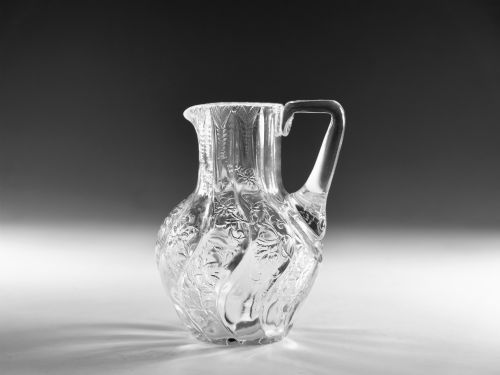
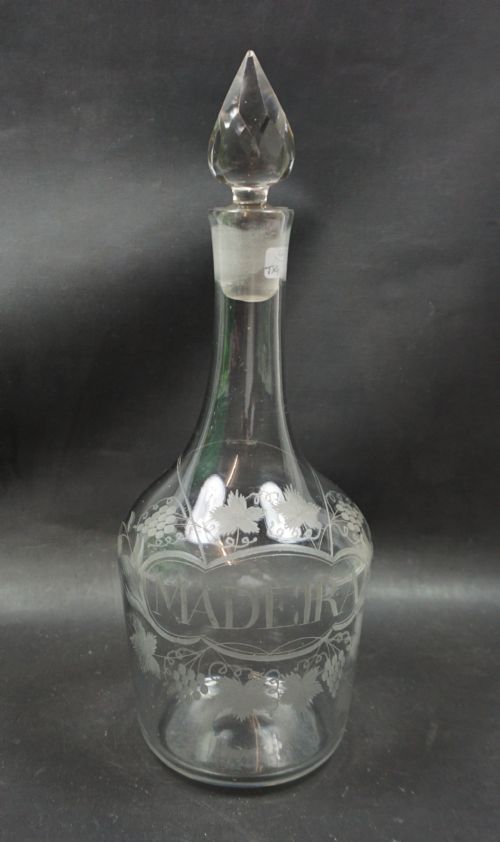
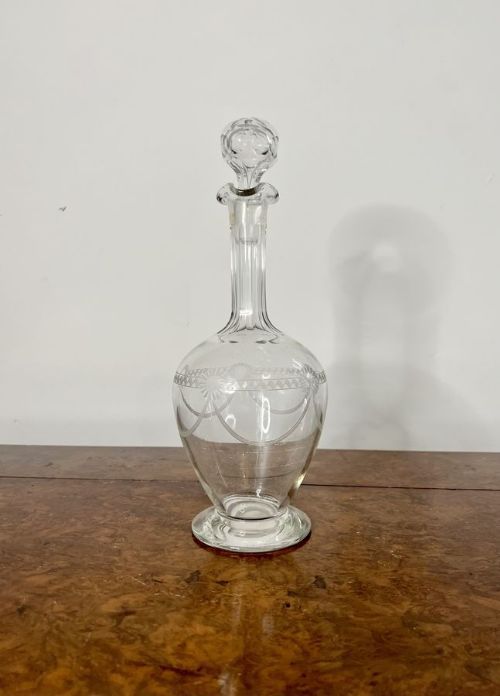
When you search for an engraved crystal decanter, you are looking at heavy vessels designed to hold wine and spirits, predominantly originating from the Victorian era. The selection spans the middle and late nineteenth century, including specific forms like shaft and globe decanters and claret jugs.
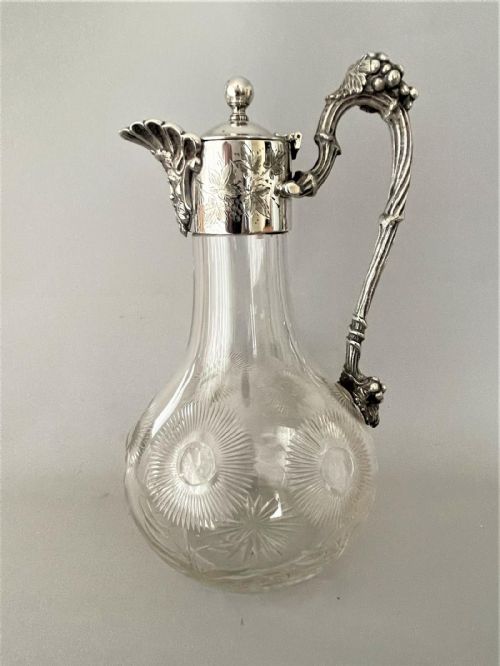
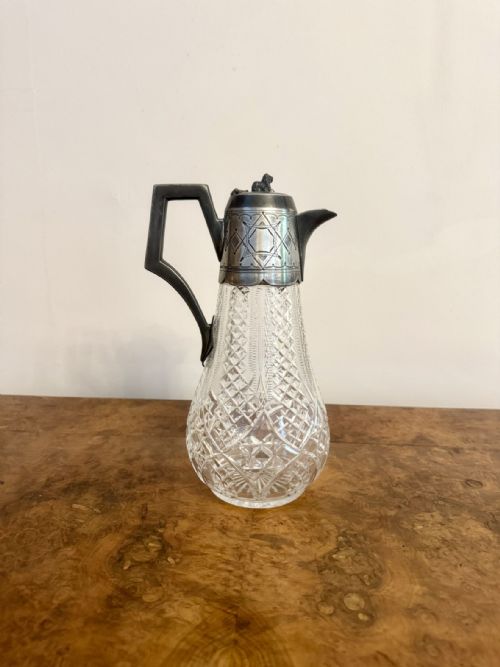
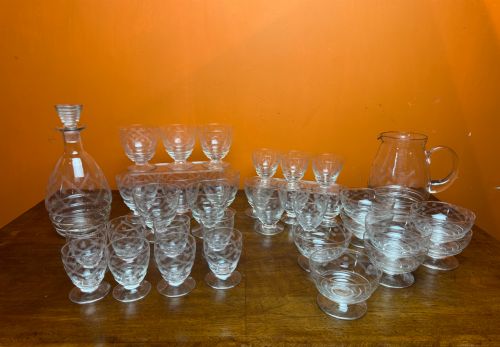
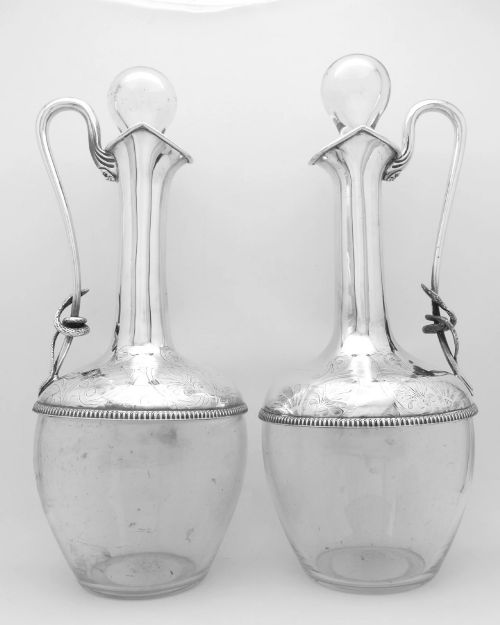
The pieces appearing on this page range from single presentation decanters to matched pairs. Alongside traditional decanters, you will regularly encounter related serving vessels such as champagne jugs, pint-sized jugs, and silver-mounted claret jugs.
How they were made
These items are fashioned from lead crystal, lead glass, and standard glass, often combining heavy moulding with detailed wheel engraving. Artisans cut geometric patterns into the body before applying fine surface engraving depicting motifs such as dolphins, stars, crests, and floral emblems.
Several examples incorporate secondary materials, featuring hallmarked silver mounts fitted around the necks and lips of the glass bodies. The manufacturing process relies on traditional blowing, heavy cutting, and meticulous hand polishing to achieve clarity.
Retail Price Guide 2026
Typical UK retail prices for engraved crystal decanter, calculated from the Sellingantiques database of over a million retail prices indexed since 2003. This retail price guide relies exclusively on Sellingantiques data; no external sources or auction records are used, so the figures do not describe the wider market.
Listings feature items spanning from 1850 through to 1900, covering both the early and late Victorian periods.
What varies in quality
Quality in these pieces is dictated by the depth and precision of the cutting alongside the clarity and weight of the crystal metal itself. Superior examples feature crisp, deep wheel engraving that catches the light sharply, whereas lesser items show shallow or blurred surface marks.
The presence of precious metal mounts also elevates a piece, particularly where the silver is substantial and securely fitted to the glass. Matched pairs and items bearing specific heraldic engravings or named factory attributions sit at the upper end of the range.
Richardsons Birmingham
The Engraved Crystal Decanter Glossary
- Lead crystal
- A heavy glass variety containing lead oxide, which increases brilliance, weight, and the ease of cutting intricate designs. It is the principal material found in these nineteenth-century vessels.
- Shaft and globe
- A specific silhouette featuring a spherical body topped by a long, narrow neck resembling a shaft. This form provides stability on the dining table.
- Claret jug
- A pouring vessel specifically designed for serving red wine, often fitted with a hinged silver mount and handle. They date commonly to the Victorian period.
- Wheel engraving
- A technique where a rotating small wheel abrades the glass surface to create detailed pictures, crests, and patterns. It requires immense skill from the lapidary.
Frequently Asked Questions
How do I clean an old decanter?
Fill the vessel with warm water and specialised cleaning beads, swirling gently to lift residue without scratching the antique interior.
Avoid using harsh chemical detergents or putting the heavy lead glass into a modern dishwasher, as thermal shock can crack the material.
What is a shaft and globe decanter?
This descriptor refers to the distinctive shape of the glass body, which pairs a rounded base with a long cylindrical neck.
The wide globe base offers a lower centre of gravity, making the vessel stable when passed around a dining table.
How do I date a Victorian decanter?
Examine the weight of the glass, the style of the cutting, and any accompanying hallmarks on silver mounts to narrow down the decade.
Pieces from this era frequently display deep hand-cutting and specific nineteenth-century decorative motifs like floral emblems of the union.