33,054  PAGES BROWSED TODAY PAGES TODAY 227 ANTIQUES UPLOADED TODAYNEW ARRIVALS
227 ITEMS ADDED TODAY
Sort Order
Items Per Page
Browse Categories
Sort order
Items per page
ID #SA1233540
FOR SALE
£3,250
Email
Save
Rare George III Gilded Cut Glass “Revsalt” Decanter, C1780 - Atelier of James Giles
Exhibit Antiques
for sale €3,803     $4,128
£3,250
Exhibit Antiques

Exhibit Antiques

Sellingantiques Verified Since Mar 2019
View Dealers Stock Page
  • About Us
    Specialists in 18th & 19th century antique glass
Id #SA1233540
PDF SHARE
SAVE

Rare George III Gilded Cut Glass “Revsalt” Decanter, C1780 - Atelier of James Giles

18th century
For Sale by Exhibit Antiques
Description

Description

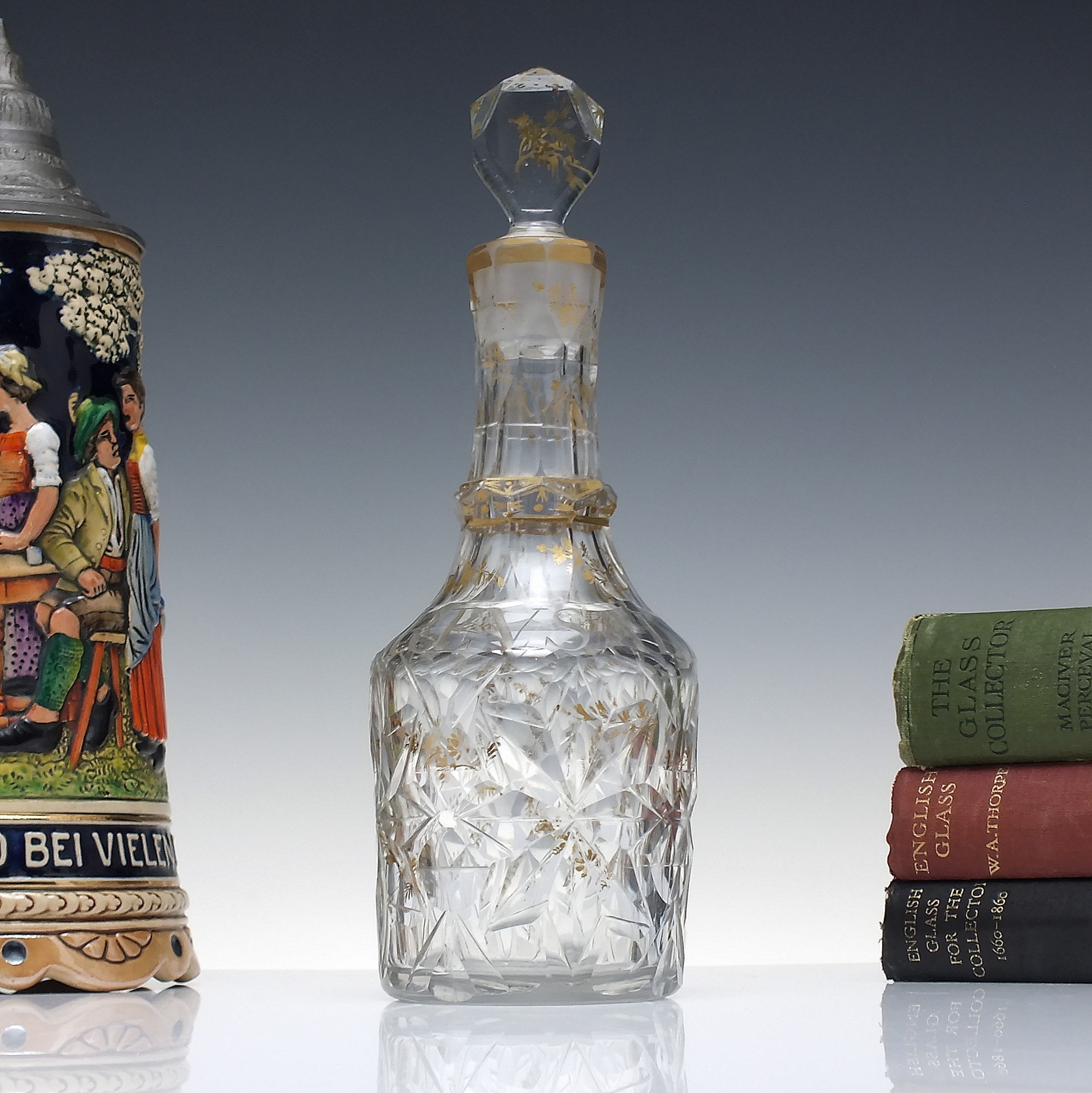
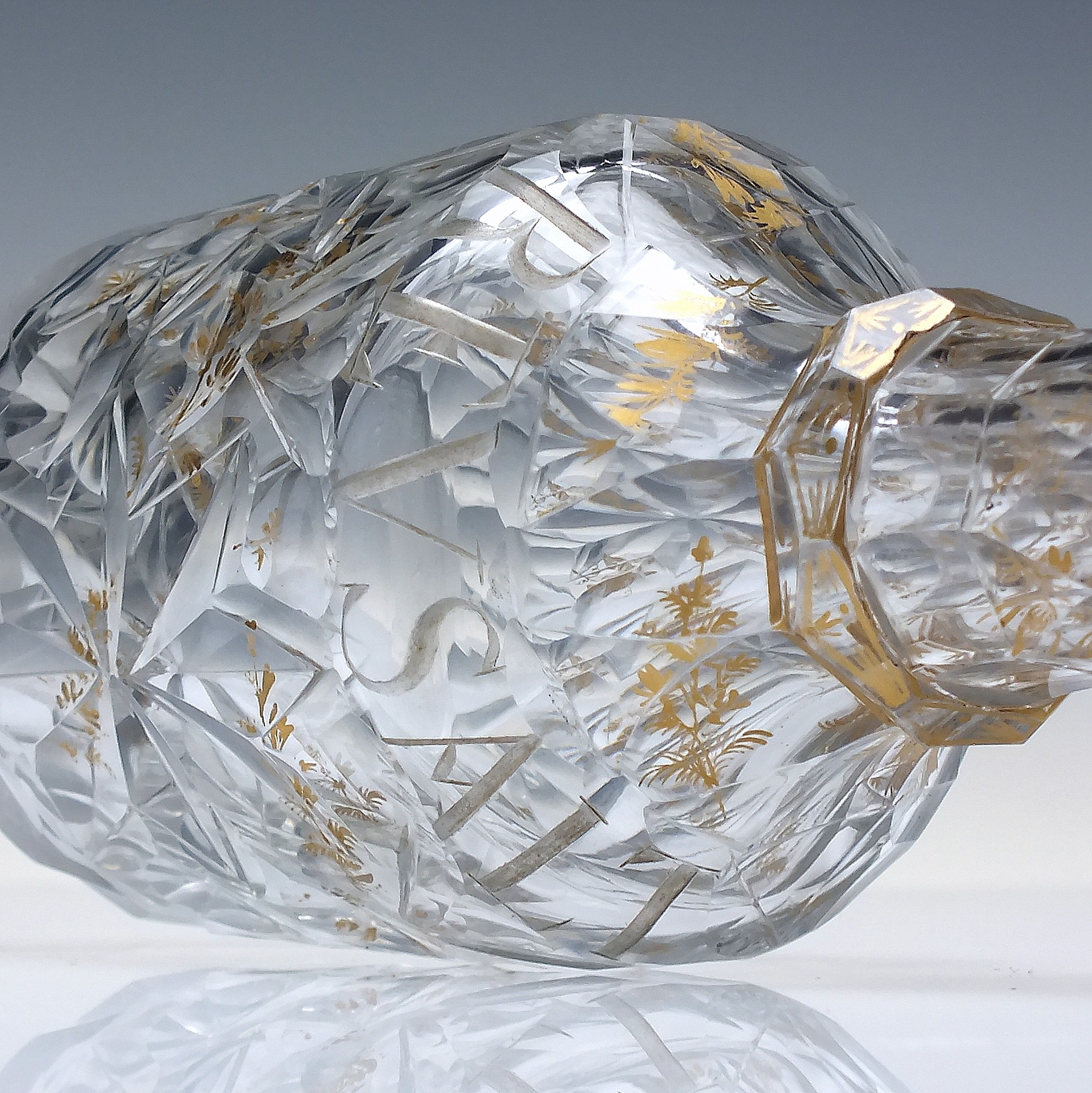
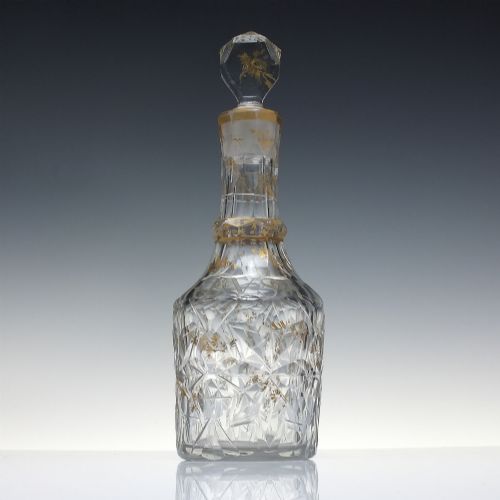
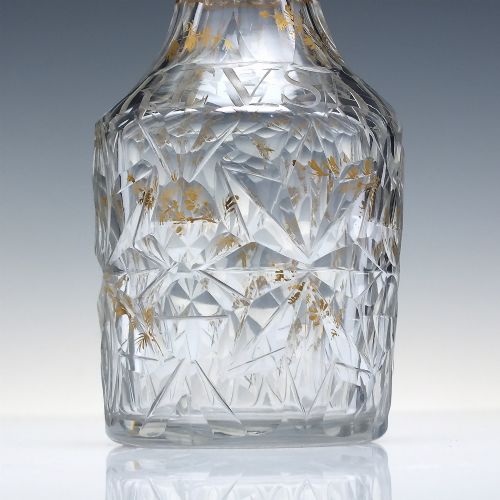
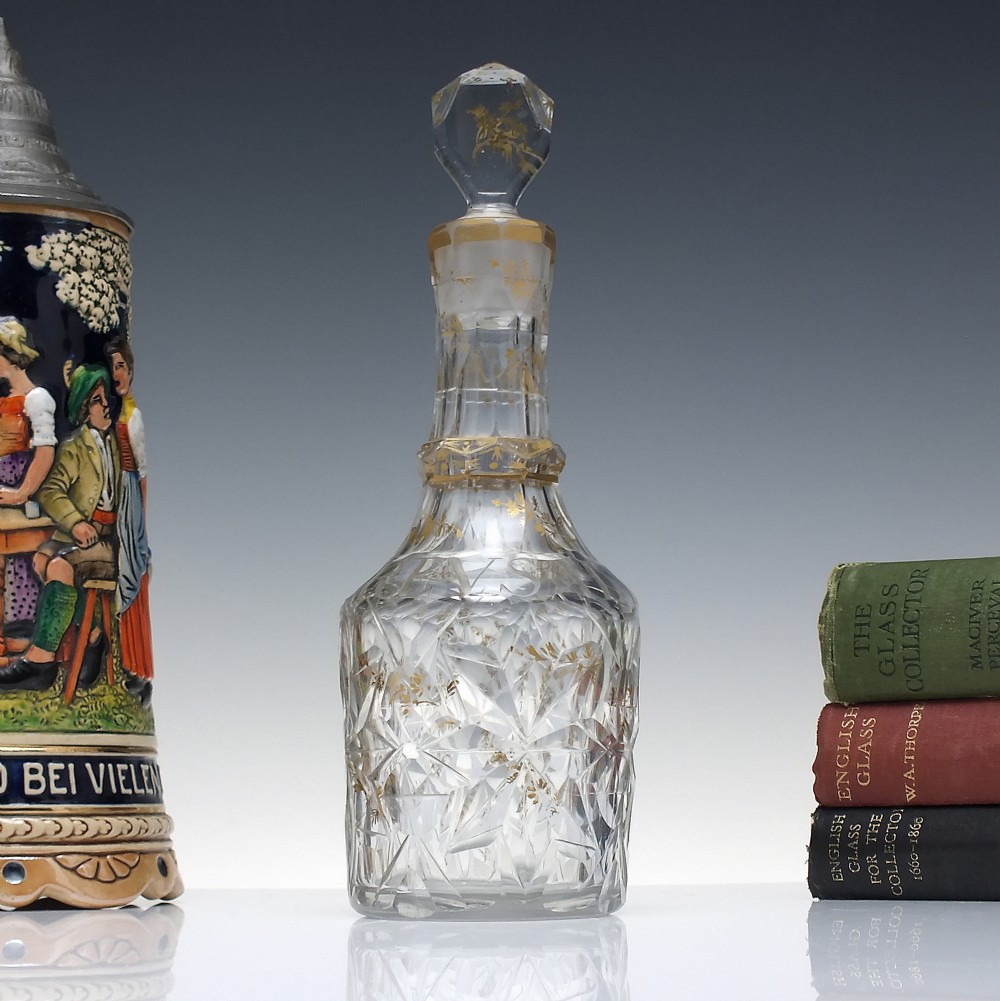
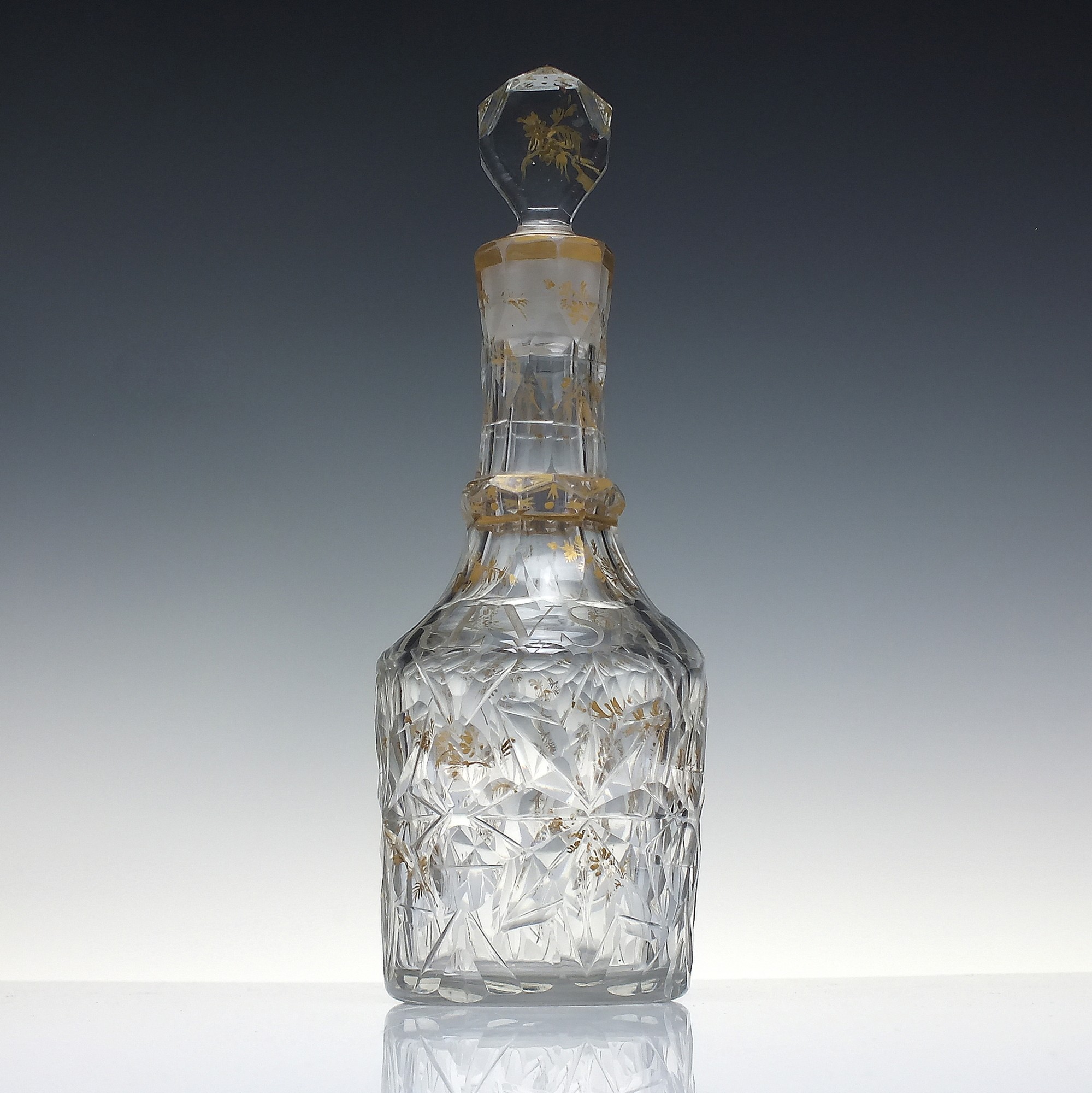
An exceptionally rare late 18th-century English cut and gilded glass decanter, dating to c1780 and engraved REVSALT, an English phonetic abbreviation of "Rivesaltes", the celebrated wine of Roussillon in southern France.

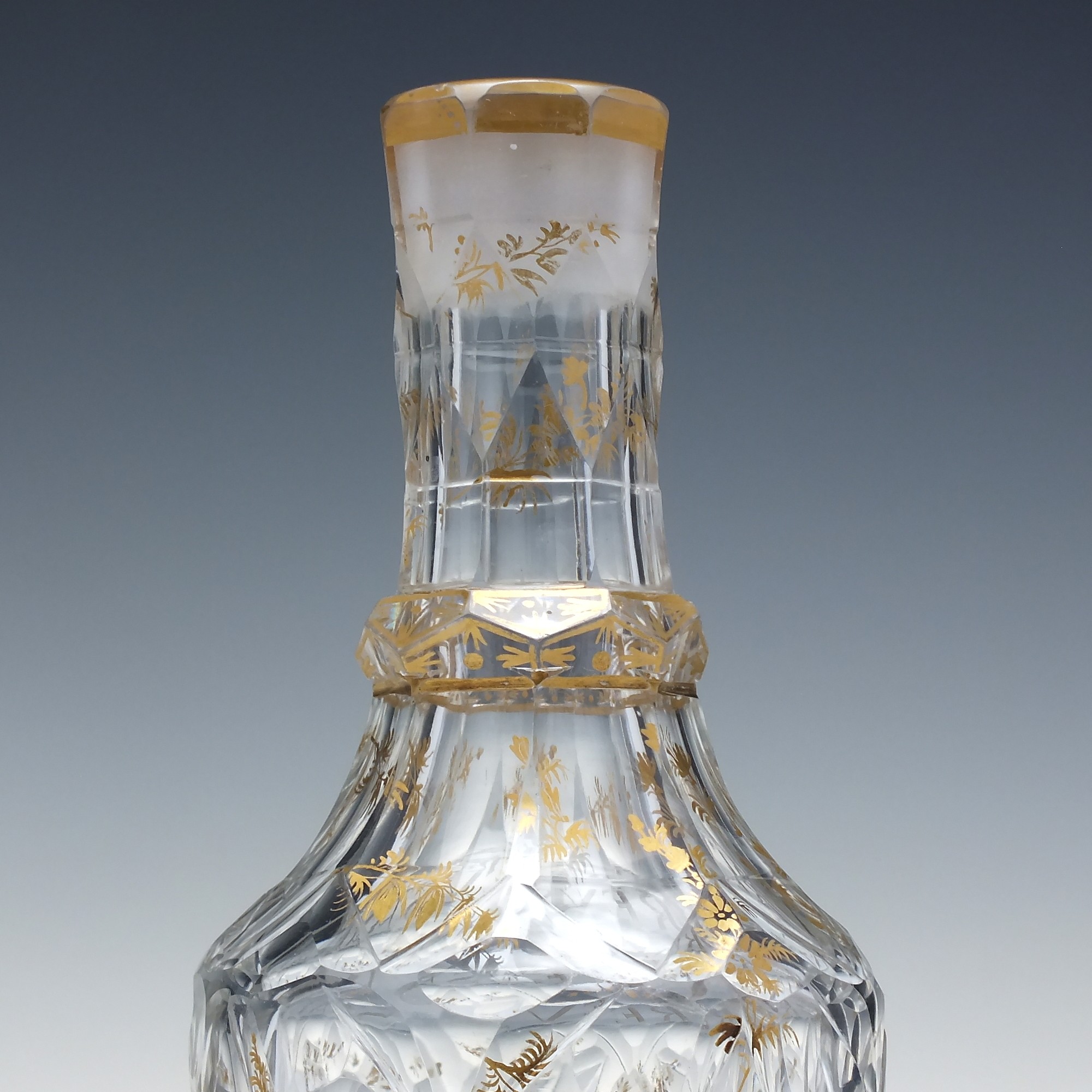
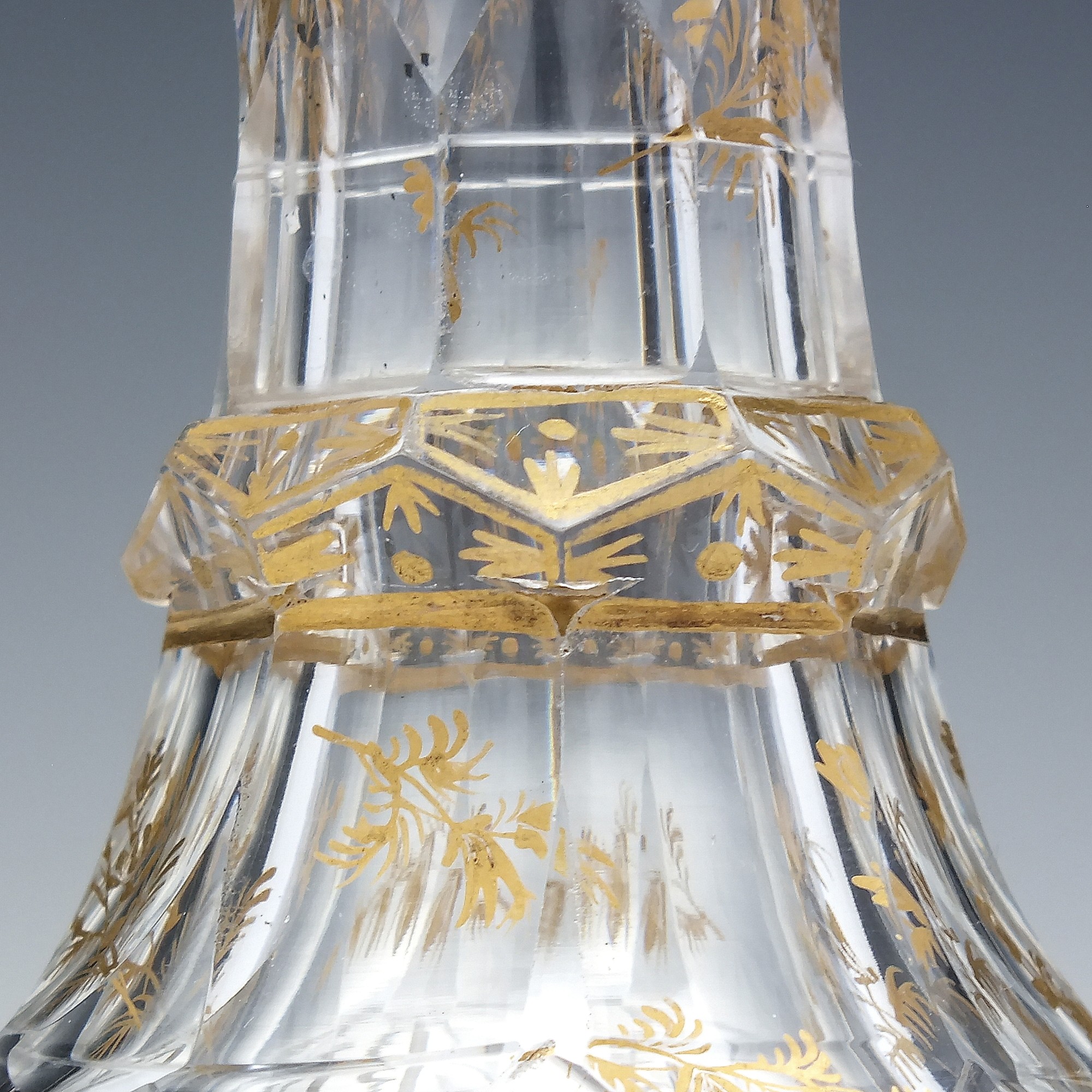
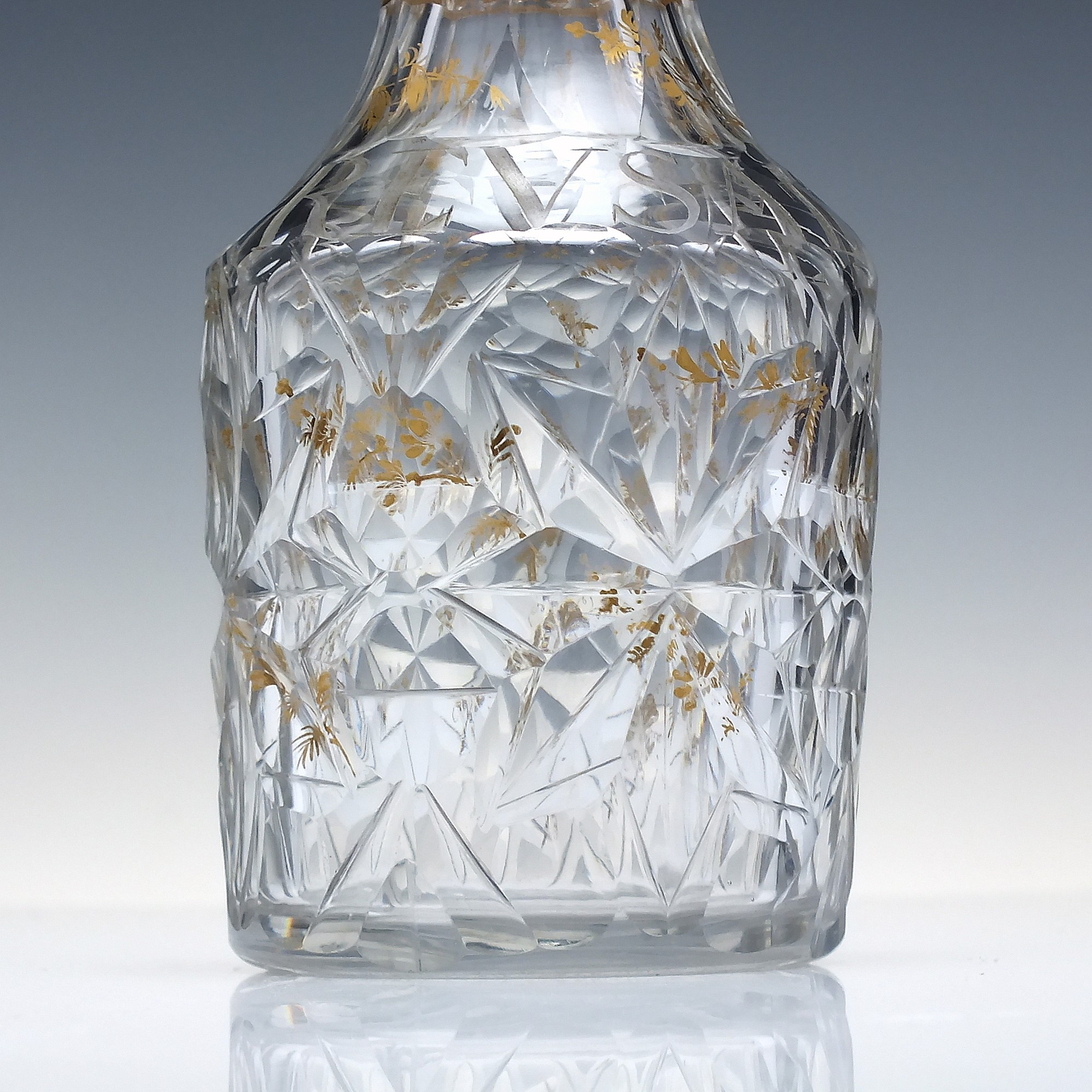
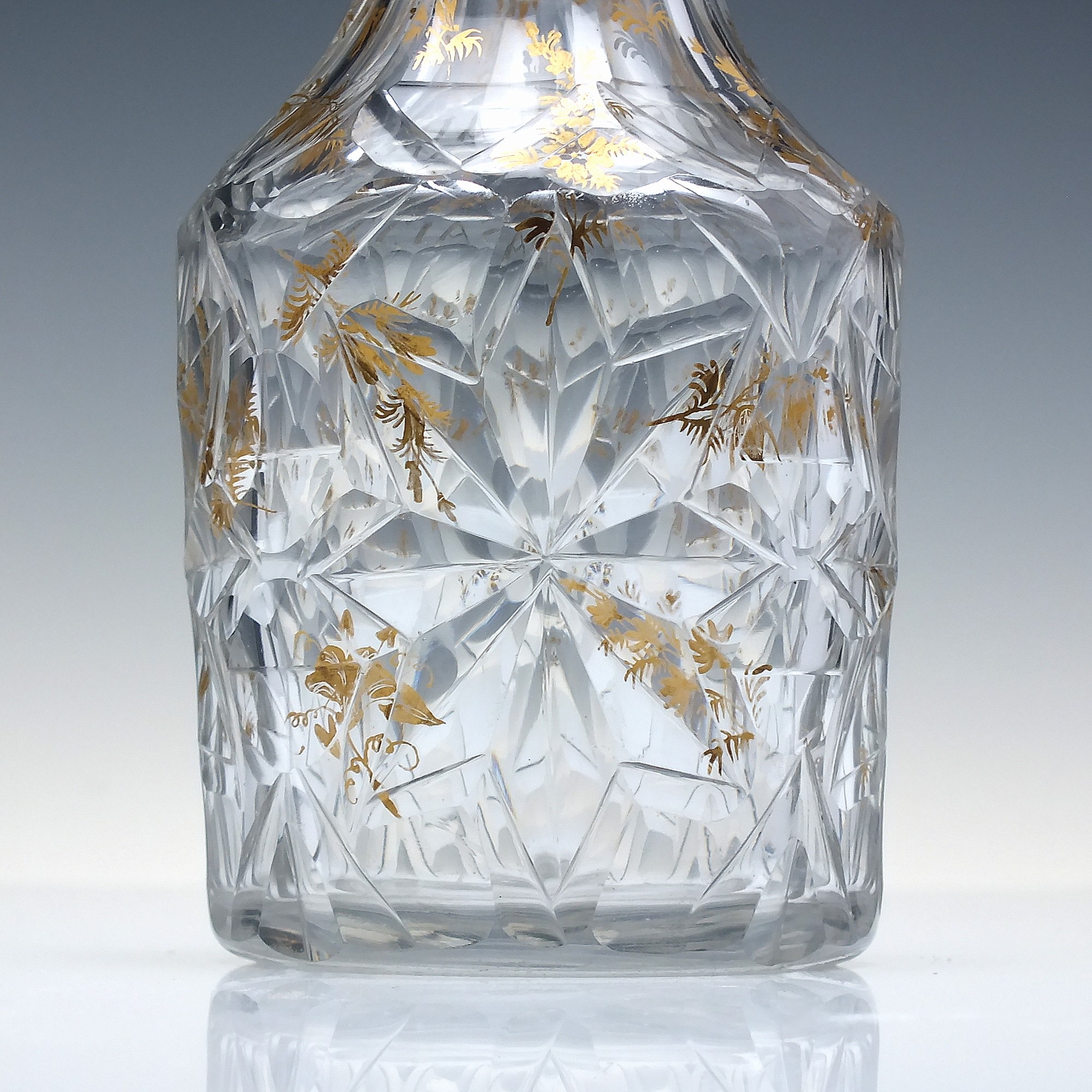
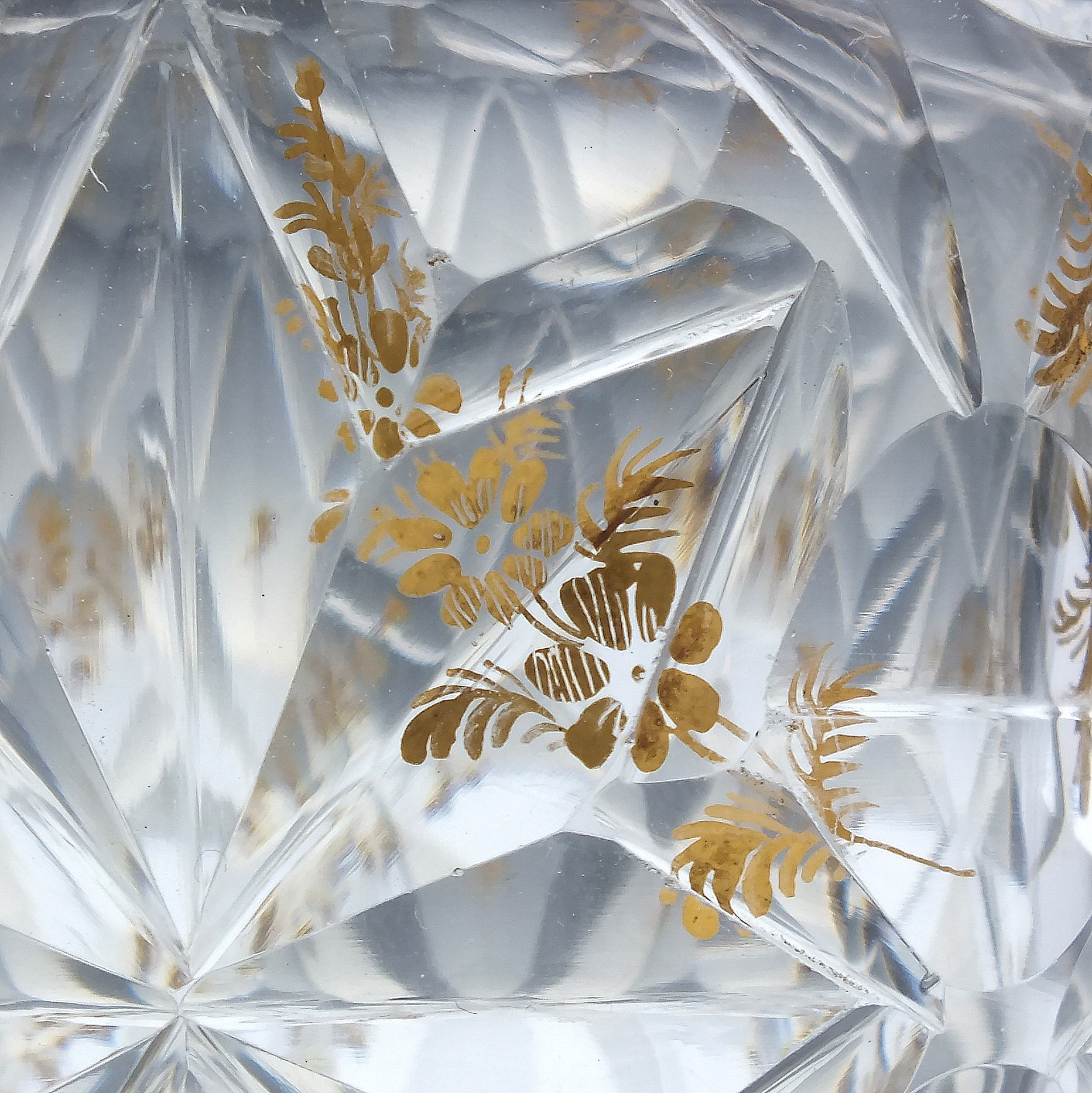
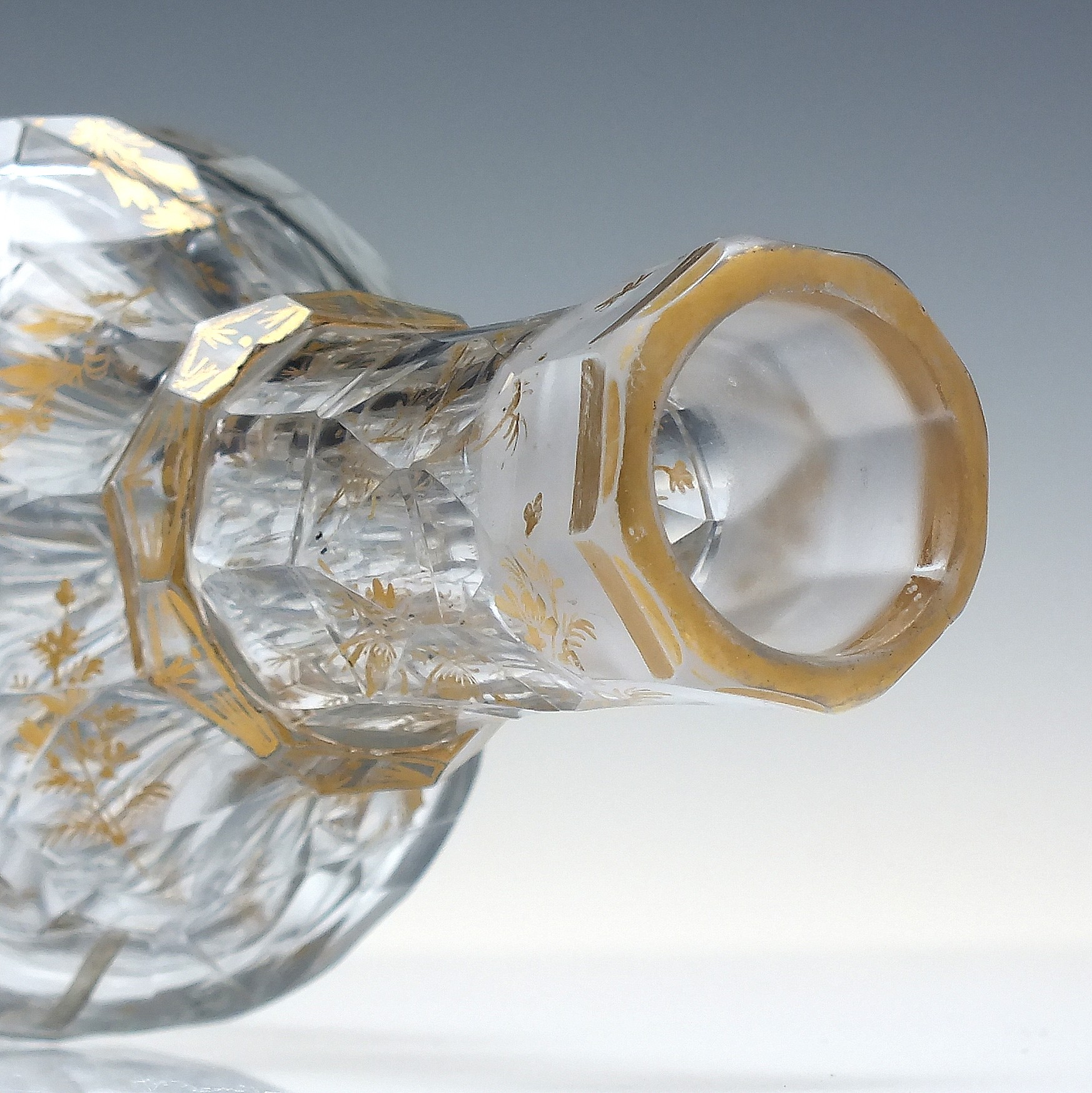
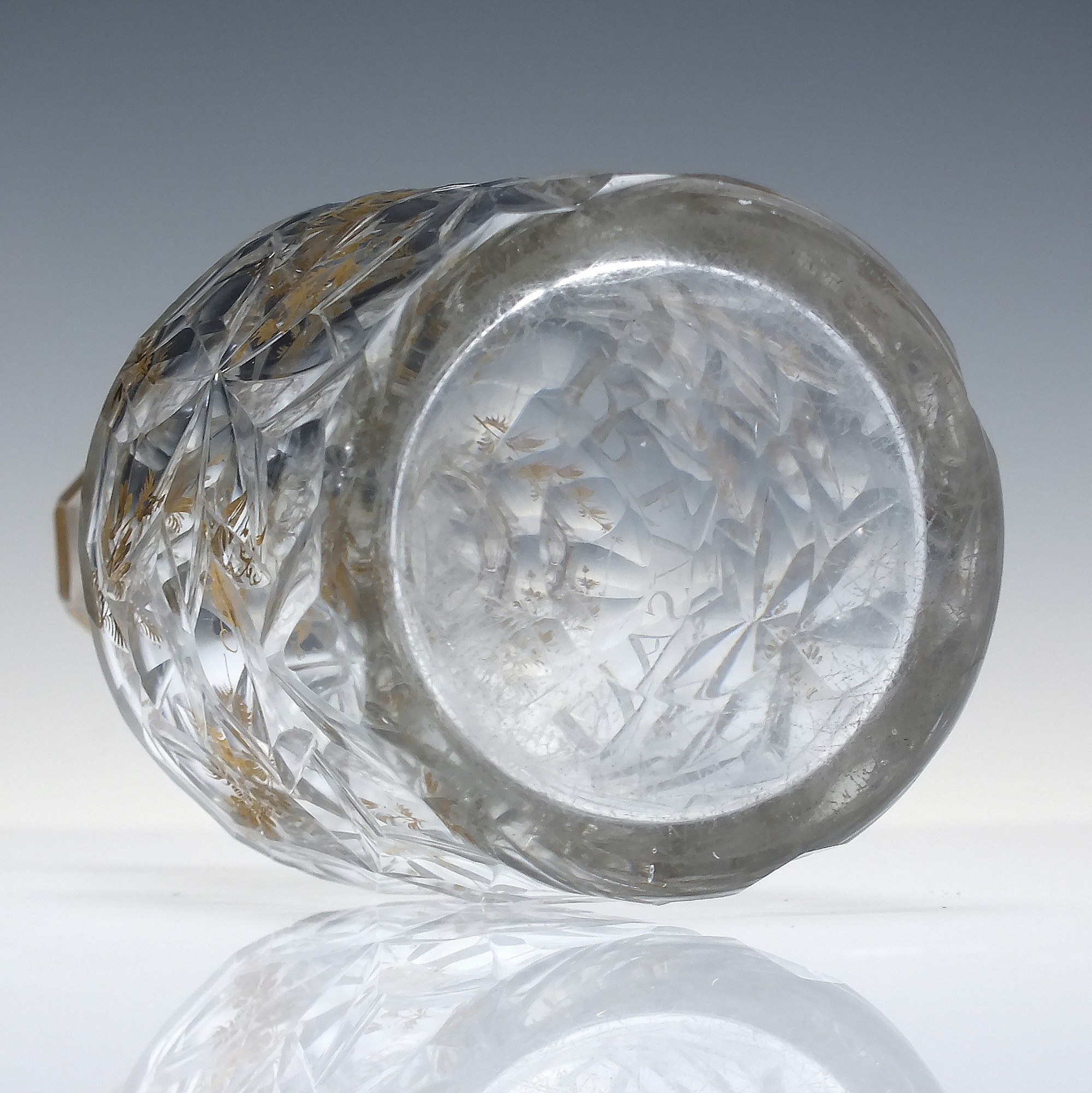
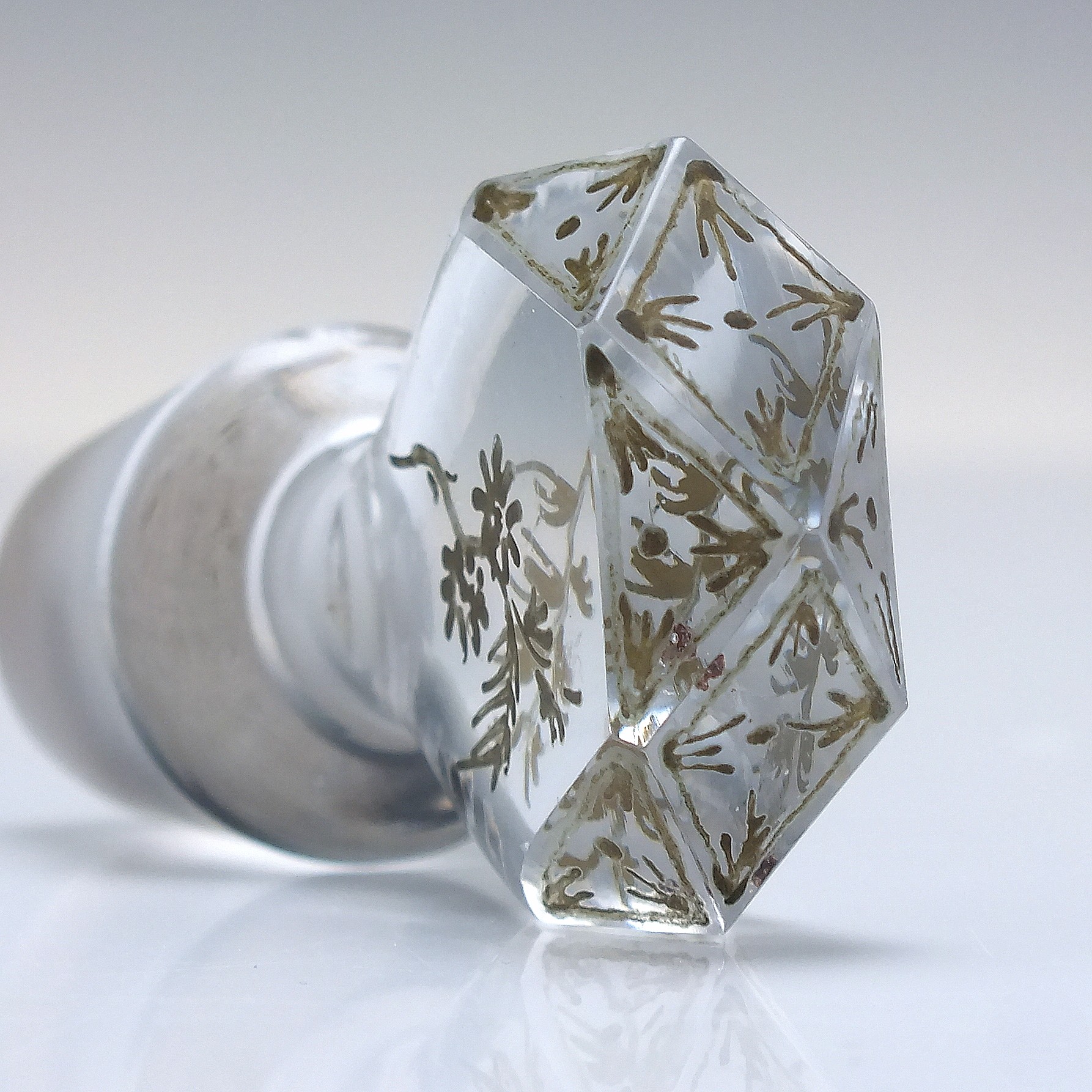
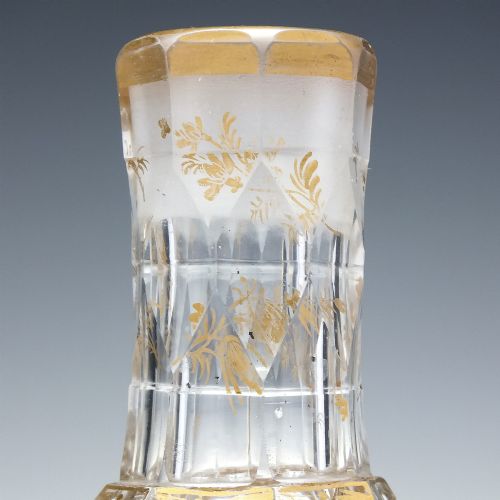
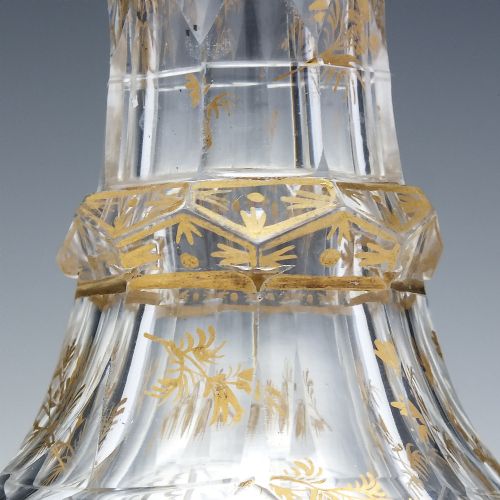
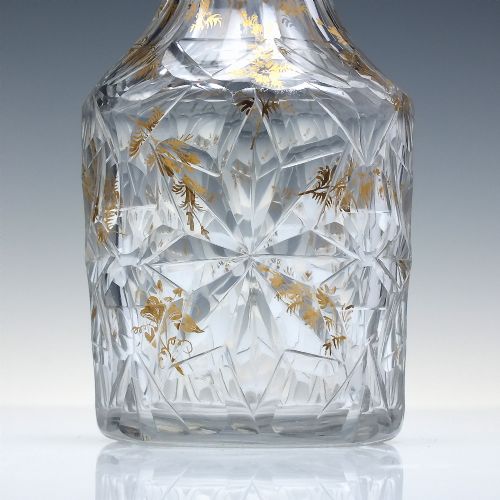
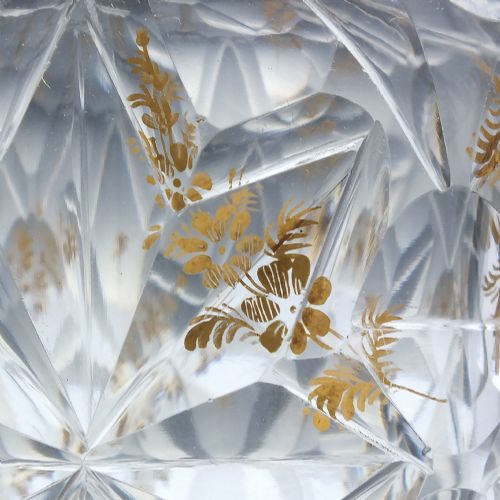
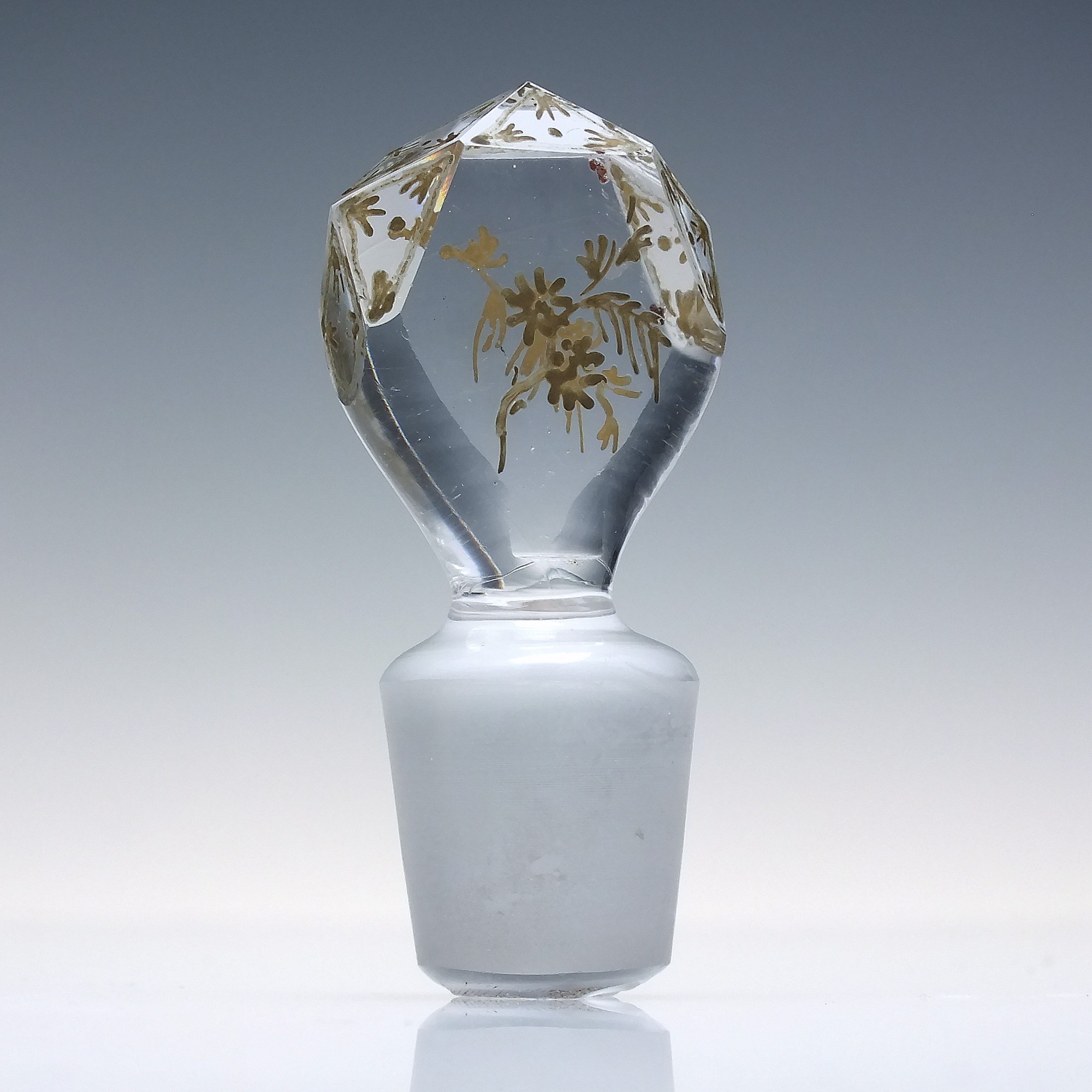
The decanter has its original lozenge stopper, an applied neck ring, with a sloping shoulder leading down to a cylindrical body. The stopper neck and body are deeply facet-cut with a complex arrangement of large interlocking stars, diamonds and geometric panels, creating a particularly brilliant and architectural appearance. Scattered throughout the cutting are finely asymmetrical gilded sprays of fern-like foliage, leaves and small flowerheads, the majority of the gilding surviving remarkably well within the protected recessed facets.
The quality and character of the gilding are consistent with work associated with the London atelier of James Giles. A similar (possibly the same) decanter engraved REVSALT, was sold at Christie's on 20th February 2013, lot 688.
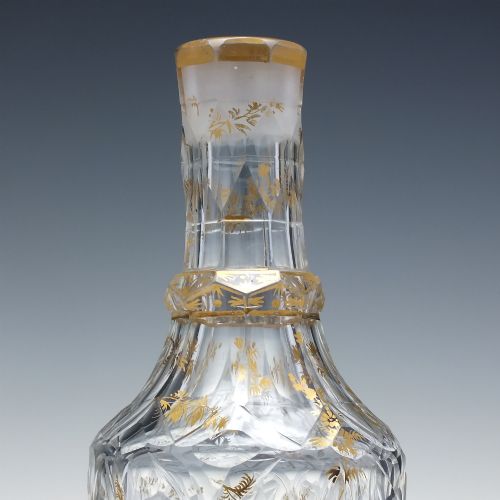
Without doubt, one of the rarest decanters we have had in over 20 years.

Please see historical context below.

Date & Origin

England, c.1780. Period of King George III. Gilded in the atelier of James Giles.
Condition

Excellent. Clean and clear, with no chips, cracks or restoration.

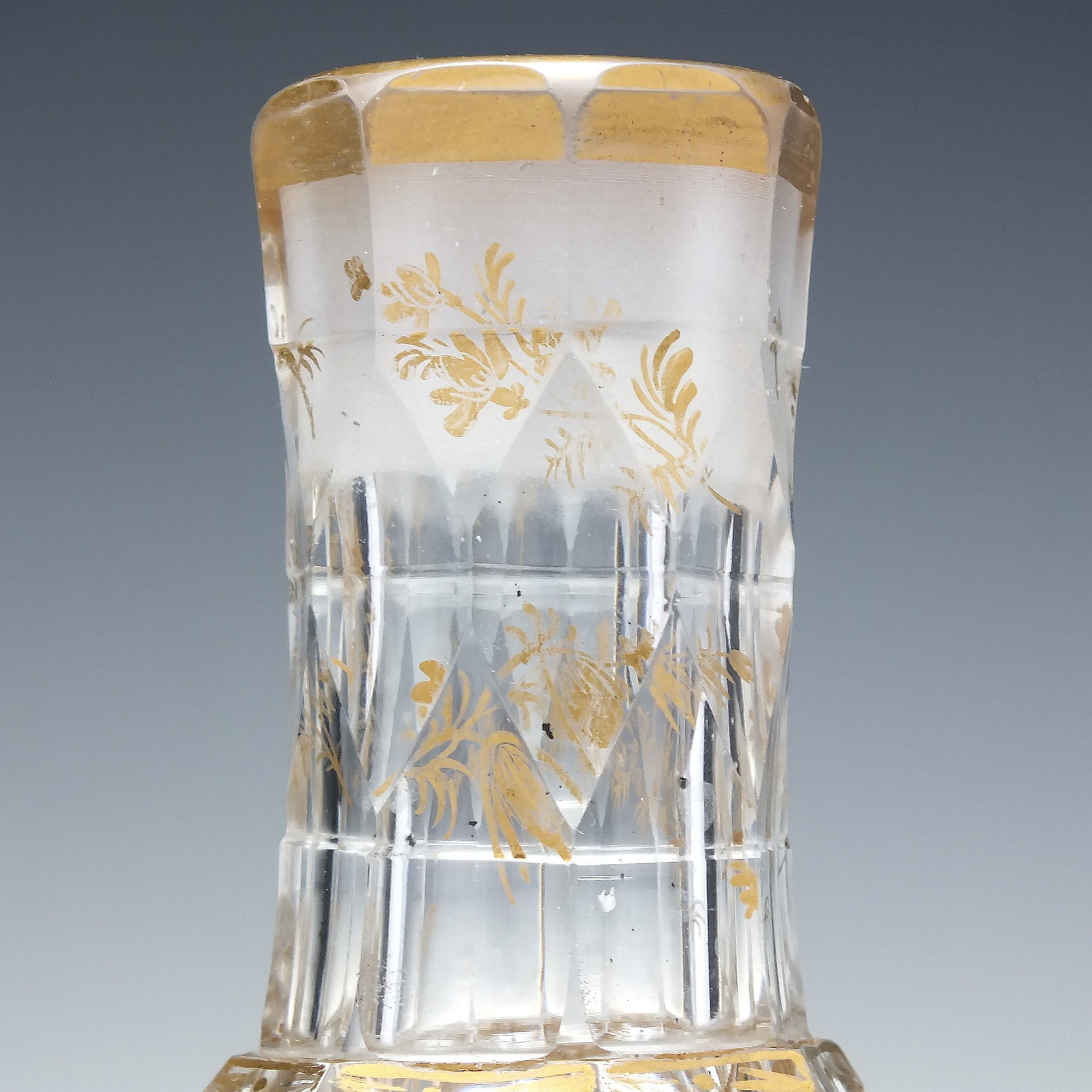
Some wear to the gilding on the stopper and upper neck, consistent with handling and age. The remaining gilding is remarkably well preserved, particularly across the body, where it has been protected within the deep cutting.
Dimensions

Height including stopper: 24 cm

Diameter: 9 cm

Weight: 736 grams

Historical Context

REVSALT is a phonetic or abbreviated English rendering of Rivesaltes, a wine-producing town and district in Roussillon, close to Perpignan and the Spanish border.
Rivesaltes produced more than one style of wine. Its ordinary, strongly coloured wines were known to British and Irish wine merchants during the 18th century and were sometimes used to add colour, body and firmness to Bordeaux wines intended for the British market. Merchant correspondence dating to 1765 specifically records Rivesaltes wine being used in this way.
The wine most likely intended by this costly, individually commissioned decanter, however, was the superior sweet Muscat or vin de liqueur of Rivesaltes. Such wines were prized for their richness, perfume and keeping qualities. The modern Muscat de Rivesaltes tradition uses Muscat Blanc à Petits Grains and Muscat of Alexandria, while the wider Rivesaltes region also produces wines from Grenache, Macabeu and other local grape varieties.
Despite being recognised by knowledgeable wine drinkers, Rivesaltes never appears to have occupied the same position in Britain as Port, Madeira, Lisbon or Frontignan. It may frequently have been described more generally as Muscat, Roussillon wine or vin de liqueur, while the ordinary red wine could disappear anonymously into blended claret. This may explain the extreme rarity of surviving decanters specifically inscribed REVSALT.

The commissioning of such an elaborate and expensive decanter suggests an affluent original owner with an unusually extensive and sophisticated cellar.

Declaration

Exhibit Antiques has dated this George III Glass Decanter to the Georgian era.

Reference Numbers
Sellingantiques Reference
SA1233540
Dealers Internal Reference
2026061504
Description
Description

An exceptionally rare late 18th-century English cut and gilded glass decanter, dating to c1780 and engraved REVSALT, an English phonetic abbreviation of "Rivesaltes", the celebrated wine of Roussillon in southern France.

The decanter has its original lozenge stopper, an applied neck ring, with a sloping shoulder leading down to a cylindrical body.
Exhibit Antiques

The stopper neck and body are deeply facet-cut with a complex arrangement of large interlocking stars, diamonds and geometric panels, creating a particularly brilliant and architectural appearance. Scattered throughout the cutting are finely asymmetrical gilded sprays of fern-like foliage, leaves and small flowerheads, the majority of the gilding surviving remarkably well within the protected recessed facets.

fig 1. A clear cut glass decanter with gilded lettering on the shoulder, a diamond facetted body, and a facetted glass stopper.
fig 1. Rare George III Gilded Cut Glass “Revsalt” Decanter, C1780 - Atelier of James Giles

The quality and character of the gilding are consistent with work associated with the London atelier of James Giles. A similar (possibly the same) decanter engraved REVSALT, was sold at Christie's on 20th February 2013, lot 688.

fig 2. A clear cut glass decanter with gilded lettering on the shoulder, a diamond facetted body, and a facetted glass stopper.
fig 2. Rare George III Gilded Cut Glass “Revsalt” Decanter, C1780 - Atelier of James Giles

Without doubt, one of the rarest decanters we have had in over 20 years.

Please see historical context below.

Date & Origin

England, c.1780. Period of King George III. Gilded in the atelier of James Giles.

fig 3. A clear cut glass decanter with gilded lettering on the shoulder, a diamond facetted body, and a facetted glass stopper.
fig 3. Rare George III Gilded Cut Glass “Revsalt” Decanter, C1780 - Atelier of James Giles

Condition

Excellent. Clean and clear, with no chips, cracks or restoration.

Some wear to the gilding on the stopper and upper neck, consistent with handling and age. The remaining gilding is remarkably well preserved, particularly across the body, where it has been protected within the deep cutting.

fig 4. A clear cut glass decanter with gilded lettering on the shoulder, a diamond facetted body, and a facetted glass stopper.
fig 4. Rare George III Gilded Cut Glass “Revsalt” Decanter, C1780 - Atelier of James Giles

Dimensions

Height including stopper: 24 cm

Diameter: 9 cm

Weight: 736 grams

Historical Context

REVSALT is a phonetic or abbreviated English rendering of Rivesaltes, a wine-producing town and district in Roussillon, close to Perpignan and the Spanish border.

fig 5. A clear cut glass decanter with gilded lettering on the shoulder, a diamond facetted body, and a facetted glass stopper.
fig 5. Rare George III Gilded Cut Glass “Revsalt” Decanter, C1780 - Atelier of James Giles

Rivesaltes produced more than one style of wine. Its ordinary, strongly coloured wines were known to British and Irish wine merchants during the 18th century and were sometimes used to add colour, body and firmness to Bordeaux wines intended for the British market. Merchant correspondence dating to 1765 specifically records Rivesaltes wine being used in this way.

fig 6. A clear cut glass decanter with gilded lettering on the shoulder, a diamond facetted body, and a facetted glass stopper.
fig 6. Rare George III Gilded Cut Glass “Revsalt” Decanter, C1780 - Atelier of James Giles

The wine most likely intended by this costly, individually commissioned decanter, however, was the superior sweet Muscat or vin de liqueur of Rivesaltes. Such wines were prized for their richness, perfume and keeping qualities. The modern Muscat de Rivesaltes tradition uses Muscat Blanc à Petits Grains and Muscat of Alexandria, while the wider Rivesaltes region also produces wines from Grenache, Macabeu and other local grape varieties.

fig 7. A clear cut glass decanter with gilded lettering on the shoulder, a diamond facetted body, and a facetted glass stopper.
fig 7. Rare George III Gilded Cut Glass “Revsalt” Decanter, C1780 - Atelier of James Giles

Despite being recognised by knowledgeable wine drinkers, Rivesaltes never appears to have occupied the same position in Britain as Port, Madeira, Lisbon or Frontignan. It may frequently have been described more generally as Muscat, Roussillon wine or vin de liqueur, while the ordinary red wine could disappear anonymously into blended claret. This may explain the extreme rarity of surviving decanters specifically inscribed REVSALT.

The commissioning of such an elaborate and expensive decanter suggests an affluent original owner with an unusually extensive and sophisticated cellar.

Date of Manufacture

Exhibit Antiques has dated this George III Glass Decanter to the Georgian era.

Reference Numbers
Sellingantiques Ref
SA1233540
Dealers Internal Ref
2026061504
Exhibit Antiques
Exhibit Antiques
Sellingantiques verified Since Mar 2019

Specialists in 18th & 19th century antique glass

Dealer Profile

You can view the stock and full dealer information on the Exhibit Antiques Profile Page
PDF SHARE
SAVE
A clear cut glass decanter with gilded lettering on the shoulder, a diamond facetted body, and a facetted glass stopper.
1 / 13
Archive I A clear cut glass decanter with gilded lettering on the shoulder, a diamond facetted body, and a facetted glass stopper.

Rare George III Gilded Cut Glass “Revsalt” Decanter, C1780 - Atelier of James Giles
Archive II A clear cut glass decanter with gilded lettering on the shoulder, a diamond facetted body, and a facetted glass stopper. View II
Archive III A clear cut glass decanter with gilded lettering on the shoulder, a diamond facetted body, and a facetted glass stopper. View III
Archive IV A clear cut glass decanter with gilded lettering on the shoulder, a diamond facetted body, and a facetted glass stopper. View IV
Archive V A clear cut glass decanter with gilded lettering on the shoulder, a diamond facetted body, and a facetted glass stopper. View V
Archive VI A clear cut glass decanter with gilded lettering on the shoulder, a diamond facetted body, and a facetted glass stopper. View VI
Archive VII A clear cut glass decanter with gilded lettering on the shoulder, a diamond facetted body, and a facetted glass stopper. View VII
Archive VIII A clear cut glass decanter with gilded lettering on the shoulder, a diamond facetted body, and a facetted glass stopper. View VIII
Archive IX A clear cut glass decanter with gilded lettering on the shoulder, a diamond facetted body, and a facetted glass stopper. View IX
Archive X A clear cut glass decanter with gilded lettering on the shoulder, a diamond facetted body, and a facetted glass stopper. View X
Archive XI A clear cut glass decanter with gilded lettering on the shoulder, a diamond facetted body, and a facetted glass stopper. View XI
Archive XII A clear cut glass decanter with gilded lettering on the shoulder, a diamond facetted body, and a facetted glass stopper. View XII
Archive XIII A clear cut glass decanter with gilded lettering on the shoulder, a diamond facetted body, and a facetted glass stopper. View XIII
Enlarged Archival View
Telephone 01501 228 282
Location
Glasgow
Scotland
United Kingdom
Verified Since Mar 2019
Items For Sale 146
Items Sold 2,188
Exhibit Antiques
Exhibit Antiques
Verified Since Mar 2019
View Dealer Info
Location: Glasgow, Scotland, United Kingdom
Verified
Mar 2019
For Sale
146
Sold
2,188
A clear cut glass decanter with gilded lettering on the shoulder, a diamond facetted body, and a facetted glass stopper.
Rare George III Gilded Cut Glass “REVSALT” Decanter, c1780 - Atelier of James Giles
Ref: SA1233540
A clear cut glass decanter with gilded lettering on the shoulder, a diamond facetted body, and a facetted glass stopper.
Detail View 1
Detail View 2
Detail View 3
Detail View 4
Detail View 5
Detail View 6
Detail View 7
Detail View 8
Detail View 9
Detail View 10
Detail View 11
Detail View 12
Archival Detail
Every single antique dealer on our platform is individually approved by our internal team. We verify their professional trade history, ethical standards, and photographic quality to ensure a secure, high-standard buying environment. Upon joining, every dealer agrees to a strict 9-point code of conduct. While issues can occasionally arise, our dealers typically resolve them swiftly and directly with the buyer. In fact, since our founding in 2002, Sellingantiques has only had to step in to help resolve an issue on roughly five occasions—a true testament to the quality of our dealers and their dedication to your happiness.
Our dealers are highly experienced in packing and shipping fragile, high-value antiques. Because you are in direct contact with the dealer, you will be able to easily go through all available shipping and insurance options together to ensure your item arrives safely.
Antiques are the ultimate green purchase. By choosing historical pieces over newly manufactured goods, you completely eliminate the carbon footprint of modern mass production while preserving exceptional, timeless craftsmanship.

George III glassware, produced between 1760 and 1820, is characterised by lead crystal construction, geometric hand-cutting, and decorative gilding. Workshops during this era employed specialised gilders who applied gold leaf to accentuate the glass facets and lettering.

Eighteenth-century decanters were hand-blown from lead crystal to achieve optical density and weight. Craftspeople carved geometric patterns into the cooled surface using rotating wheels, followed by hand-applied gold leaf gilding fixed through low-temperature firing.

Authentic Georgian decanters feature a ground or snapped pontil mark on the underside, natural friction wear on the base, and hand-fitted stoppers. The gilding often shows light wear consistent with age, and the glass possesses distinct weight due to its lead content.

An antique glass decanter functions as a decorative object on a timber sideboard, marble bar cart, or tray in a dining room or study. Displaying clear cut glass alongside contemporary brass or silver bar accessories creates a balanced material contrast.

Clean gilded glass by hand using lukewarm water and mild detergent, avoiding abrasive sponges or dishwashers that strip gold leaf. Ensure internal moisture evaporates completely before inserting the stopper to prevent trapped condensation.
items
Add keywords to the filter
Price
£100
£250000
Era
Movements
Material
Origin
Stock Location
Freshness
Online Payments
Categories