


Antique Glass Car Mascots
A small moulded glass figure made to sit on the radiator cap of a 1920s or 1930s motor car, catching the light as it went.

Antique Glass Car Mascots
They came in with the open radiator cap. Through the 1920s that cap was a place to put an ornament, and moulded glass mascots were made to be mounted there, often over a lit base so the light travelled through the figure. When bonnets closed over the radiator in the 1930s, the use went with them.
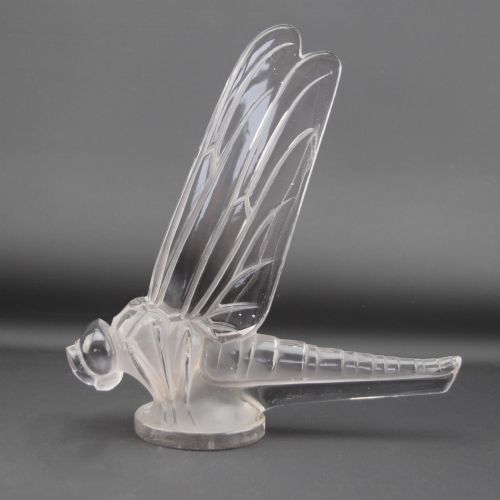
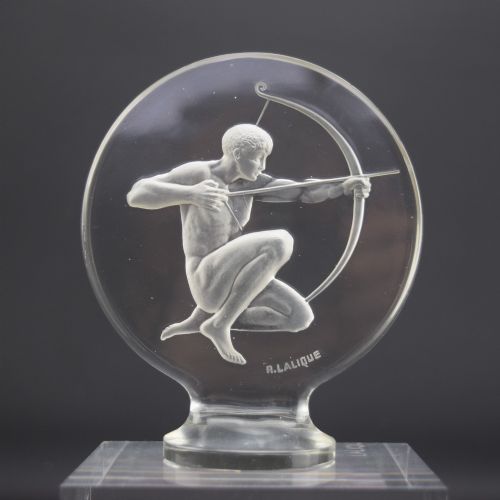
The category on Sellingantiques is French and effectively one name. Of 54 listings, 51 name Lalique; three name Sabino, all dated 1930 and described as French Art Deco, two of them dragonflies. Models are known by their French titles: Sanglier the wild boar, Sirène the mermaid, Naiade, Archer, Vitesse, Victoire, Longchamp, Cinq Chevaux, Grande Libellule, and the various heads, Tête de Coq, Tête d'Aigle, Tête d'Épervier, Tête de Bélier, Tête de Paon.
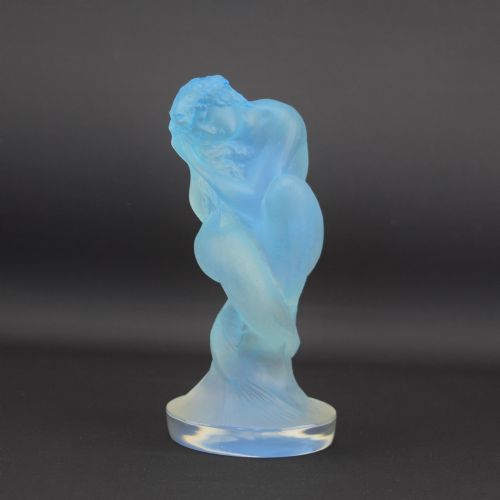
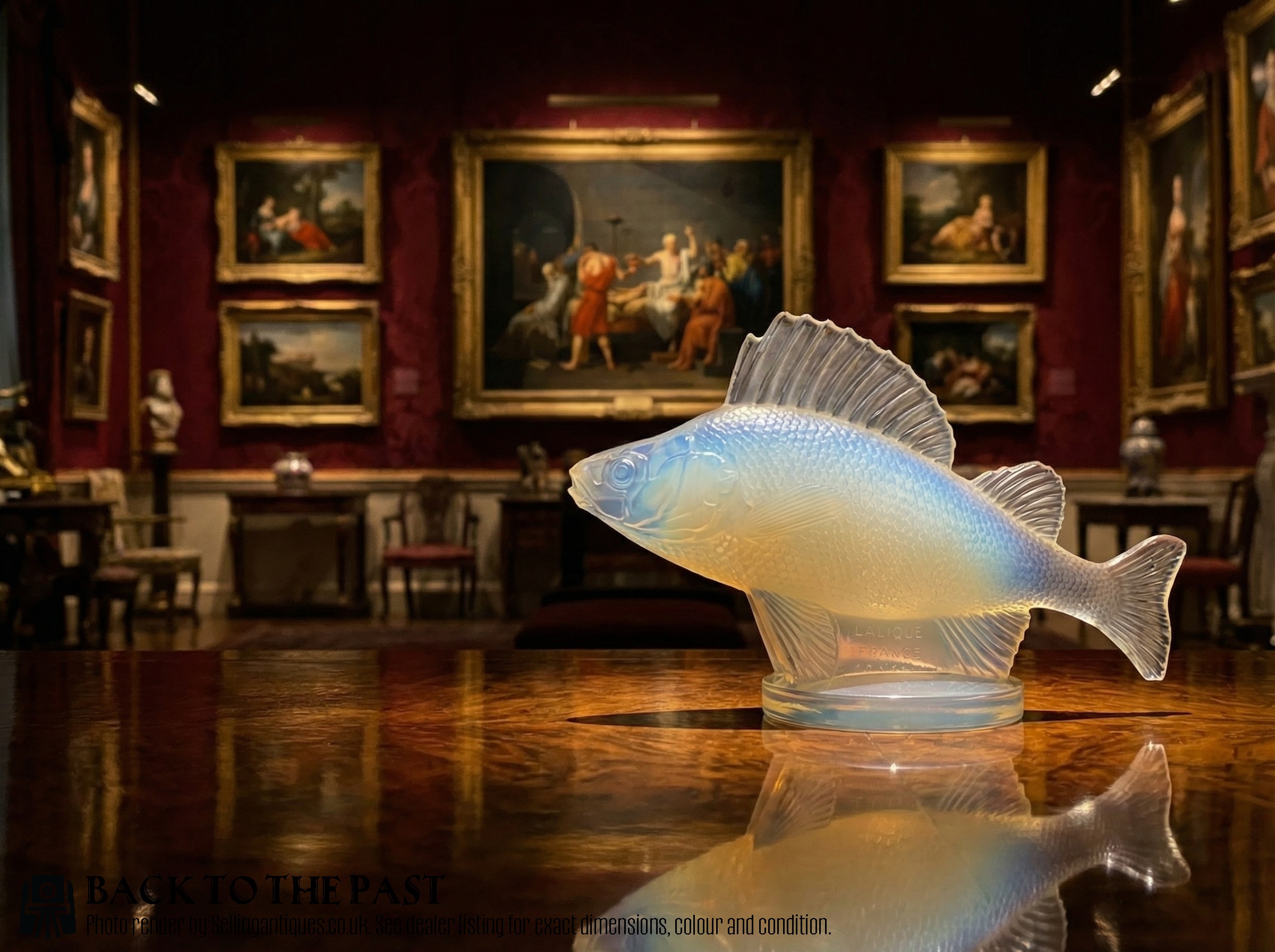
Clear and frosted glass is the default, polished surfaces set against frosted ones. Opalescent glass, with its milky blue-white cast, is named in about a quarter of titles, and a few pieces are tinted: topaz, grey and green, amber. Three Naiade listings are titled as car mascot and paperweight together, which suggests the model was sold for both.
Dates sit tight. Every dated piece falls between 1920 and 1930, and the title dates cluster at c1925, c1926, c1928, 1929 and c1930, with c1928 the single most common. The dealers' decade field is coarser than the title date and the two sometimes disagree, so the title date is the finer reading. This is a thin market: three dealers on Sellingantiques have ever listed one, and around eight come up in a year.
What Sets Them Apart
Model decides more than anything else. Vitesse, Cinq Chevaux, Victoire, Grande Libellule and Longchamp hold the upper reaches of the archive, while Sanglier, Sirène, St Christopher and the smaller heads sit at the lower end. Size works inside that: Grande Libellule and the larger Coq Houdan rank above the small heads and the Coq Nain.
Glass comes next. Where the same model appears in more than one treatment, the opalescent version sits above the clear and frosted, and the tinted versions sit above both. An amber opalescent perch outranks the plain opalescent perch; topaz and grey/green Sanglier outrank the clear and frosted Sanglier. An opalescent Vitesse stands alone at the top of the whole archive.
Everything above the three Sabino pieces names Lalique in the title, so attribution as it appears in the listing tracks the range closely. Fittings barely feature: one Archer carries a Guild of Handicraft silver mount and sits above otherwise comparable Archers of the same c1926 date, and it is the only piece here whose mount is mentioned.
Antique Glass Car Mascots Retail Price Guide 2026
Typical UK retail prices for glass car mascots, calculated from the Sellingantiques database of over a million retail prices indexed since 2003. This retail price guide relies exclusively on Sellingantiques data; no external sources or auction records are used, so the figures do not describe the wider market.
The Naiade is the only model on Sellingantiques titled as both a car mascot and a paperweight, so it seems it served for both.

The Antique Glass Car Mascots Glossary
- Car mascot
- An ornament made to sit on a car's radiator cap, here in moulded glass rather than the cast metal more usually seen.
- Opalescent
- Glass with a milky blue-white glow in reflected light and warmer tones seen through it; named in roughly a quarter of titles.
- Clear and frosted
- The usual finish, polished clear glass worked against frosted surfaces for contrast.
- Tête de
- 'Head of', the prefix on a whole run of models: Tête de Coq, Tête d'Aigle, Tête d'Épervier, Tête de Bélier, Tête de Paon.
- Sanglier
- Wild boar, one of the models that recurs most often, and found in topaz and grey/green as well as clear and frosted.
- Cinq Chevaux
- 'Five horses', a plaque-form mascot rather than a figure, dated c1925 in both appearances and the earliest date in the archive.
Antique Glass Car Mascots: Frequently Asked Questions
Which glass mascots turn up most often?
Lalique dominates: 51 of 54 listings name it. Within that, Sanglier and Sirène recur, along with Archer, Naiade, Coq Houdan and the various Tête de heads.
The three listings that don't name Lalique name Sabino, all dated 1930 and all French Art Deco, two of them dragonflies.
What does opalescent mean on a mascot?
Opalescent glass shows a milky blue-white glow in reflected light and warmer tones when light passes through it. About a quarter of titles here use the word.
It appears on Sirène, Naiade, Perch, Tête d'Épervier and Vitesse. Where a model exists both ways, the opalescent one sits above the clear and frosted.
When were these made?
Every dated piece in the archive falls between 1920 and 1930, one of the tightest ranges of any glass category on Sellingantiques.
Title dates cluster at c1925, c1926, c1928, 1929 and c1930. The single most frequent is c1928, in eight titles.
Why are they called mascots rather than ornaments?
Mascot was the term for the figure mounted on a car's radiator cap. The exposed cap gave a place for one, and glass versions were made to catch the light there, often over an illuminated base.
The fashion faded as bonnets closed over the radiator cap during the 1930s.
Can a glass mascot be used as a paperweight?
Three Naiade listings are titled as car mascot and paperweight together, the only model here described both ways.
That pairing suggests the figure was offered for either use rather than adapted afterwards.
How often do glass car mascots come up for sale?
Rarely. Three dealers on Sellingantiques have ever listed one, and around eight reach the market in a year.
The 54 listings that make up this archive span roughly forty-fold from the bottom of the range to the top, with an opalescent Vitesse alone at the summit.