


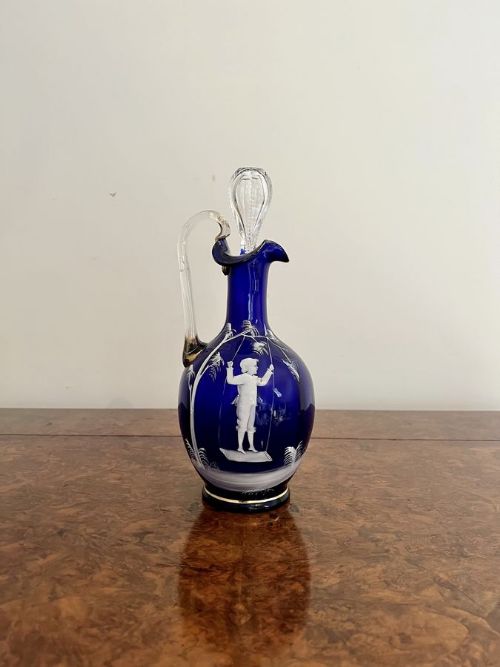


Antique Mary Gregory Glass
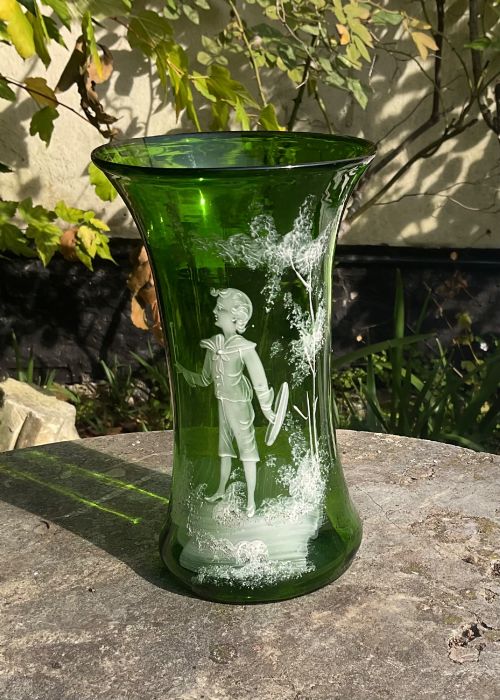
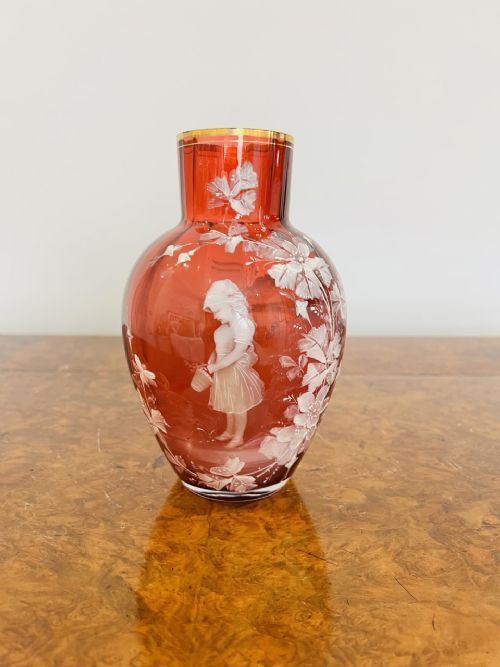
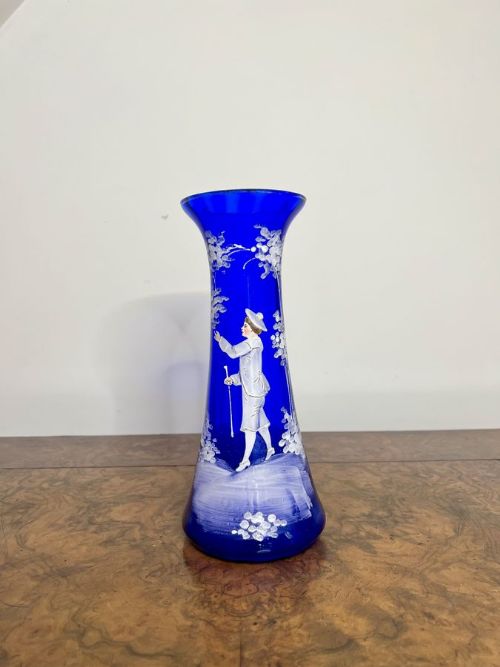
Coloured Victorian glass enamelled in white with figures, made as small useful and dressing-table wares: vases, beakers, cream jugs, salts and lidded trinket boxes.
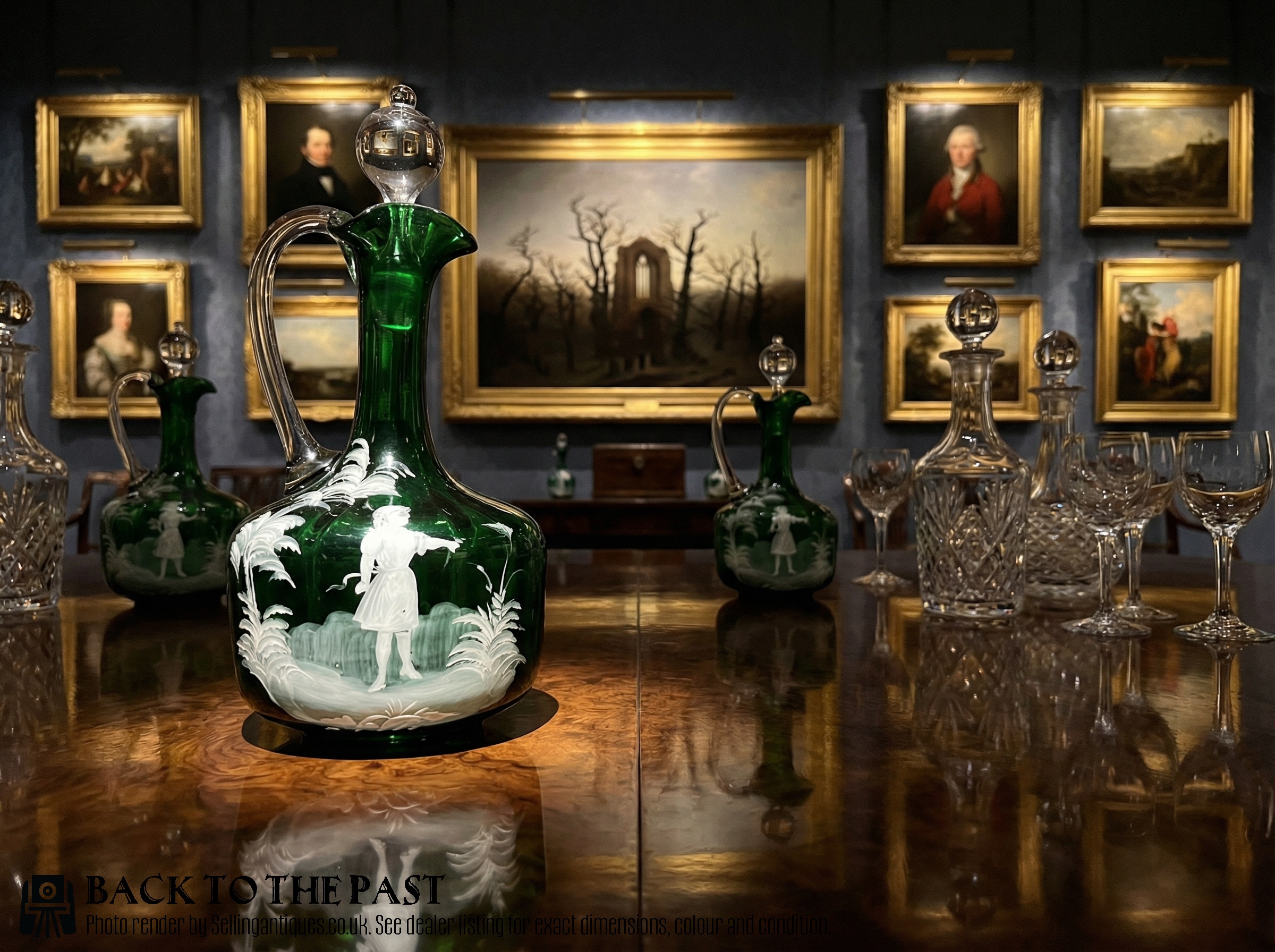
Antique Mary Gregory Glass
Mary Gregory is a trade name for a decoration style, not a form or a factory. Coloured glass, enamelled in white with figures, usually children at play, made in quantity in Bohemia and elsewhere in Continental Europe from the later 1800s for home use and export.
Colour is the first thing you meet. Cranberry runs through a third of the titles on Sellingantiques and is the house colour of the category. Around it sit blue, cobalt, light blue, turquoise, green, olive, Bristol green, ruby, amethyst, yellow and a single uranium body.
Two forms carry the group. Vases account for just over a quarter of titles, from small ones up to large and matched pairs. Lidded trinket boxes account for a fifth, and every one of those ten is dated circa 1890, with eight titles naming France. Behind them come the small drinking and pouring vessels: beakers, tots, mugs, tumblers, cream jugs, ewers and a decanter.
Dating is often broad rather than exact. The dated field spans 1860 to 1900, with twenty-six of forty-nine listings carrying a clean year, while thirteen read simply Victorian and eight 19th Century. Titles and dated fields don't always agree, so a piece titled circa 1890 may be filed as Victorian.

Where Value Sits
Size and number do most of the work. Large vases, pieces described as good and large, and groups of three sit in the upper half of the range, while miniature and small pieces sit at the very bottom. A pair of vases and a complete green dressing table set are the two highest entries sampled, and a pair of salts outranks single salts.
Form sorts the rest. Small drinking glasses hold the bottom: beaker, tot, mug, tumbler, cream jug. Vases, ewers, decanters and covered jars hold the top. That pattern is steady enough that the shape tells you roughly where a piece falls before colour is considered.
Colour separates otherwise identical pieces. Among the circa-1890 trinket boxes, all much the same in size and date, the amethyst and the uranium examples sit above the cranberry, turquoise, cobalt, ruby and olive ones. The one uranium piece in the archive is a trinket box, near the top of that group.
Antique Mary Gregory Glass Retail Price Guide 2026
Typical UK retail prices for mary gregory glass, calculated from the Sellingantiques database of over a million retail prices indexed since 2003. This retail price guide relies exclusively on Sellingantiques data; no external sources or auction records are used, so the figures do not describe the wider market.
Every trinket box in the Sellingantiques archive is dated circa 1890, the tightest date cluster in the category.
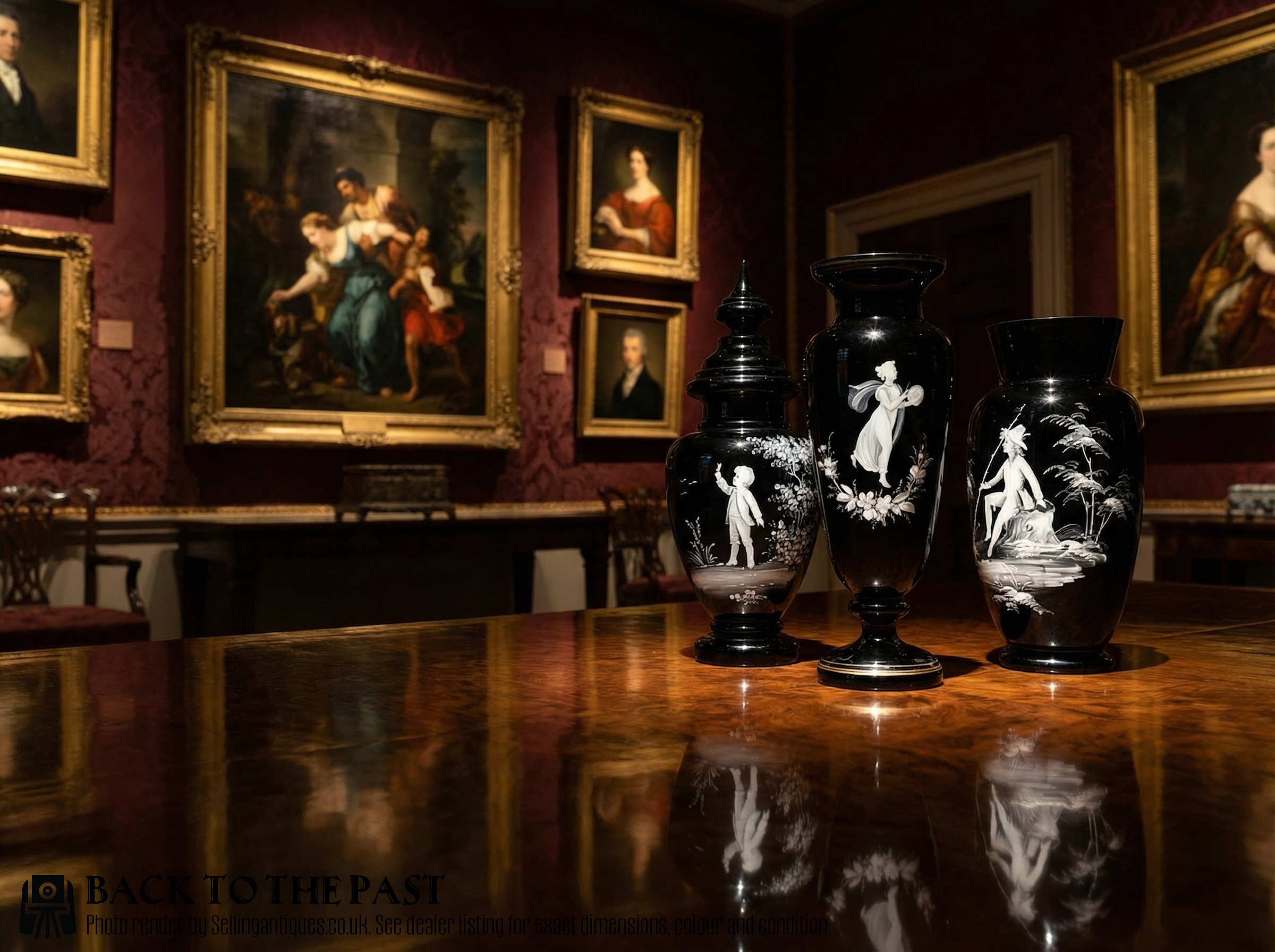
The Antique Mary Gregory Glass Glossary
- Mary Gregory
- The trade name for coloured glass enamelled in white with figures. It appears in every title in this category and describes the decoration, not a maker.
- Cranberry
- Pink-red glass, the commonest body colour in the archive at a third of titles. It turns up on tots, tumblers, mugs, salts, bowls, vases and trinket boxes alike.
- Trinket box
- Small lidded box for the dressing table, a fifth of the titles. Every one recorded is dated circa 1890.
- Dressing table jar
- A covered toilet jar, recorded twice on its own and once as part of a full green set.
- Uranium glass
- Glass coloured with uranium salts, greenish and fluorescent. One trinket box only, and no other uranium piece anywhere in the archive.
- Spill vase
- A narrow vase for paper tapers, used to carry a light from the fire. It appears once, spelled spil vase in the title.
Antique Mary Gregory Glass: Frequently Asked Questions
How often does this glass come up for sale?
Around seven pieces a year come to market on Sellingantiques, spread across eleven dealers.
That means the category arrives in ones and twos rather than in runs. Waiting for a particular colour in a particular form can take a while.
What colours does Mary Gregory glass come in?
Cranberry leads, at about a third of titles. Blue in several shades, cobalt, light blue and turquoise all appear, as do green, olive green and Bristol green.
Ruby, amethyst and yellow are recorded singly or in pairs. One trinket box is uranium glass, greenish and fluorescent, and it is the only uranium piece in the archive.
Which forms turn up most?
Vases, in fourteen of forty-nine titles, from small examples through to large ones and matched pairs. Lidded trinket boxes follow, in ten.
After those come the small drinking and pouring wares: beakers, tots, mugs, tumblers, cream jugs, pitchers, water jugs, ewers and a decanter.
Where was it made?
The style was made in quantity in Bohemia and elsewhere in Continental Europe from the later 1800s, for domestic sale and for export.
In the listings themselves, one title names Bohemia and eight name France. No other place of origin appears. The French ones are all trinket boxes or dressing table jars dated circa 1890.
Are any makers named on these pieces?
No. No glasshouse is named in any of the fifty listings, and no maker attribution comes with the category.
Mary Gregory describes the enamelled decoration, so pieces are catalogued by colour, form and date instead.
What unusual pieces have appeared?
A miniature yellow beaker, a spill vase, a decanter and a pair of salts each turn up once and nowhere else.
A complete green dressing table set is the highest entry in the sampled range.