


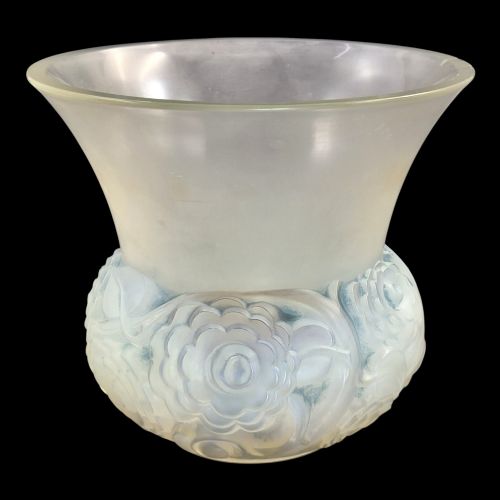

Art Deco Glass
Decorative and table glass made between about 1910 and 1950, for dressing tables, cocktail cabinets, dining tables and the bonnets of motor cars.

Art Deco Glass
The style spread internationally through the 1920s and 1930s, and the glass follows it: geometry, stylised figures, strong colour. It was made for modern living by pressing, moulding, cutting and enamelling as much as by blowing. Of 642 listings on Sellingantiques with a clean year, 525 sit in the 1930s and 111 in the 1920s, so the field is interwar with very little either side.
Three object words run almost dead level in the titles: vase, perfume and decanter. That tells you what you are most likely to meet, which is a 1930s vase, a decanter set or a perfume bottle rather than a piece by any one named factory. Bottle and perfume bottle follow close behind.
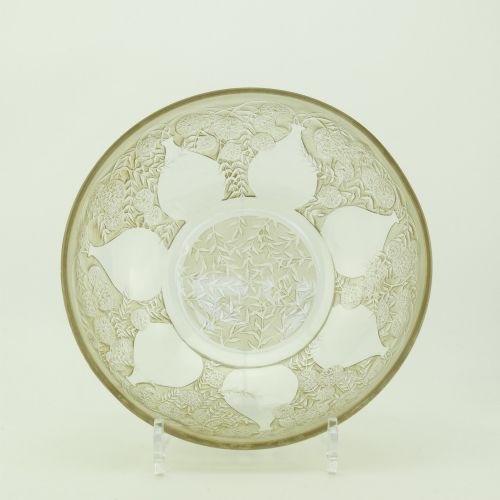
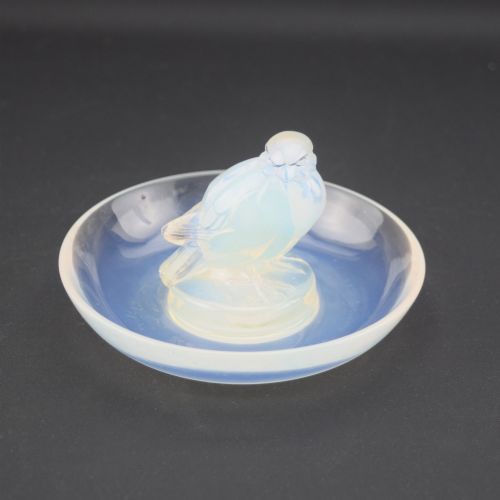
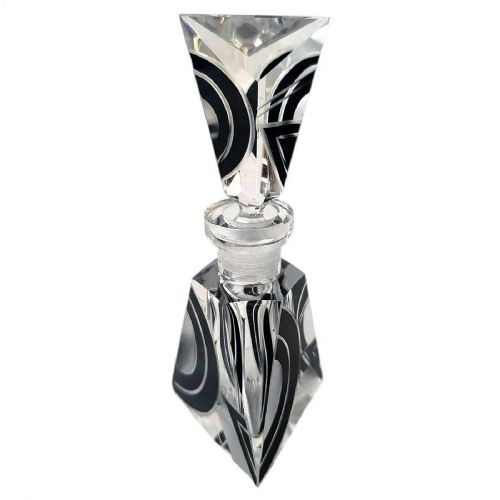
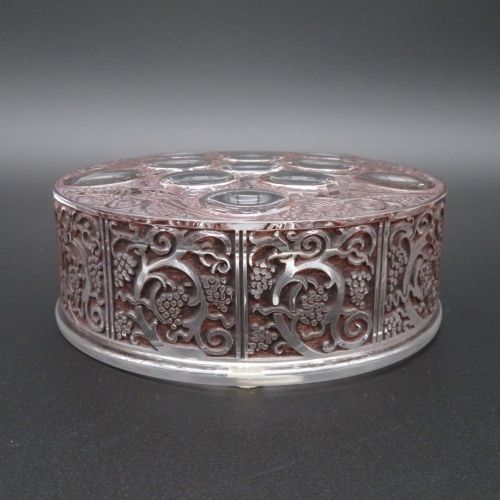
The archive falls into recognisable groups. Czech and Bohemian enamelled and cut glass covers decanter sets, whisky and liqueur services, tall etched vases, wine coolers and trinket boxes, with the origin written three ways in titles: Bohemia, Czechoslovakia and Czech Republic. French opalescent and moulded glass covers bowls, plates, chargers, vases, paperweights, statuettes and car mascots. Dressing-table glass covers atomisers, scent bottles and powder boxes, many with silver or guilloche enamel mounts.
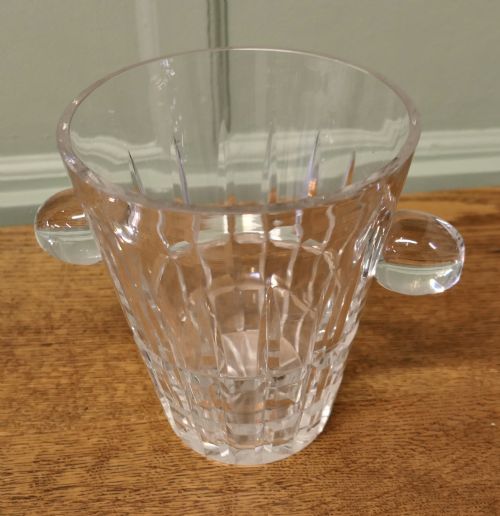
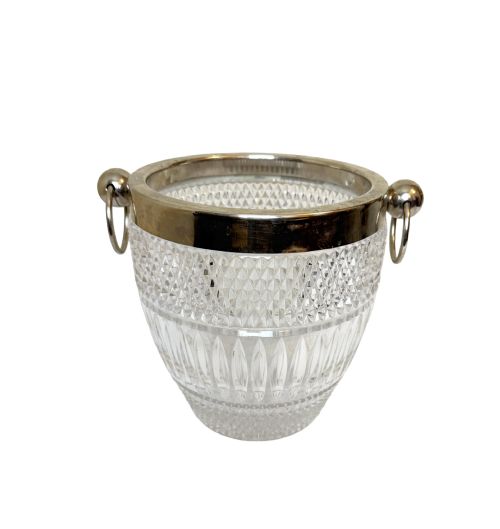
Round the edges sit cocktail shakers, ice and champagne buckets, tantaluses, comports and lamps, often silver plated or chromed. A smaller but steady slice is coloured and specialist glass: uranium and vaseline, malachite, carnival, and cased vases described as blue or red over crystal. Around 72 pieces are listed a year, across 86 different dealers.
Where The Range Splits
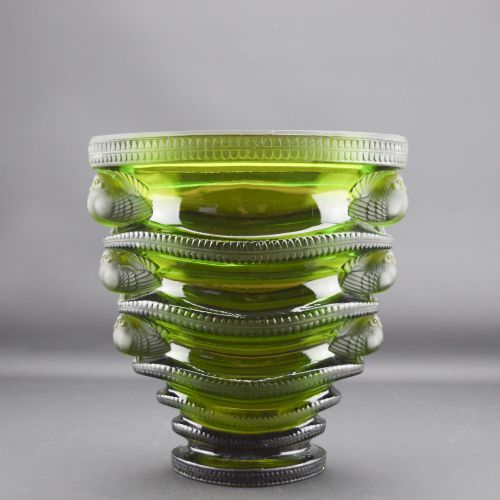
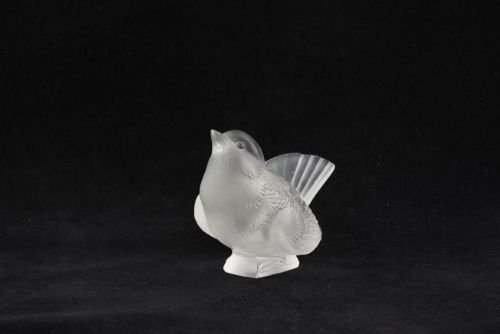
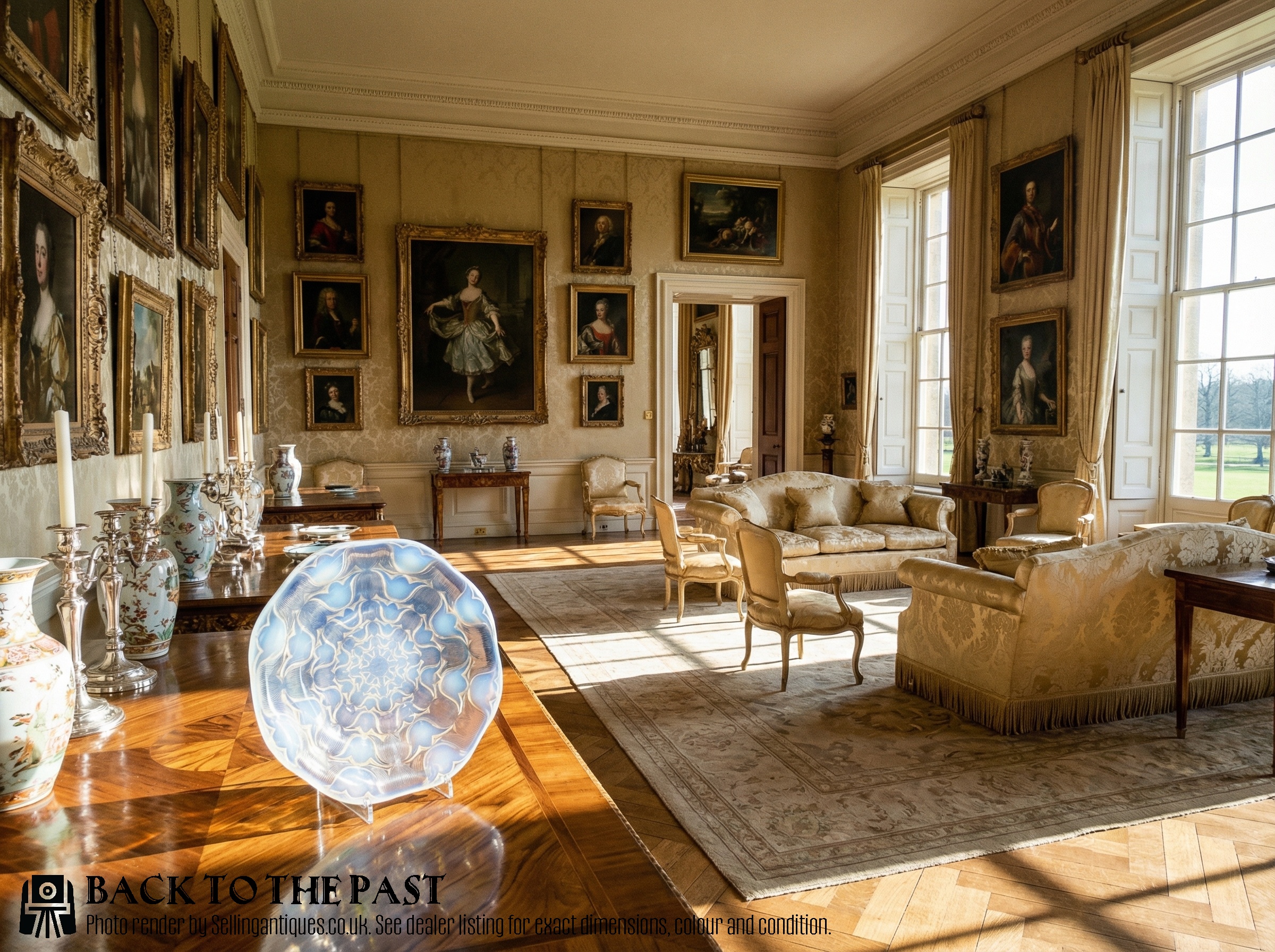
A French name does more to lift a title than anything else in this category. René Lalique pieces cluster at the top of the sample, the car mascots and pattern bowls and figures especially, with Sabino, Verlys, Etling, Daum and Val Saint Lambert in the band below. A title reading simply Art Deco glass vase sits at the bottom of the same range.
After the name comes the work in the glass. Hand enamelling and deep cutting pull upward, and the Czech decanter sets described as hand enamelled lead crystal, or vases as cut and enamel etched, sit well above pressed candlesticks and carnival dishes. A signature or factory mark recorded in the title does the same, whether it reads signed Sabino, signed Moser or a noted factory mark.
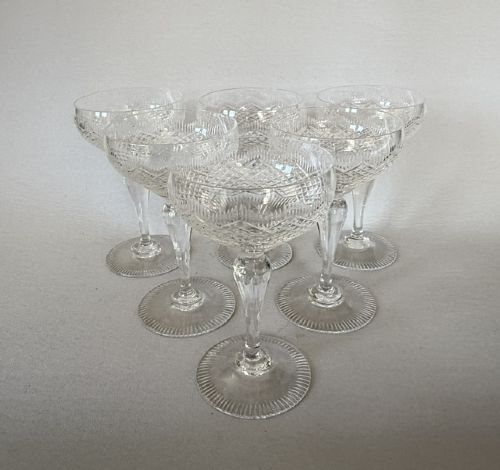
Then completeness and scale. Seven-piece sets, decanters with six matching glasses, sets on their original matching tray: these hold above single decanters and lone glasses every time. Size gets called out too, in 43 titles, and the measured examples that reach the top include a 36cm bubble-glass vase and 14in opalescent chargers.
Art Deco Glass Retail Price Guide 2026
Typical UK retail prices for art deco glass, calculated from the Sellingantiques database of over a million retail prices indexed since 2003. This retail price guide relies exclusively on Sellingantiques data; no external sources or auction records are used, so the figures do not describe the wider market.
The earliest firmly dated Art Deco glass on Sellingantiques is a handbag-shaped vase of 1910.
Karl Palda
The Art Deco Glass Glossary
- Opalescent
- Milky-white glass that glows blue or amber depending on the light behind it. It appears in 69 titles, nearly all of them French bowls, plates and chargers.
- Atomiser
- A perfume bottle fitted with a bulb-and-pump spray. Both spellings turn up, atomiser and atomizer, 52 titles between them.
- Decanter set
- A decanter with matching glasses, often six, sometimes on a tray. It's the commonest set form in the category and a mainstay of the Czech listings.
- Cased, or over crystal
- A coloured layer laid over clear glass and then cut through, so the clear shows in the pattern. Titles read blue over crystal, red over crystal.
- Car mascot
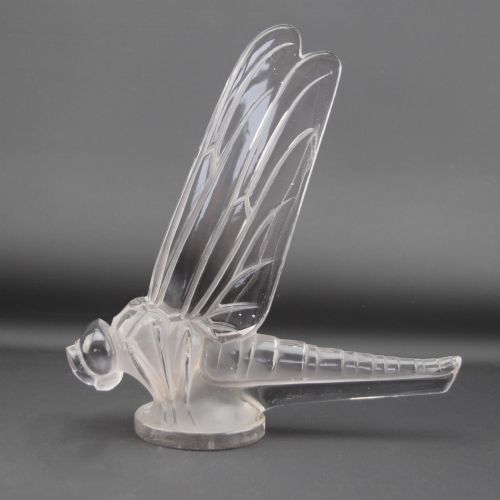
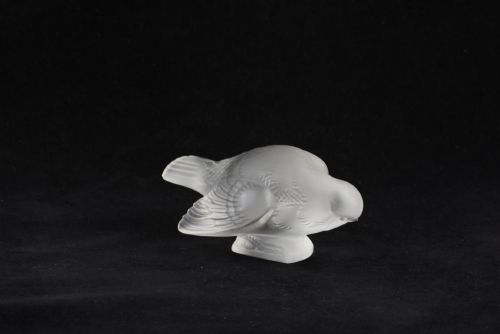
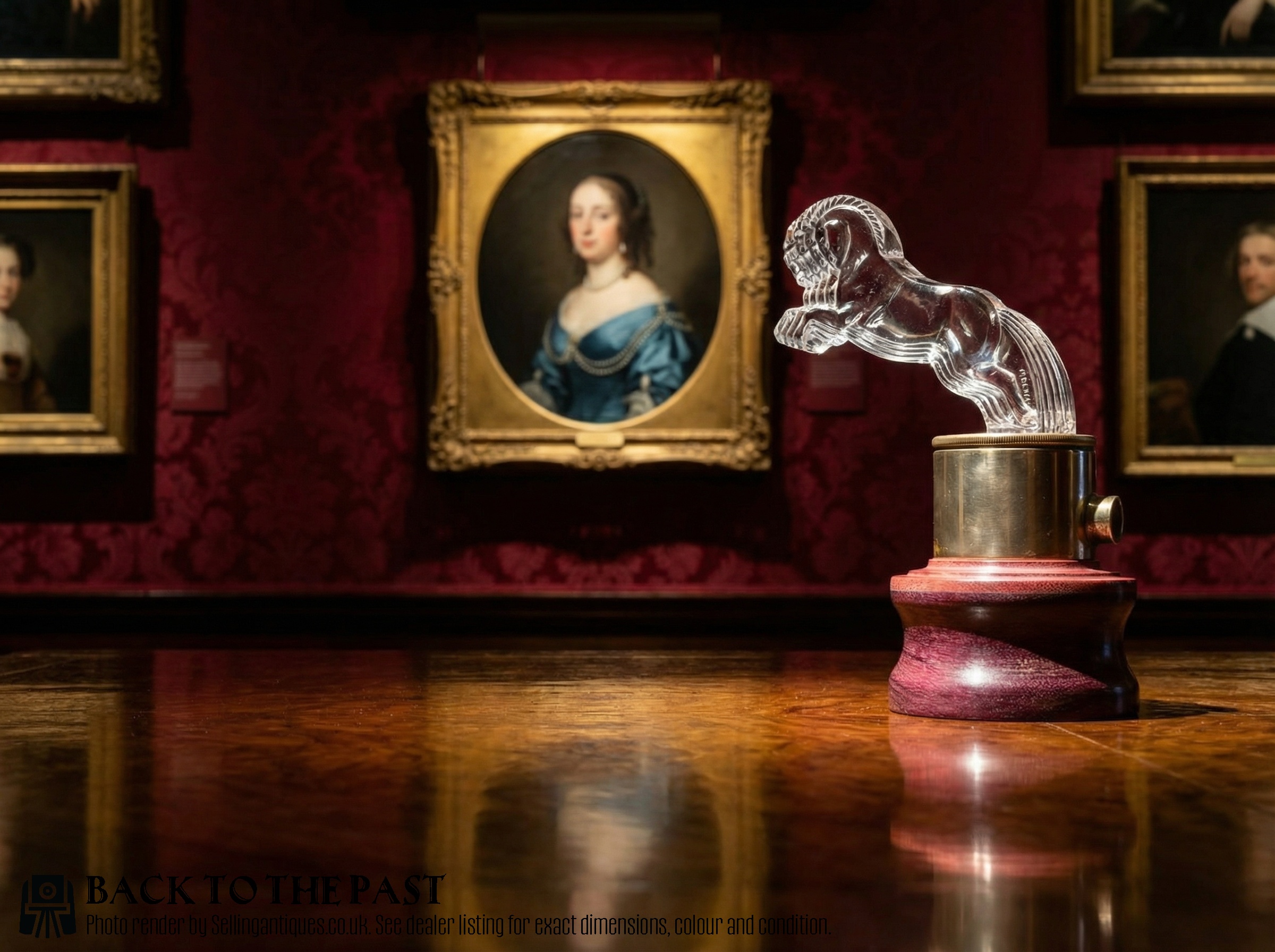
- A moulded glass radiator ornament. Thirteen titles, in the shape of sparrows, a dragonfly, a perch, a wild boar, a peacock's head and five horses.
- Guilloche enamel
- Translucent enamel laid over an engine-turned metal ground. Seen on the silver-mounted scent bottles and dressing-table jars.
Art Deco Glass: Frequently Asked Questions
What date is most Art Deco glass?
The dated field runs 1910 to 1950, and of the 642 listings carrying a clean year, 525 fall in the 1930s and 111 in the 1920s. Only five sit in the 1940s and 1950s together.
c1930 appears in 165 titles. In practice it works as shorthand for interwar rather than a precise year, and a few titles give a firmer date than the field does.
Which pieces turn up most often?
Vase, perfume and decanter are almost level as the leading object words, at 121, 120 and 115 titles. Bottle follows at 111, perfume bottle at 79.
So the heading really covers three collecting habits filed under one style: French and Czech vases, dressing-table glass, and drinking sets.
Is Czech glass the same as Bohemian?
The titles use Bohemia, Czechoslovakia and Czech Republic for glass made in the same interwar decades and the same region. Which word a dealer picks is a matter of habit.
Czech appears in 81 titles and enamel in 82. The typical form is a decanter, whisky or liqueur set, or a tall etched vase.
What is uranium glass in these listings?
Greenish-yellow glass coloured with uranium oxide, which fluoresces. It shows up 16 times in the archive, sometimes described as vaseline glass.
It isn't confined to one form. Tall enamelled Czech vases carry it, and so does a whole cocktail shaker.
Are car mascots part of this category?
Yes, and they're the oddest thing in it. Thirteen titles cover moulded glass radiator ornaments, in the shape of sparrows, a dragonfly, a perch, a wild boar, a peacock's head and five horses.
They sit at the very top of the sample.
How many dealers list Art Deco glass?
Around 72 pieces are listed a year on Sellingantiques, handled by 86 different dealers over time. That makes it a broadly stocked category rather than a specialist corner.
Only one name, Karl Palda, is carried by three or more of them. Every other maker in the titles is effectively one or two dealers' stock.