



Antique Drinking Glasses
Stemmed and footed glasses made for wine, ale and spirits, sold in pairs and sets rather than one at a time.

Antique Drinking Glasses
The category is sold by the multiple. Two-thirds of titles on Sellingantiques simply say "glasses", a third specify a pair, and sets of six turn up throughout. A pair or set of six English wine glasses or rummers, Victorian or Georgian, is the piece you'll meet most often.
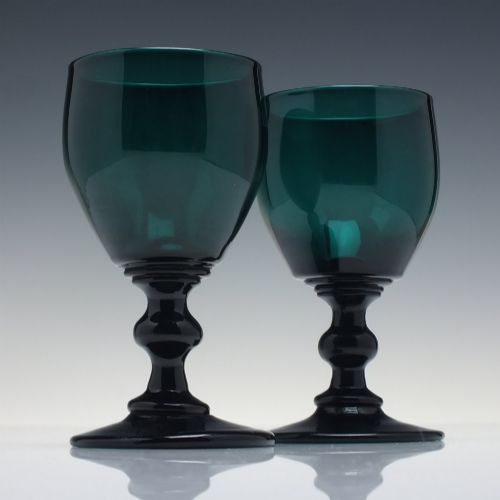
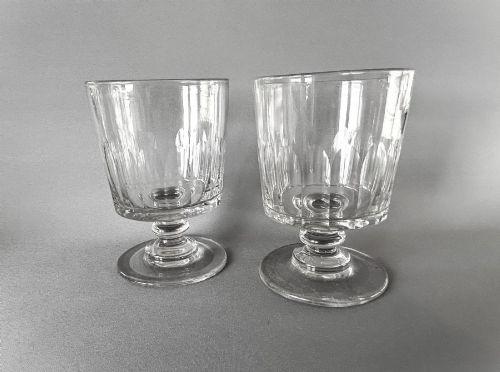
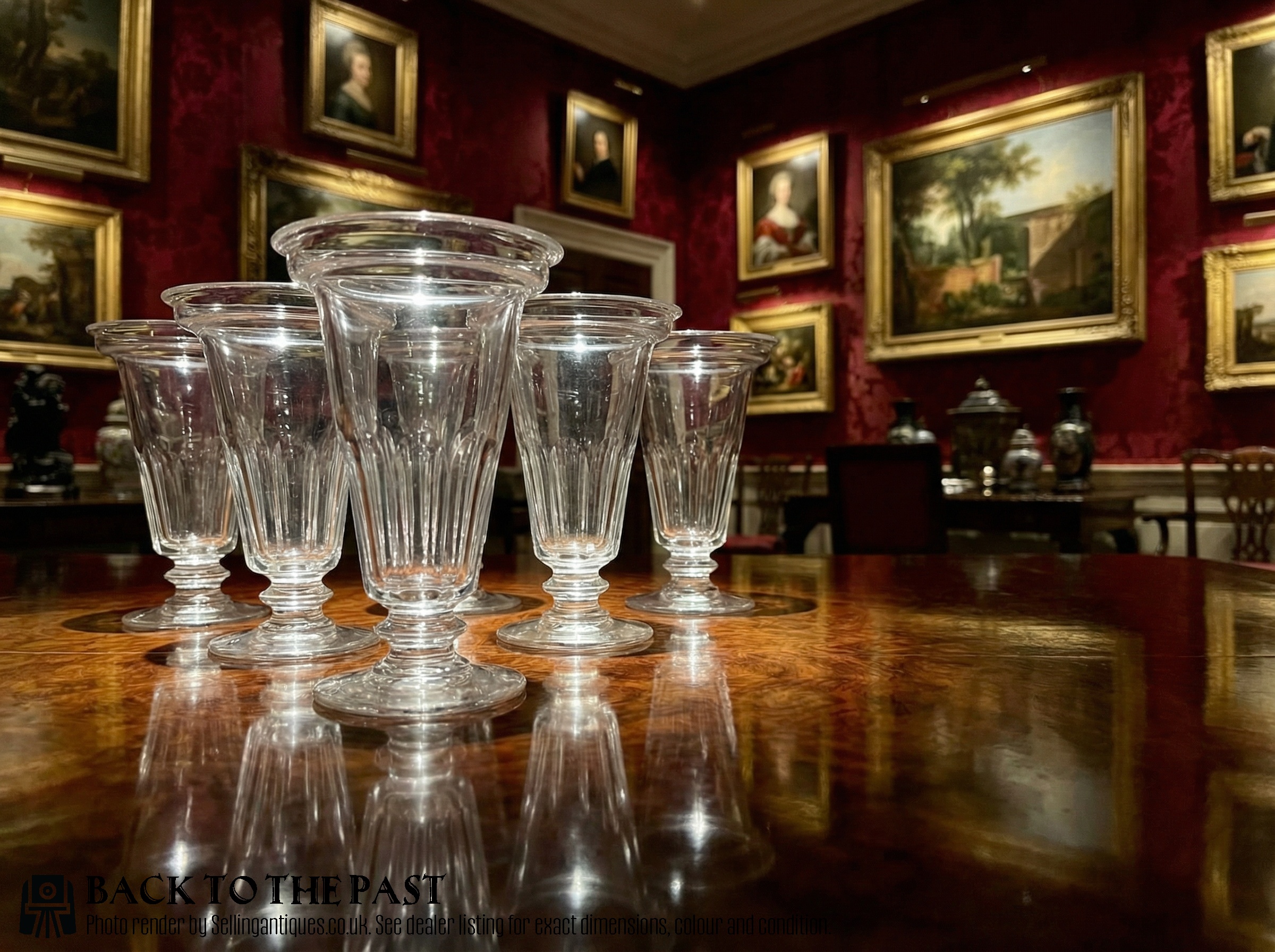
Glass made specifically for drinking spread through Britain from the later 17th century, and by the Georgian period there were graded forms for particular drinks: wine, ale, dram, cordial. The short-stemmed rummer and the plain tumbler served the tavern and the everyday table. Rummers alone account for roughly a fifth of titles, with pan tops, ovoid bowls, baluster stems, square lemon squeezer feet and Anglo-Irish work among them.
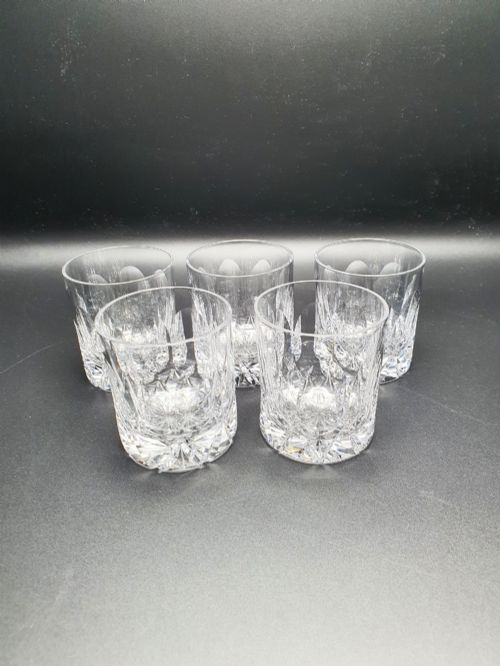
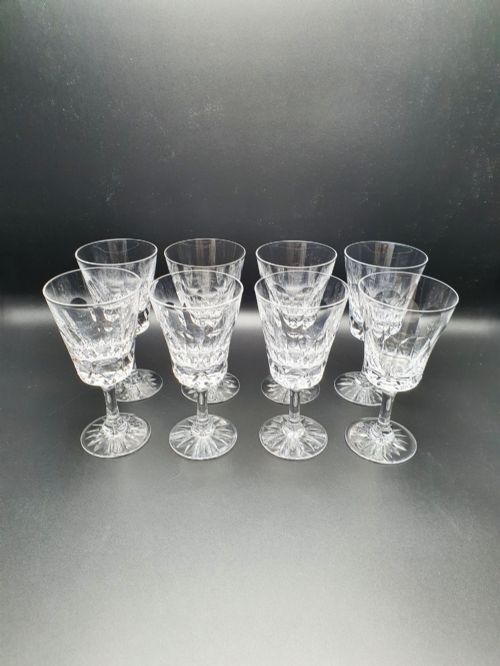
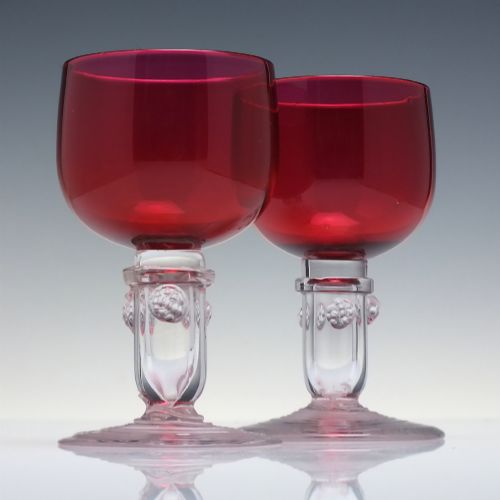
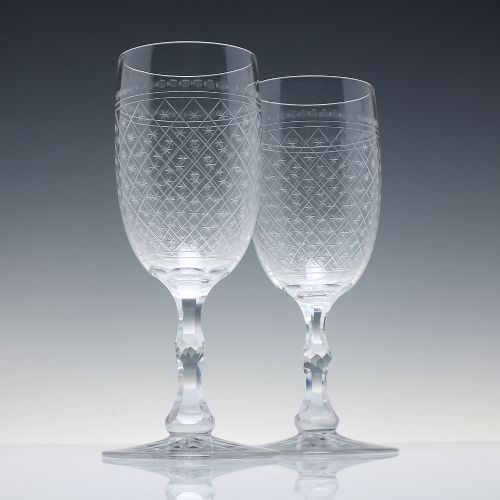
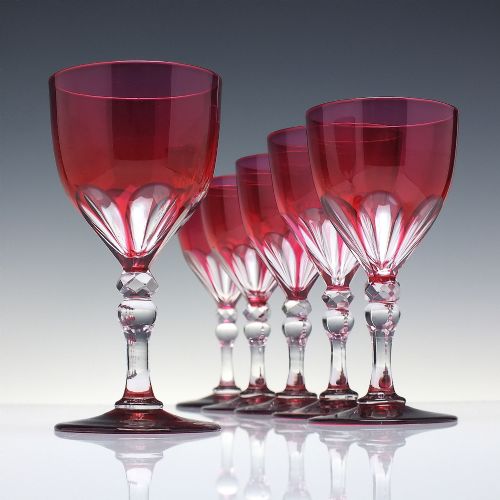
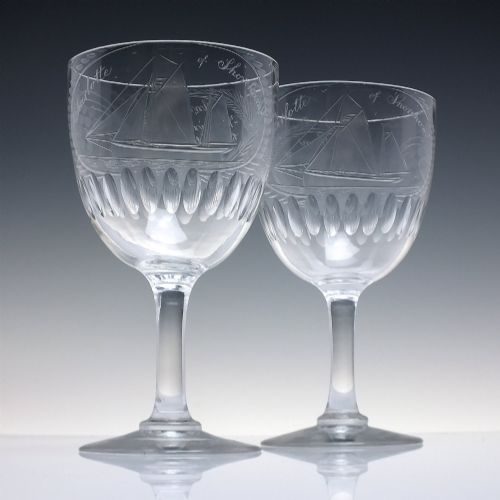
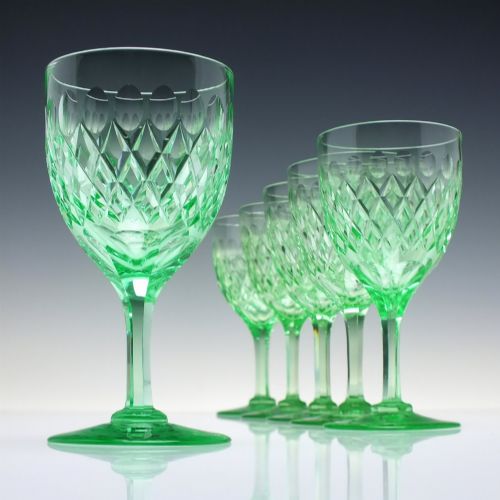
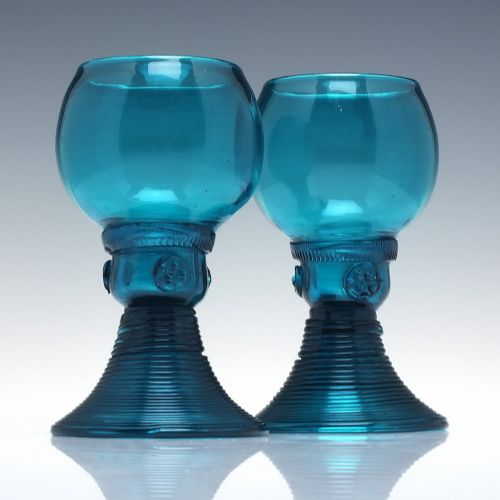
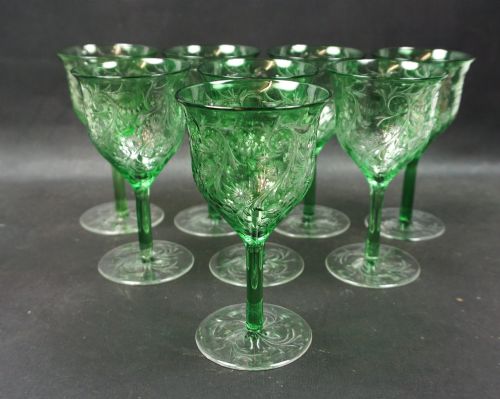
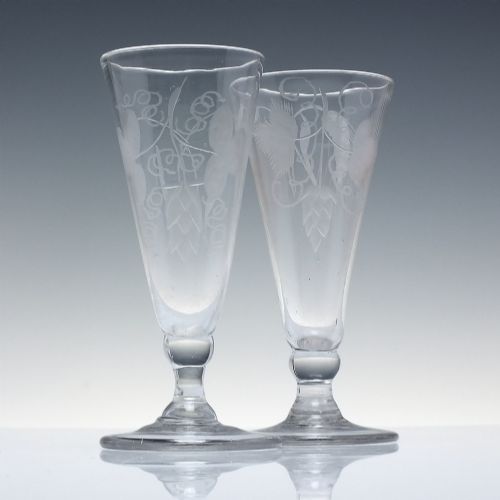
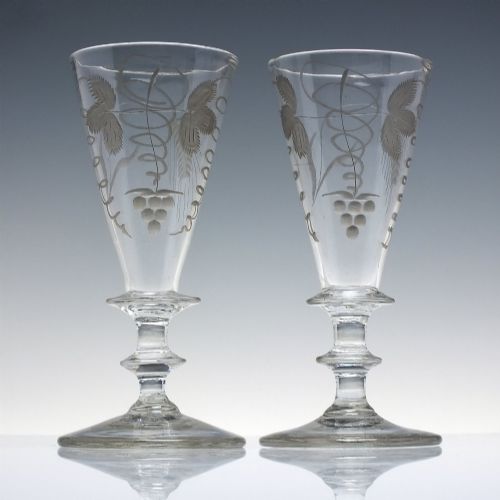
Two other strands run strongly. Colour is one: cranberry, Bristol green, emerald, amber, amethyst, ruby and vaseline all appear on sets. Cut and engraved crystal is the other, with acid etched, intaglio and facet cut work recorded alongside. Together they cover a good share of what comes up.
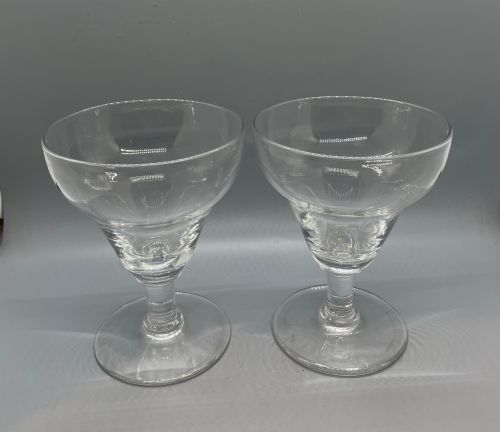
At the two ends sit the outliers. A handful of 18th-century pieces, dram glasses with folded feet and plain stem goblets, are dated by dealers to the 1740s and 1750s. At the other end, 1930s cocktail, martini and aperitif services, sometimes with a decanter or a plated tray, form the second largest period band. Non-British glass is uncommon: Murano, Bohemian, Biedermeier and French Art Deco each appear once or twice.
What Separates Them
Number counts first. Pairs sit low in the range, and the money climbs as the set grows: eight, twelve, sixteen, then the outliers, a nineteen-piece drinking service, a suite of thirty-four French Art Deco glasses, a lot of eighty-four Murano glasses. A complete service with its decanter or pitcher does better than the same glasses loose.
Age pulls hard in the same direction. Plain stem goblets of the 1750s, facet cut wine glasses of the 1780s and engraved dram glasses of the 1740s are the highest-priced stemware recorded, while Victorian and 1930s pairs sit at the bottom. Between those points, what's been worked into the glass decides a lot: cut, engraved, etched and intaglio surfaces lift a set, and an intaglio-cut rock crystal service tops the sampled range.
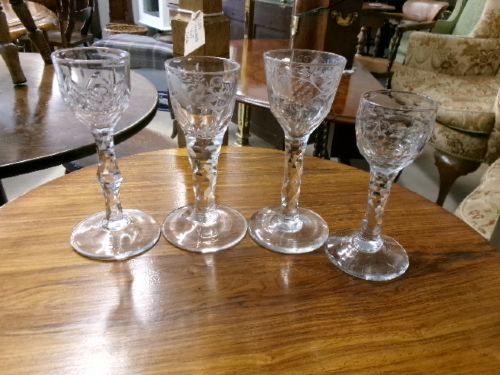
Then the parts you can see in a photograph. Air twist, baluster, bobbin and faceted stems, folded feet and lemon squeezer feet all appear on the more expensive sets. Size is its own selling point, and dealers flag it: unusually large, very tall, heavy crystal.
Antique Drinking Glasses Retail Price Guide 2026
Typical UK retail prices for drinking glasses, calculated from the Sellingantiques database of over a million retail prices indexed since 2003. This retail price guide relies exclusively on Sellingantiques data; no external sources or auction records are used, so the figures do not describe the wider market.
The largest lot to pass through Sellingantiques was eighty-four Murano glasses. A suite of thirty-four French Art Deco glasses follows it.
The Antique Drinking Glasses Glossary
- Rummer
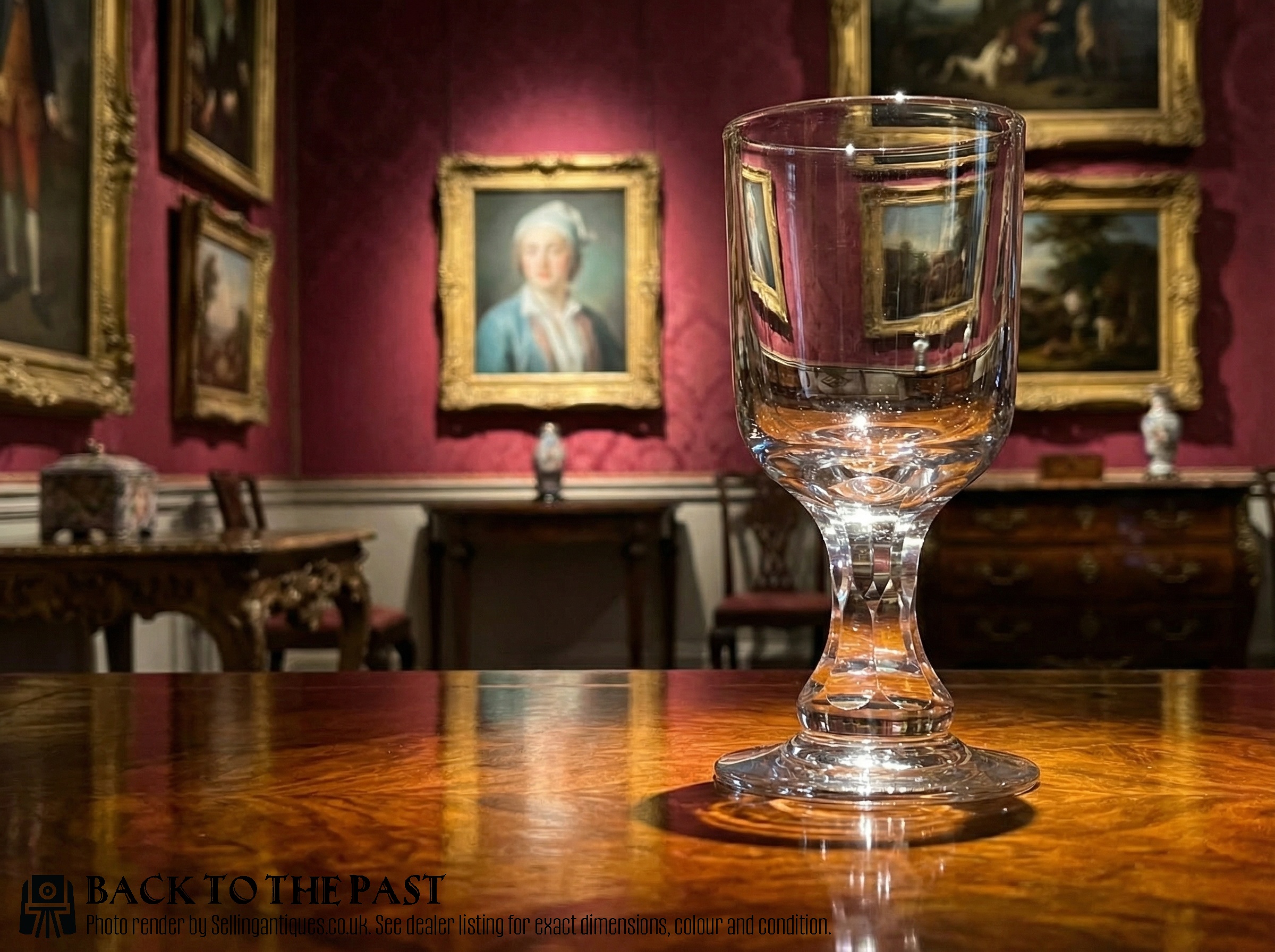
- A short-stemmed footed drinking glass with a generous bowl, a staple 19th-century English form and roughly a fifth of the titles.
- Pan top
- A bowl with a flared, shallow upper section, described on several rummers.
- Lemon squeezer foot
- A thick moulded foot with radiating ribs underneath, noted on a group of rummers dated around 1800.
- Folded foot
- The foot rim turned under to thicken the edge, cited on 18th-century dram glasses.
- Air twist stem
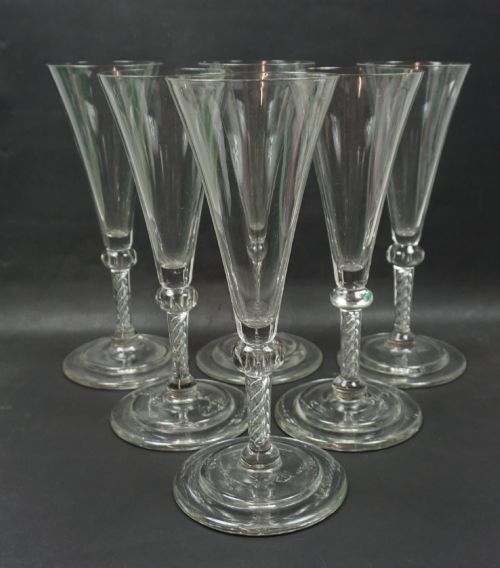
- Spiralling threads of trapped air running through the stem, recorded on a set of tall wine flutes.
- Deception glass
- A toasting glass with a thickened bowl, so it holds less than the size suggests.
Antique Drinking Glasses: Frequently Asked Questions
What is a rummer?
A short-stemmed footed drinking glass with a generous bowl, and one of the standard English forms of the 19th century. It makes up roughly a fifth of the titles in the category.
Listings describe them with pan tops, ovoid bowls, baluster stems and square lemon squeezer feet. Anglo-Irish and tavern rummers both turn up.
Are drinking glasses sold singly or in sets?
By the multiple, almost always. Two-thirds of titles say "glasses", a third specify a pair, and sets of six are common.
Larger groups appear too: eight, twelve, sixteen, a nineteen-piece service, a suite of thirty-four, and one lot of eighty-four.
How old are most antique drinking glasses?
Victorian is the commonest label, followed by the 1930s, Georgian, the 1900s and the 1890s. Of the listings carrying a clean year, those years run from 1800 to 1940.
A number of titles carry a circa date that the period field doesn't record, including c1740, c1750 and c1780, so the 18th century is better represented than the figures alone suggest.
Which colours turn up in coloured sets?
Cranberry recurs, along with Bristol green, emerald green, amber, amethyst, ruby red and vaseline.
Colour is a defining strand of the category rather than an occasional novelty, and it appears on a substantial minority of the sets recorded.
Do Art Deco cocktail glasses come up?
Yes. The 1930s form the second largest period band on Sellingantiques, with martini, aperitif and cocktail glasses among them.
Some arrive as full services with a decanter, and glasses on plated trays appear as well.
Is non-British glass common in this category?
No. The evidence is overwhelmingly English, and foreign glass shows up once or twice each.
Murano and Salviati from Italy, Steinschonau and Bohemian work from central Europe, Biedermeier, Austrian and French Art Deco make up that small group.