




Antique Apothecary Bottles
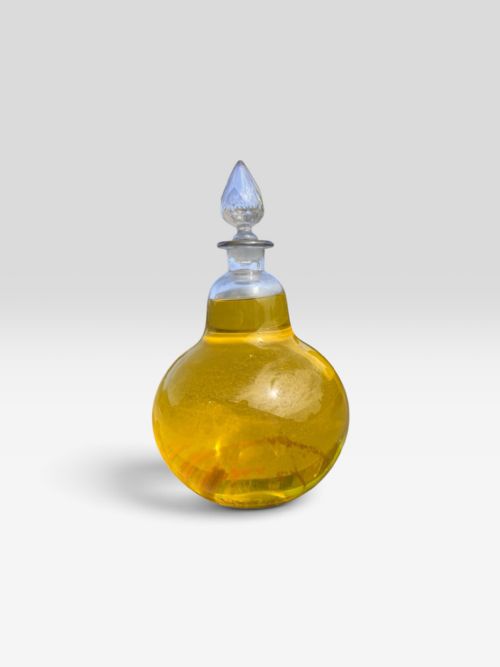
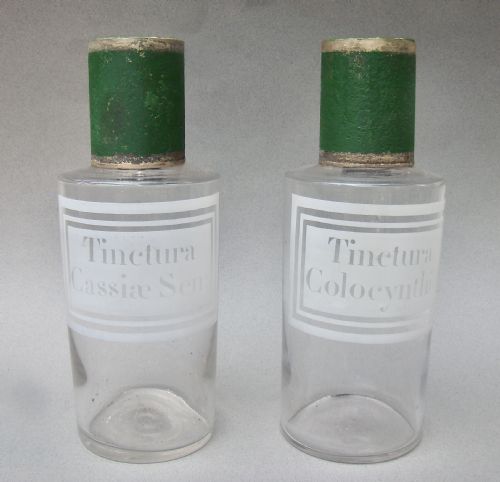
Glass bottles and jars from the dispensing chemist's counter and shelf, made to hold drugs, tinctures and ingredients, many with the drug name painted straight onto the glass.

Antique Apothecary Bottles
They're free-standing glass storage vessels from apothecary and chemist shops: stoppered bottles for liquids, wide-mouthed jars for dry goods. Some held bulk stock behind the counter, others stood on the shelf for display. They were made in quantity through the eighteenth, nineteenth and early twentieth centuries.
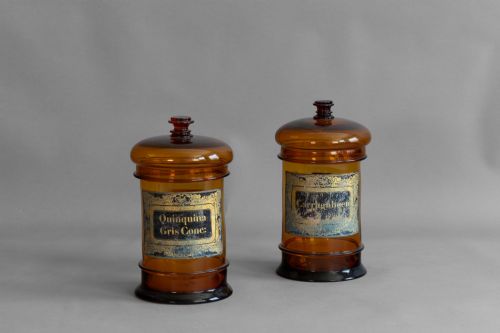
The version you're most likely to meet is a 19th-century or Victorian bottle or jar sold on its own. "Glass" appears in 22 of 54 titles on Sellingantiques, "bottles" in 20 and "jar" in eight. Pairs turn up in nine titles, so multiples are a habit of the category, but singles still lead.
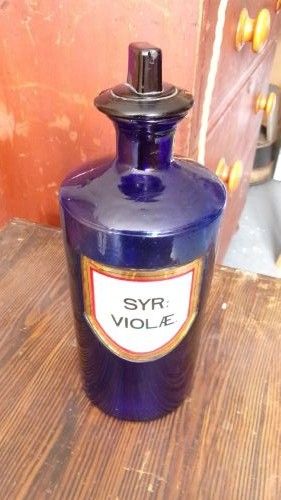
Beyond the plain single, four groups recur. Labelled shop bottles carrying a painted or applied drug name make up around a quarter of listings, with titles naming blue, white, grey and yellow labels. Coloured glass is a similar share, blue leading and Bristol blue singled out repeatedly. Then pairs, sets and collections, and a small group of outsize carboys.
Dating is broad rather than precise. "19th Century" and "Victorian" between them account for over half the listings, and only 12 carry a clean year, those running 1850 to 1920. Twentieth-century entries exist but are thin, and the odd title reaches much further back, one English bottle titled as 16th century. Title and date field don't always agree, so read them together.
Where The Range Splits
Number decides more than anything else. Single bottles cluster at the bottom of the range, while the top is held by sets and collections: eleven, thirteen, seventeen and one group of 29 chemists' jars. Alongside nine pairs sit sets of three, five, eight and ten.
Colour is the next lever. Amethyst appears exactly once and sits at the very top. Blue and green recur through the upper half, with Bristol blue named again and again, while undescribed clear glass jars sit low. Size pulls the same way: "large" runs through 16 titles, and all four carboys sit in the upper half.
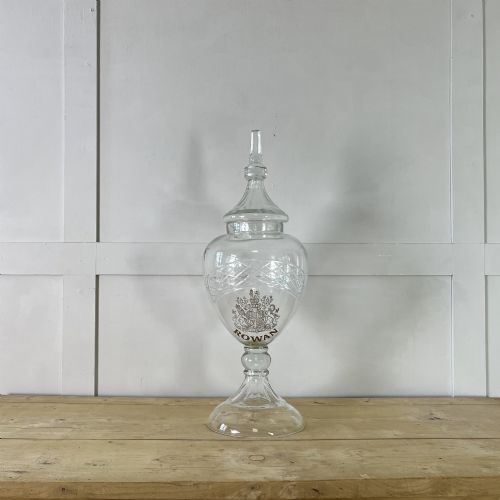
Then the label and the glass itself. Titles that specify a coloured label, a Royal Warrant label or original labels naming a firm sit above the plainest painted-label jars, which anchor the bottom. Etched French jars, a cut glass jar and a polychrome enamelled bottle each appear once, and all of them sit above plain work.
Antique Apothecary Bottles Retail Price Guide 2026
Typical UK retail prices for apothecary bottles, calculated from the Sellingantiques database of over a million retail prices indexed since 2003. This retail price guide relies exclusively on Sellingantiques data; no external sources or auction records are used, so the figures do not describe the wider market.
Apothecary bottles have been listed on Sellingantiques since 2012.
The Antique Apothecary Bottles Glossary
- Apothecary bottle
- Stoppered glass vessel for storing drugs or tinctures in a dispensing shop.
- Apothecary jar
- The wide-mouthed version, often with a cover, made for dry goods rather than liquids.
- Painted label
- Drug name applied directly to the glass rather than on paper. The commonest label wording in these titles.
- Bristol blue
- Deep cobalt glass, named in several titles and usually on labelled shop bottles.
- Carboy
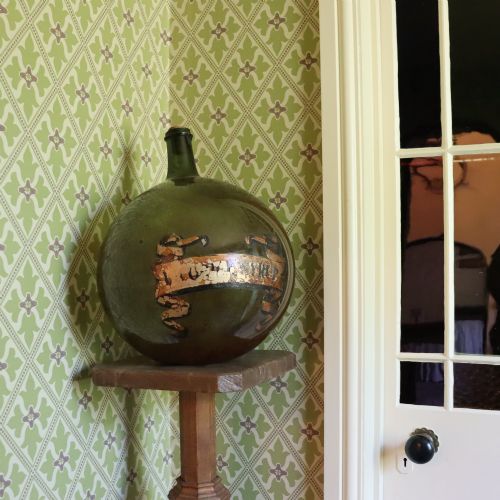
- Very large glass vessel. Four appear in the archive, every one titled large or very large.
- Lollipop stopper
- Flat disc-shaped stopper, named once across the whole archive.
Antique Apothecary Bottles: Frequently Asked Questions
What colours do these bottles come in?
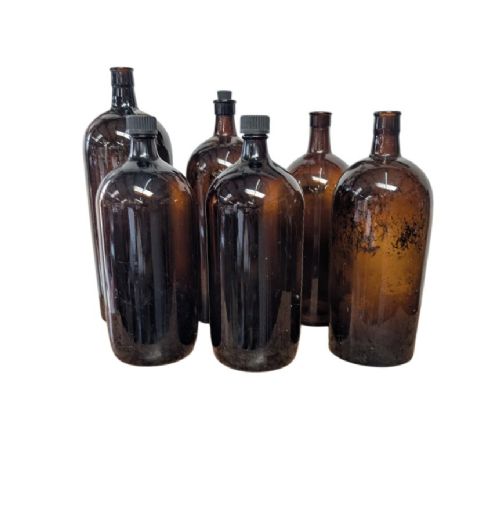
Blue leads where colour is named, appearing in eight titles, with Bristol blue picked out repeatedly. Green, amber and dark green each turn up in individual titles.
Amethyst is the outlier. It appears once in the whole archive, on a pair, and that pair sits at the very top of the range. Clear glass is common and, where nothing else is said about it, sits low.
Are they usually sold singly or in groups?
Singles lead, but not by much. Nine titles name a pair, and there are sets of three, five, eight and ten.
Collections go further: groups of 11, 12, 13, 17 and one of 29 chemists' jars have all been listed. Those larger groups hold the upper end of the range.
How old are most apothecary bottles?
Broad dating dominates. "19th Century" and "Victorian" together cover more than half the 54 listings on Sellingantiques, so you're reading a century or a reign rather than a year.
Only 12 listings carry a clean year, and those run from 1850 to 1920. Twentieth-century entries are real but thin, with a few Georgian, Regency and eighteenth-century pieces at the other end.
Which makers signed apothecary bottles?
No glasshouse or supplier name comes through in this archive. The dealer descriptions don't attach one.
One listing does name the firm on its labels, and that's the only place in the category where a name appears at all. Everything else is identified by colour, label, size or form.
What is a carboy?
A very large glass vessel, used by chemists for bulk quantities. Four appear in the archive, and every one is titled large or very large.
One is described simply as an outsize chemist carboy bottle. All four sit in the upper half of the range.
Do any listings include cases rather than loose glass?
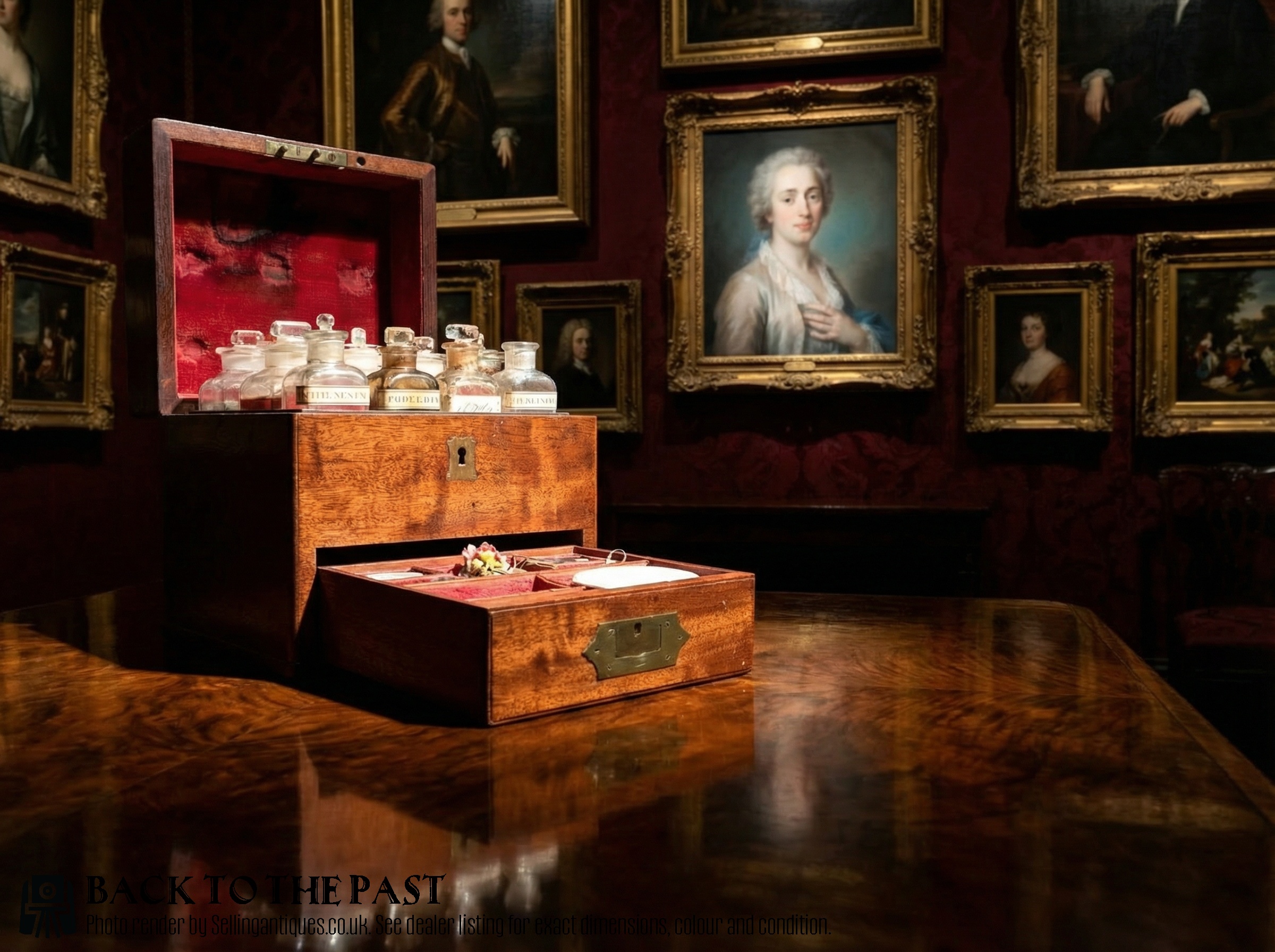
A handful. A Victorian leather apothecary case and a Regency mahogany fitted apothecary's box have each appeared once.
So has a bottle with its carrier, a gelatine jar and cover, and a silver-mounted flask with a pill box. France is the recurring foreign origin across the category, named on amber bottles, etched jars, blown glass pickling jars and a set of eight.