

Antique Glass Jugs
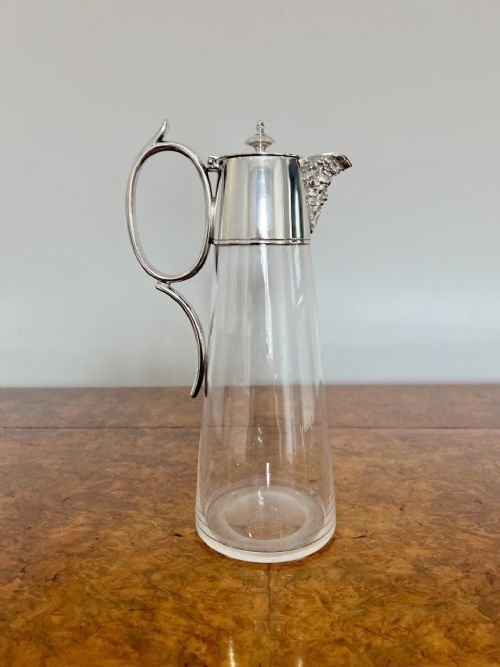
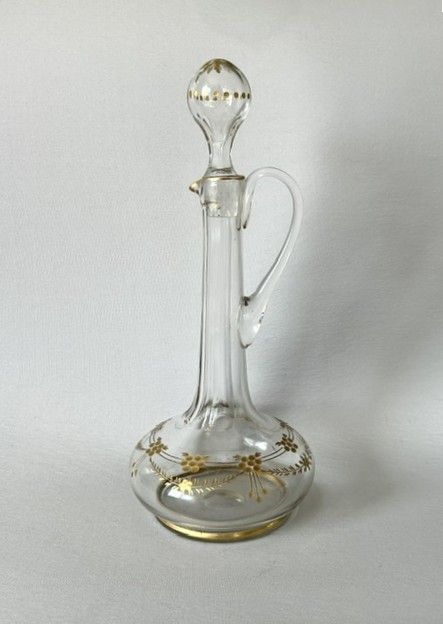
A glass jug for the table, made to pour water, wine or cream, and often finished with a silver or plated rim, mount or hinged lid.
What Are Antique Glass Jugs?
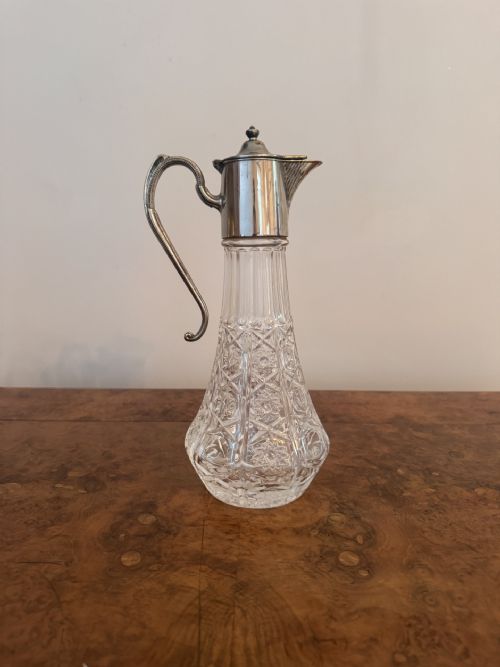
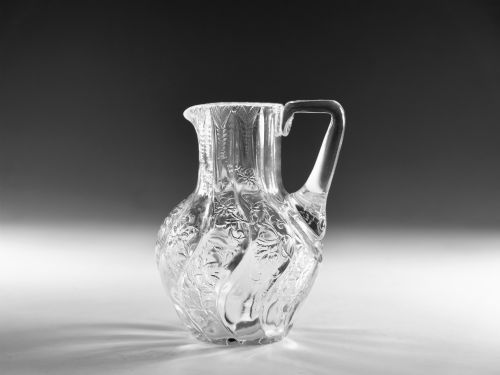
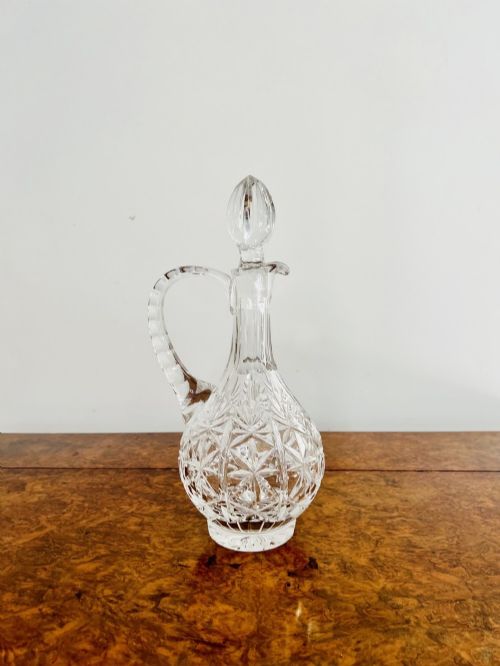
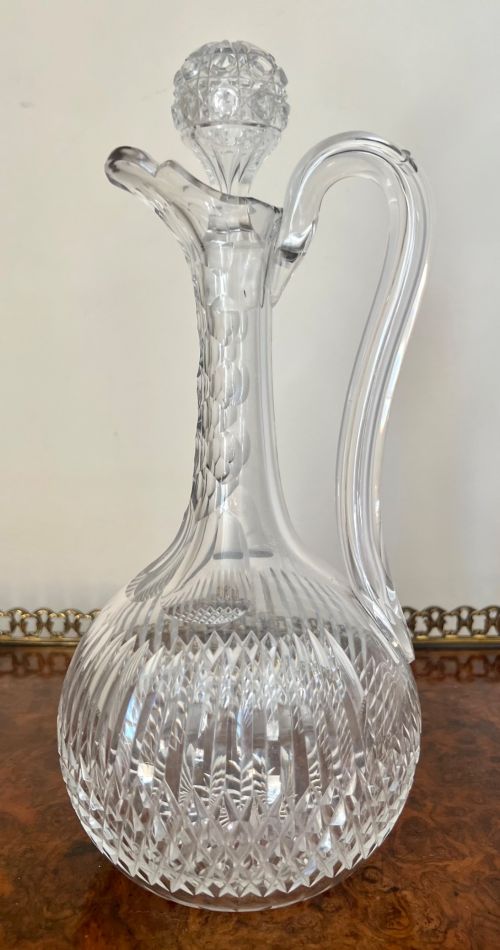
The heading covers serving jugs in glass, and clear cut or engraved lead glass dominates it. Roughly half the category is claret jugs and water jugs, catalogued as Victorian more often than anything else. 'Claret' is the single commonest word in the titles, 'water' and 'cut' close behind.
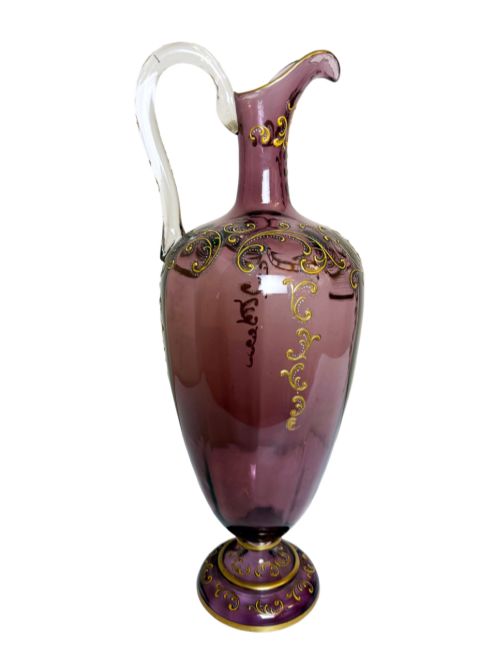
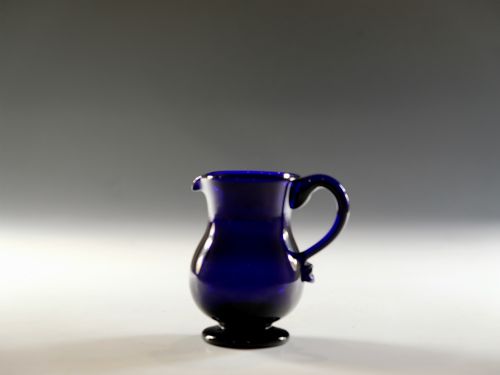
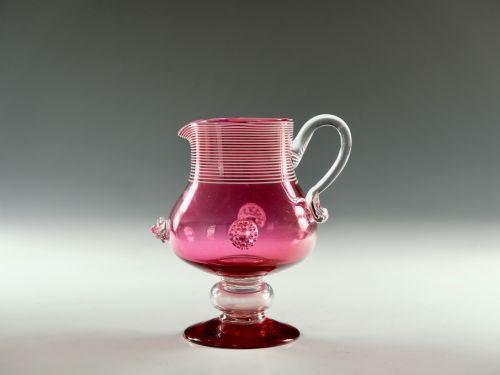
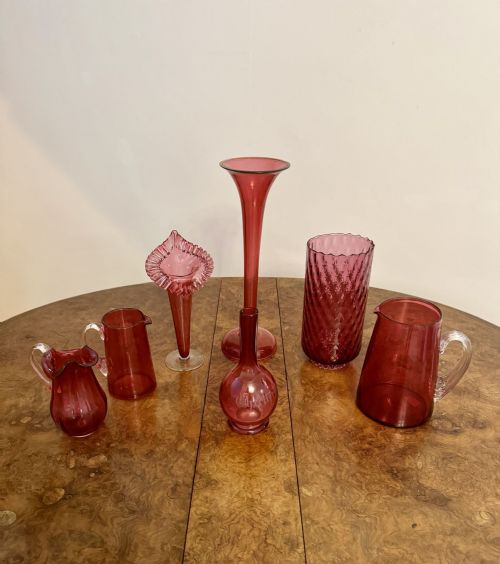
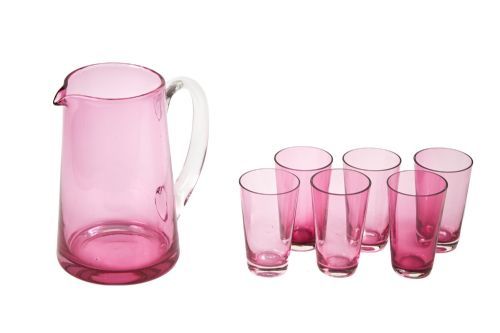
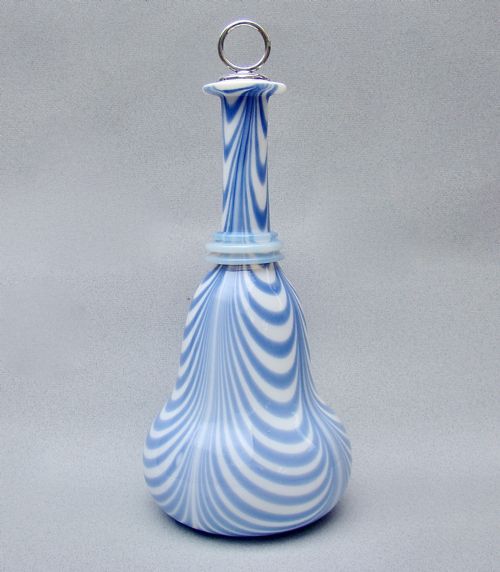
Colour is the second population, about a quarter of the whole. Cranberry leads, then blue, Bristol blue and green, with amber, amethyst, turquoise, opaline, vaseline, ruby and Burmese turning up in ones and twos. Small cream jugs make up a further group, frequently sold with a matching sugar bowl.
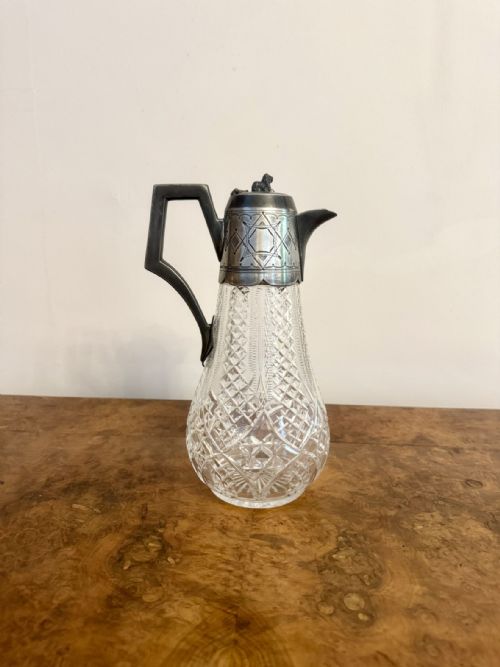
Metal comes with the glass often enough to matter: silver or plated rims, collars, hinged lids and handles, and a few pewter tops. Jugs also arrive in company, as pairs, with goblets or tumblers, as jug-and-bowl sets, or inside a full drinks service.
Dates run from the middle of the 18th century to the middle of the 20th, and where a decade is given the weight sits between the 1860s and the 1910s, with the 1880s busiest. Much of the dating is era labels rather than years, so a jug called Victorian could sit anywhere across six decades, and the dated field and the title sometimes disagree. Art Deco is a thin edge by comparison. English origins are named most often, with Irish, Anglo-Irish, Scottish, French, Dutch, Bohemian, Venetian, Czech, German and Austrian pieces scattered through.

What Sets Them Apart
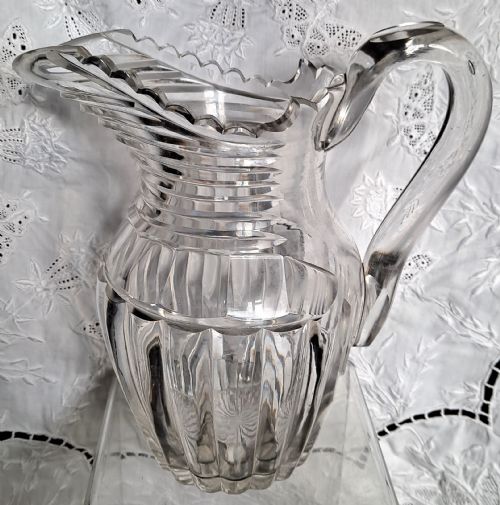
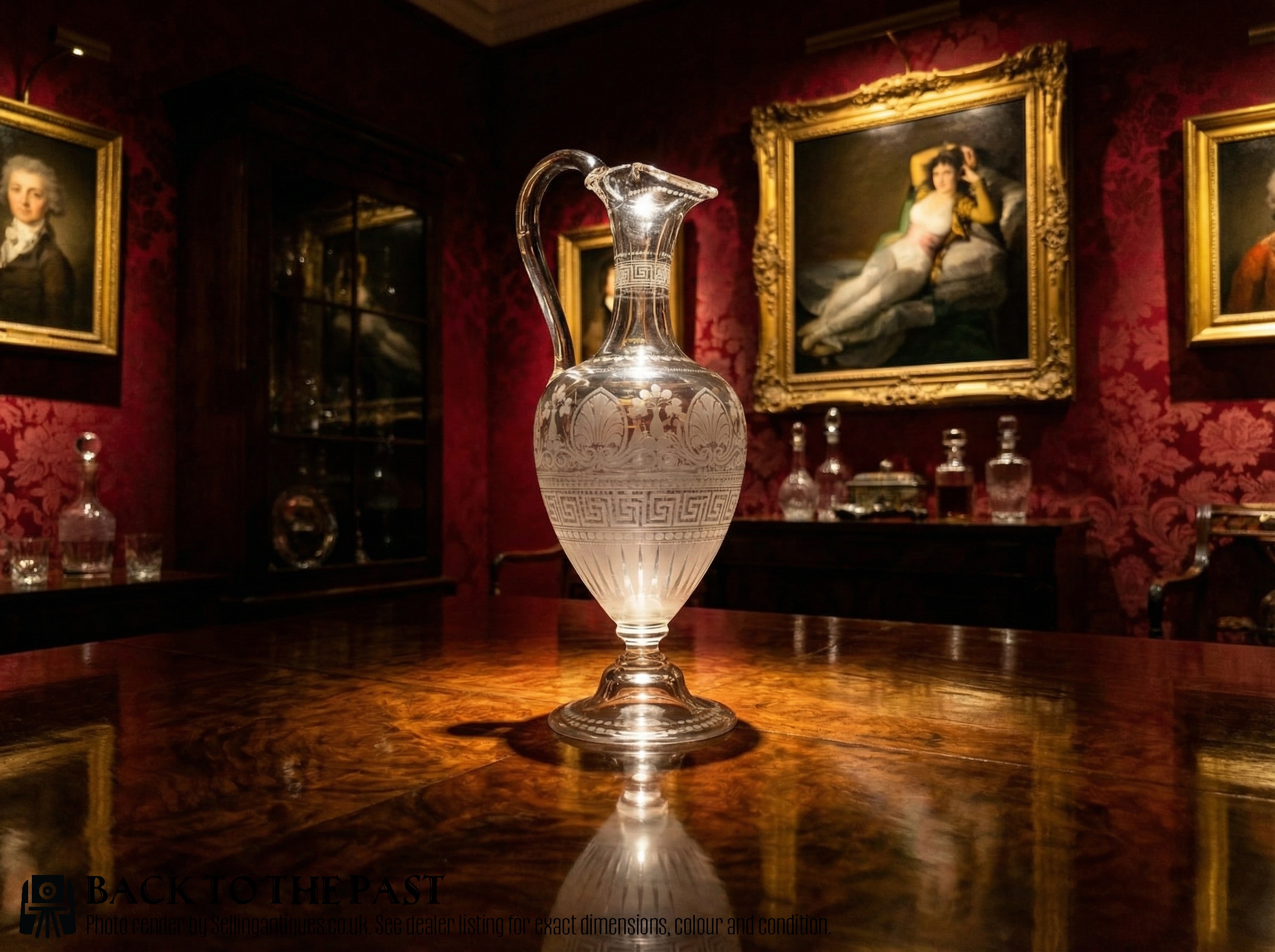
Decoration does most of the separating. Deep cutting, intaglio work and hand wheel-engraving of ferns, birds, vines and stags sit at the top of the range, with applied scroll handles alongside them. Plain moulded jugs, frilled or frosted, sit at the bottom.
Metal lifts a jug. Silver-mounted, silver-topped and silver-lidded claret jugs cluster in the upper half, pewter-topped examples with them, while unmounted glass sits lower. Attribution to a named glasshouse or designer does the same, though such names appear only in scattered single titles rather than as a norm.
Size and completeness are the other two levers. Magnums, jugs described simply as massive, champagne jugs and ones with an integral ice compartment reach the top; so do pairs, jug-and-goblet trios and cased drinks services. Single small cream and cranberry jugs sit at the quiet end.
Retail Price Guide 2026
Typical UK retail prices for glass jugs, calculated from the Sellingantiques database of over a million retail prices indexed since 2003. This retail price guide relies exclusively on Sellingantiques data; no external sources or auction records are used, so the figures do not describe the wider market.
The oldest to pass through Sellingantiques was a facon de Venise jug of about 1680. The dated listings otherwise run from 1750 to 1960.

The Antique Glass Jugs Glossary
- Claret jug
- A tall handled glass jug for serving wine, often with a metal mount or hinged lid. The commonest label in the category.
- Water jug
- A table jug for water, usually clear and either cut or engraved. Second only to claret in the titles.
- Cream jug
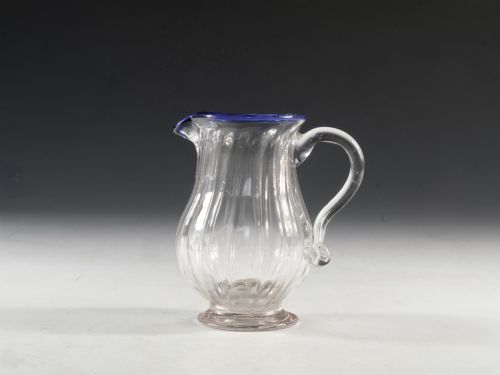
- A small jug for cream, regularly listed with a matching sugar bowl, and sometimes Georgian and blue-rimmed.
- Silver mounted / silver plated
- A metal collar, rim, lid or handle fitted to the glass body. Silver appears far more often in titles than plate.
- Cranberry
- Pink-red glass coloured with gold, and the leading colour term on Sellingantiques by a wide margin.
- Wrythen
- A twisted body, formed in the blowing rather than cut, seen on Georgian cream jugs and wrythen decanter sets.
Frequently Asked Questions
What is the difference between a claret jug and a water jug?
A claret jug is a tall glass jug for decanting and serving red wine, and it is the form most likely to carry a metal mount, handle or hinged lid. A water jug is the plainer table version.
In practice the labels are close cousins in the listings, both usually clear glass and both usually cut or engraved. Claret is used a little more often than water.
Which period do most of these jugs come from?
Victorian is the label used most, appearing in around a third of titles, with Edwardian some way behind and Georgian and Regency thinner again. Art Deco is a small edge of the archive.
Where an actual decade is recorded, the 1880s are the busiest on the books, and the 1860s to 1910s carry most of the weight. Dates in the record run from 1750 to 1960, with one Venetian-style jug catalogued around 1680.
How common are coloured glass jugs?
Coloured glass makes up about a quarter of the category, so it is a real second population rather than an occasional curiosity.
Cranberry leads, followed by blue, Bristol blue and green. Amber, amethyst, turquoise, citrine, opaline, vaseline, ruby and Burmese each surface only a handful of times.
Do glass jugs usually have silver on them?
A good number do. Silver appears in roughly one title in nine, plated in fewer, and the mounts take the form of rims, collars, necks, lids and handles. A few jugs are pewter-topped instead.
The rest are all glass. Metal-mounted pieces tend to sit in the upper half of the range.
Are jugs sold singly or in sets?
Singly, most of the time. Pairs, jug-and-goblet trios, water sets with tumblers, jug-and-bowl sets and full drinks services form a steady minority.
Cream jugs are the exception to watch for, since they often come paired with a matching sugar bowl.
What unusual forms turn up in this category?
Odd shapes drift through the record: a jug with an integral ice compartment, a champagne jug, a cocktail mixing jug, an oil-and-vinegar jug and a wash basin and jug.
A tantalus fitted with cut crystal jugs has passed through, as has a silver-mounted novelty monkey jug that sits at the very top of the range on its own.