

Antique Victorian Glass
Table and drinking glass, coloured decorative pieces, scent bottles and lockable decanter cases from roughly 1830 to 1910, made for the Victorian dining room and dressing table.
Antique Victorian Glass
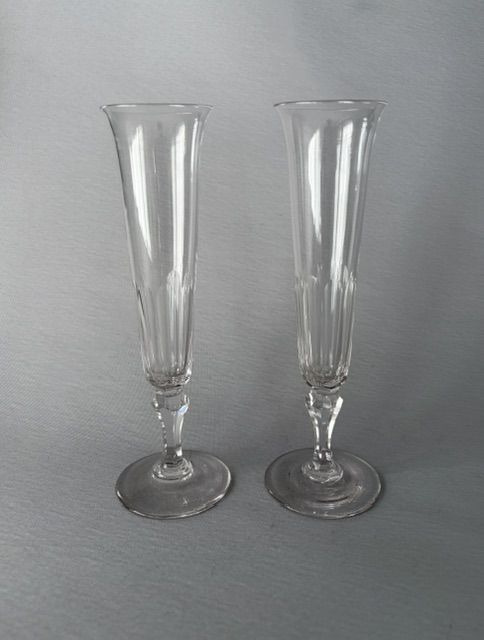
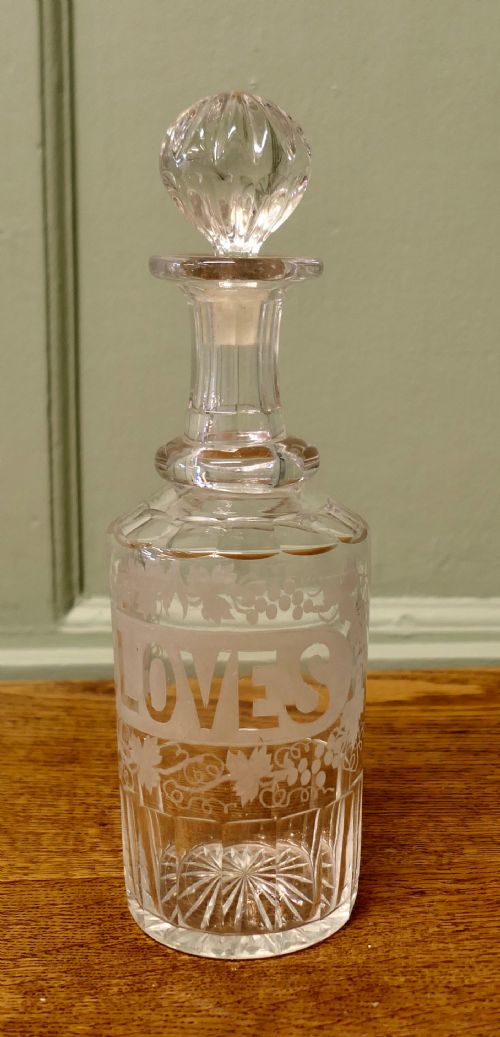
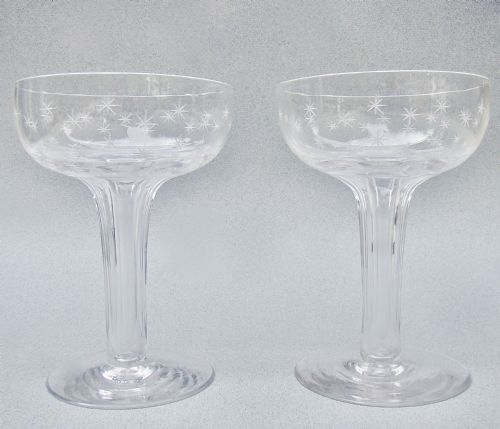
The heading covers British and Continental glass of roughly 1830 to 1910, and clear cut, engraved and etched table glass dominates it. Wine glasses, rummers, decanters, carafes, claret jugs, tumblers and champagne bowls make up about half the category, sold singly, in pairs and in sets of three or six.
The likeliest single meeting is a cut or etched wine glass, rummer, champagne bowl or decanter, English, dated somewhere between the 1850s and the 1890s. Cutting is named in more titles than anything else, and pairs run a close second.
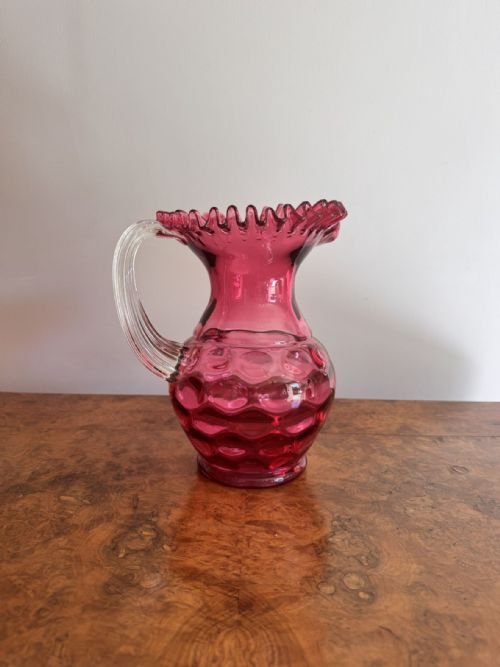
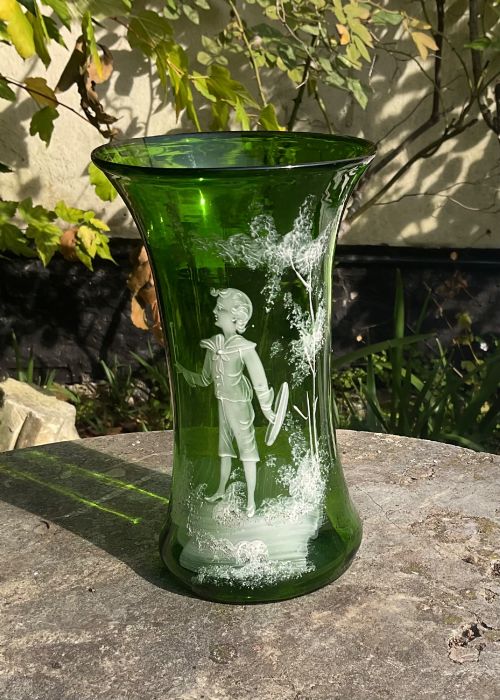
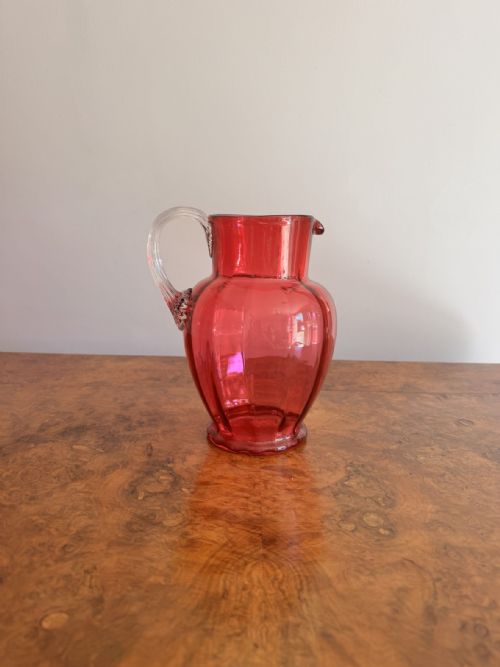
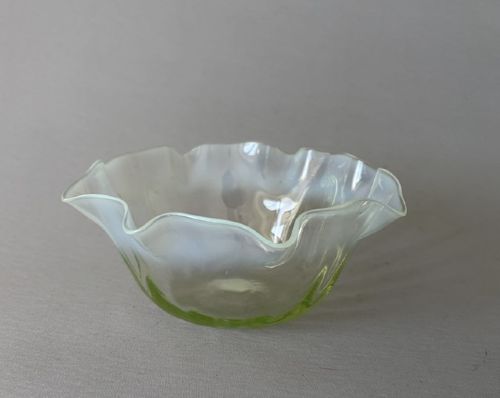
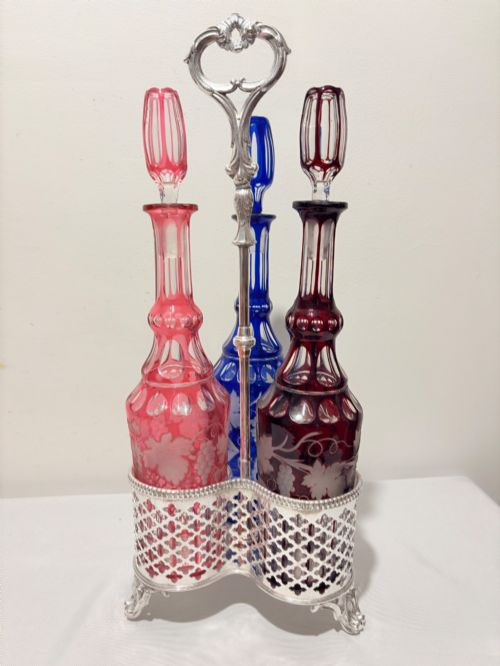
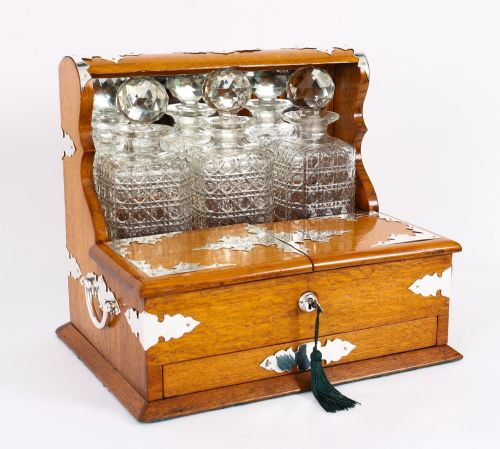
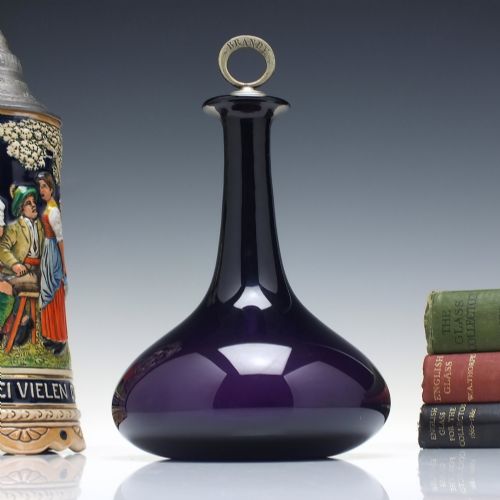
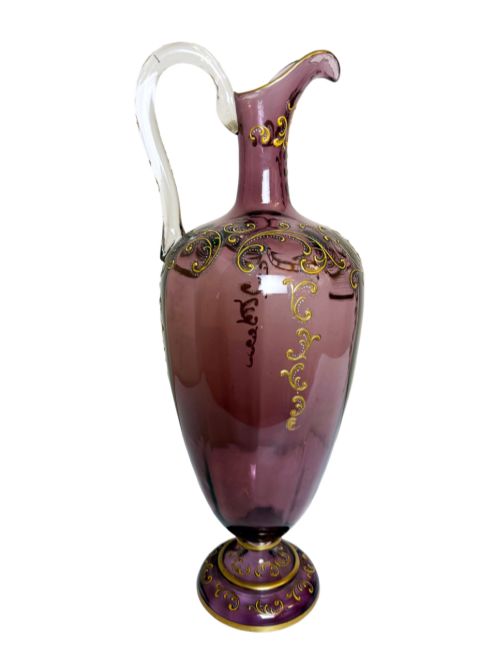
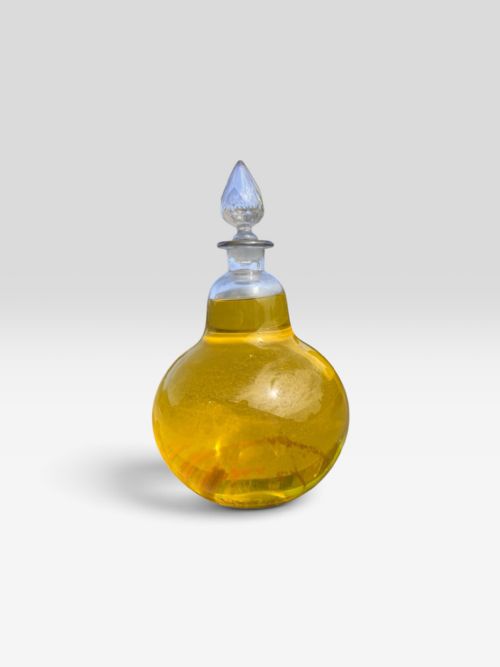
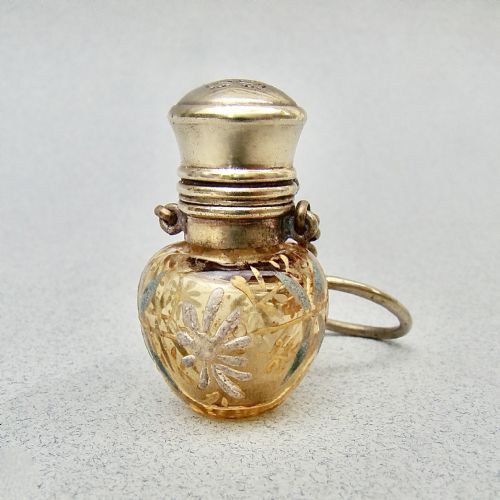
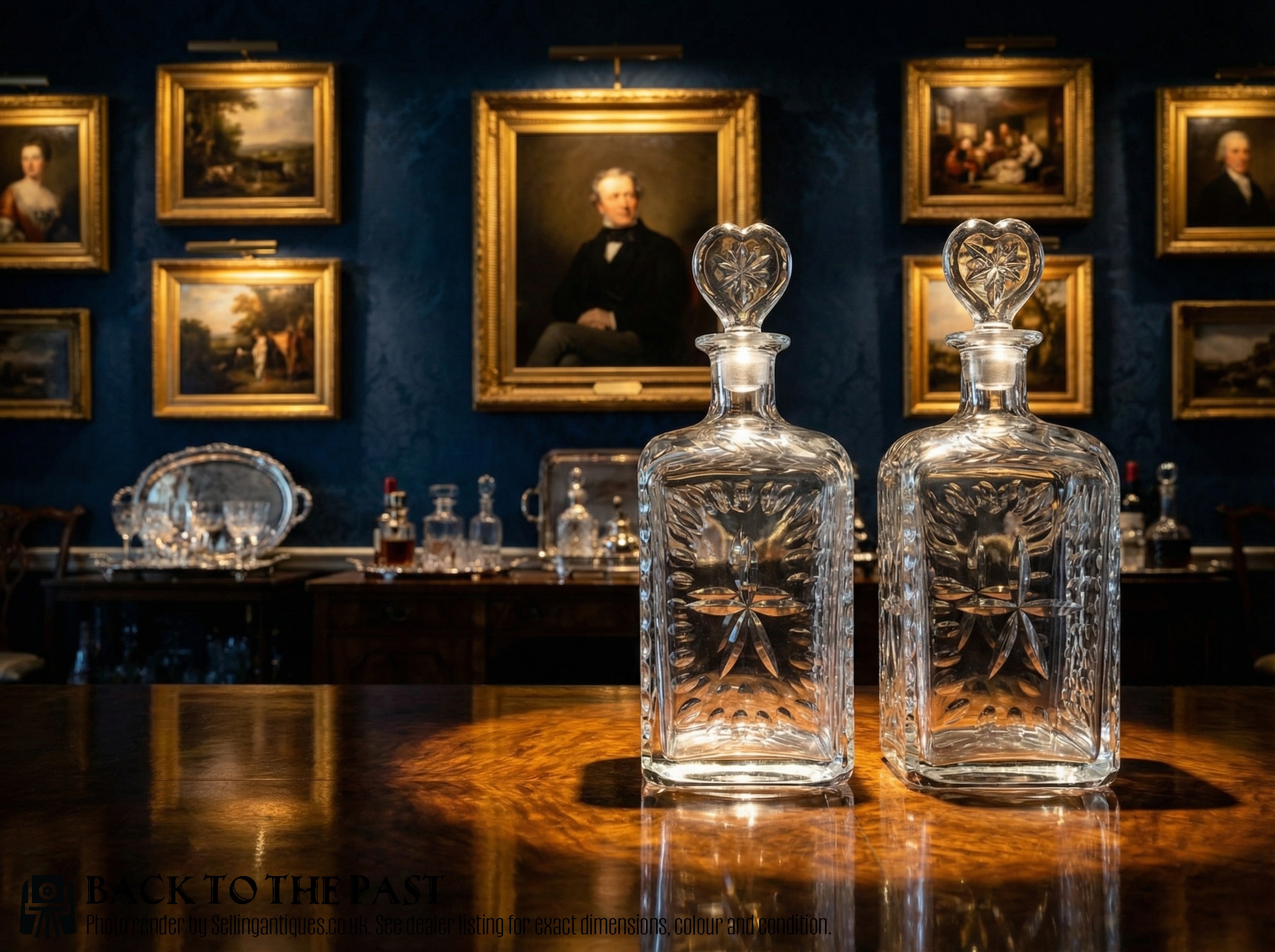
Coloured glass is the next largest strand, a quarter or so: cranberry more than any other colour, then Bristol blue and green, amethyst, ruby, opaline, satin and the yellow-green uranium glass sold as vaseline. Alongside it sit scent and perfume bottles, apothecary and chemist jars, and the cased oak or walnut tantalus with its two, three or four decanters.
A large minority are not purely glass. Silver or plated mounts, stoppers, stands and frames appear in roughly one title in eight, and hallmark dates quoted in those titles cluster in the 1880s and 1890s across London, Birmingham, Sheffield and Chester. Nearly half the archive carries no decade at all, just "Victorian" or "19th Century", and the dated field stretches from 1800 to 1930.
Where The Range Splits
Number counts for a great deal. A set of ten cut champagne coupes, twelve free-blown ice plates or ten green opaline scallop shells sits well above the same shape sold alone, and a single drinking glass or small coloured bowl is the bottom of the range. The same rummer, port glass or whisky tumbler reappears all the way up the scale once cutting, engraving or a set of six comes with it.
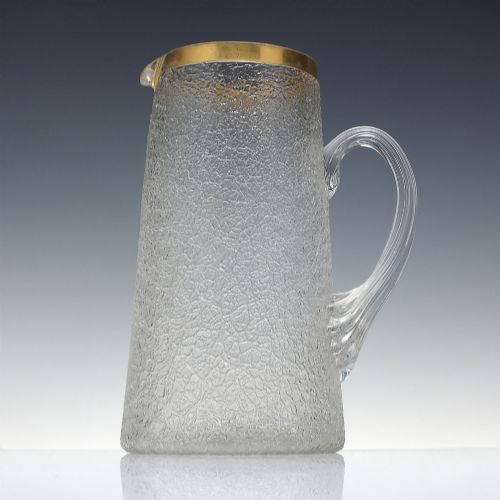
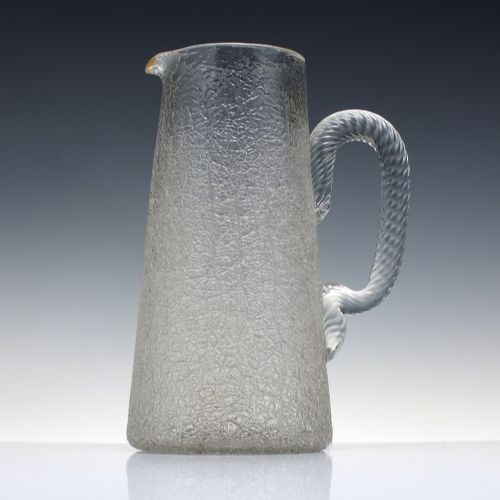
Decoration is the other main divide. Named work such as intaglio, star, fern and heron etching, or hunting scenes engraved on mixing rummers, carries the upper end, while pressed and moulded pieces like water jugs and diamond moulded pickle jars sit low. Silver and plated mounts and frames pull pieces upward too, and a hallmarked mount gives the tightest dating in the whole category.
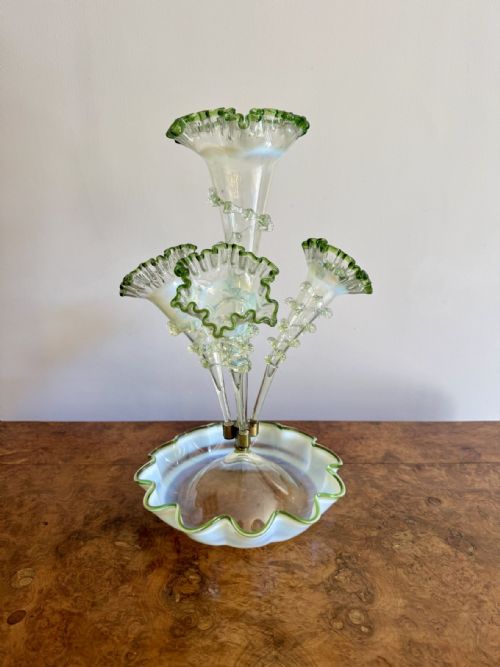
Scale and cabinetwork finish the picture. Floor-standing cranberry trumpet vases, pharmacy display jars with covers, brandy dispensers, epergnes and painted or leaded window panels take the highest positions. Among tantaluses, locking cases in coromandel, calamander, satinwood or burr walnut, and those built with a games compendium or jewellery casket in the same carcass, stand above the plain oak two-bottle stand.
Antique Victorian Glass Retail Price Guide 2026
Typical UK retail prices for victorian glass, calculated from the Sellingantiques database of over a million retail prices indexed since 2003. This retail price guide relies exclusively on Sellingantiques data; no external sources or auction records are used, so the figures do not describe the wider market.
Clean years on Sellingantiques listings run from 1800 to 1930, so the Victorian label reaches from the Regency into the interwar years.
The Antique Victorian Glass Glossary
- Rummer
- Short-stemmed drinking glass with a large bowl on a foot, named in 87 titles and often paired with the words tavern or pub.
- Tantalus
- Stand or lockable case, commonly oak or walnut, holding two, three or four decanters; the word appears in 169 titles.
- Cranberry
- Pink-red glass coloured with gold, the most-named colour in the category at 181 titles.
- Vaseline or uranium
- Yellow-green glass containing uranium, which fluoresces; it runs as a minor thread through bowls, posy vases, wine glasses and scent bottles.
- Harlequin set
- A set assembled from similar but not identical glasses, described as such in several listings.
- Deception glass
- A drinking glass with a thickened interior, so it holds less than the bowl suggests.
Antique Victorian Glass: Frequently Asked Questions
What does cut, etched and engraved mean here?
They are the three decorating methods dealers name most. Cut glass is worked with a wheel into slices, thumbprints or facets; etched and engraved surfaces carry lighter designs, from star and fern patterns to herons and hunting scenes.
Cutting is named in more titles than any other single feature. Pressed and moulded glass, worked in a mould rather than decorated afterwards, sits at the other end of the range.
How reliable is the Victorian date on a listing?
It is broad. Nearly half the archive says only "Victorian" or "19th Century" with no decade attached, and the clean-year field runs from 1800 to 1930.
Where decades are given they gather in the 1880s, then the 1870s, 1890s, 1860s and 1850s. The single most common date in titles is c1880. A few titles read "William IV/early Victorian" or "Victorian/Edwardian", so the label stretches at both ends.
Silver-mounted pieces are the exception, since hallmark dates quoted in their titles are specific, mostly 1880s and 1890s.
Is a tantalus glass or furniture?
Both, and it is counted here because of the decanters. Roughly one listing in twelve is a tantalus, most often an oak or walnut case holding two or three bottles, with locking mechanisms named repeatedly.
The largest run to four decanters, in woods including mahogany, burr walnut, coromandel, calamander and satinwood. Some are built into one carcass with a games compendium or a jewellery casket.
Which colours turn up in Victorian coloured glass?
Cranberry leads, followed by green and blue, with amethyst and ruby behind them. Bristol appears in 58 titles, meaning deep blue or green glass associated with that city.
Opaline, satin, overlay and cased glass all recur, along with the yellow-green uranium glass usually listed as vaseline.
Are most pieces English or Continental?
The body of the category is English, and 94 titles say so outright.
Continental pieces are a small minority: Bohemian, Venetian and Murano, French opaline, German, and one Belgian item across the whole archive.
How many pieces come up on Sellingantiques?
Around 244 a year, and 173 different dealers have listed in the category. That makes it one of the widest-spread glass groupings on the site rather than the ground of a few specialists.
The usual shapes repeat constantly, but odd single forms have passed through: a glass rolling pin, a combed glass pipe, a wedding bell, a coin tankard, a gin dispenser and a brewery brandy fountain.