
Antique Scent Bottles
A small stoppered glass bottle made to carry perfume, cologne or smelling salts, kept on a dressing table or carried in a pocket, reticule or on a chatelaine.
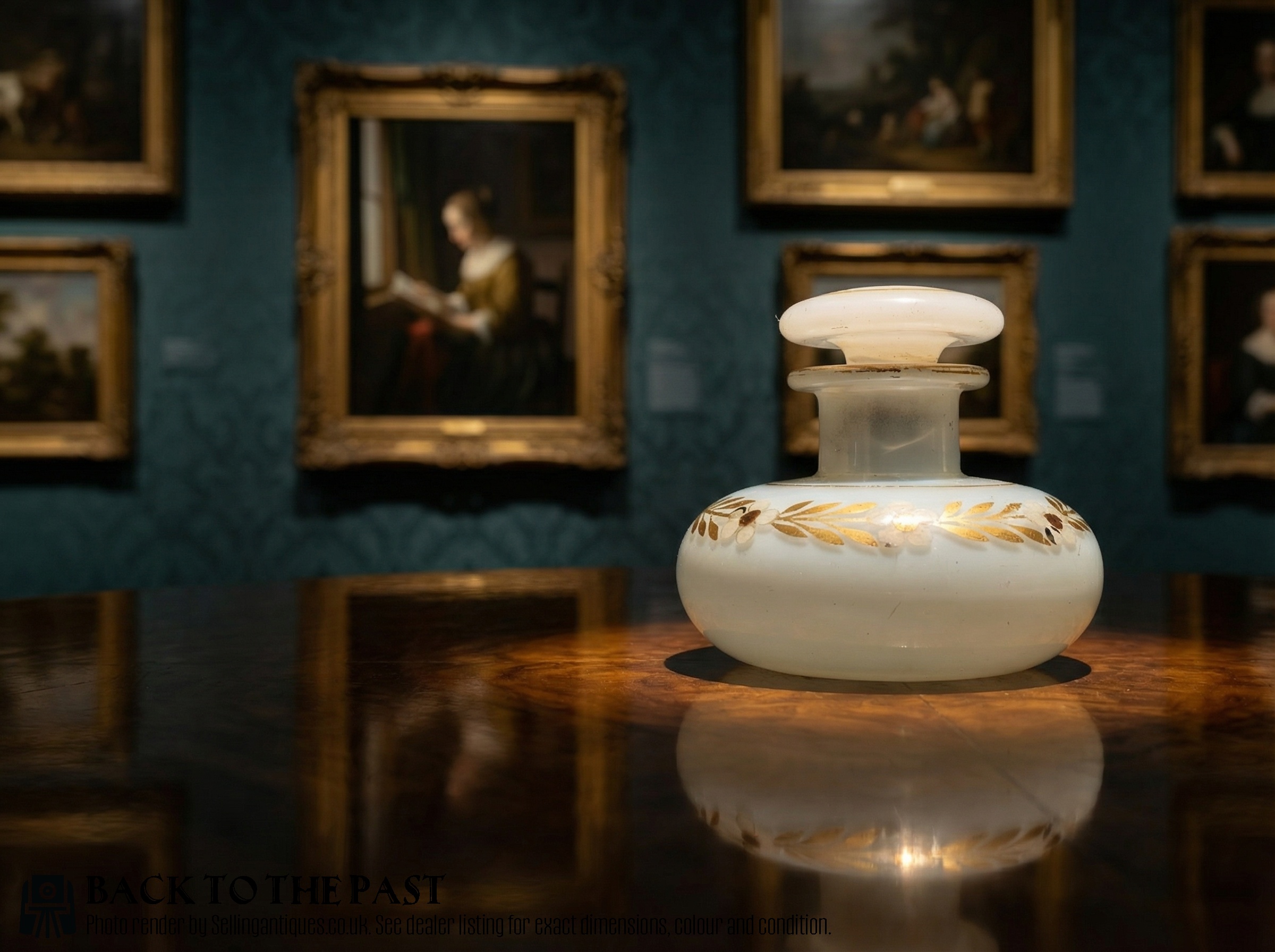
What Are Antique Scent Bottles?
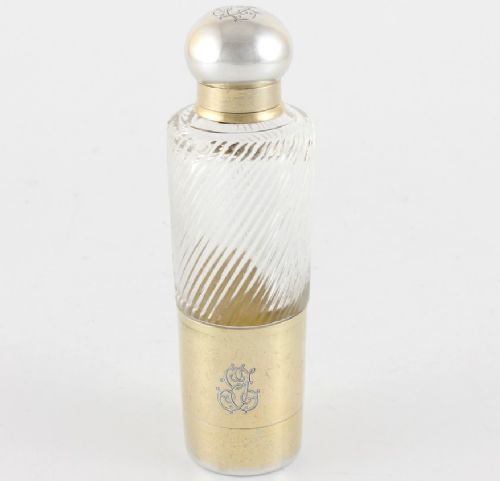
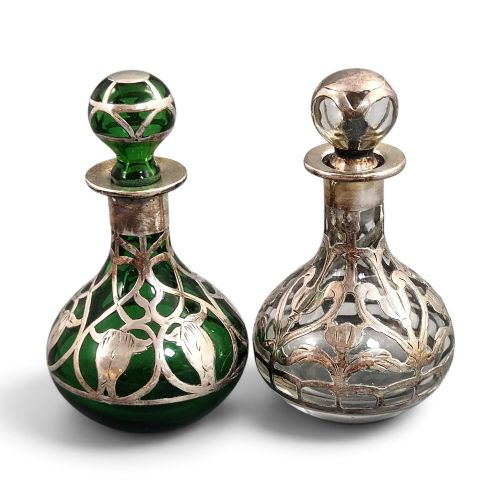
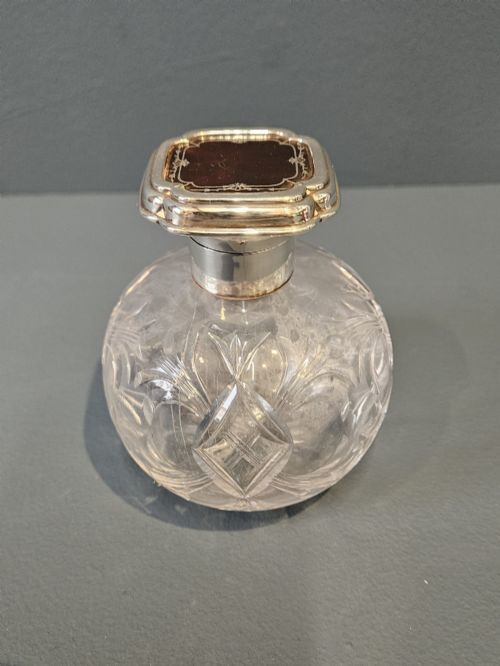
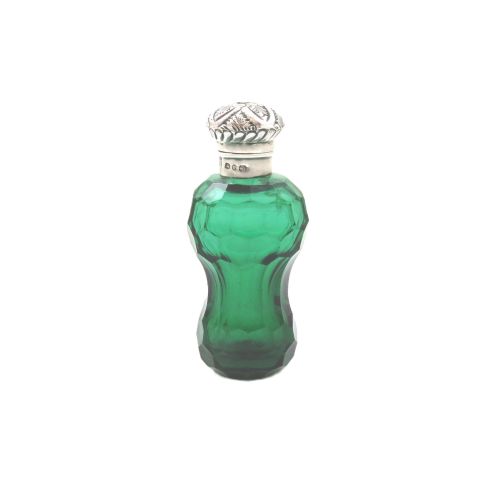
Glass and silver dominate the category, and the pairing of the two describes most of what comes up: a coloured or cut glass body with a silver, silver-gilt or ormolu top, collar or mount. Glass appears in around three-fifths of titles, silver in two-fifths. Cut glass is the commonest treatment of the body.
Small bottles like these became a standard personal accessory in Europe from the eighteenth century. Glass was used because it doesn't taint the contents; metal mounts and screw tops were added to slow evaporation and to survive being carried about. That practical shape has barely changed across two centuries of listings.
Victorian is the largest single period label, with the nineteenth century behind it, so a great many bottles are dated only to a span rather than a year. Where decades are given they cluster in the 1870s and 1880s, then again in the 1930s. Pre-1837 material is genuinely scarce on Sellingantiques.
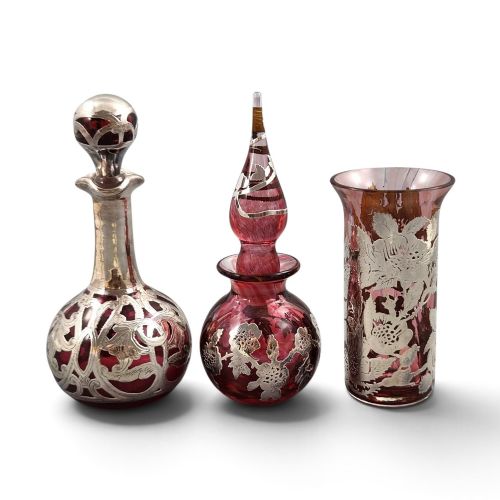
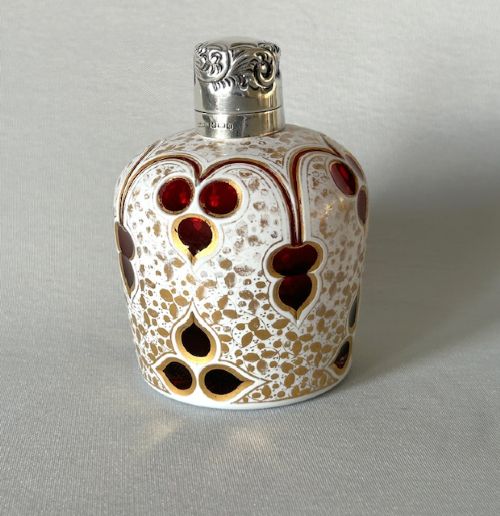
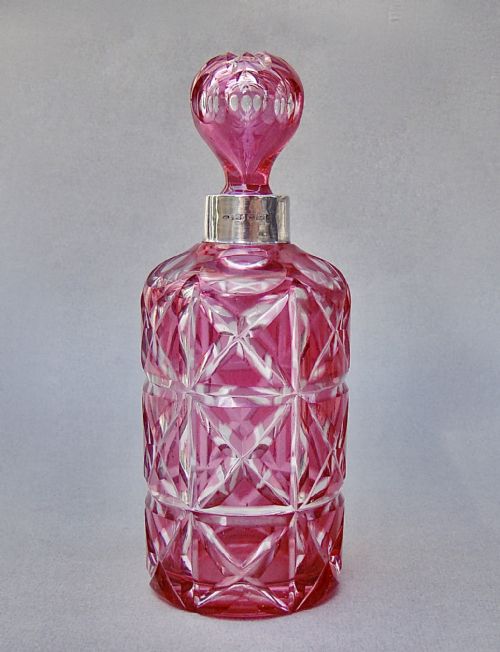
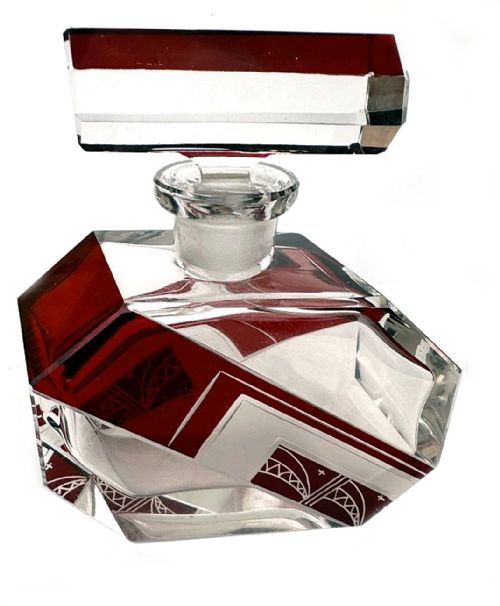
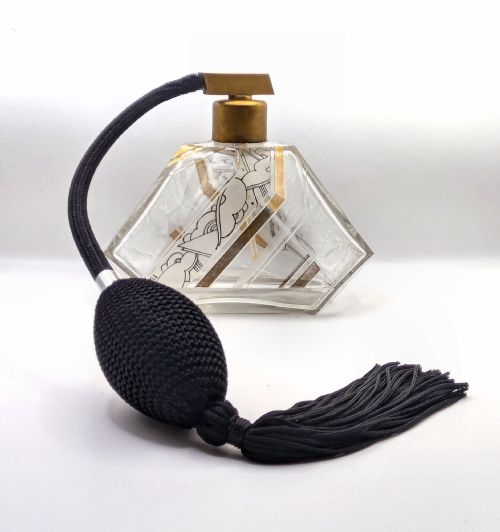
Beyond the Victorian and Edwardian silver-mounted bottles, four groups recur. French decorative glass, including opaline and ormolu-mounted Palais Royal work. Bohemian and Continental overlay and coloured glass, cranberry and ruby among them. Oxford Lavender attar bottles, a sub-population of their own from around 1850 to 1860. And 1930s perfume bottles and atomisers, which make up about a third of current stock.
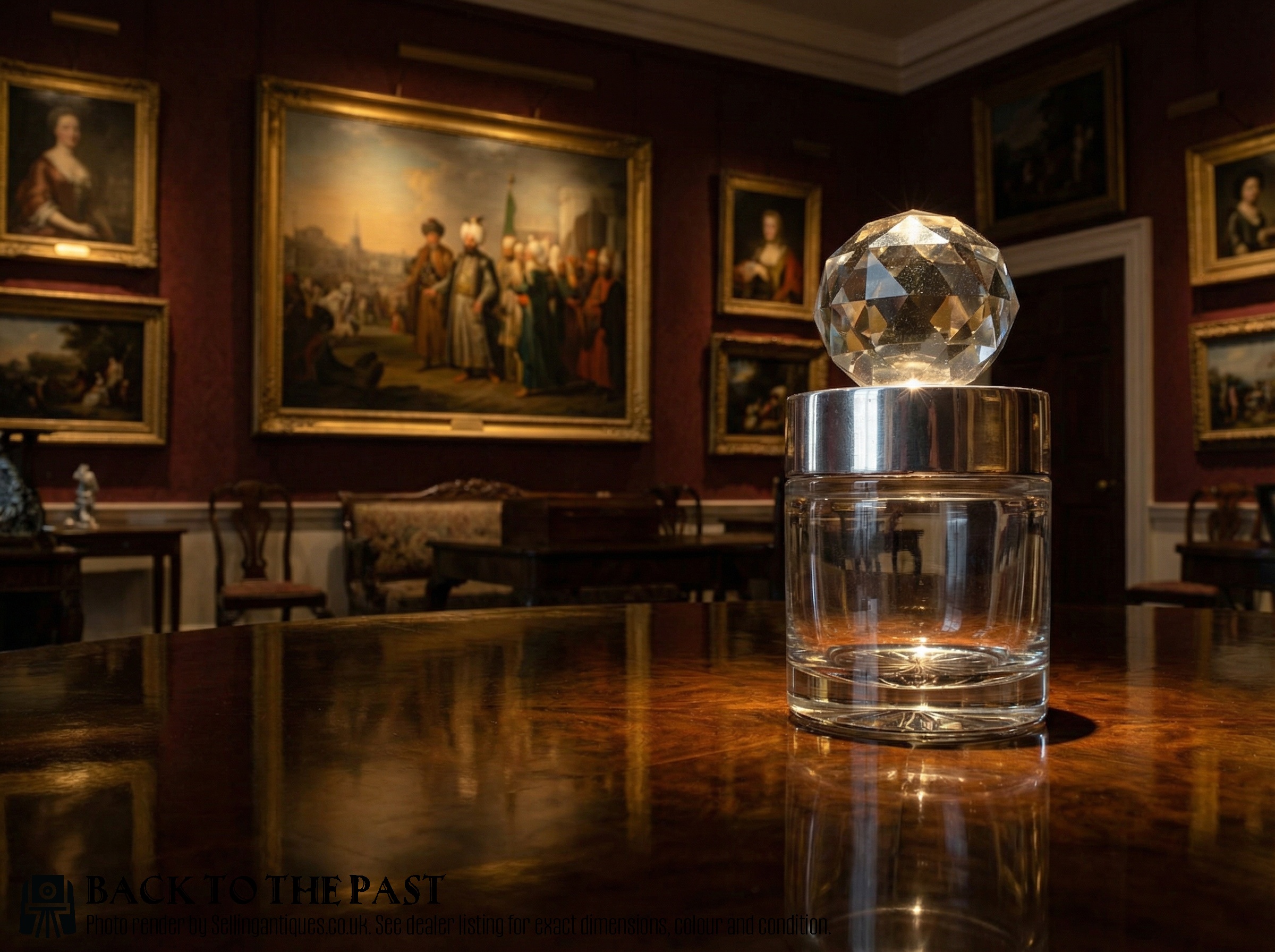
Where The Range Splits
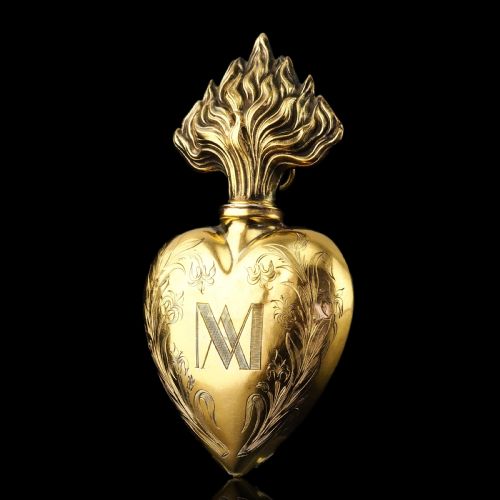
The metal is the first divider. Plain unmounted glass sits at the bottom of the range; silver mounts lift a bottle, silver-gilt more so, and the two gold-mounted examples on record sit apart from everything else. A title carrying an assay town and year, Birmingham or London most often, runs consistently above the same bottle described without one.
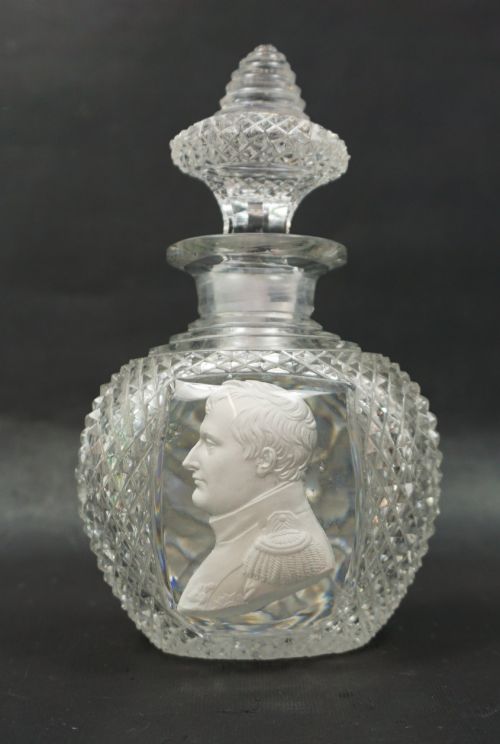
After that it's how much work went into the glass. Overlay cut through to the colour beneath, enamelling, gilding and deep wheel cutting all run above plain bodies of the same date. Named glasshouses sit above unattributed work of comparable period. One-off techniques like sulphide portraits, lithyalin and murrine turn up once or twice each, and near the top.
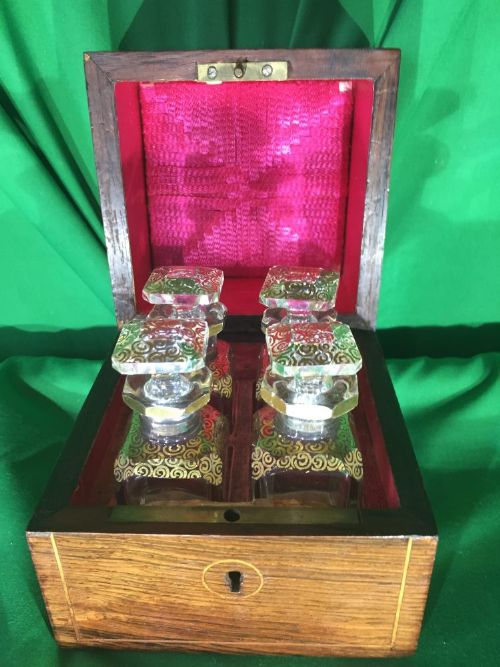
Completeness counts for a lot. A cased pair, a set of three or four, or a fitted casket sits well above a single bottle, and Palais Royal work supplied in an opaline egg casket is the clearest case of that. Size cuts both ways: large bottles carry a premium, and so do miniatures where scarcity is claimed.
Retail Price Guide 2026
Typical UK retail prices for scent bottles, calculated from the Sellingantiques database of over a million retail prices indexed since 2003. This retail price guide relies exclusively on Sellingantiques data; no external sources or auction records are used, so the figures do not describe the wider market.
About thirty-eight scent bottles are listed on Sellingantiques each year, and seventy different dealers have listed one.

The Antique Scent Bottles Glossary
- Silver mounted, silver topped, collar
- All describe a metal cap, top or neck band fitted to the glass. Mounted is the commonest wording, topped the next.
- Cut glass
- The body wheel-cut with facets, hobnail or slice cuts. The single most frequent glass treatment in the category.
- Overlay
- A layer of coloured glass cased over another and cut through to reveal what's underneath. A Bohemian and Continental staple.
- Opaline
- Semi-opaque milky glass, often French and often gilded, and the backbone of the French decorative branch.
- Double-ended
- One flask with a cap at each end, typically scent at one and smelling salts at the other.
- Attar
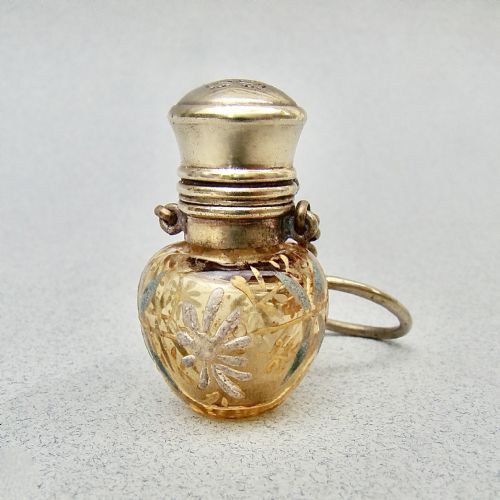
- Concentrated perfume oil. In these listings the word names the Oxford Lavender bottles specifically, found in amber, turquoise, green and polychrome enamel.
Frequently Asked Questions
What is a Palais Royal scent bottle?
French decorative glass, ormolu-mounted, often carrying a Grand Tour association. It accounts for a modest but steady group of listings on Sellingantiques.
Several came supplied in opaline caskets, including the egg and "egg in nest" form. Those cased examples sit above single bottles.
How old are most antique scent bottles?
The dated field runs from 1750 to 1940, and about four in ten listings carry a clean year. Victorian and nineteenth century together cover almost half the archive, so many bottles are placed in a span rather than a date.
Decade labels cluster in the 1870s and 1880s, with a second peak in the 1930s. Edwardian, the 1900s, 1910s and 1920s fill the gap between.
Why do so many have silver tops?
Scent evaporates. A screw-fitting metal top and collar closed the bottle properly and stood up to being carried in a pocket, reticule or on a chatelaine.
Silver mounts appear in around two-fifths of titles. Birmingham and London are the assay offices that show up most; Sheffield and Chester surface only once each.
What are Oxford Lavender attar bottles?
A sub-population of around twenty-five listings, almost all dated circa 1850 to 1860. They turn up in amber, turquoise, green and polychrome enamel.
They're consistent enough in form and date to read as a group of their own rather than as scattered Victorian glass.
Are Art Deco perfume bottles part of this category?
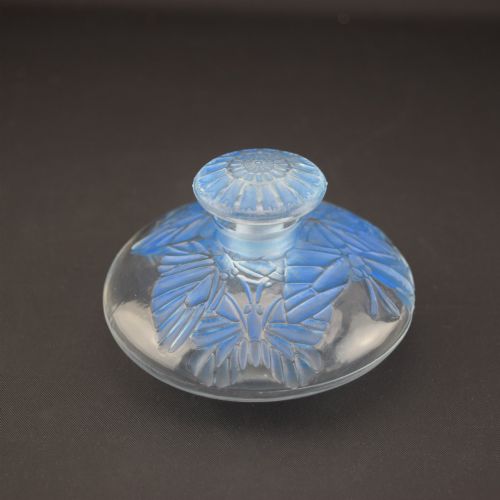
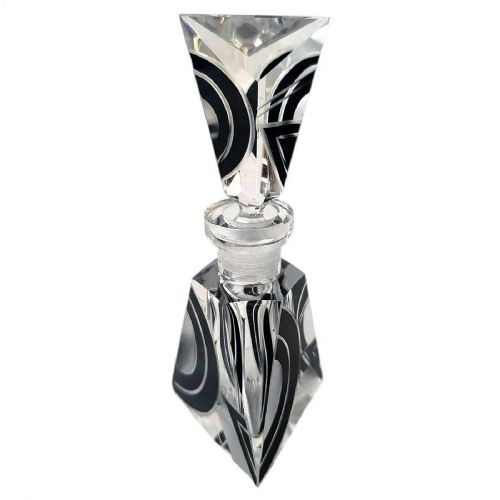
Yes, and they weigh heavily on the current side. Bottles and atomisers of the 1920s and 1930s make up about a third of what's listed now, against roughly an eighth of all listings on record.
The atomiser, with its bulb spray, is almost entirely a twentieth-century form here. Guilloche enamel tops belong to the same stretch.
Does uranium glass appear in scent bottles?
It does, in a handful, French and Victorian both. The greenish-yellow colour comes from uranium oxide in the batch.
It's one of the few materials that repeatedly holds the upper-middle of the range rather than appearing once and disappearing.