




Antique Glass Tazzas
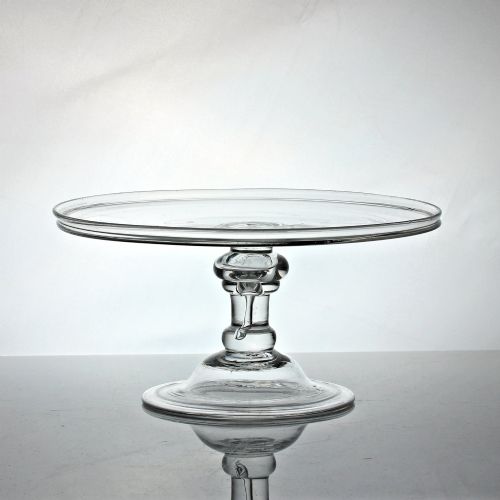
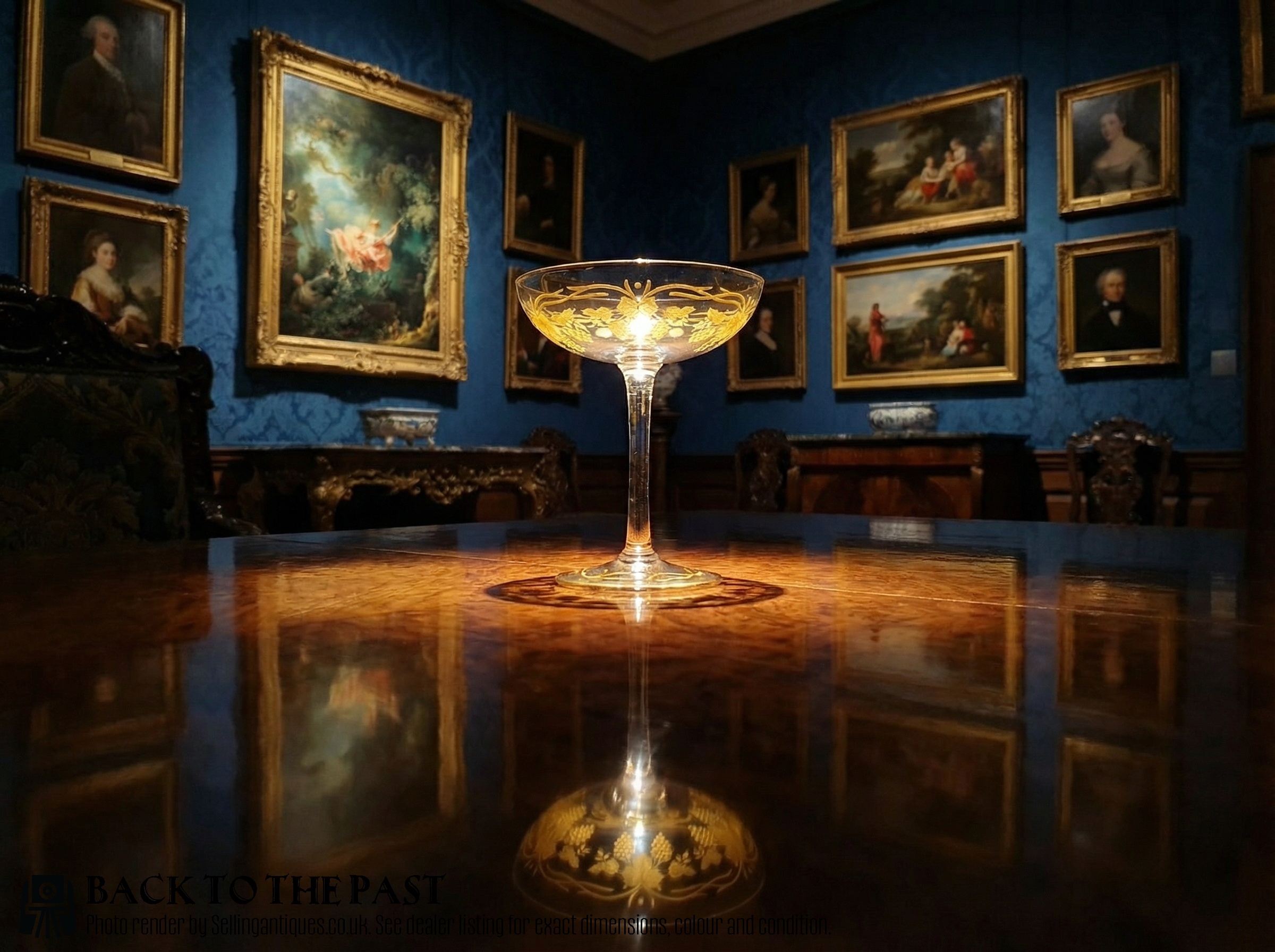
A tazza is a shallow glass bowl or dish raised on a stem and foot, used at table for sweetmeats, fruit and dessert, and for display.
What Is A Glass Tazza?
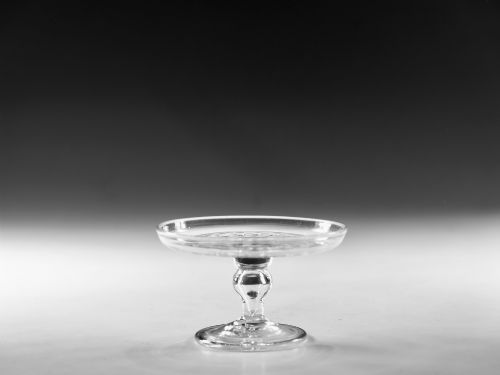
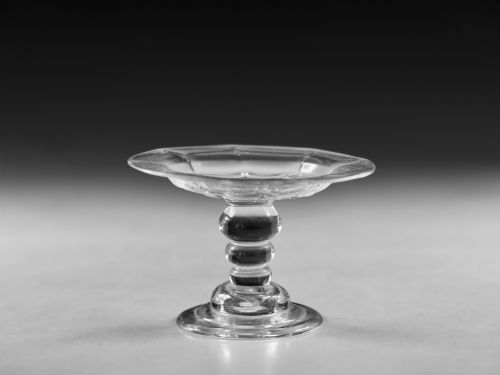
Two quite different things share the word. About half the archive on Sellingantiques is 18th- and early 19th-century English lead glass, with baluster, Silesian or hollow stems and folded feet, sometimes small enough to be called a patch stand. The rest is Victorian and later cut, etched or frosted glass on a stem.
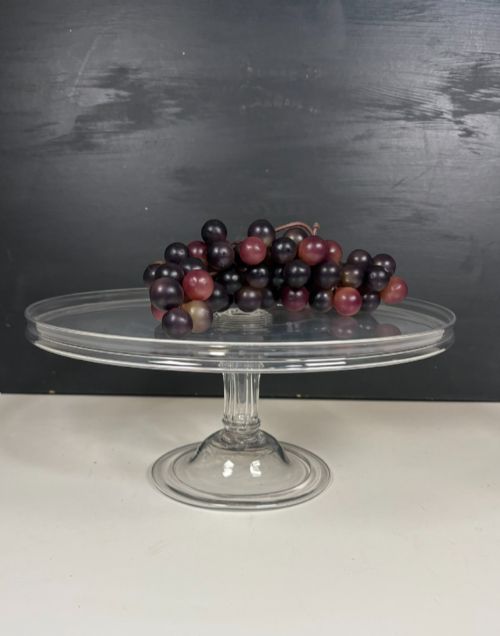
The form goes back to the Renaissance, when a shallow bowl on a stemmed foot served sweetmeats and fruit. British glasshouses took it up in the 18th century for small delicacies, then revived it on a larger scale in the 19th century as a dessert or cake stand. That second life is why the same object turns up in listings as a comport, a pedestal bowl or a cake stand.
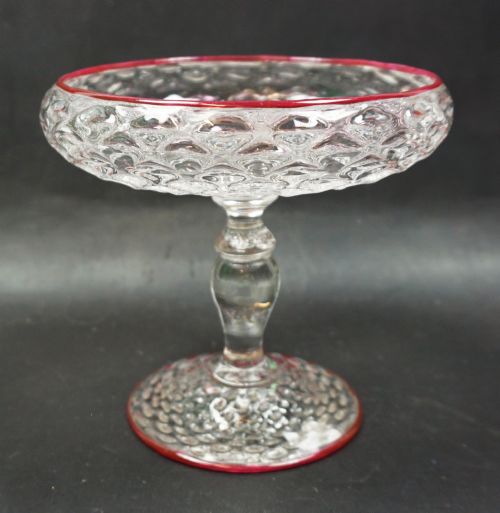
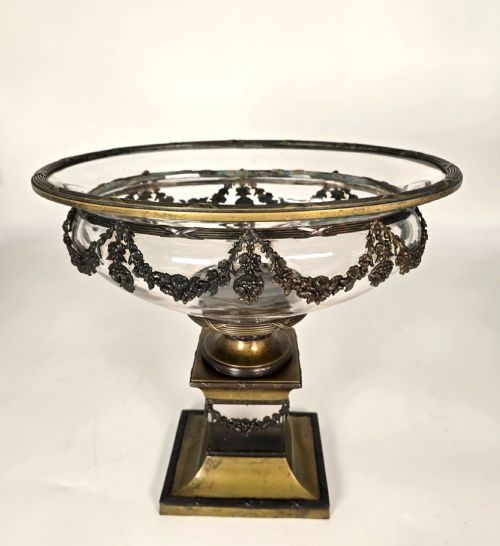
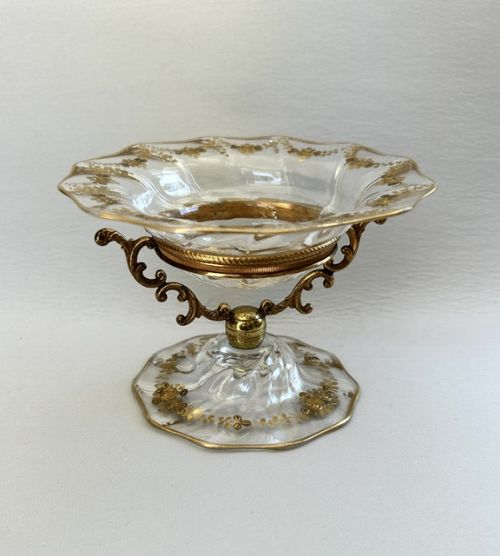
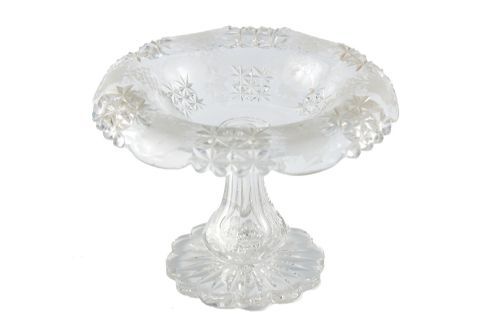
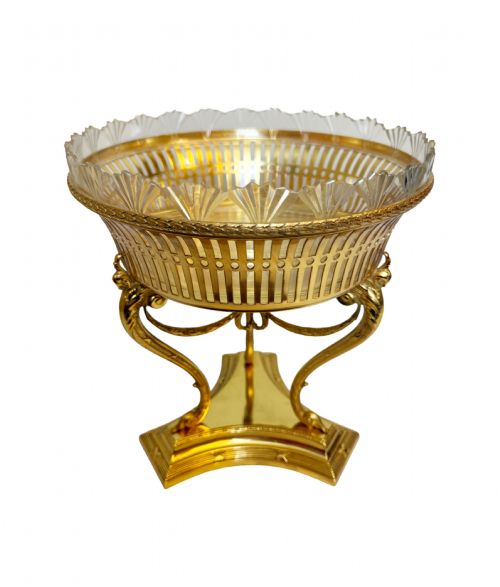
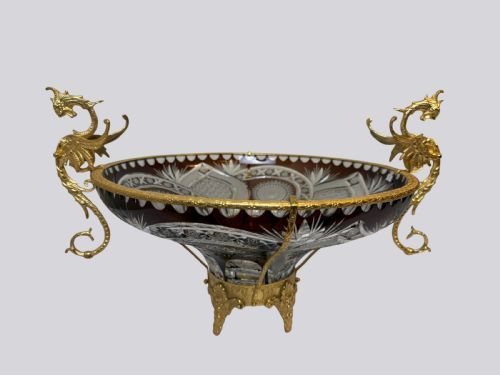
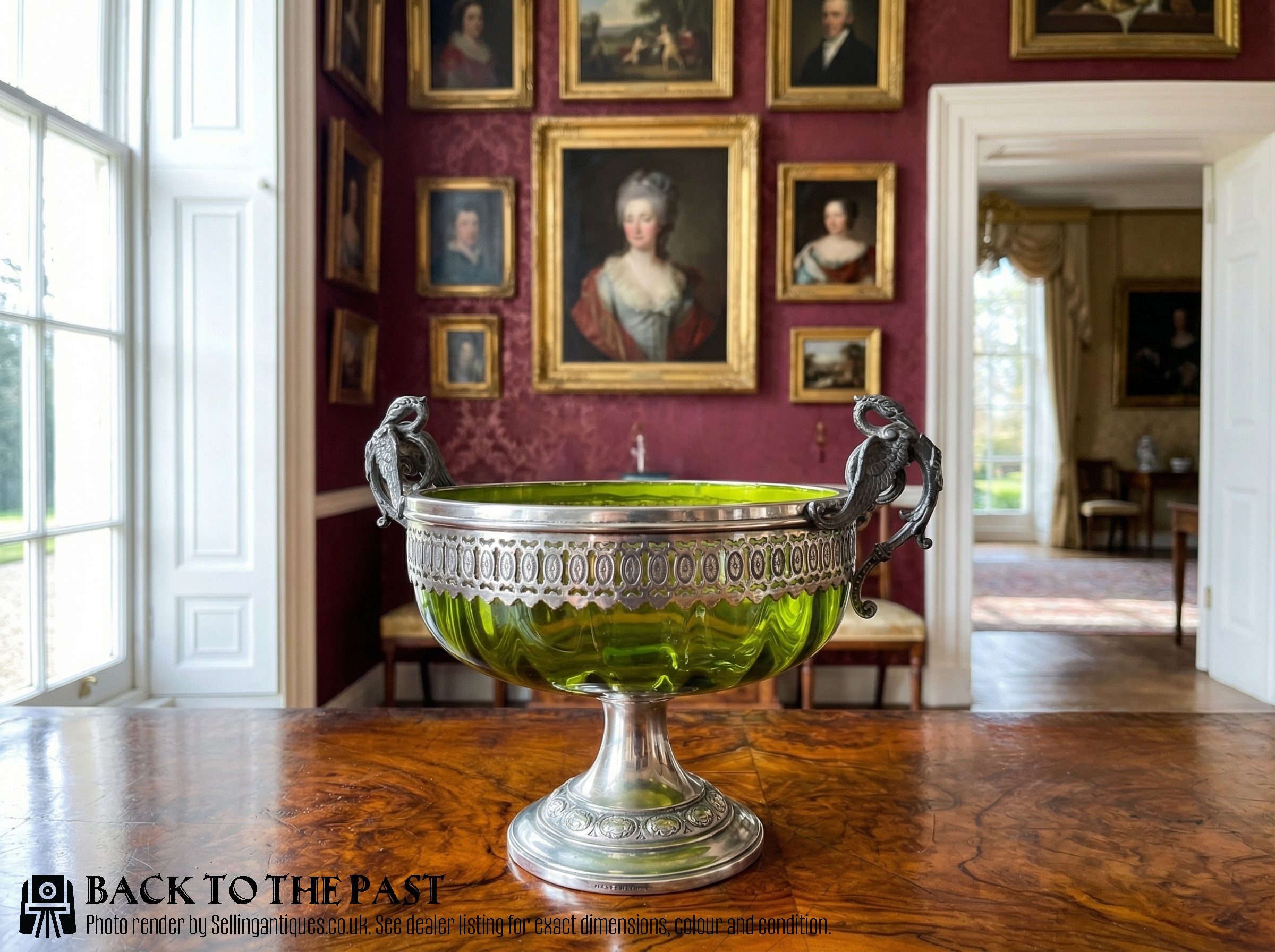
Victorian cut and etched pieces are the largest single block, with etched, frosted, engraved, Greek Key, fruiting vine and honeycomb moulding recurring in the titles. Georgian glass runs close behind: 13 titles say Georgian, 11 say English, and the 18th century is the biggest period bucket in the dated field. A visible minority is coloured, cranberry, ruby, vaseline, blue pearline or yellow-over-crystal, and a small tail is glass mounted in ormolu, gilt bronze or silver plate as a centrepiece.
Dates in the archive run from 1700 to 1930, and only about half the listings carry a clean year. Five entries say only Georgian, five only Victorian and four only 19th century, so a title reading Victorian may sit anywhere across sixty years. Around seven come to market a year, listed by 31 different dealers, which tells you most dealers who carry the form have handled one rather than a run.
What Sets Them Apart
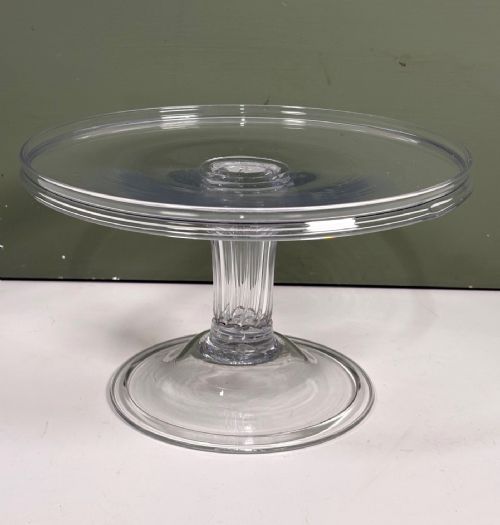
Age and the stem carry the glass-only pieces. Georgian examples naming a baluster, Silesian or triple-knop stem, a hollow stem, or a folded or terraced foot sit well above the general run, and the highest-placed plain glass is 1730s to 1770s English. The earliest dated piece in the archive, a very large crystal tazza on a spreading folded foot given as English c.1730, is also near the top.
Size pulls in both directions. Large appears in eight titles and pushes upward; miniature and tiny patch stands, despite being the smallest things in the category, cluster near the top rather than the bottom. It is the middling size, a plain Victorian stemmed dish of ordinary diameter, that sits lowest.
Beyond that, colour beats plain, with cranberry, ruby, vaseline and yellow-over-crystal above the standard cut and etched Victorian work. Metal mounts lift a piece further: ormolu, gilt bronze, silvered bronze and silver-plate centrepieces gather at the upper end. Pairs are the rarity of the category, with only three listings offering one, and each sits above the comparable single.
Retail Price Guide 2026
Typical UK retail prices for glass tazzas, calculated from the Sellingantiques database of over a million retail prices indexed since 2003. This retail price guide relies exclusively on Sellingantiques data; no external sources or auction records are used, so the figures do not describe the wider market.
Glass tazzas have been listed on Sellingantiques since 2011.
The Antique Glass Tazzas Glossary
- Tazza
- A shallow bowl or dish raised on a stem and foot. Listings also use comport, cake stand and pedestal bowl for the same shape.
- Patch stand
- A very small tazza, named in nine titles and often described as miniature or tiny. Sweetmeat glass is used interchangeably with it in a couple of titles.
- Folded foot
- A foot rim turned back under itself for strength. It appears on the earliest-dated pieces in the archive.
- Baluster stem
- A swelling, vase-shaped stem, named in several 18th-century listings. A knop is a knob or swelling in the stem, and one listing specifies a triple-knop.
- Silesian stem
- A moulded, ribbed and shouldered stem, cited in two Georgian listings. A terraced foot, rising in stepped tiers, is noted on one miniature patch stand.
- Pearline
- Opalescent pressed glass, named once in a blue Victorian cake stand. Vaseline glass, greenish-yellow uranium glass, appears once in a Venetian example.
Frequently Asked Questions
What is a patch stand?
It is a very small tazza. The name turns up in nine titles on Sellingantiques, usually alongside words like miniature or tiny, and in a couple of cases alongside sweetmeat glass.
Small does not mean cheap in this category. The miniature ones cluster near the top of the range rather than the bottom.
Are most glass tazzas English?
English is named in 11 titles, French in five and Venetian in one, so overseas glass is the minority in the archive.
The English side splits between Georgian lead glass and Victorian cut and etched work, which are the two blocks that dominate the category.
How old are they?
The dated field runs from 1700 to 1930. The 18th century is the largest single bucket at 14 listings, then the 1800s decade at 10 and the 1870s at 8.
Only about half the listings carry a clean year. A handful reach into the 20th century, with the latest dated 1932, which is the outer edge of the form here.
Why are some called cake stands or comports?
The 19th-century revival made the form larger and put it on the dessert table, so dealers reach for whichever name suits the piece.
Comport, cake stand and pedestal bowl all describe the same shallow bowl on a stem. One Georgian listing hedges with "Tazza / Comport".
Do coloured examples differ from plain ones?
Colour is a visible minority: cranberry, ruby, vaseline, blue pearline and yellow-over-crystal all appear in titles, along with crackle glass, gilding and enamelling.
Those coloured pieces sit above the plain cut and etched Victorian glass in the range.
Can you find a matching pair?
Rarely. Only three listings in the archive offer a pair, which makes a matched pair the scarcest thing in the category.
Each of those pairs sits above the comparable single piece.