

Antique Wine Glasses
Stemmed English drinking glasses made for wine, mostly 18th and 19th century, sold singly, in pairs and in sets running up to sixteen.
What You're Looking At
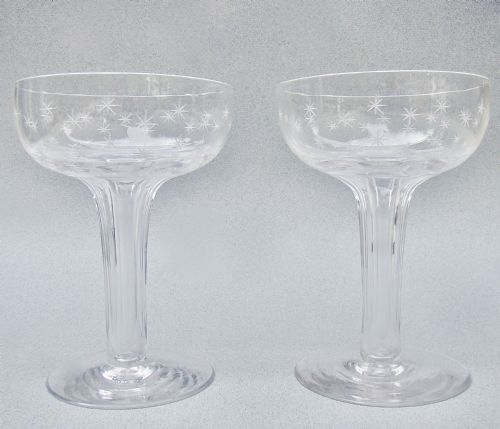
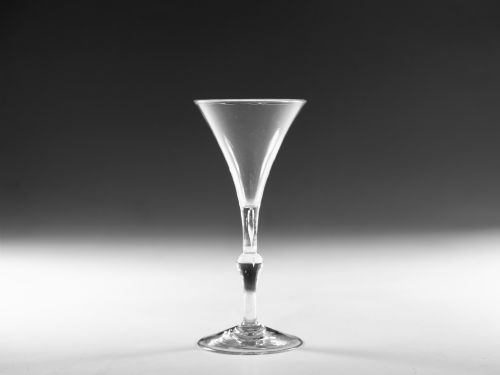
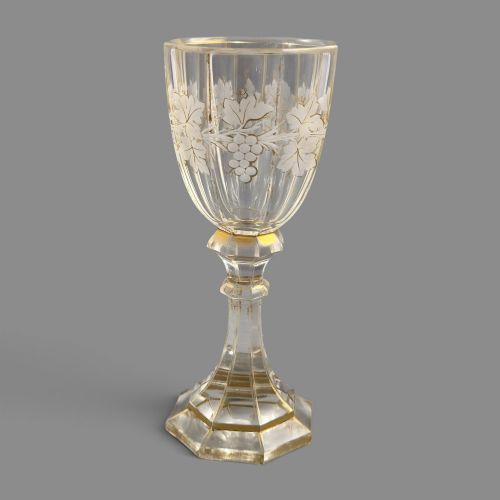
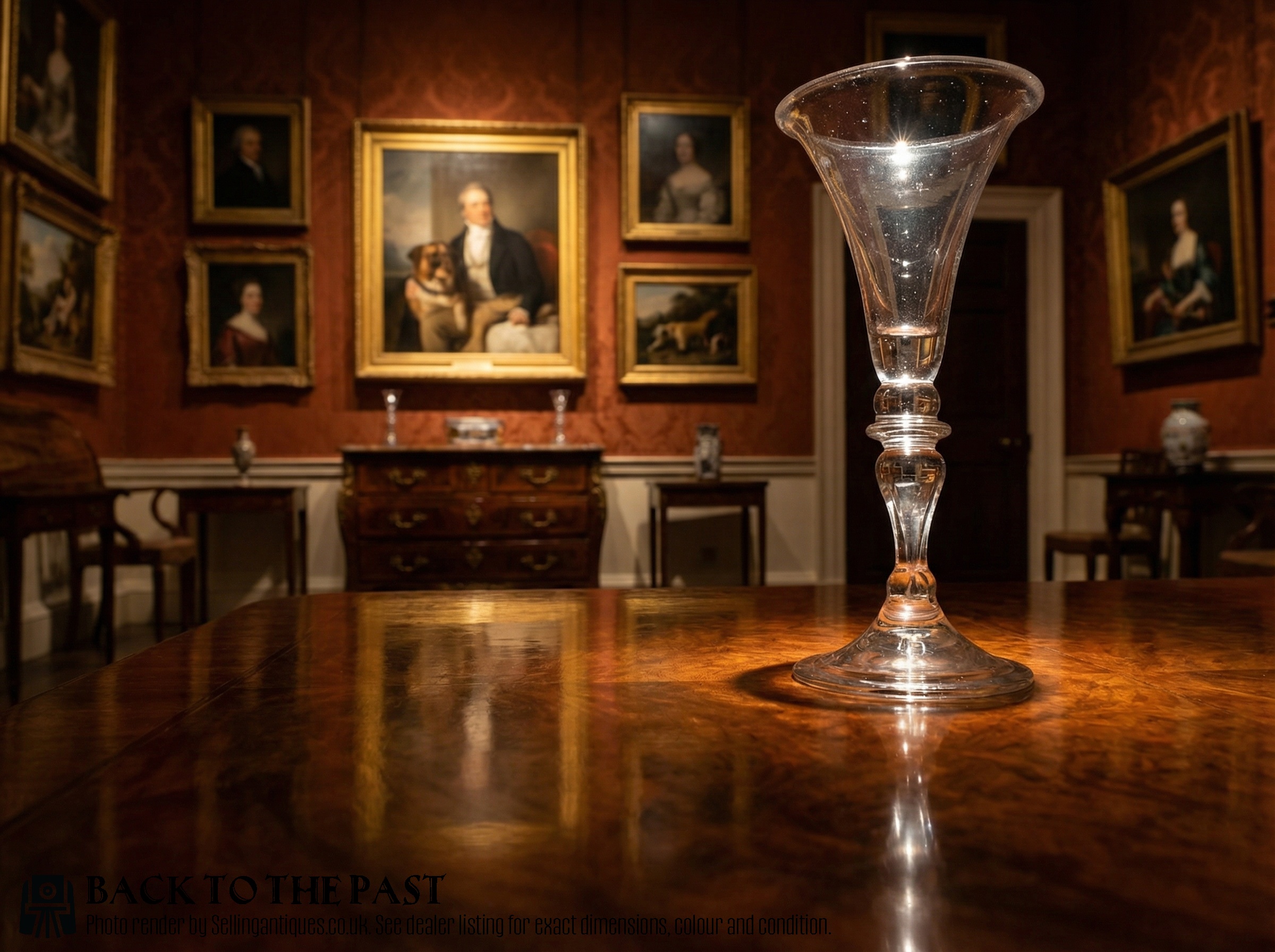
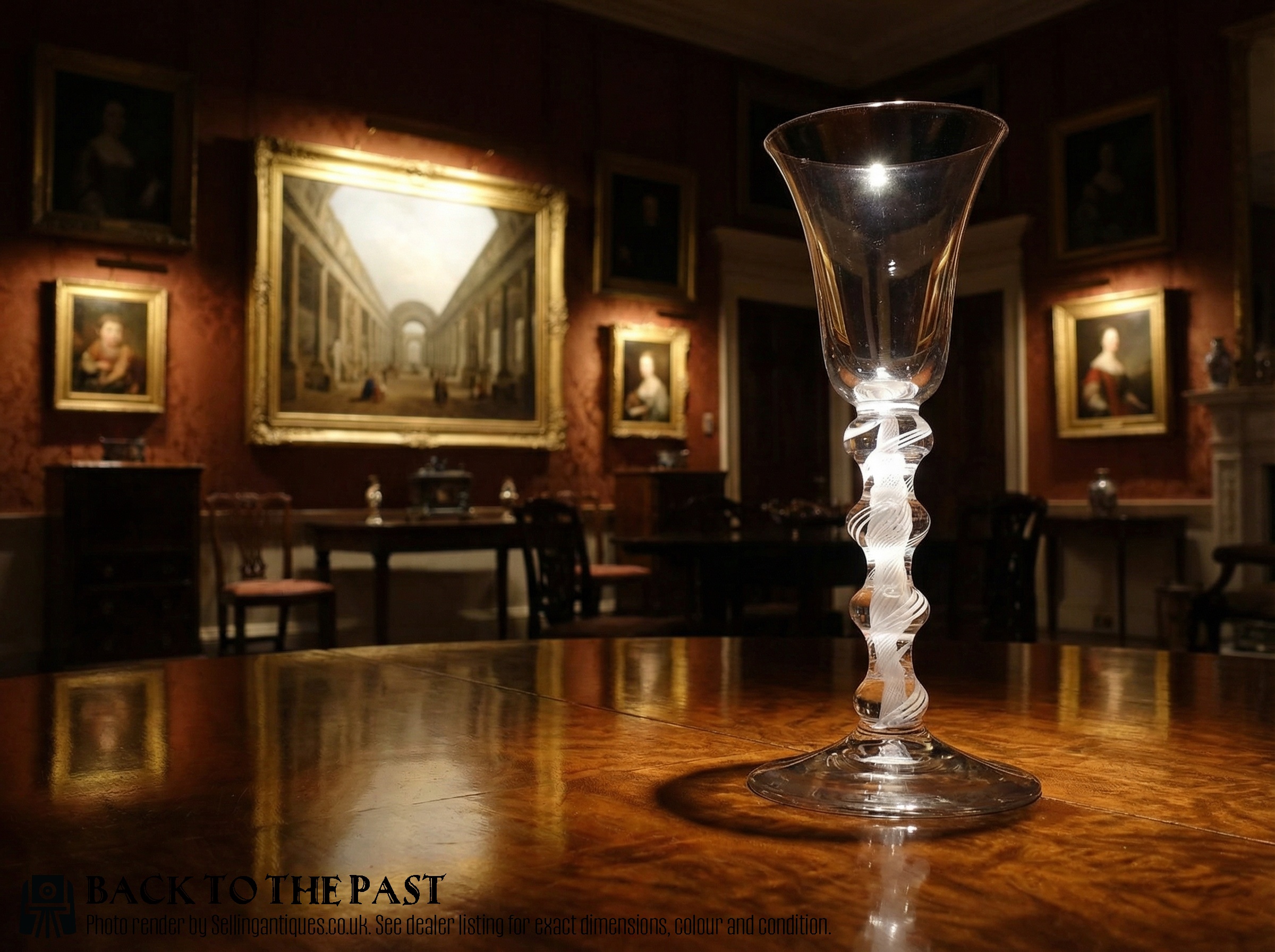
The glass you'll meet most often is a single English stemmed wine glass of the 18th century, described by its stem before anything else. Plain, air twist, opaque twist, facet cut, balustroid, baluster, composite, incised and mixed twist are the categories dealers write titles around, with the bowl named second: trumpet, bell, ogee, bucket, cup or pan top.
Stemmed glasses made for wine became a standard part of the English table from the later 17th century, once lead glass allowed thin bowls on drawn or built-up stems. Through the 18th century they were made in graded sizes for different wines and spirits. By the 19th century, matched sets rather than single glasses were the norm.
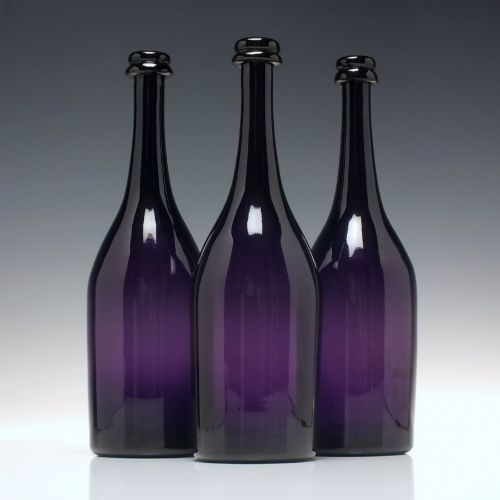
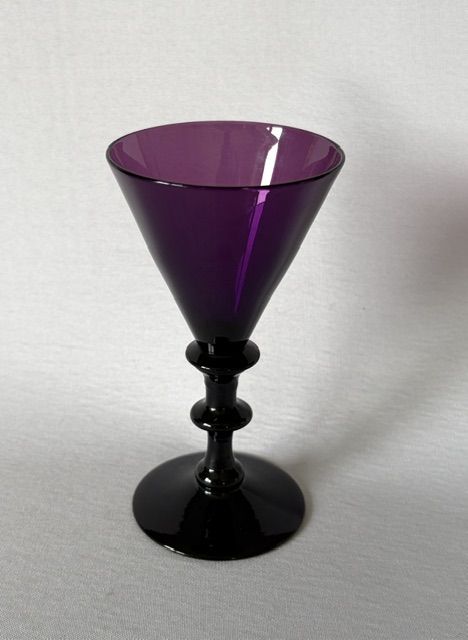
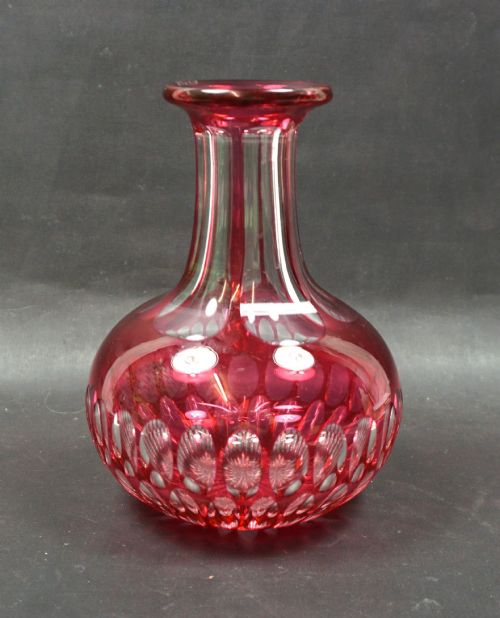
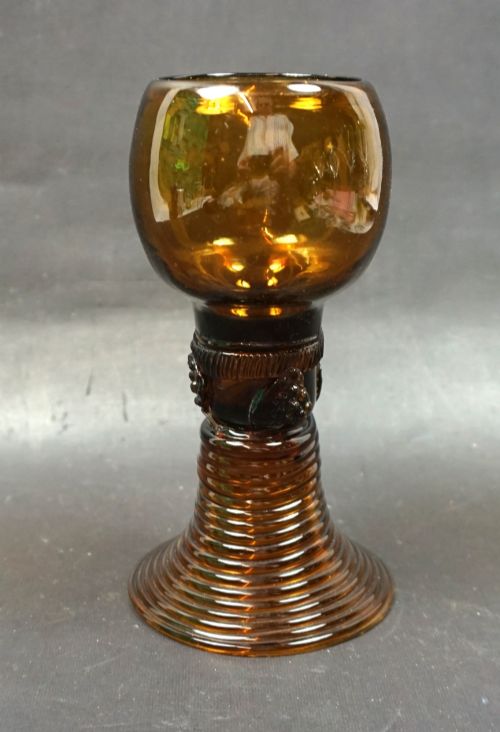
The weight of the record sits between 1730 and 1780. Georgian and 18th-century labels outnumber Victorian and 19th-century ones, and c1750 and c1760 alone account for a large block of titles. A second concentration runs c1820 to c1890, which is where the coloured glass sits: green, so-called Bristol green, peacock blue, amethyst, turquoise, cranberry, amber and uranium or vaseline.
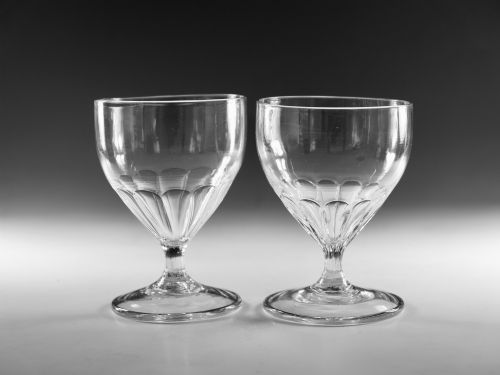
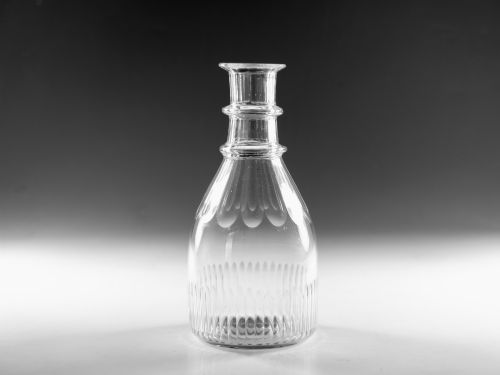
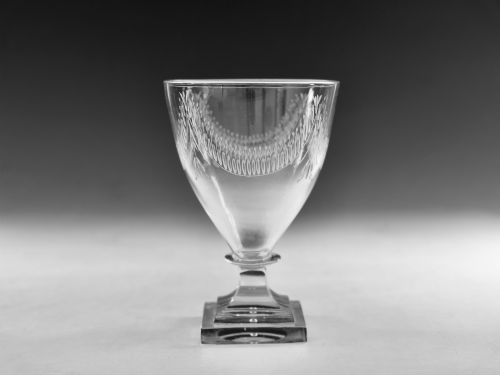
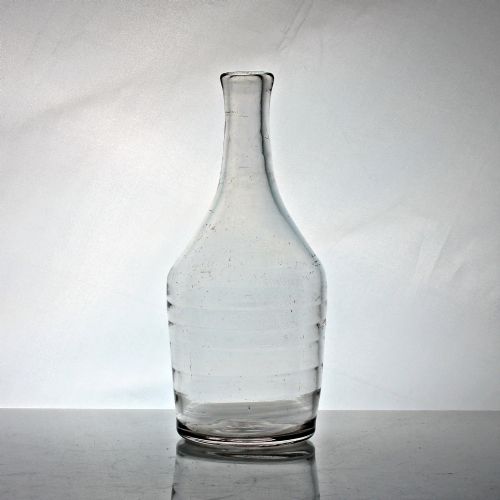
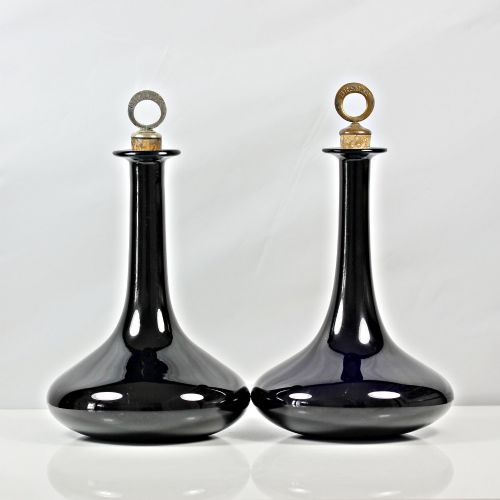
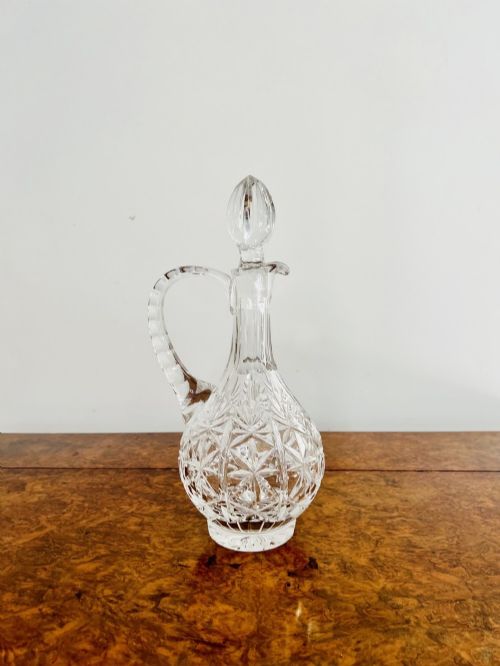
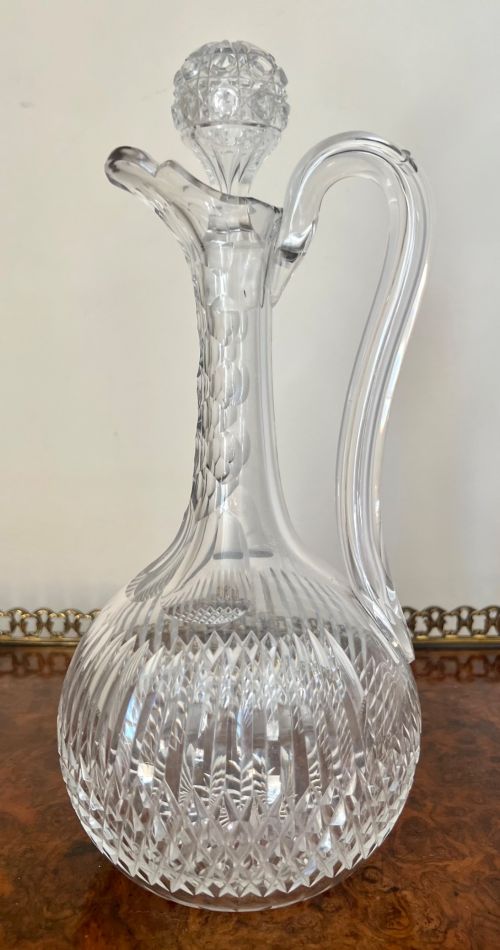
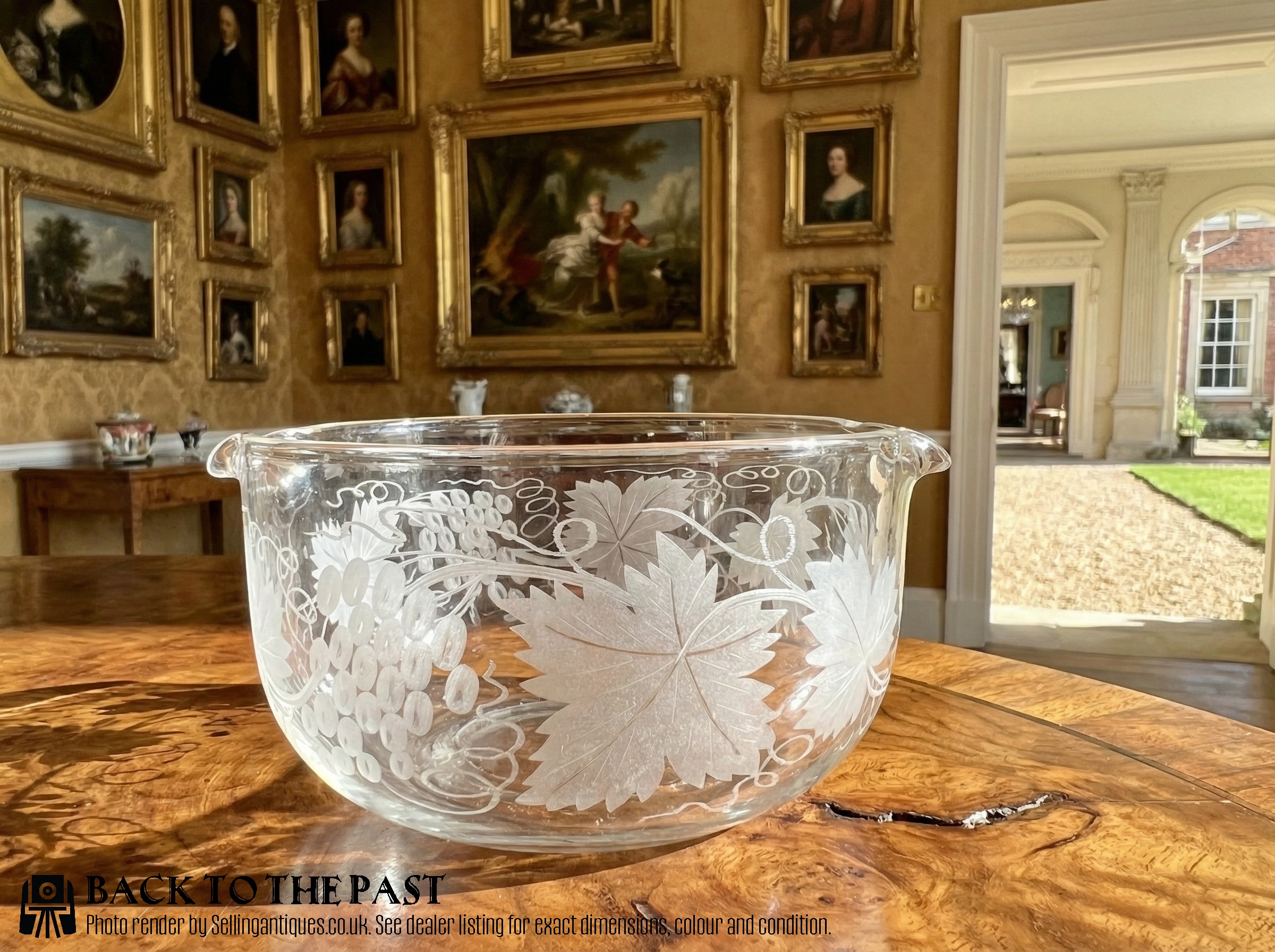
Around the stemmed glasses is a fringe of related table glass listed under the same heading - rummers, goblets, flutes, carafes, decanters, wine rinsers, funnels, coolers and bottles. That fringe is larger in current stock than in the archive. Period labels are applied loosely in places, so a title date and the listed date are best read together.
Where The Range Widens
The stem decides most of it. Plain stems and straightforward single-series twists sit through the lower and middle of the range. Mixed twist, triple mixed twist, mercury twist, colour twist, composite and light baluster stems occupy the top, and a red and green colour twist is a different proposition from a plain drawn stem of the same decade.
Date pulls hard in the same direction. The earliest pieces in the record - a façon de Venise glass given as c1670, an English glass given as c1680, a Nuremberg goblet of about 1711, baluster stems of c1710 to c1730 - cluster at the top, while the coloured Victorian glasses of c1820 to c1880 cluster at the bottom. Engraving with a subject or an inscription lifts a glass again: Jacobite roses and Fiat mottoes, acrostic engraving, Newcastle marriage goblets, a dated 1792 Ducal Union glass, a coin glass. Plain engraved florals stay mid-range.
Numbers matter too. Sets of eight, ten, twelve, fourteen and sixteen, including harlequin sets assembled from near-matching glasses, sit well above singles of the same type, and pairs above singles again. A named hand or a stated collection history appears only at the upper end: James Giles gilded and engraved facet-stem glasses, an ex-Cranch light baluster, Continental named factories.
Retail Price Guide 2026
Typical UK retail prices for wine glasses, calculated from the Sellingantiques database of over a million retail prices indexed since 2003. This retail price guide relies exclusively on Sellingantiques data; no external sources or auction records are used, so the figures do not describe the wider market.
The most expensive antique wine glass ever sold on Sellingantiques was a large Jacobite acrostic engraved air twist goblet of about 1750, sold in February 2022.
Webb
The Antique Wine Glasses Glossary
- Air twist
- Stem containing spiralling threads of trapped air, and one of the two twists you'll meet most in titles.
- Opaque twist
- Stem containing spiralling white enamel threads. The single commonest twist description in the archive.
- Single and double series
- One central spiral, or an inner spiral sitting within an outer set of threads.
- Plain stem
- An undecorated drawn or straight stem, often carrying an air tear. Common through the middle of the range.
- Balustroid
- The lighter descendant of the baluster stem, usually knopped, and named in its own right in dealer titles.
- Knop
- A swelling in the stem. Single, double, triple, medial and drop knops all appear in descriptions.
Frequently Asked Questions
What does stem type tell you?
It's how the whole category is indexed. Twist, opaque twist, air twist, plain stem and balustroid carry the bulk of the titles, so a buyer reads the stem first and the bowl second.
Stem type also tracks date. Balusters and balustroids belong to the earlier decades, twists to the middle of the 18th century, facet cutting to the later part.
Which bowl shapes turn up?
Trumpet, bell, ogee, bucket, cup, pan top and ovoid recur as the bowl descriptor, and dealers pair the bowl with the stem in the title.
A folded foot, where the rim is turned under for strength, shows up repeatedly on plain-stem and balustroid glasses.
Are antique wine glasses sold as sets?
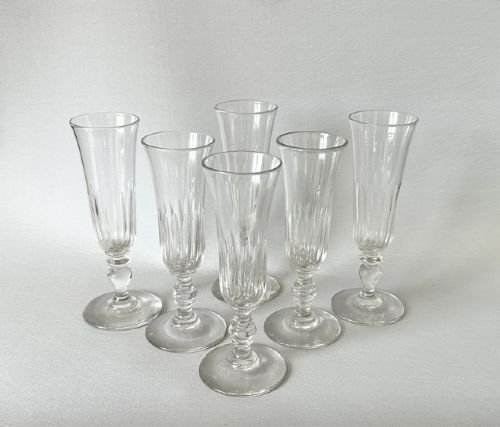
Singles and pairs dominate, with pairs named in a large block of titles. Sixes are common, and beyond that come eights, tens, twelves, fourteens and sixteens.
Some larger groups are described as harlequin sets, assembled from near-matching glasses rather than made together. Complete larger suites sit well above singles of the same type.
Why is so much coloured glass 19th century?
Colour is the second axis of the category and it sits almost entirely in the 19th century. Green leads by a distance, then blue, then cranberry, with amethyst, amber, turquoise, peacock blue and uranium or vaseline glass recurring.
Bristol is used as a colour term in these titles rather than as an attribution to a particular works.
How many are listed each year?
Around 214 wine glasses and related pieces a year on Sellingantiques, spread across 111 dealers.
That makes it one of the more widely stocked corners of the glass category, and it means the same stem types come round regularly rather than once.
What unusual pieces appear under this heading?
A boot-shaped stirrup glass, a wine funnel, single- and double-lipped wine rinsers, and a thick-walled deceptive toastmaster's glass of about 1720 all turn up once and nowhere else.
Engraved oddities include a glass cut for the 1873 Vienna World Fair and one engraved simply 'Women & Wine'.
Rummers, goblets, carafes, decanters and coolers form a steadier fringe alongside the stemmed glasses.