

Antique Georgian Glass
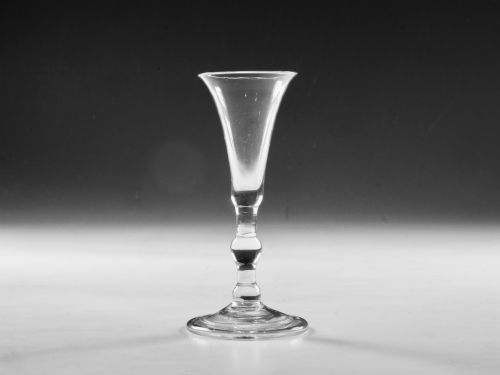
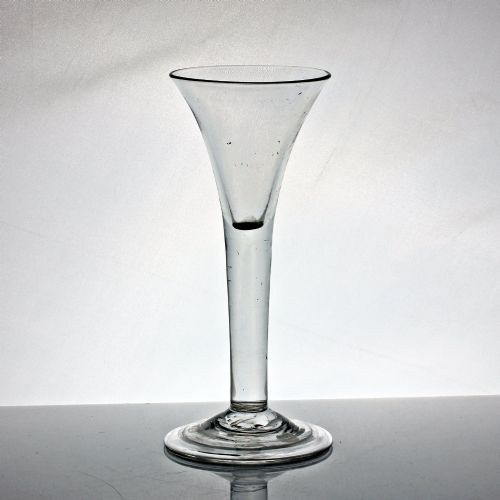
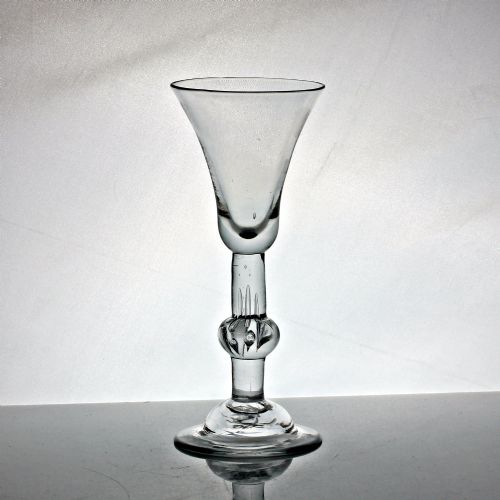
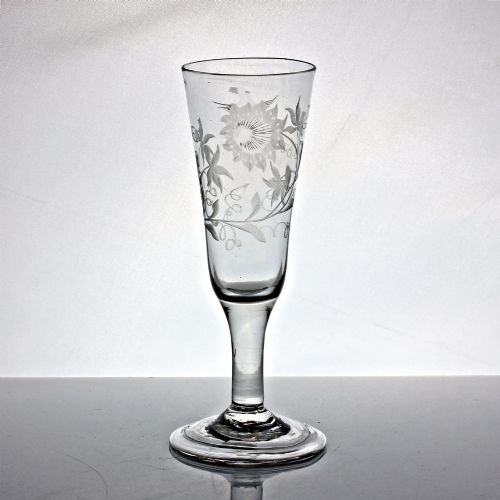
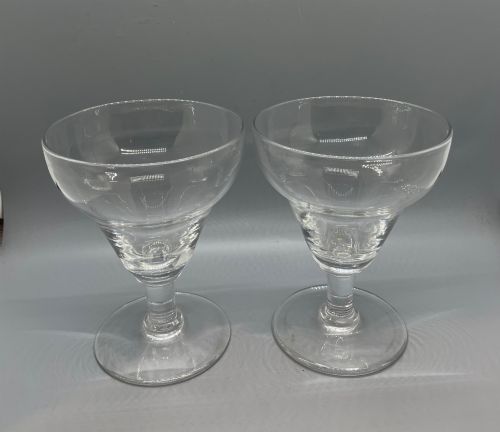
British lead-glass drinking and table glass of roughly 1700 to 1840: stemmed wines, ale and dram glasses, rummers and decanters, made for wine, spirits and punch on the table.

Antique Georgian Glass
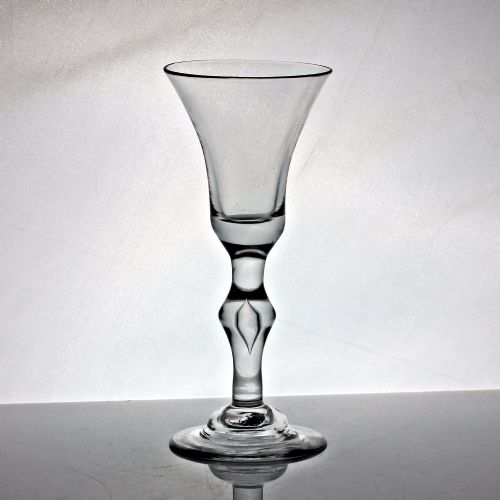
Lead glass was developed in England in the later seventeenth century, and it gave a heavy, clear, brilliant metal that suited stemmed drinking glasses and cut and engraved tableware. Through the eighteenth and early nineteenth centuries it was made in quantity, in the sequence of stem fashions that collectors still use to sort it.
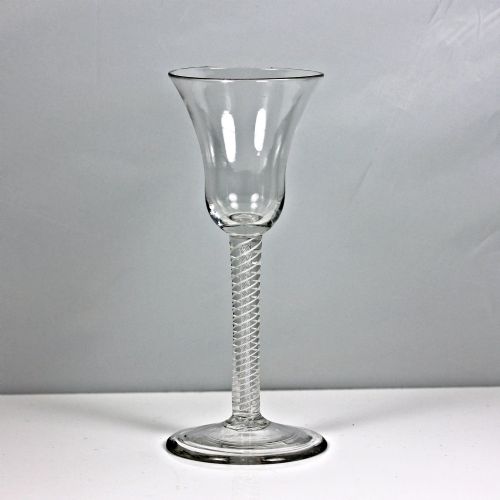
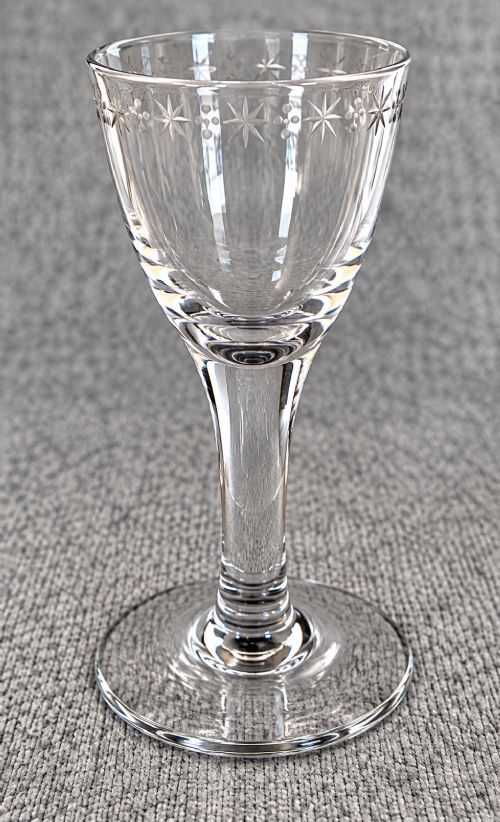
The single stemmed drinking glass dominates. "Wine" appears in a third of titles on Sellingantiques, and listings are written around three features: stem type, bowl shape and foot. A title such as "double series opaque twist wine glass, ovoid bowl" is doing the work a maker's name does elsewhere, because no glasshouse attributions run through this category at all.
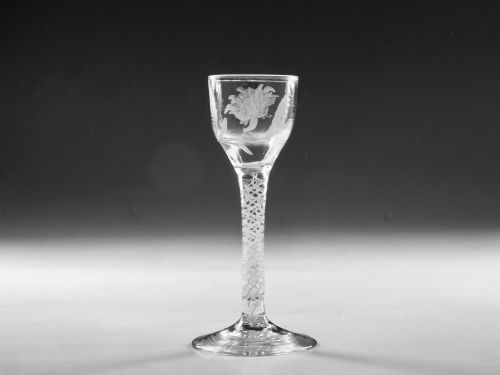
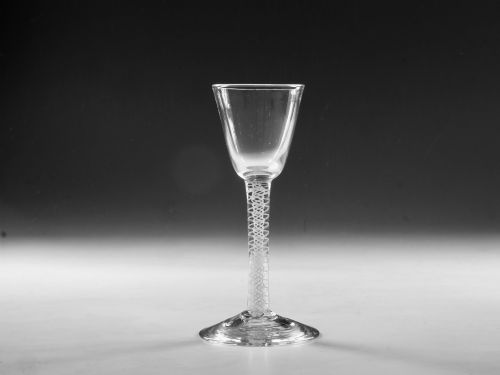
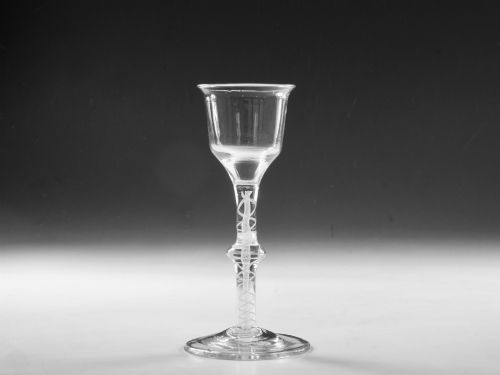
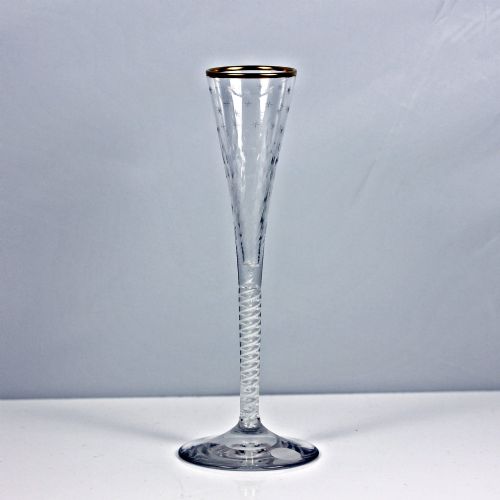
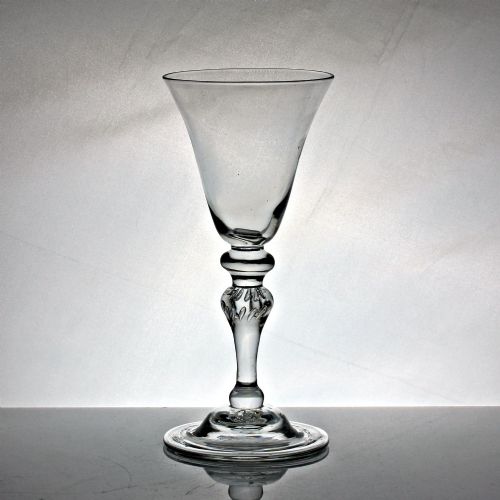
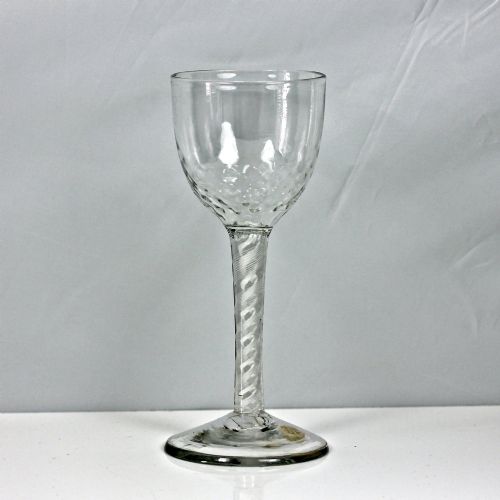
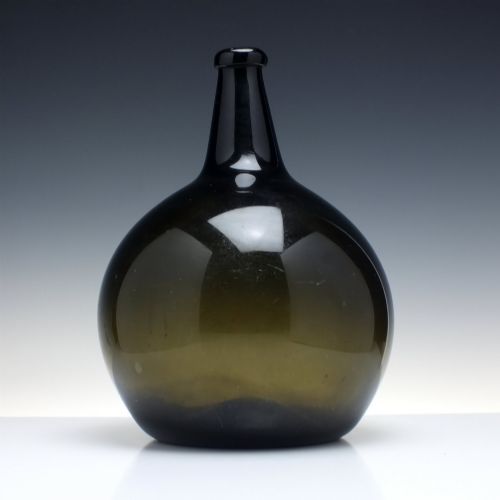
Twist stems are the largest group, opaque twist and air twist together, with double series and multi spiral recurring inside them. Plain stems, balustroids and balusters make up a second block, alongside composite, pedestal and firing glasses. Rummers and tumblers form a third, decanters, carafes, toddy lifters and wine rinsers a fourth.
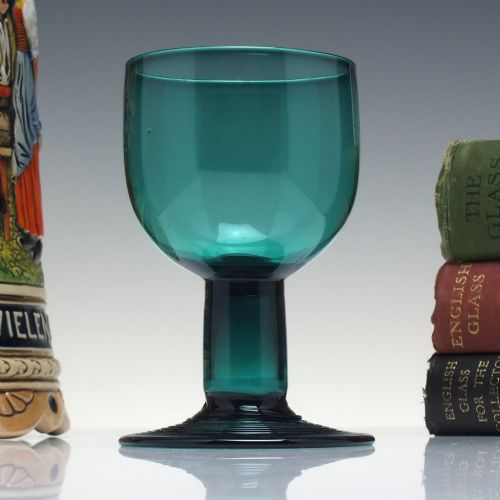
Coloured glass is a substantial branch on its own: deep blue and green under the Bristol trade names, plus amethyst, peacock blue, turquoise and amber, with the small squat mell decanter recurring across those colours. A thin Continental fringe turns up too, single pieces given to Liege, Bohemia, Sweden, Germany, Belgium and the Netherlands. Dealer dating is mostly a label rather than a year, with "Georgian" and "18th Century" used far more often than a figure, so treat any single dated value as the dealer's bracket.
Where The Range Splits
Stem type sets the ladder. Plain stems and moulded ale glasses sit low; air twist, mixed twist, baluster and colour twist wines occupy the top, and the four colour twists in the archive, red, green-and-red and single series, sit at the very head of it. Stem complexity pushes the same way: double, triple and four-knop stems, triple annular knops and vermicular collars appear only in the upper part of the range.
Engraving is named in 177 titles, and the subject matters more than its presence. Hop-and-barley and swag work sits mid-range. Jacobite and anti-Jacobite emblems, Newcastle light balusters, armorials, Masonic devices and named occasions such as "Speed the Plough" or a coin rummer sit high above it.
Number counts, and sets survive better in this category than you would expect for glass. Pairs run through a tenth of titles and sets of six rummers, ale glasses, port glasses and coloured wine flutes turn up. Singles dominate the bottom. On colour, blue and green spread across the whole range, while amethyst, peacock blue, turquoise green and amber cluster higher.
Antique Georgian Glass Retail Price Guide 2026
Typical UK retail prices for georgian glass, calculated from the Sellingantiques database of over a million retail prices indexed since 2003. This retail price guide relies exclusively on Sellingantiques data; no external sources or auction records are used, so the figures do not describe the wider market.
The largest pieces on Sellingantiques are all for serving - table rummers, tazzas, punch and turnover bowls, epergnes and magnum decanters, plus a pint-and-a-half flip tumbler.
The Antique Georgian Glass Glossary
- Opaque twist
- White enamel threads worked into the stem. The commonest named stem in this category, with 107 titles using it.
- Air twist
- Spiral threads of air drawn up the stem, often described as multi spiral or double series. Named in 89 titles.
- Double series
- Two sets of threads in one stem, one running inside the other. Recorded in 49 titles.
- Rummer
- A short-stemmed, wide-bowled drinking glass. Around 134 titles name one, singly or in pairs and sets, sometimes as a pan rummer or table rummer.
- Lemon squeezer foot
- A moulded, radially ribbed underside to the foot, found on rummers of about 1800. Folded feet, turned under at the rim for strength, are named in 30 titles.
- Mell decanter
- A small squat coloured decanter that recurs a dozen times in blue, green, amethyst and peacock. A form seldom named outside this archive.
Antique Georgian Glass: Frequently Asked Questions
Which forms turn up most often?
The stemmed wine glass, by a wide margin. "Wine" is in a third of titles on Sellingantiques, with the stem named as twist or plain and the bowl shape given in about a tenth.
Rummers are the next block, then decanters. Behind them sits a long tail of small table items: salts, cream jugs, jelly and monteith glasses, toddy lifters and rinsers.
Are Georgian glasses ever marked?
No. Nothing in this category is marked, signed or documented, and a scan across more than 1,200 listings returned no maker names at all.
That is why titles lean so hard on stem, bowl and foot. Those three features are how the category is described and sorted.
Does Bristol blue mean the glass was made in Bristol?
In these listings, Bristol blue and Bristol green work as colour terms. They describe a deep blue and a deep green, not an attributed place of making.
Bristol appears in 83 titles and blue in 94, so it is one of the well-populated corners of the category.
How reliable are the dates in the listings?
The dealers' dating field is usually a label. "Georgian" alone accounts for 443 entries and "18th Century" for 247, against 329 listings that carry a clean year.
Where years are given they cluster in the 1750s and the 1800s, and title dates echo that with c1750, c1760, c1740, c1820 and c1830. The outer edges of the field run 1700 to 1920, and a handful of entries are Georgian Revival or Georgian style.
What sort of engraving appears on these glasses?
Hops and barley is the recurring one, along with swags. Beyond that the archive records Jacobite and anti-Jacobite emblems, Masonic devices and armorials.
Named occasions turn up too: "Speed the Plough", "God speed the carpenter", "Tally Ho" with a fox, a ship with initials and a Royal Fusiliers regimental decanter.
Can you still buy matching sets?
Yes, more often than glass of this age might suggest. Pairs appear in 136 titles and six in 36.
Sets of six rummers, six ale glasses, six port glasses and six coloured wine flutes have all been listed.
Which unusual pieces have come through?
The largest are serving pieces: table rummers, tazzas, punch and turnover bowls, epergnes and magnum decanters.
The oddities are one-offs. A boot dram glass with rigaree, a double-ended dram measure, a glass caddy spoon, a gimmel flask, a Lynn-ringed shoulder carafe and a half-pint coin tankard dated 1837.