



Antique Biscuit Barrels
A lidded glass jar with a metal cover and swing handle, made to sit on the Victorian tea table and hold sweet biscuits for serving.
Antique Biscuit Barrels
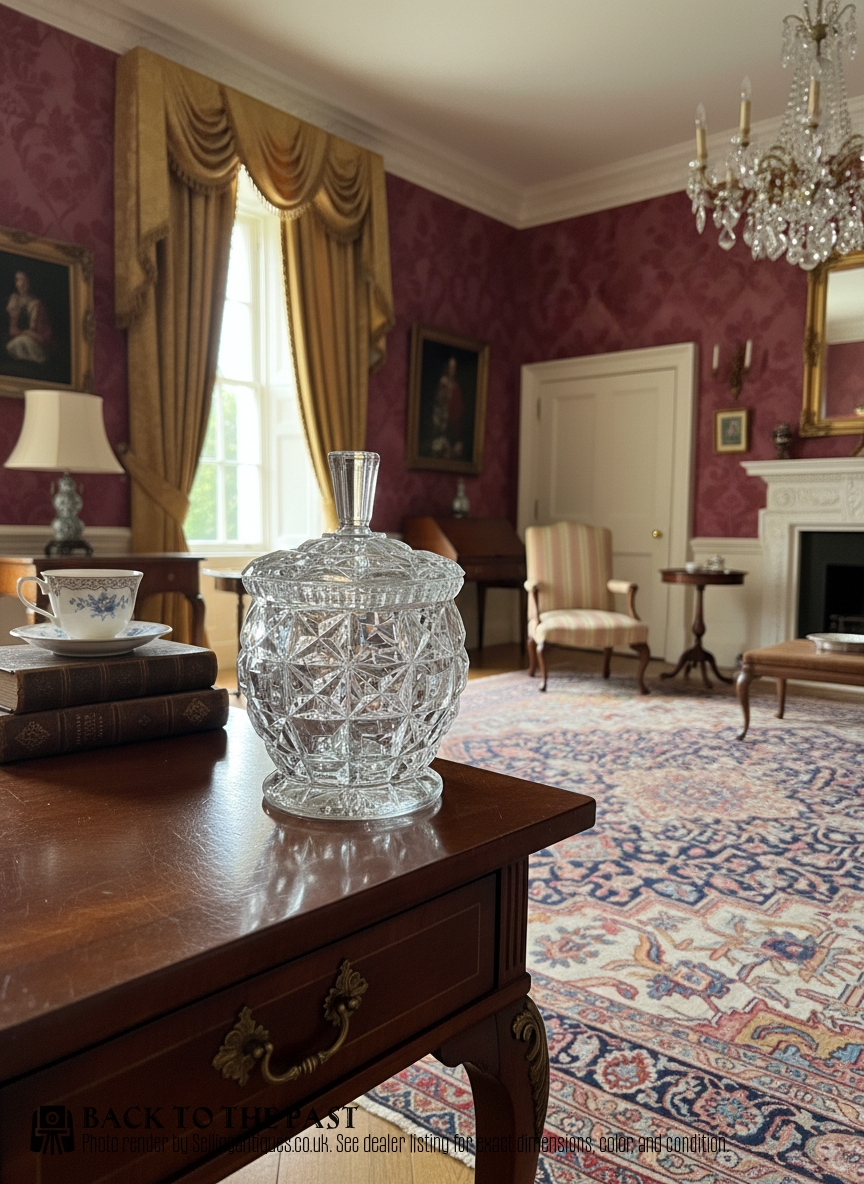
Glass dominates: 32 of the 39 listings on Sellingantiques name it in the title, and 14 of those specify cut glass. The lid, collar and swing handle are metal, usually silver or silver plate, which is named in nine titles. Put together, that gives the form you'll meet most often.
The typical one is a clear cut-glass barrel with plated mounts, late Victorian to Edwardian. Seventeen titles say Victorian and nine Edwardian, and the dated field runs from 1880 to 1930. Some listings carry a period label rather than a year, so read those as the dealer's shorthand.
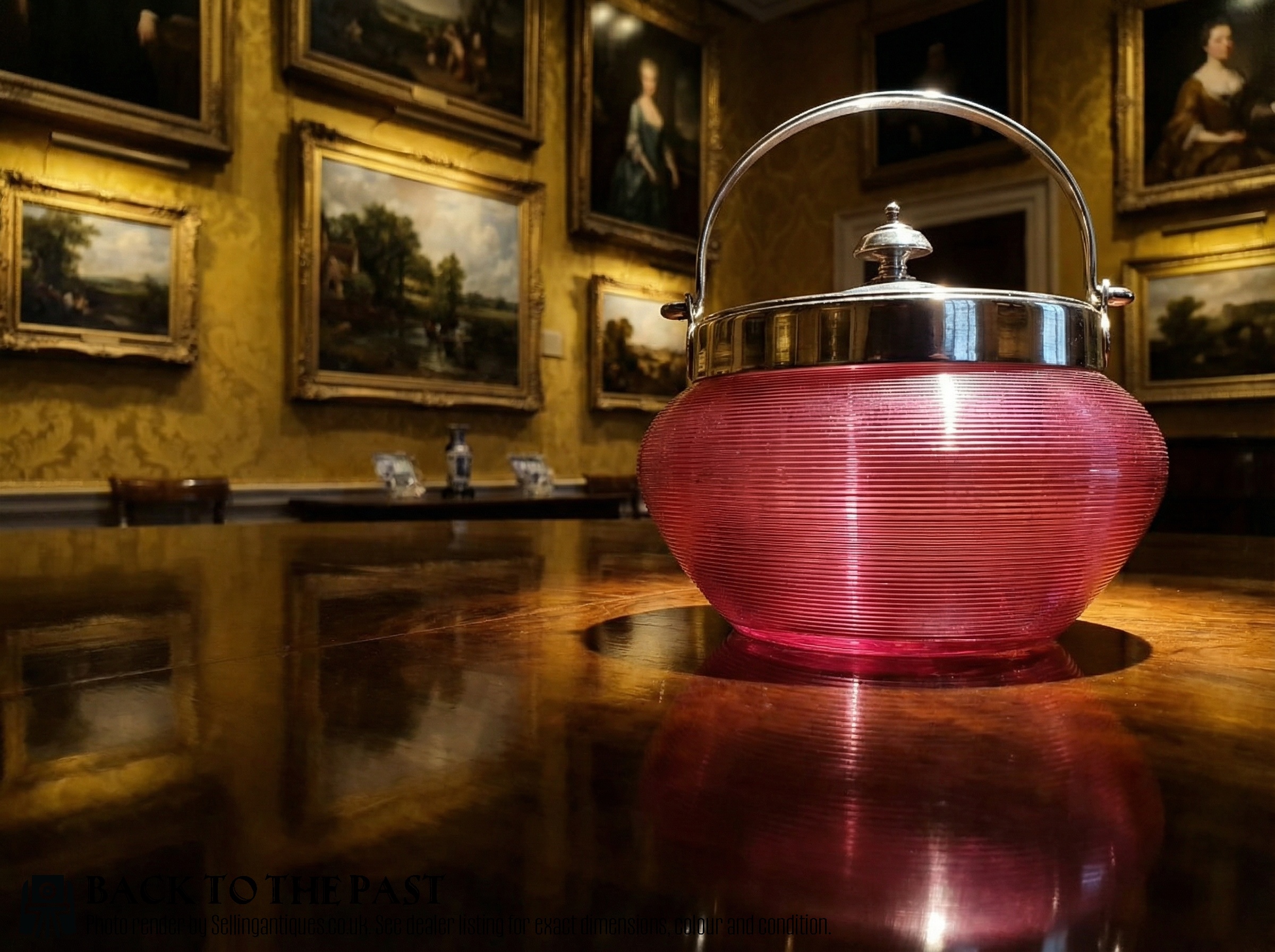
Colour is the other strand. Cranberry appears in six titles, including one with silver-plated mounts and one in cranberry overlay cut glass. Green and uranium glass each turn up once. Enamel painted, etched and holly-engraved bodies account for a small group of their own, and two pressed or moulded glass examples sit alongside them.
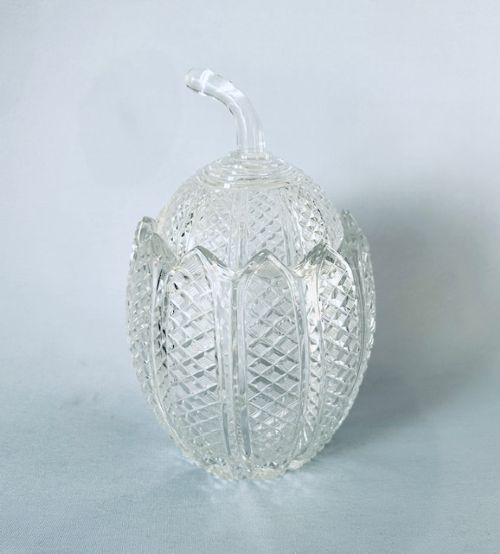
Names wander. 'Barrel' dominates the titles, but 'jar', 'box', 'cookie jar' and 'tea caddy' all appear, sometimes two of them in the same title. Oddities exist: a cut glass novelty modelled as a melon, and an Art Deco moulded barrel of geometric design.
Where The Range Splits
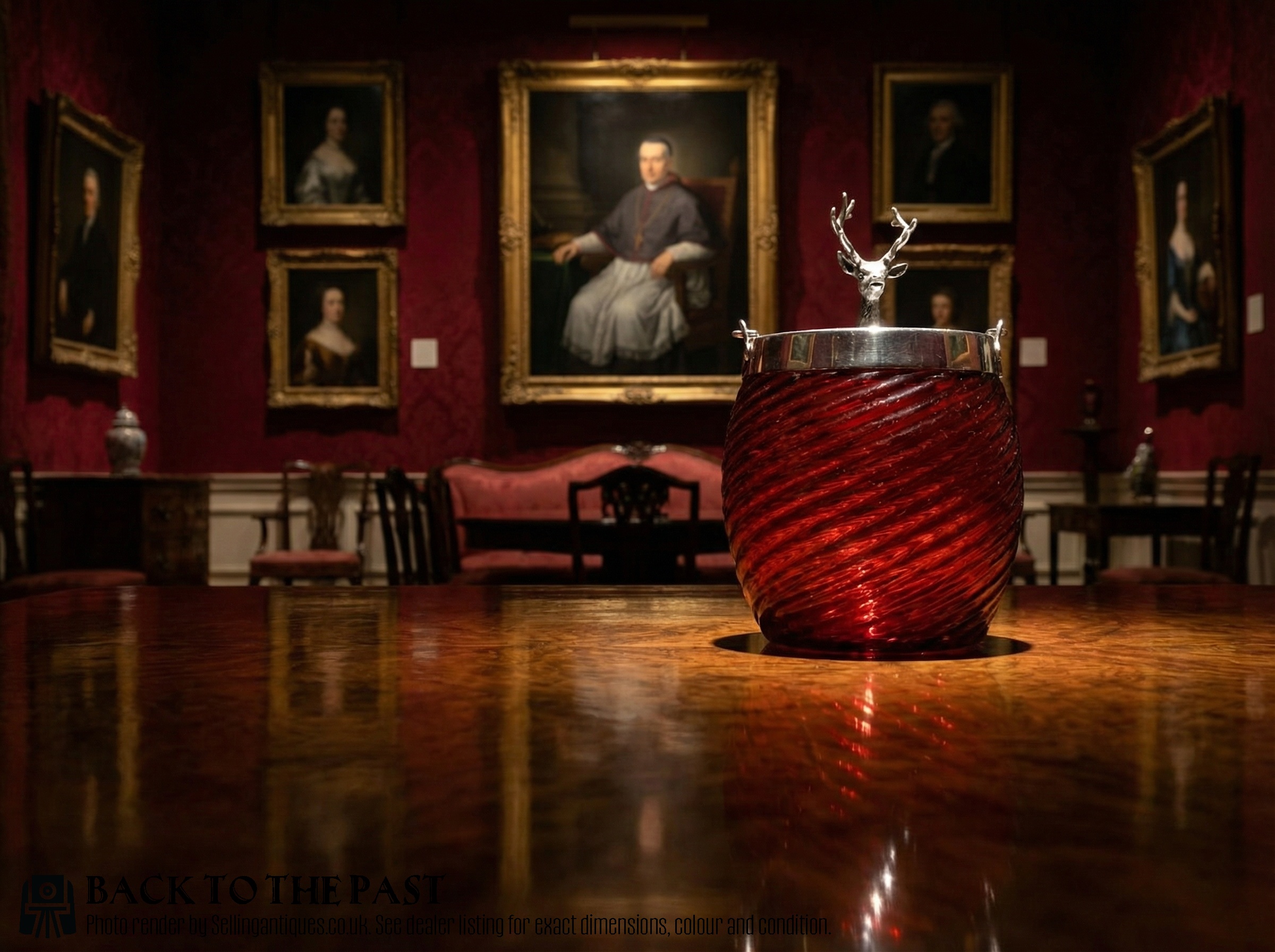
Colour separates the top from the bottom more than anything else. Cranberry examples cluster in the upper part of the range, and the single barrel combining cranberry overlay cut glass with silver sits at the very top. Plain clear cut glass is where the bottom of the range lives.
Cut work also earns its place. Cutting is named in 15 titles, and hobnail cutting sits among the highest-priced; the two pressed and moulded glass barrels sit low to mid range. Applied decoration works the same way, with enamel painted, etched, engraved and uranium enamelled bodies all above the plainest clear glass.
Metal and size do the rest. Where silver or silver plate is named in the title, the listing tends to sit higher. 'Large' appears in one of the top titles, while 'small' turns up in three of the cheaper ones.
Antique Biscuit Barrels Retail Price Guide 2026
Typical UK retail prices for biscuit barrels, calculated from the Sellingantiques database of over a million retail prices indexed since 2003. This retail price guide relies exclusively on Sellingantiques data; no external sources or auction records are used, so the figures do not describe the wider market.
About four biscuit barrels are listed on Sellingantiques each year, and 21 dealers have listed them, so no one dealer defines the category.
The Antique Biscuit Barrels Glossary
- Cut glass
- Glass decorated by grinding facets into the surface. The commonest body in this category, named in 14 titles.
- Mounts
- The metal collar, lid and handle fitted to the glass body, in silver or silver plate.
- Cover
- The lid. Titles sometimes list it separately, as '& Cover'.
- Cranberry glass
- Pink-red glass, and the signature colour of these barrels, in six titles.
- Overlay
- One layer of coloured glass laid over another and cut through to show the layer beneath.
- Uranium glass
- Greenish-yellow glass coloured with uranium, which fluoresces. It appears once in the archive, on an enamelled Victorian barrel.
Antique Biscuit Barrels: Frequently Asked Questions
How often do biscuit barrels come up for sale?
About four a year reach the market on Sellingantiques, so this is a trickle rather than a stream.
They come from 21 different dealers across 39 listings, which means no single dealer defines the category.
What period are most biscuit barrels from?
The dated field runs 1880 to 1930, and 24 of the 39 listings carry a clean year. That fifty-year window holds almost the whole category.
Within it, nine fall in the 1900s and five in the 1890s, with smaller numbers in the 1880s, 1910s, 1920s and 1930s. Eleven more are entered simply as Victorian and two as Edwardian.
One listing is labelled Georgian, which sits well outside the range the rest of the archive supports.
Are the lids solid silver or plated?
Silver or silver plate is named in nine of the titles, and where the metal is specified it's usually silver plate.
No assay marks, date letters or hallmarks are recorded anywhere in this evidence, so the metal is what the title says and nothing more.
Why do listings call them jars and boxes too?
The titles simply disagree. 'Barrel' dominates, but 'jar', 'box', 'cookie jar' and even 'tea caddy' all appear for the same lidded serving vessel.
Some titles use two names at once. It's the object that stays consistent: a covered glass body with a metal lid and swing handle.
Which coloured glass turns up in this category?
Cranberry is the one you'll see most, in six titles, including a cranberry overlay cut glass barrel with silver.
Beyond that, a late Victorian green glass example and a uranium glass one each appear once.
The rest of the coloured group is decoration rather than body colour: enamel painted, etched and holly engraved.
Was pressed glass used for biscuit barrels?
Yes, but sparingly. Two listings name pressed or moulded glass bodies, against 14 that specify cut glass.
One of the moulded examples is an Art Deco barrel with a geometric design, which sits at the later end of the dated range.