


Antique Glass Comports
A comport is a glass dish raised on a stem or pedestal foot, made to hold fruit, sweetmeats or confectionery on a dining table or sideboard.
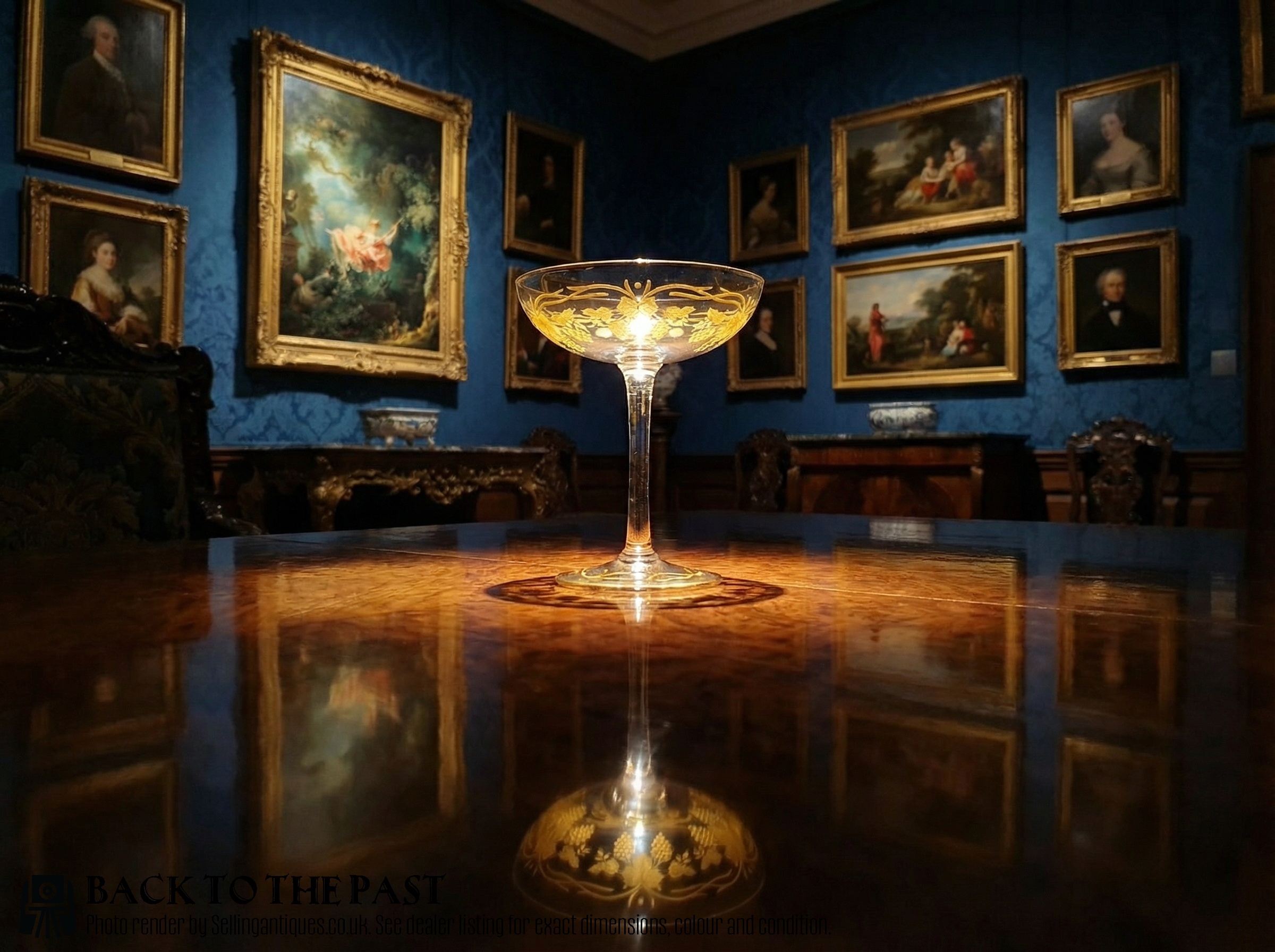
What Is A Glass Comport?
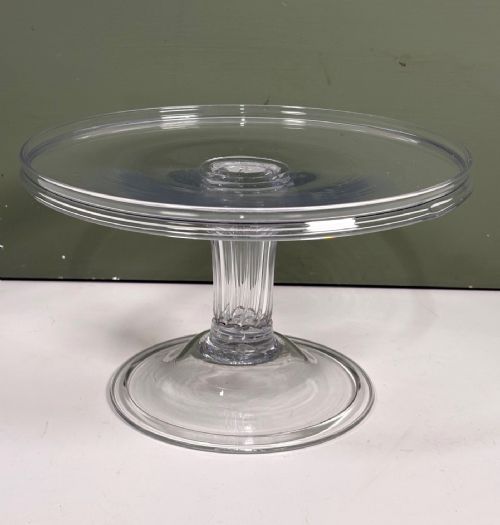
Raised dishes on a stem were made in glass from the 18th century, when the tazza form was adapted for the dessert course. The word comport, from compote, came into general use in the 19th century for a footed dish set out on the table. Titles on Sellingantiques use comport, tazza, pedestal bowl and stand more or less interchangeably, and several use two of them at once, so the same object may be listed under any of them.
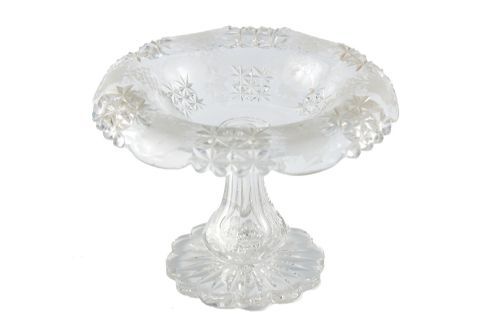
The form you'll meet most is a Victorian cut or frosted glass comport on a pedestal foot. Victorian appears in eleven of the thirty-five listings and cut in eleven, and the mid to late 19th century accounts for twelve of the dated entries. Most are sold singly, though four titles specify a pair.
The second cluster is 1930s Art Deco, with eight titles and nine listings dated to that decade: uranium glass bowls, figural stems modelled as a figure rather than a plain baluster, and bowls on chrome or plated mounts. Between the Victorian run and the 1930s there is almost nothing.
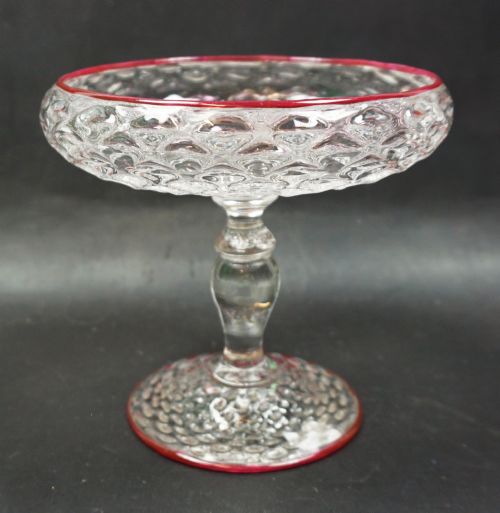
Around the edges sit a small handful of Georgian and early 19th century tazzas, one with a Silesian stem, and a scattering of coloured and decorated glass across periods: cranberry, satin, gilding, and applied green or red cane on English pieces of about 1880 to 1900. It's a small category, with roughly four listed a year and eighteen different dealers having handled one.
Where The Range Sits
The top of the range is 1930s work. The six highest-priced titles are all from that decade, and every one names uranium glass, a figural stem, or both. Uranium turns up three times in the archive, always in figural pieces, always near the top.
Below that, the argument is about decoration and survival. A plain etched or frosted single bowl sits at the bottom; titles that combine cut work with frosting, gilding, cranberry or applied cane sit higher. Pairs do better than singles, and four listings are pairs, including two Victorian cut glass pairs and a pair of English etched tazzas.
Size counts, with large appearing in five titles across an early 19th century tazza, a cranberry comport and Art Deco figural pieces. So does anything beyond plain glass: the two titles naming a glasshouse, and the four with ormolu, chrome, silver plate or partial gilt mounts, all sit above the plain Victorian cluster.
Retail Price Guide 2026
Typical UK retail prices for glass comports, calculated from the Sellingantiques database of over a million retail prices indexed since 2003. This retail price guide relies exclusively on Sellingantiques data; no external sources or auction records are used, so the figures do not describe the wider market.
Dated glass comports on Sellingantiques run from 1800 at the earliest to 1930 at the latest.
The Antique Glass Comports Glossary
- Comport
- A footed or stemmed dish for fruit and sweetmeats, and the commonest title word in this category.
- Tazza
- A shallow bowl on a stem and foot, used in titles for the same sort of object as a comport.
- Pedestal bowl
- A bowl raised on a solid or moulded foot rather than a slender stem.
- Cut glass
- Facets, flutes or hobnails ground into the surface, named in around a third of titles and often set against frosted areas.
- Uranium glass
- Greenish-yellow glass coloured with uranium, which fluoresces under UV. Three titles name it, all 1930s figural pieces.
- Silesian stem
- A moulded, shouldered and faceted stem found on early tazzas. One title records it and it appears nowhere else in the archive.
Frequently Asked Questions
What is the difference between a comport and a tazza?
In practice, very little. Titles use comport, tazza, pedestal bowl and stand for the same sort of raised dish, and several listings pair two of the words together.
Where there's a leaning, tazza tends to describe a shallow bowl on a stem and foot, and pedestal bowl a bowl on a solid or moulded foot rather than a slender stem.
Which periods do these come from?
Twenty-seven of the thirty-five listings carry a clean year, running from 1800 at the earliest to 1930 at the latest.
The profile has two humps rather than a curve: twelve listings across the 1850s to 1890s, nine in the 1930s, four in the 1900s, and almost nothing between the two clusters.
Are glass comports usually sold as pairs?
Mostly singly. Four titles out of thirty-five specify a pair, among them two Victorian cut glass pairs and a pair of English etched tazzas.
One listing goes further and is described as a centrepiece set of comports with salts. Pairs sit above the single-piece cluster.
What colours and decoration turn up?
Cut work is the most frequent, named in around a third of titles, often against frosted or etched areas. Gilding appears twice.
Colour comes in as cranberry, which shows up three times as full bowls and as applied edging, and once as satin glass. Applied cane decoration is noted twice, green and red, on English pieces of around 1880 to 1900.
Do any have metal parts?
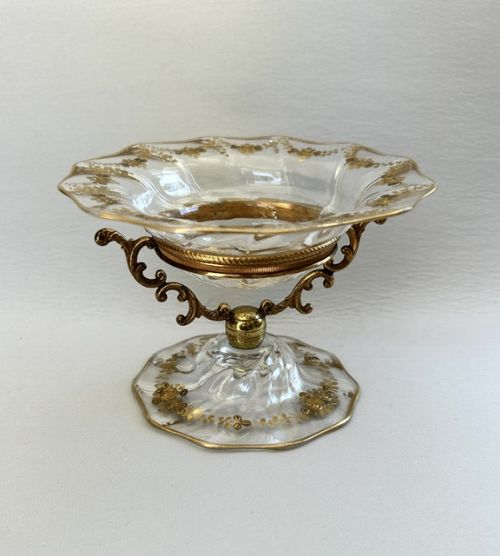
Four listings pair glass with metal: chrome, silver plate, ormolu and a partial gilt mount. The rest are glass throughout.
The metal-mounted pieces are largely an Art Deco thing, including one silver-plated coupe, and they sit above the plain Victorian cluster.
Are these pieces marked by a maker?
Rarely. Only two titles in the whole archive name a glasshouse, one each, and no maker runs across the category.
Where a name does appear it lifts a piece above the plain Victorian group, but the great majority are described by period, form and decoration alone.