




Antique Champagne Coupes
A wide, shallow-bowled stemmed glass made for champagne at table, sold in pairs and sets rather than one at a time.
Antique Champagne Coupes
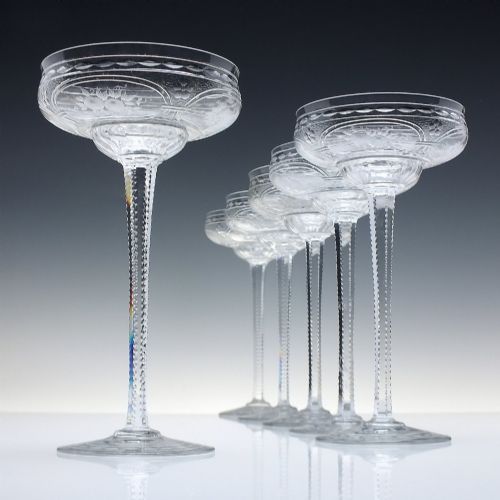
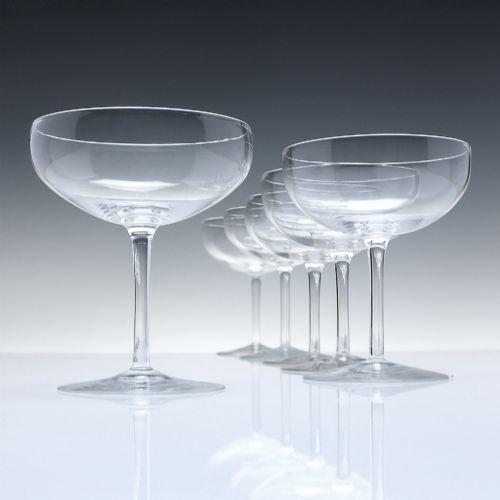
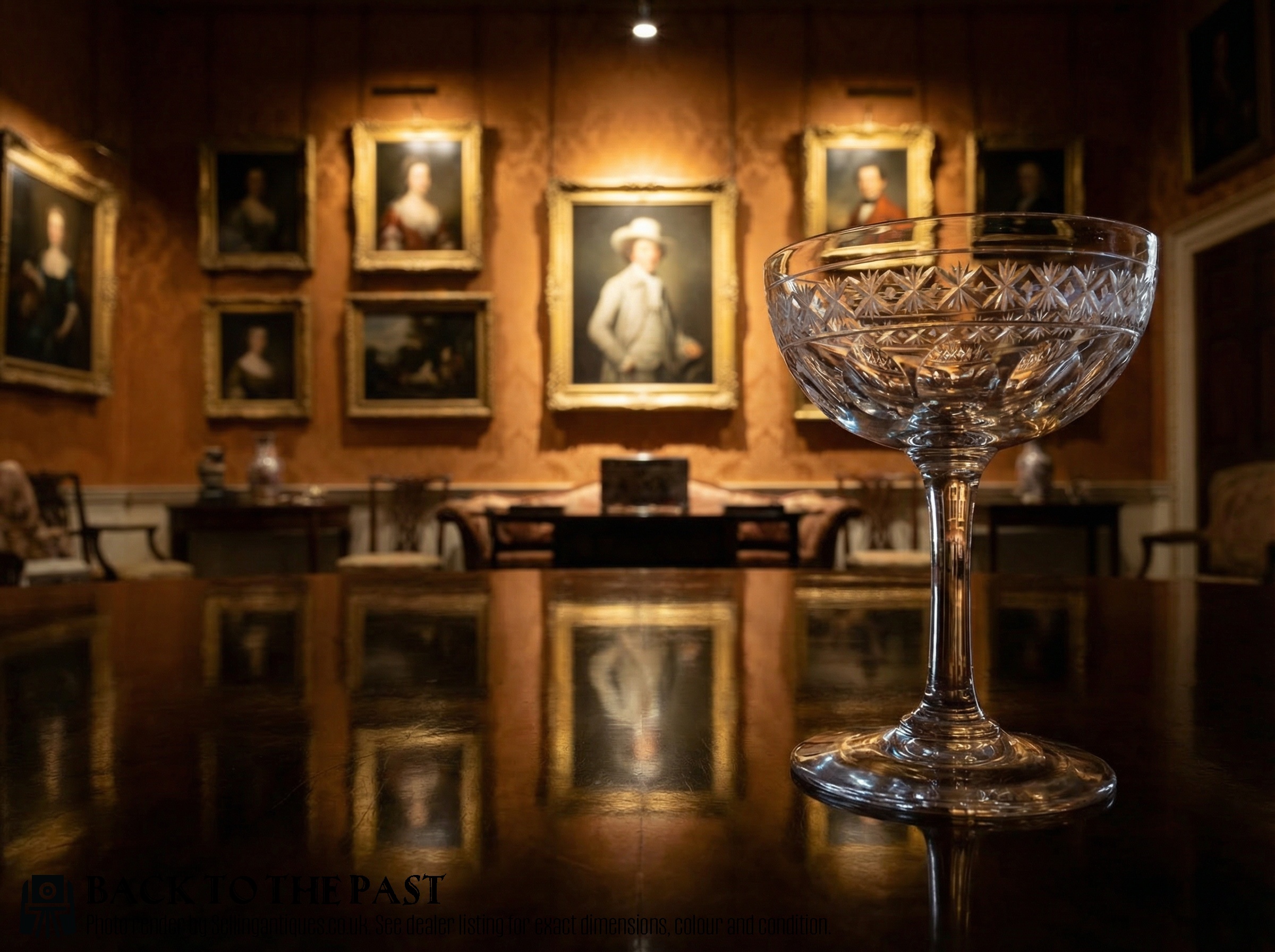
The coupe is the broad, shallow bowl on a stem that served as the standard English and French champagne glass through the 19th century, when sparkling wine came to the table in sets. It held that position until the taller flute took over in the middle of the 20th century.
What comes up on Sellingantiques is late 19th and early 20th century English and Continental table glass, mostly clear lead crystal with cut or wheel-engraved decoration. The dealer dates run from 1850 to 1930, with the decade tags clustering in the 1910s and 1880s. Many listings carry only 'Victorian' or 'Edwardian' as a period label rather than a year.
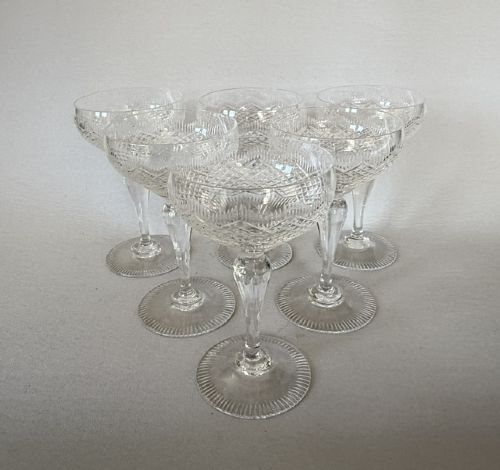
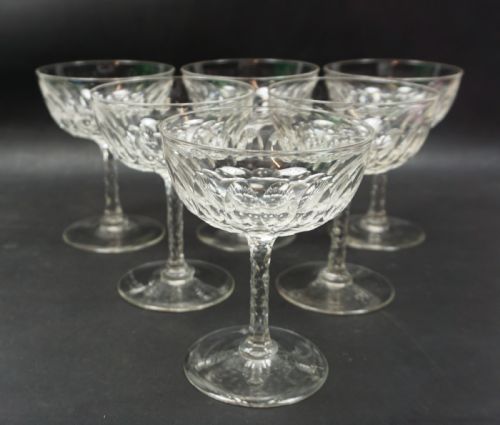
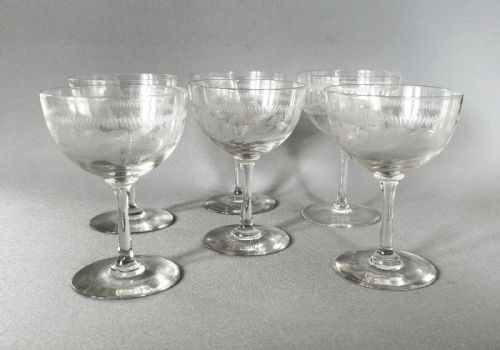
The version you are most likely to meet is a pair of clear cut or etched glasses described as Victorian or Edwardian. 'Coupes' appears in three quarters of titles, 'pair' in nearly half, and sets of six are the next most common grouping, with fours, eights, tens, elevens, twelves and sixteens all turning up at least once. Titles sometimes say 'glasses' or even 'bowls' for the same object.
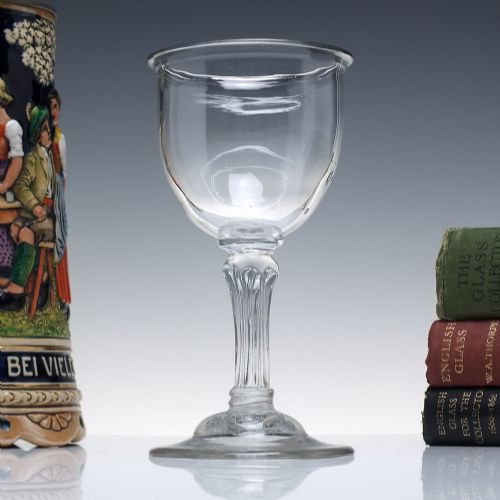
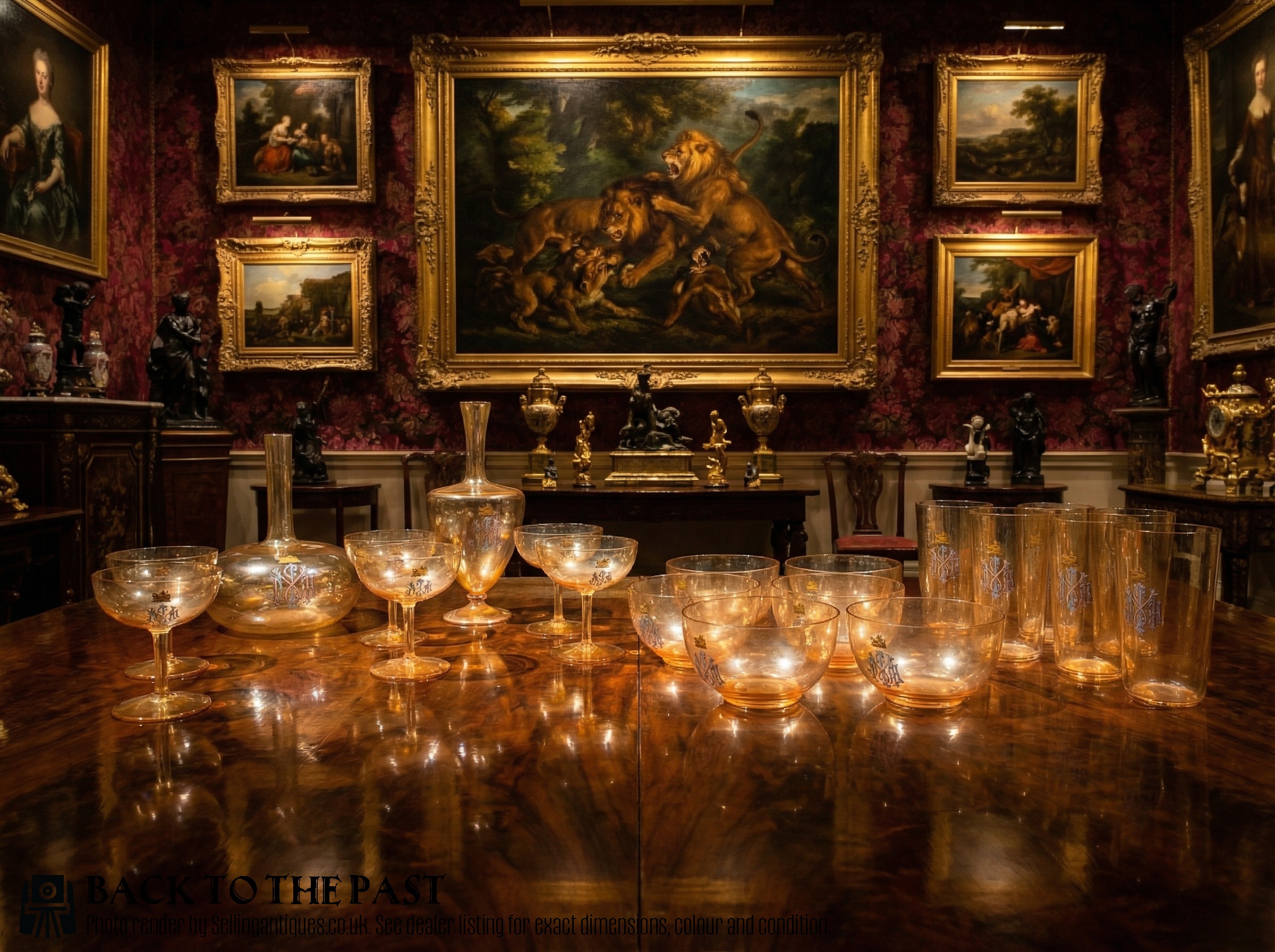
Beyond the clear glass there are smaller runs: coloured and cased pieces in cranberry, red and green over crystal, plus whole-colour amber; hollow-stemmed examples; and a handful of outliers sold under the same heading, including an 18th-century pedestal stem glass, a Georgian opaque twist stem, a Murano pair and an Austrian garden party service. Continental origins are scarce, so treat a listing as English unless the title says otherwise.
Where The Range Widens
Numbers do most of the work. Pairs sit in the lower reaches, while the sets of eleven, twelve and sixteen sit at the very top. Two sets of sixteen are the largest groupings recorded, one etched crystal and one amber. Harlequin sets, matched in size and date but not in pattern, appear twice, both Victorian.
Colour lifts a set clear of the plain clear pairs. Cranberry, red and green cased over crystal all appear, along with cranberry and amber as whole-glass colours, and the cased examples are often engraved through the colour, one with convolvulus and one with fruiting vines. Named patterns count too: Greek key turns up on a sliced-cut Victorian pair and on two Edwardian etched sets, and 'bark stem' appears once.
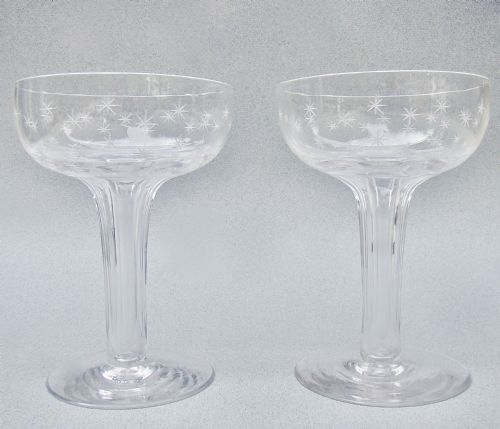
Stems and age account for the rest. Hollow stems show up only twice, one of them an extra-tall set of eleven near the upper end. Facet-cut stems, intaglio cutting and full engraved schemes carry more than simple decoration, and the two pieces reaching back to the 18th century and the Georgian period sit above comparable Victorian pairs.
Antique Champagne Coupes Retail Price Guide 2026
Typical UK retail prices for champagne coupes, calculated from the Sellingantiques database of over a million retail prices indexed since 2003. This retail price guide relies exclusively on Sellingantiques data; no external sources or auction records are used, so the figures do not describe the wider market.
Champagne coupes have been listed on Sellingantiques since 2017.
The Antique Champagne Coupes Glossary
- Coupe
- The shallow, wide-bowled stemmed champagne glass itself, and the word used in three quarters of titles on Sellingantiques.
- Cut glass
- Decoration ground into the blank with a wheel. The commonest decorative term in these titles.
- Etched
- Surface-worked decoration, used more or less interchangeably with engraved across these listings.
- Over crystal
- A coloured layer cased over clear crystal and then cut or engraved through, seen in cranberry, red and green.
- Hollow stem
- A stem blown as a continuous cavity with the bowl, found on tall Victorian and Edwardian examples.
- Harlequin set
- Glasses matched in size and period but differing in pattern, sold together as a set.
Antique Champagne Coupes: Frequently Asked Questions
How many champagne coupes come up for sale?
Only about eight reach the market on Sellingantiques in a year, spread across seventeen different dealers.
That means no single seller holds more than a small handful at any time.
Are these sold as singles or sets?
Almost always in multiples. 'Pair' appears in nearly half the titles, and sets of six are the next most common grouping.
Larger groupings do appear: fours, eights, tens, elevens, twelves and two sets of sixteen are all recorded.
What decoration is most common on the bowls?
Cutting leads. 'Cut' or 'cut glass' runs through a good share of the titles, including sliced cut, facet-cut stems and intaglio cutting.
Etched and wheel-engraved decoration makes up the next group, at about a fifth of listings. Star-etched and Greek key borders both appear by name.
Are antique champagne coupes French?
Mostly not. The great majority of what appears here is English, described as Victorian or Edwardian.
Continental origins are scarce across the listings: a single Murano pair, a set of twelve early 20th-century French coupes and one Austrian garden party service.
Do coloured coupes turn up?
Yes, as a small but steady run. Casing appears in three shades over clear crystal: cranberry, red and green.
Whole-colour glass appears too, including a set of sixteen amber and a set of six cranberry. The cased examples are often engraved through the colour.
Can coupes be older than Victorian?
Two listings reach back further: an 18th-century pedestal stem glass given as c1750, and a Georgian double series opaque twist stem described as a champagne or sweetmeat glass.
Both sit outside the main run rather than extending it. The dated field for the category as a whole spans 1850 to 1930.