

Antique Glass Decanter Set
An antique glass decanter set brings structured hospitality to a room, offering matched glassware housed within dedicated stands and boxes.

Identifying an antique glass decanter set
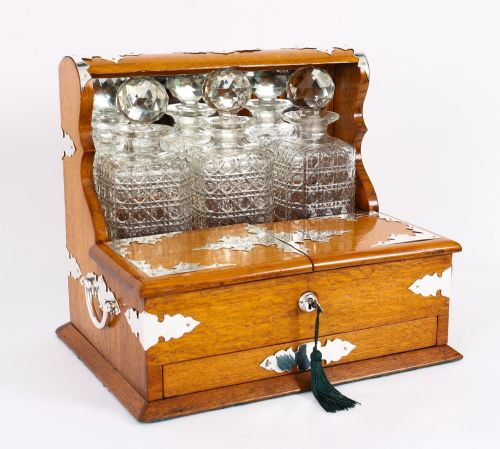
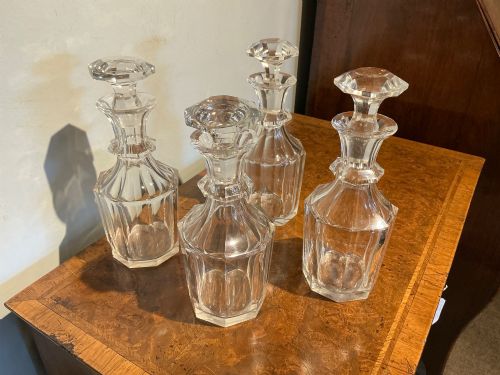
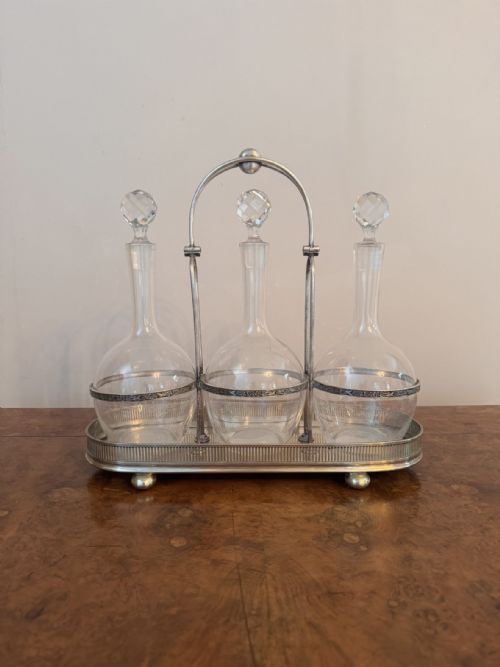
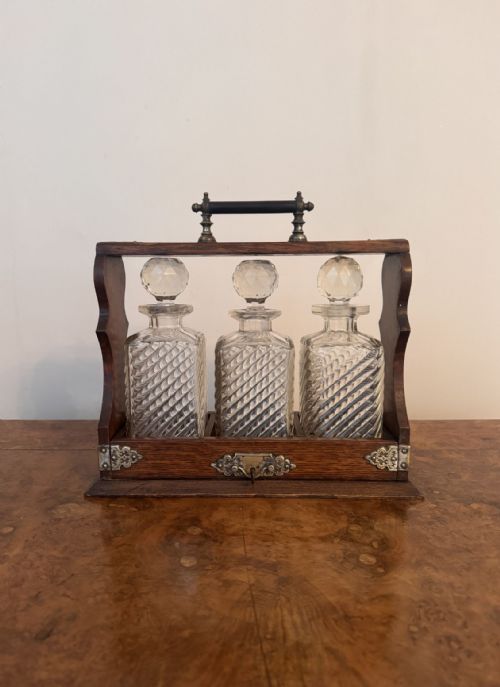
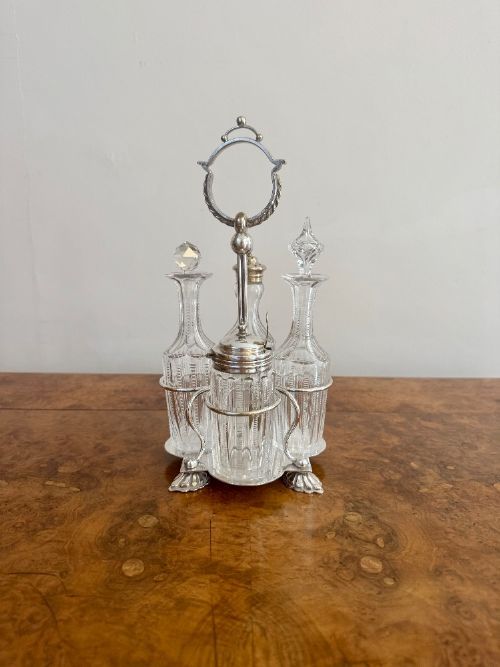
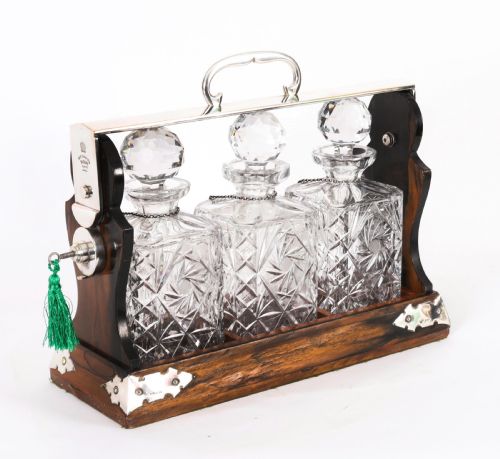
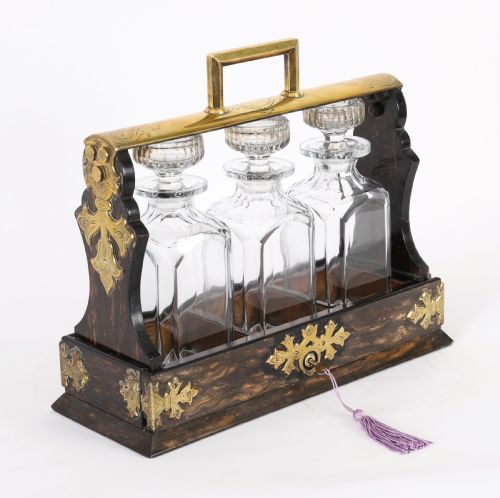
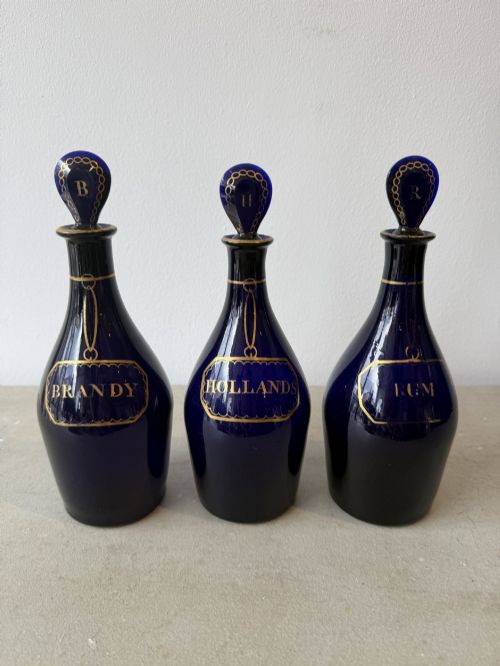
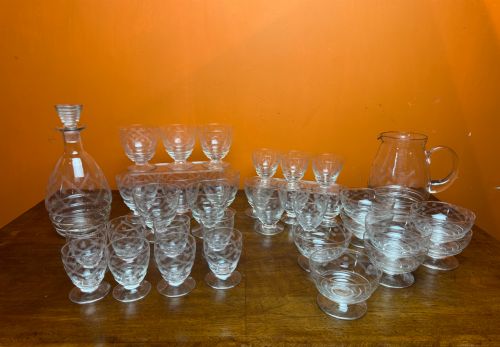
Buyers seeking an antique glass decanter set find matched drinking vessels and serving bottles housed in fitted wooden boxes, stands, or carried within locking frames.
The selections span distinct historical eras, including Georgian, Victorian, Edwardian, and Art Deco periods, encompassing forms like tantalus sets and liqueur cabinets.
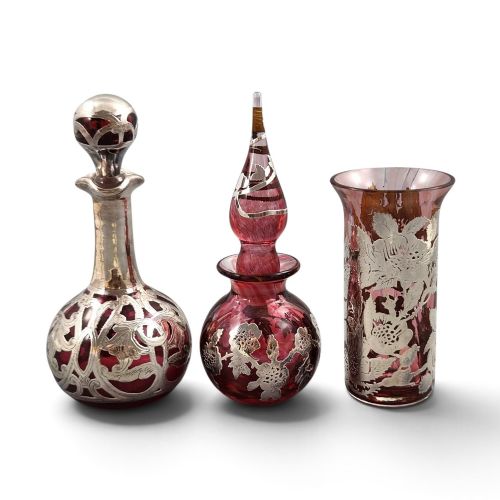
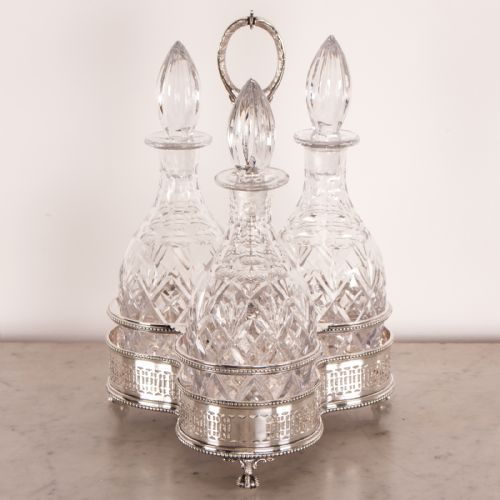
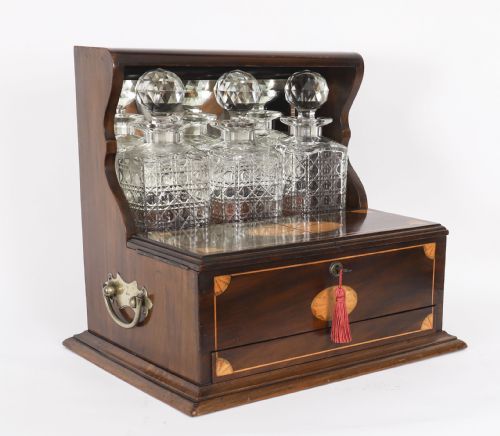
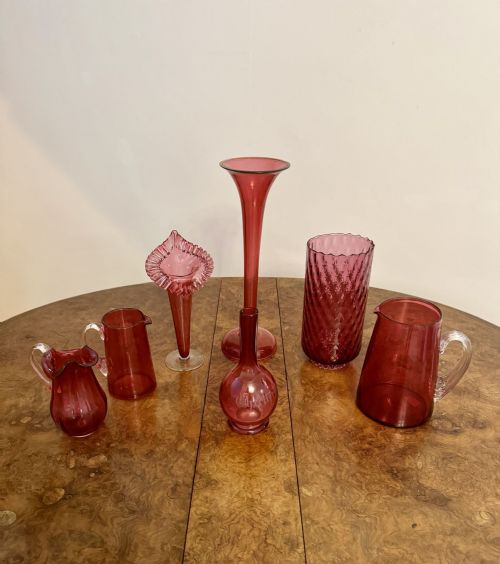
Examples frequently combine cut glass, cranberry glass, or amethyst glass bottles with supportive framework in mahogany, brass, or silver-plated metal.

Materials and construction
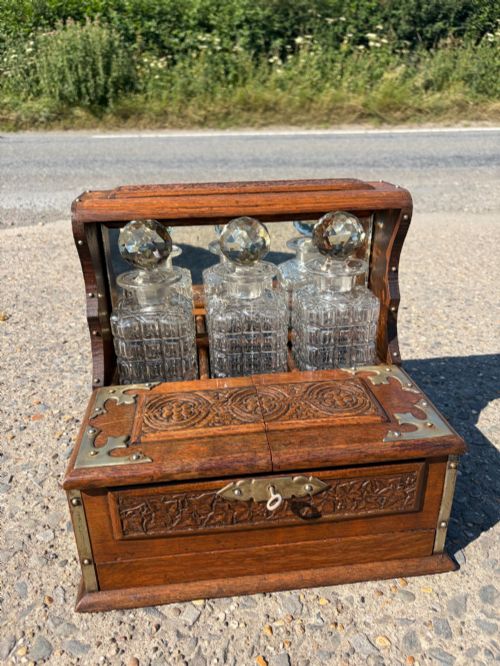
Craftsmen shaped vessels from blown and cut crystal or coloured glass such as cranberry and black glass, pairing them with wooden cabinetry in mahogany and Black Forest carved timber.
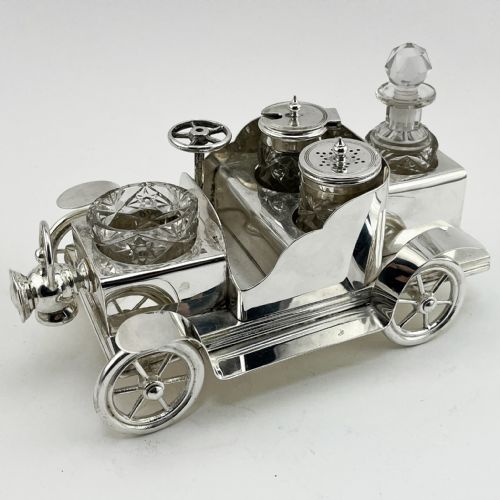
Metalwork components utilise brass and silver plating to form locking mechanisms, protective coasters, and carrying stands that secure the glass components.
Retail Price Guide 2026
Typical UK retail prices for glass decanter set, calculated from the Sellingantiques database of over a million retail prices indexed since 2003. This retail price guide relies exclusively on Sellingantiques data; no external sources or auction records are used, so the figures do not describe the wider market.
Jazz music enthusiasts in nineteen thirty could pour drinks from a dedicated jazz man decanter set.
Evaluating quality and execution
Superior examples display precise glass cutting and deep colour saturation across both decanters and their matching glasses, whereas standard iterations rely on simpler moulded forms.
The sophistication of the housing elevates a piece, distinguishing complex mechanical tantalus frames and fitted liqueur boxes from basic open stands.
The Antique Glass Decanter Set Glossary
- Tantalus
- A locking security frame that restrains decanter stoppers until a key is turned, preventing unauthorised pouring. It typically holds two or three bottles.
- Cranberry glass
- A rich red transparent glass produced by adding gold chloride to the molten batch during the nineteenth century. It appears frequently in Victorian barware.
- Cave de liqueur
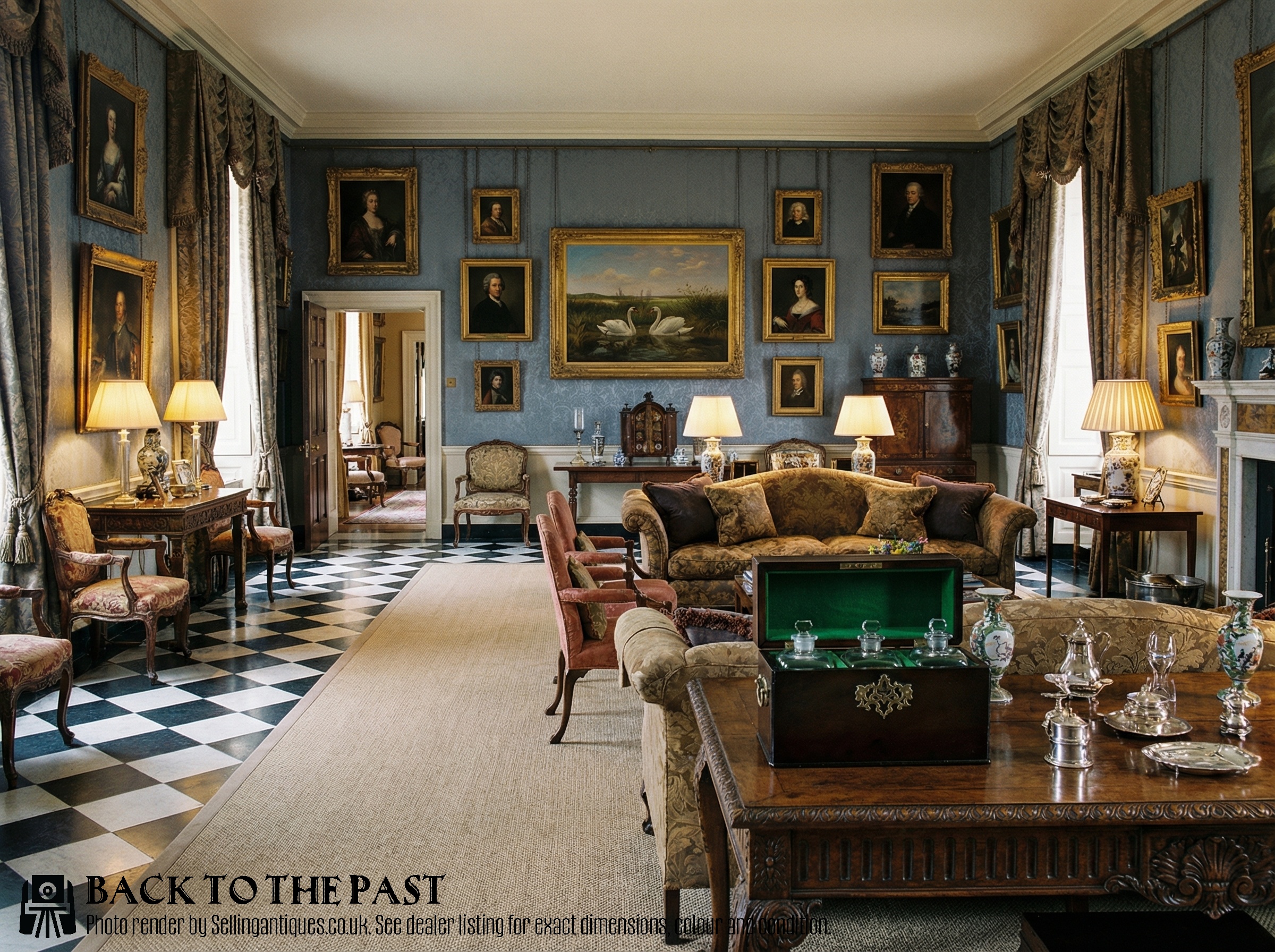
- A French-style portable liqueur cabinet or box containing fitted compartments for decanters and small glasses, often associated with Black Forest woodcarving.
- Cut crystal glass
- Glassware patterned with faceted geometric incisions that refract light. It requires skilled hand-cutting and polishing.
Frequently Asked Questions
What is an antique glass decanter set used for?
These sets served to store, lock, and present spirits and cordials for entertaining guests in domestic dining rooms and drawing rooms.
They kept valuable beverages secure while displaying polished glass and fitted stands as decorative interior accessories.
How do I distinguish Edwardian from Victorian sets?
Victorian sets often feature heavier ornamentation, deep cranberry or amethyst colours, and elaborate mechanical stands or tantalus frames.
Edwardian pieces tend toward lighter structural frameworks in mahogany and brass, reflecting changing interior tastes at the turn of the century.
Are the glasses always matching in these sets?
Many surviving sets retain their original complement of small cordial glasses or tumblers designed specifically to fit the accompanying stand or box.
Over decades of use, individual glasses could be replaced, making matched original sets particularly notable for collectors.
How should I care for antique glass decanters?
Wash glass components gently by hand using lukewarm water to protect aged surfaces, avoiding harsh detergents and extreme temperature changes.
Wood and metal stands require dry dusting and occasional treatment appropriate to mahogany, brass, or silver plating.