
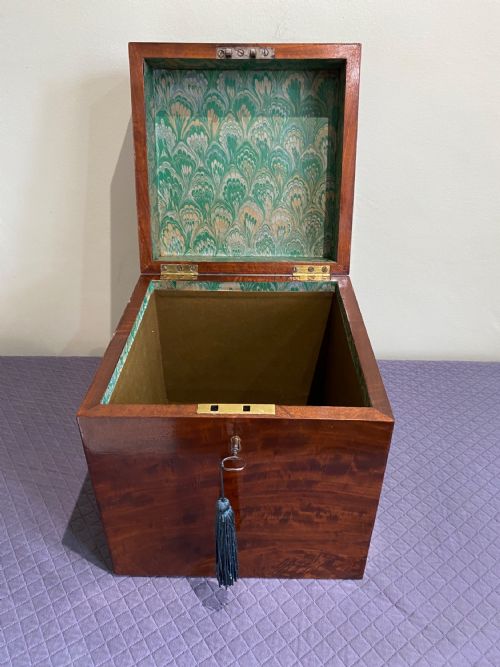
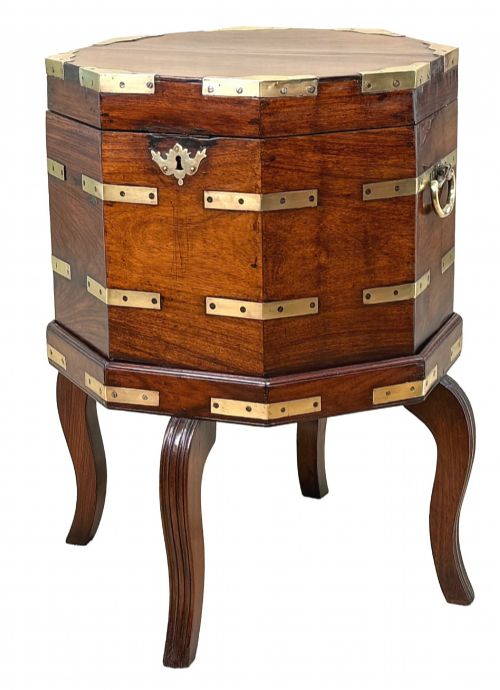
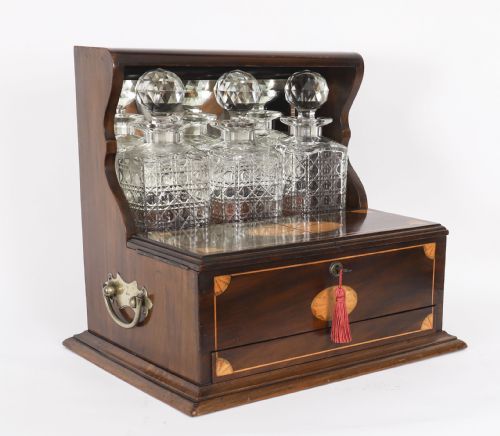

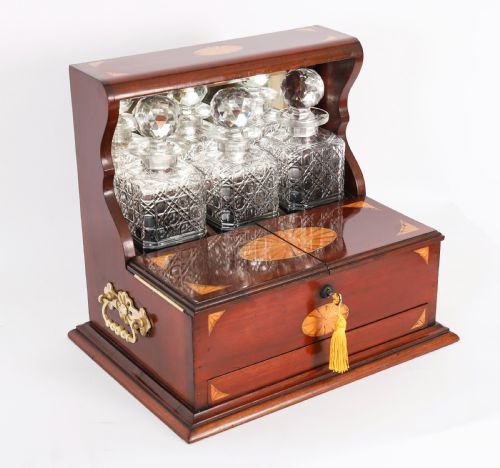
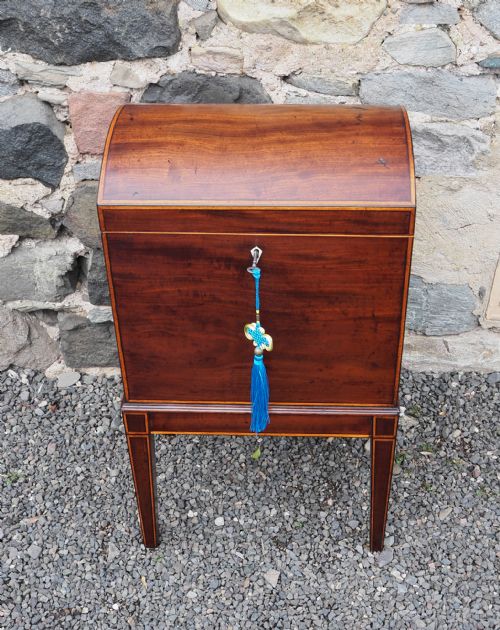


Mahogany Decanter Box
These mahogany decanter box pieces are compact, fitted drinking cabinets designed to secure fine spirits for the table.
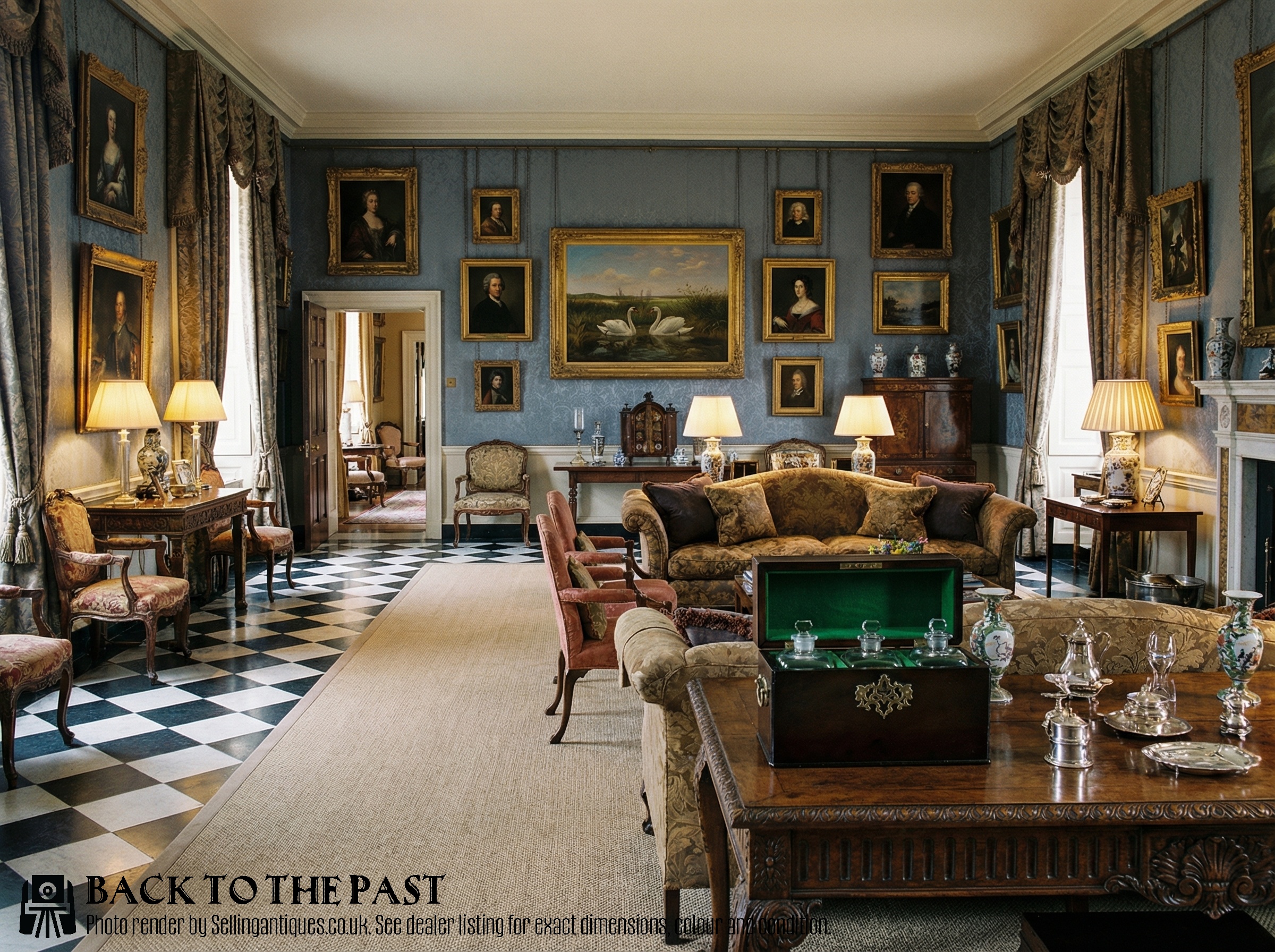
Mahogany Decanter Box
When you search for a mahogany decanter box, you are looking at portable and stationary drinking cabinets designed to hold glass bottles securely.
The pieces on this page span from the eighteenth century through the Georgian, Regency, and Victorian periods, often appearing as fitted cellarettes, wine carriers, or tantalus sets.
Materials and construction
These items are built from solid or flame mahogany, sometimes accented with satinwood inlay or fitted with heavy brass carrying handles and corner mounts.
Interior storage relies on precision woodwork to divide the space for multiple cut crystal decanters and glassware.
Campaign and military style boxes utilise robust brass banding to reinforce the timber against travel.
Mahogany Decanter Box Retail Price Guide 2026
Typical asking prices for mahogany decanter box among the pieces listed under this phrase on Sellingantiques today, from the lower quarter to the upper quarter. They describe what is for sale here now, not the wider market.
Materials recorded across these listings include solid mahogany, flame mahogany, brass, satinwood, mirror glass, paper, padouk, and cut crystal.
Distinctions in quality
The finest examples display superior timber selection, such as figured flame mahogany, matched with intricate satinwood stringing or marquetry.
Quality rests heavily on the completeness of the interior, distinguishing boxes that retain their original matched cut crystal decanters from those altered over time.
Robust brass hardware, secret drawers, and fully functioning locks elevate an individual piece above standard utilitarian storage.
The Mahogany Decanter Box Glossary
- Cellarette
- A lockable container or cabinet designed to hold bottles of wine and spirits near the dining table. They frequently appear in Georgian and Regency forms.
- Tantalus
- A locking drink cabinet that displays decanters while preventing access without a key. The wooden frame holds the bottles secure beneath a metal bar.
- Campaign set
- Portable furniture fitted with brass hardware and flush handles made for travel. These pieces often include glass decanters and gold decoration.
- Flame mahogany
- Timber veneer cut from the fork of the mahogany tree to create a distinctive, flickering grain pattern. This figure is prized in cabinetmaking.
- Satinwood
- A pale, lustrous exotic timber utilised for contrasting inlay and bandings on dark mahogany furniture. It adds decorative detail to Georgian and Sheraton revival pieces.
Mahogany Decanter Box: Frequently Asked Questions
What is a decanter box?
A decanter box is a wooden chest specifically partitioned to transport or store glass spirit bottles safely. They protect fragile glassware while remaining presentable for the dining room.
Most examples contain internal wooden grids designed to prevent the bottles from shifting during movement.
How were these boxes used?
Hosts utilised them to serve after-dinner drinks while keeping expensive spirits locked away from staff. The key stayed with the master of the house.
They sat upon sideboards or tables during social gatherings before being locked and stored after use.
How do I date a mahogany box?
Dating relies on construction methods, timber choice, and hardware styles across different eras. Georgian and George III boxes often feature simpler brass fittings and solid mahogany.
Victorian and Edwardian iterations frequently incorporate complex locking mechanisms, tantalus bars, and games compartments.
Are original decanters common?
Finding a box with its complete original set of cut crystal decanters is unusual due to breakage over centuries. Many surviving pieces have been matched with period-correct glassware later.
Complete sets with matching stoppers command greater interest among collectors.
How do I care for mahogany wood?
Maintain the timber by keeping it away from direct sunlight and sudden temperature shifts that cause splitting. Regular dusting with a dry cloth preserves the polished surface.
Apply a traditional wax sparingly to nourish the grain without building up heavy residues.