


19th Century Decanter Box
A 19th century decanter box is a fitted wooden case built to secure fine glass bottles for the table or travel.

19th Century Decanter Box
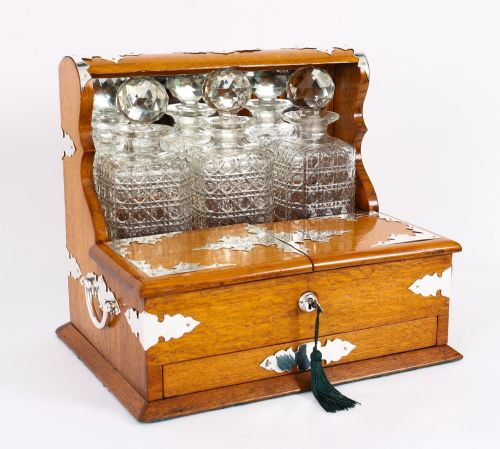
A 19th century decanter box gathers liquor bottles, glasses and games into a single secure cabinet. These pieces serve as portable dry bars, cellarettes and liqueur caskets designed for the Victorian or Regency interior.
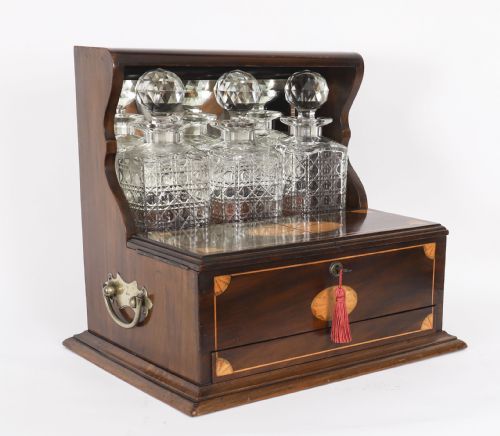
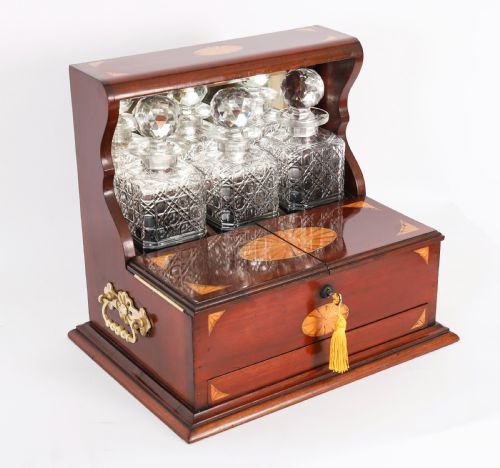
The most common examples on this page are mahogany and oak cases fitted with three cut crystal or glass decanters. Many incorporate games compendiums, humidor sections or matching liqueur glasses within the fitted interior.
Origins range from English workshops to French Napoleon III cabinets and Swedish birch boxes. The form spans plain campaign boxes with brass binding to elaborate coromandel and satinwood inlaid caskets.
Materials and construction
Cabinetmakers built these boxes using dense timbers such as mahogany, oak, coromandel and rosewood, often applying satinwood inlay or brass binding to protect the edges. Heavier pieces utilise pollard oak or blonde oak fitted with glass mirror panels inside the lid.
Interiors rely on precision carpentry to house cut crystal and cut glass decanters securely alongside scent bottles and matching glasses. Metalwork includes brass locks and handles designed to withstand frequent travel or movement around the house.
Listings feature oak, mahogany, coromandel and rosewood alongside cut crystal and brass hardware.
What separates the best examples
Quality rests on the depth of the cabinetwork and the integration of the internal fittings. Superior boxes combine substantial timbers like coromandel or mahogany with fine brass hardware and intact, matching cut crystal decanters.
Versatility also defines the upper tier, where a simple decanter box expands into a complete dry bar, games compendium or liquor cave. The crispness of the wood inlay and the precision of the velvet or silk-lined interior separate standard production from exceptional work.
Philip Ashberry·Leuchars of London·Baccarat
The 19th Century Decanter Box Glossary
- Tantalus
- A locking decanter stand that displays the bottles while preventing access without a key. The metal bar secures the stoppers until the mechanism is released.
- Cellarette
- A freestanding or box-form wine cooler designed to store bottles at table height. Regency examples often feature deep fitted interiors for cooling or secure transport.
- Cave a liqueur
- A French term for a liqueur box fitted with a set of small glasses and decanters. These boxes frequently feature tortoiseshell, brass inlay or exotic wood veneers.
- Compendium
- A multi-purpose box containing combinations of games, cards, dry bar equipment and smoking accessories. They represent the more elaborate end of 19th century box design.
- Coromandel
- A dense, dark East Asian timber with contrasting light streaks used for luxury boxes. It provides a striking surface for brass-bound campaign pieces.
19th Century Decanter Box: Frequently Asked Questions
What is a tantalus?
A tantalus is a locking frame that holds decanters upright while keeping the stoppers locked in place. It allows the bottles to be seen clearly while preventing uninvited pours.
The mechanism uses a hinged metal bar across the neck of each decanter, secured by a key-operated lock at the side of the box.
How were these boxes used?
These boxes served as portable or stationary liquor cabinets for entertaining guests in the dining room or drawing room. They kept spirits, glasses and sometimes games together in one secure place.
Wealthy households used them to lock away expensive imported liqueurs and wines from domestic staff or guests when the master of the house was away.
Are the decanters removable?
Yes, the decanters lift entirely out of their fitted wooden or velvet-lined partitions once the locking bar or lid is opened. Each bottle sits in a tailored well designed to prevent shifting during transit.
When the locking mechanism is engaged, however, the stoppers cannot be removed and the bottles remain trapped inside the frame.
How do I tell Regency from Victorian boxes?
Regency boxes tend to favour clean architectural lines, heavy mahogany or rosewood timbers, and brass campaign mounts. They often double as cellarettes or simple bottle cases.
Victorian boxes introduce greater complexity, such as coromandel veneers, mixed games compendiums, complex tantalus locking bars and elaborate satinwood stringing.