



Fitted Decanter Box
A fitted decanter box holds crystal spirits securely inside a partitioned timber case, combining portable hospitality with fine craftsmanship.
Fitted Decanter Box
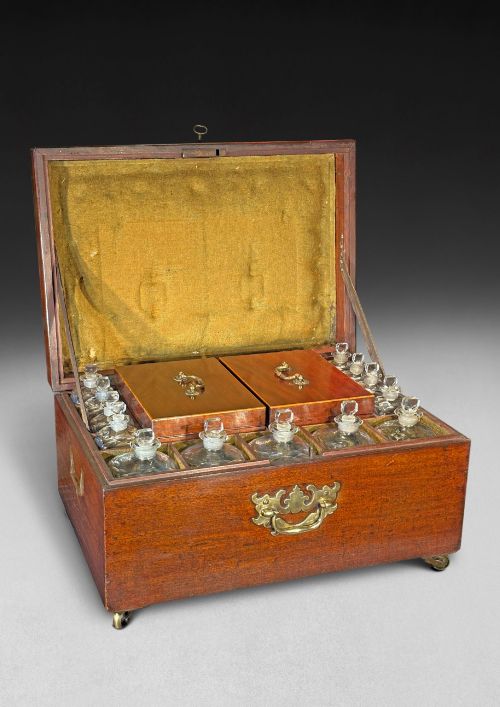
A fitted decanter box provides a secure, portable housing for glassware and spirits, designed for elegant entertaining during the eighteenth and nineteenth centuries. These pieces combine secure internal compartments with robust exterior timber cases, often incorporating locks to protect valuable contents. Buyers seek them for both their functional drinking sets and their handsome cabinetwork.
The versions most frequently encountered on this page date from the nineteenth century, spanning Regency, Victorian, and later periods. Mahogany and oak dominate the selections, alongside exotic woods like coromandel and burr birch. Many examples incorporate cut glass decanters, sometimes accompanied by games compendiums or dedicated drinking glasses.
Formations vary from compact tabletop caskets to large campaign sets and freestanding cellarettes. Some items present simple brass-bound corners, while others display Gothic revival details or elaborate brass mounts. Each variation reflects the changing domestic habits and social rituals of its era.
Materials and construction
Makers utilised dense timbers such as mahogany, oak, and coromandel to construct the exterior frames of a fitted decanter box. These hardwoods provided the structural strength needed to support heavy glass bottles during travel or daily use. Flame mahogany veneers and burr birch surfaces added decorative grain patterns to the outer carcases.
Interior layouts relied on precision woodworking to create exact partitions for cut glass decanters and stoppers. Brass mounts, corner braces, and locking hardware reinforced the joints while providing polished metal accents against the dark wood. Specialised linings protected the glass vessels from friction and impact.
Fitted Decanter Box Retail Price Guide 2026
Typical asking prices for fitted decanter box among the pieces listed under this phrase on Sellingantiques today, from the lower quarter to the upper quarter. They describe what is for sale here now, not the wider market.
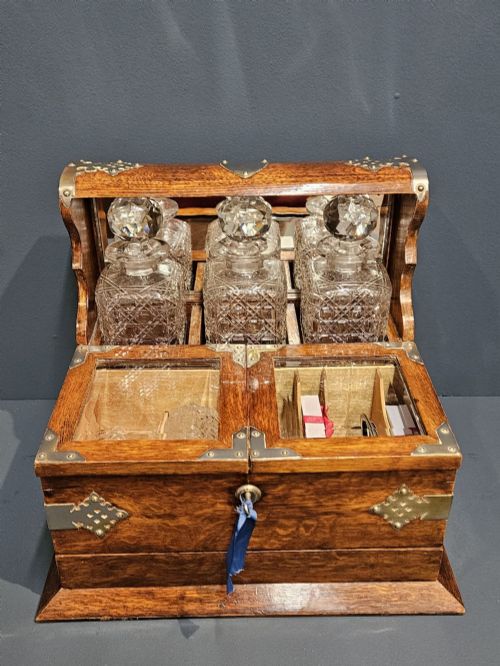
Some nineteenth-century hosts locked the spirits away from their guests inside a tantalus, securing the drinks while keeping the conversation flowing.
Distinctions in quality
The hierarchy of quality in a fitted decanter box rests on the selection of materials and the precision of the internal joinery. Superior examples employ luxurious hardwoods like coromandel or well-figured flame mahogany, paired with heavy brass mounts rather than plated substitutes. The tightness of the partitions and the smooth operation of the locking mechanisms reveal the maker's original skill.
Completeness and originality further separate standard pieces from exceptional ones. Retaining the original cut glass decanters, matching stoppers, and associated drinking glasses elevates an object significantly. Subtle details such as hidden drawers, integrated games compendiums, and undamaged wood surfaces distinguish the finest specimens.
The Fitted Decanter Box Glossary
- Cellarette
- A freestanding or floor-standing cabinet designed to hold bottles of wine and spirits near the dining table. They frequently appeared in Georgian and Regency dining rooms.
- Tantalus
- A locking drink cabinet that displays decanters behind a security bar while preventing access without a key. Victorian examples often incorporated games compartments alongside the bottles.
- Campaign set
- Portable furniture and equipment designed for travel by military officers or wealthy travellers. These sets featured robust construction and fitted travel cases.
- Cut glass
- Glassware shaped and patterned by grinding wheel techniques to create light-refracting facets. Decanters finished in this manner catch the ambient light on a dining sideboard.
Fitted Decanter Box: Frequently Asked Questions
What is a fitted decanter box?
A fitted decanter box is a specialised wooden case designed to hold and protect glass decanters, stoppers, and sometimes drinking glasses. These containers kept expensive spirits safe and organised during the Georgian and Victorian eras.
Cabinetmakers lined the interiors with precise wooden partitions to prevent the glass vessels from shifting during transport. Many included working locks to restrict access to the contents.
How were these boxes used?
Owners used them to serve wine and spirits in domestic drawing rooms, dining rooms, or while travelling. They provided a portable, self-contained bar setup before fitted home cocktail cabinets became common.
Servants would bring the closed box to a table, unlock the lid, and present the decanters to guests. Some versions combined the drink storage with compartments for cards and games.
How do I date a decanter box?
Dating relies on observing the timber choices, brass hardware styles, and overall construction methods. Regency pieces often show clean mahogany lines, while Victorian items lean towards heavier brass mounts and oak.
The shape of the cut glass decanters and the presence of specific locking mechanisms also offer clear clues to the decade of manufacture.
Are the decanters usually original?
Many surviving pieces retain their original cut glass decanters and matching stoppers, though some have been paired with replacement glassware over the centuries. Examining the fit inside the wooden partitions helps determine if the bottles belong to the case.
Matched sets that fit the internal contours precisely add significant integrity to the piece.
How should I care for the wood?
Maintain the timber surfaces by keeping the box away from direct sunlight and extreme humidity fluctuations. Regular dusting with a soft, dry cloth preserves the finish without harming the antique polish.
Avoid using modern liquid polishes that can build up a residue on nineteenth-century finishes.