25,016  PAGES BROWSED TODAY PAGES TODAY 100 ANTIQUES UPLOADED TODAYNEW ARRIVALS
100 ITEMS ADDED TODAY
Sort Order
Items Per Page
Browse Categories
Sort order
Relevant Links
Items per page
ID #SA1138980
FOR SALE
£2,750
Email
Save
Antique Pollard Oak Three Crystal Decanter Tantalus Dry Bar Humidor 19th C
Regent Antiques
for sale €3,218     $3,493
£2,750
Regent Antiques

Regent Antiques

Sellingantiques Verified Since Sep 2016
View Dealers Stock Page
  • About Us
    We specialise in english and continental furniture, silver, porcelain and decorative items.
  • Trade Associations
    Regent Antiques is a registered member of LAPADA  CINOA
Id #SA1138980
PDF SHARE
SAVE

Antique Pollard Oak Three Crystal Decanter Tantalus Dry Bar Humidor 19th C

19th century
For Sale by Regent Antiques
Description

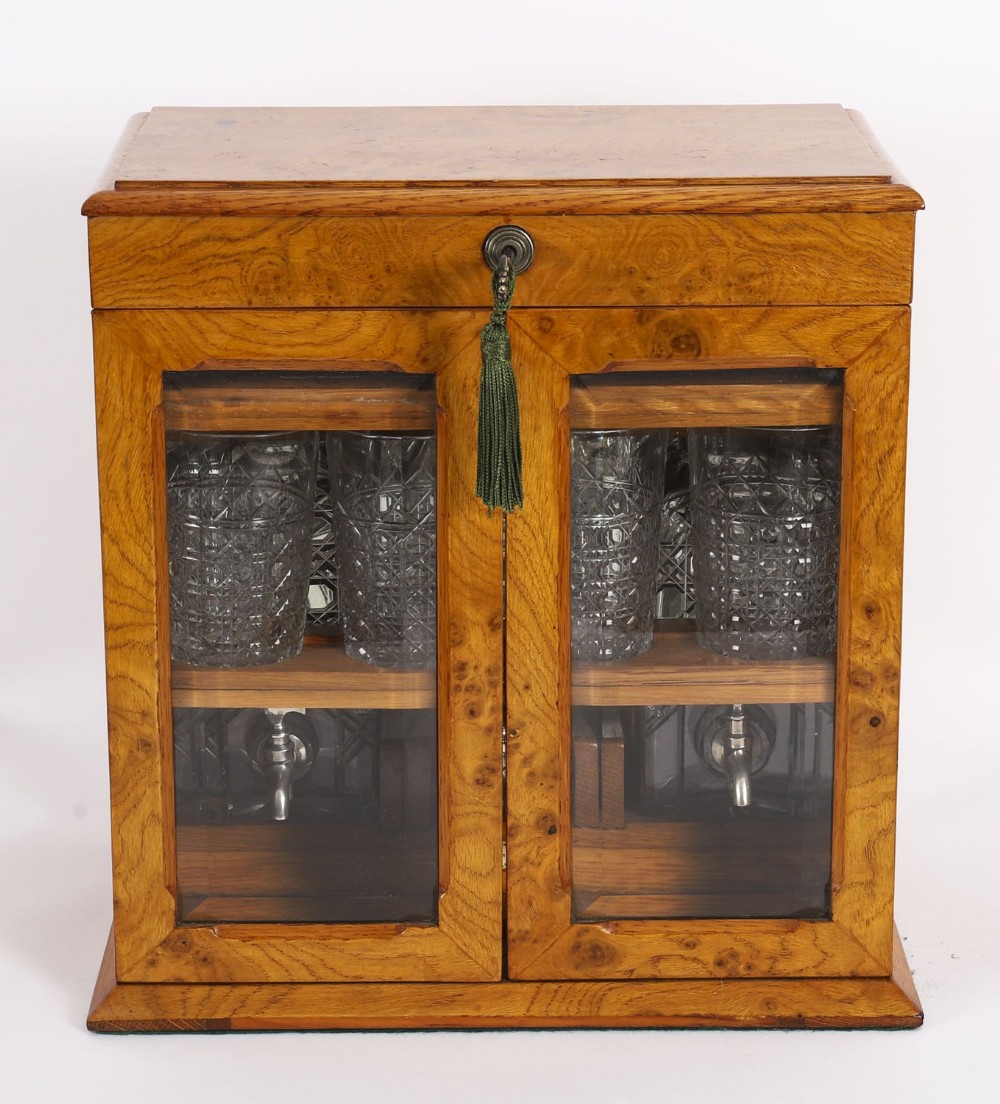
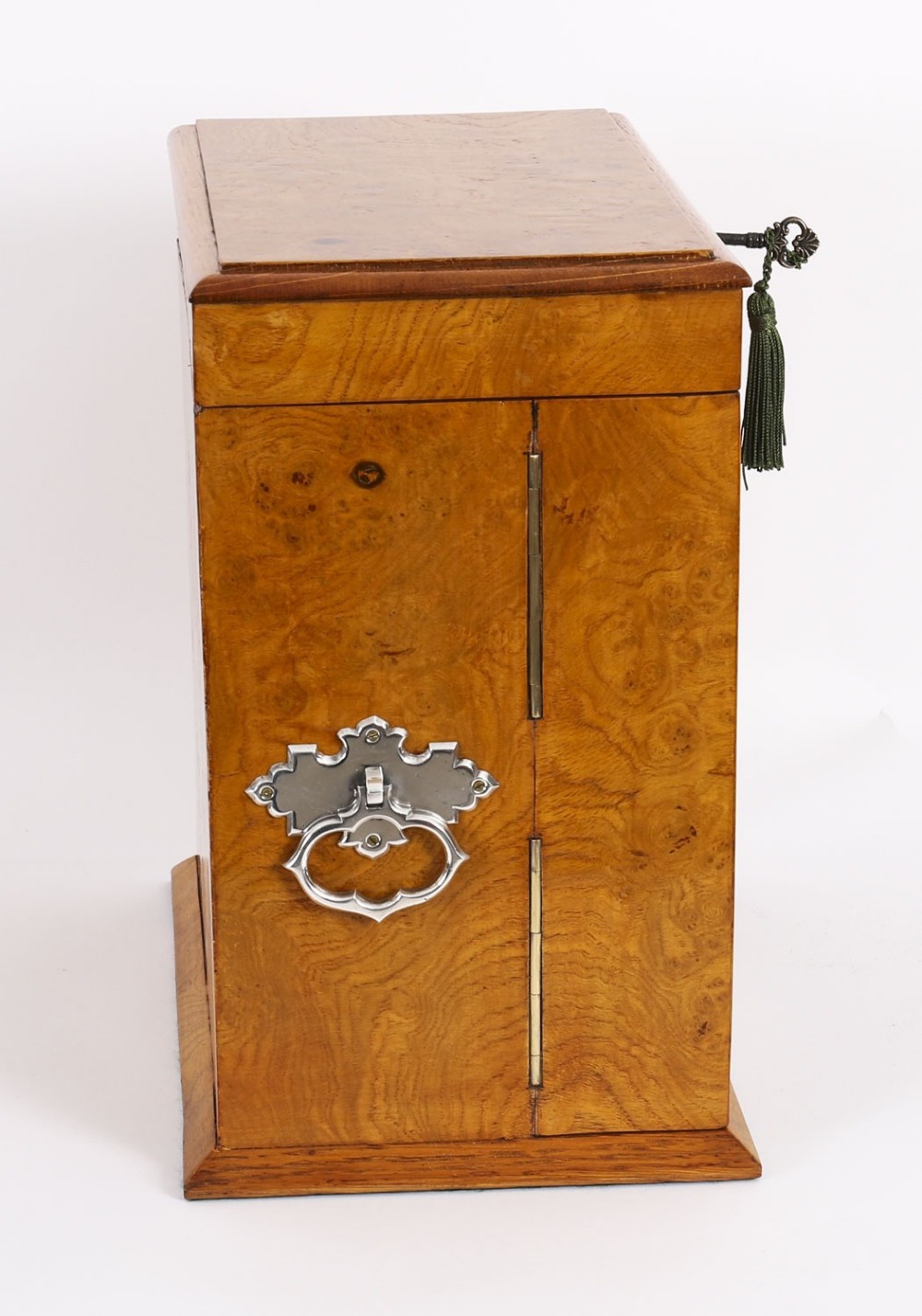
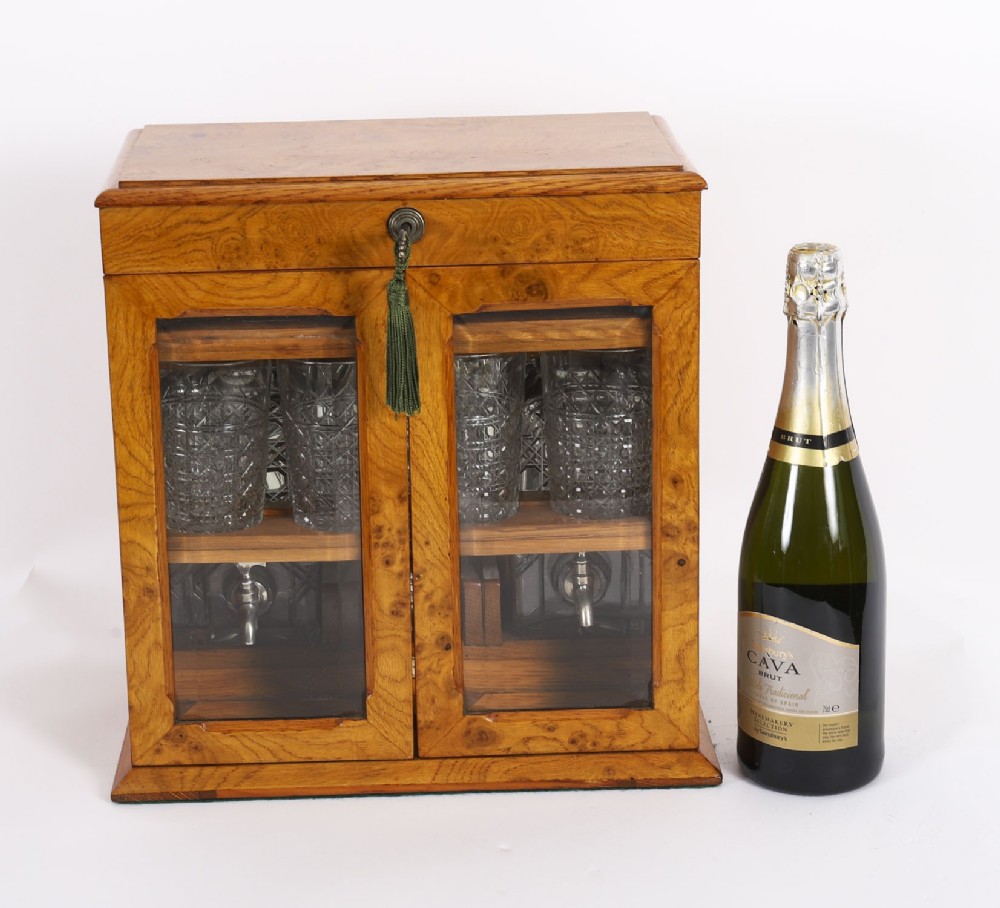
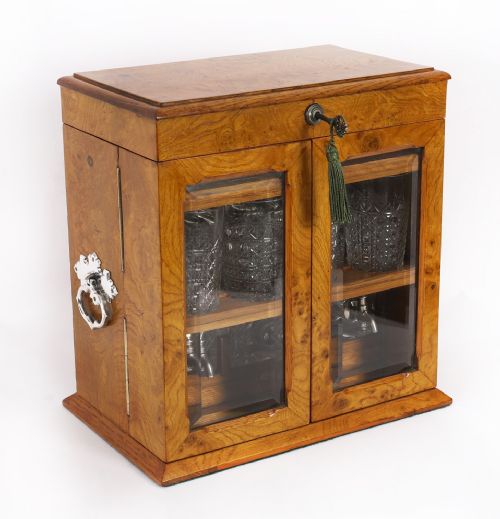
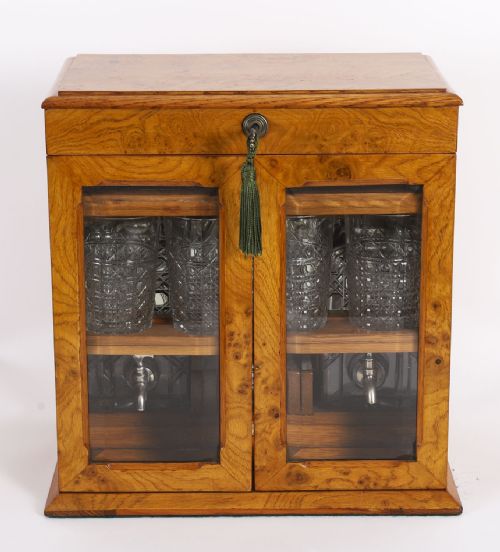
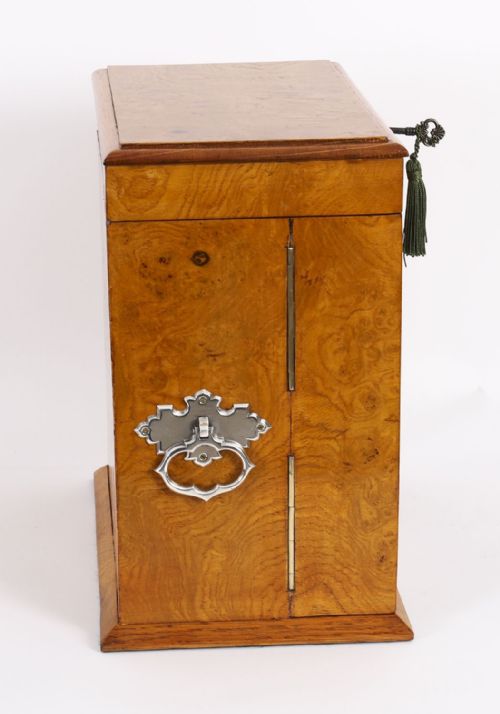
A superb Victorian pollard oak combined humidor, tantalus and drinks cabinet Circa 1880 in date.

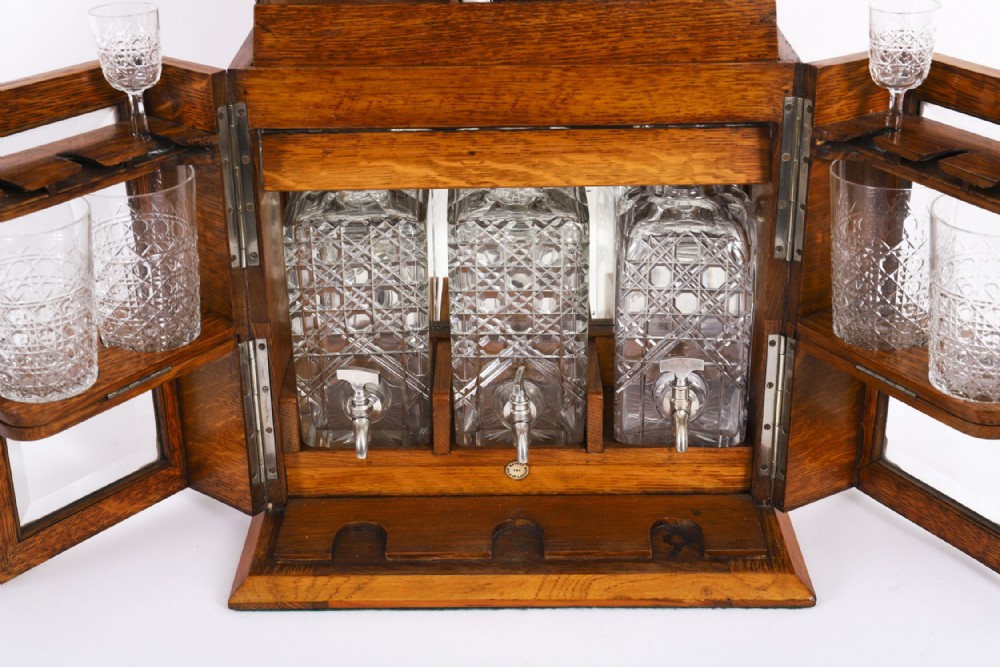
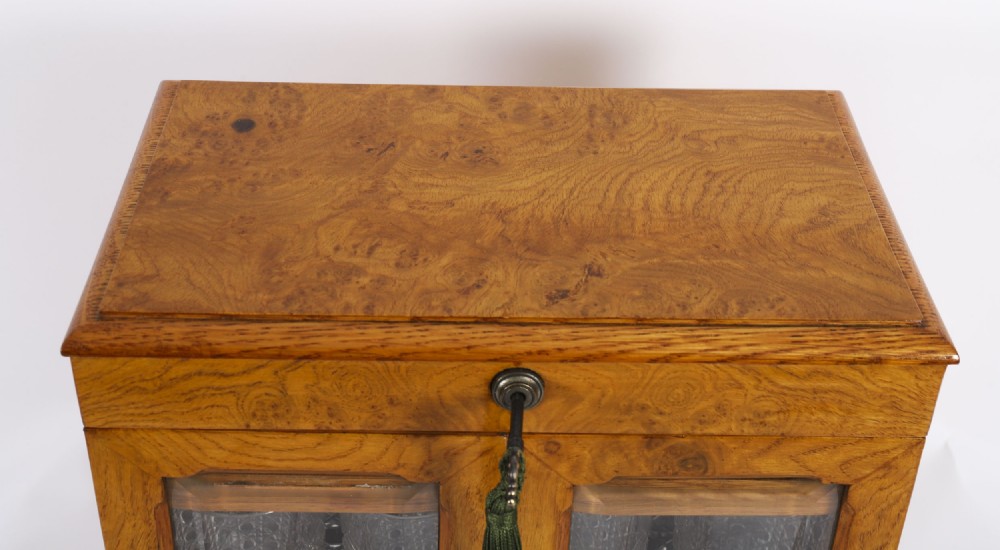
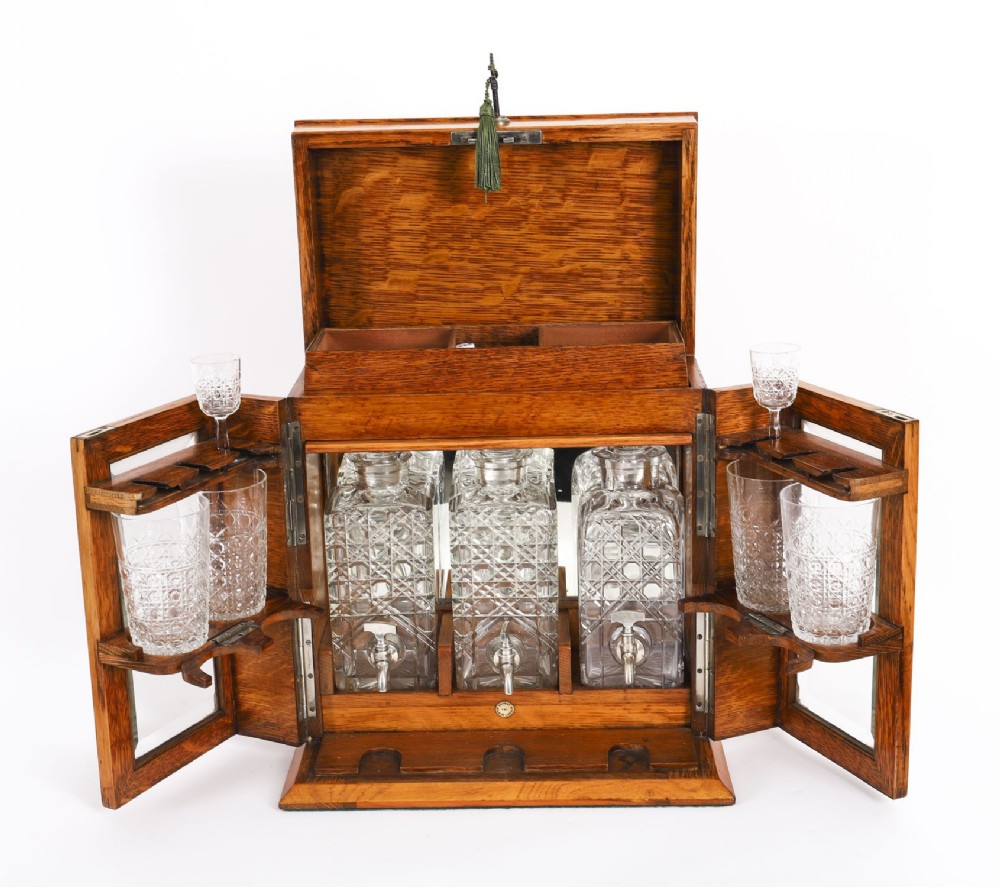
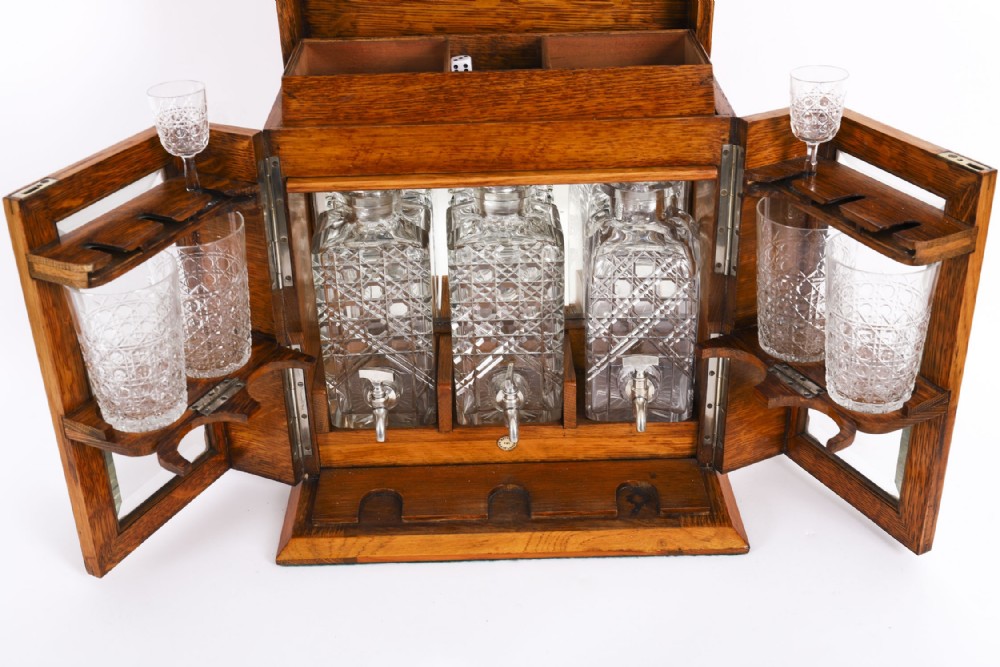
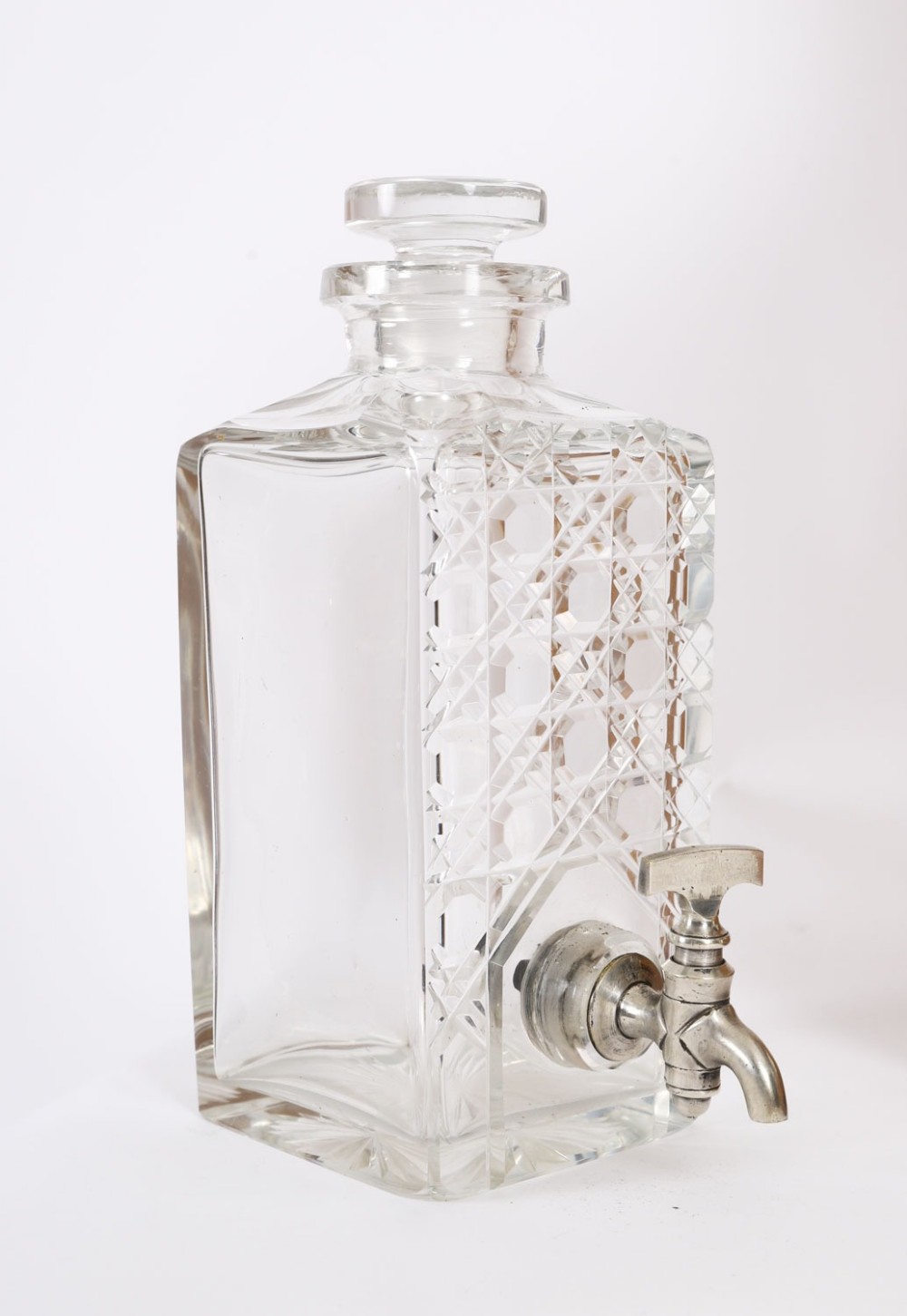
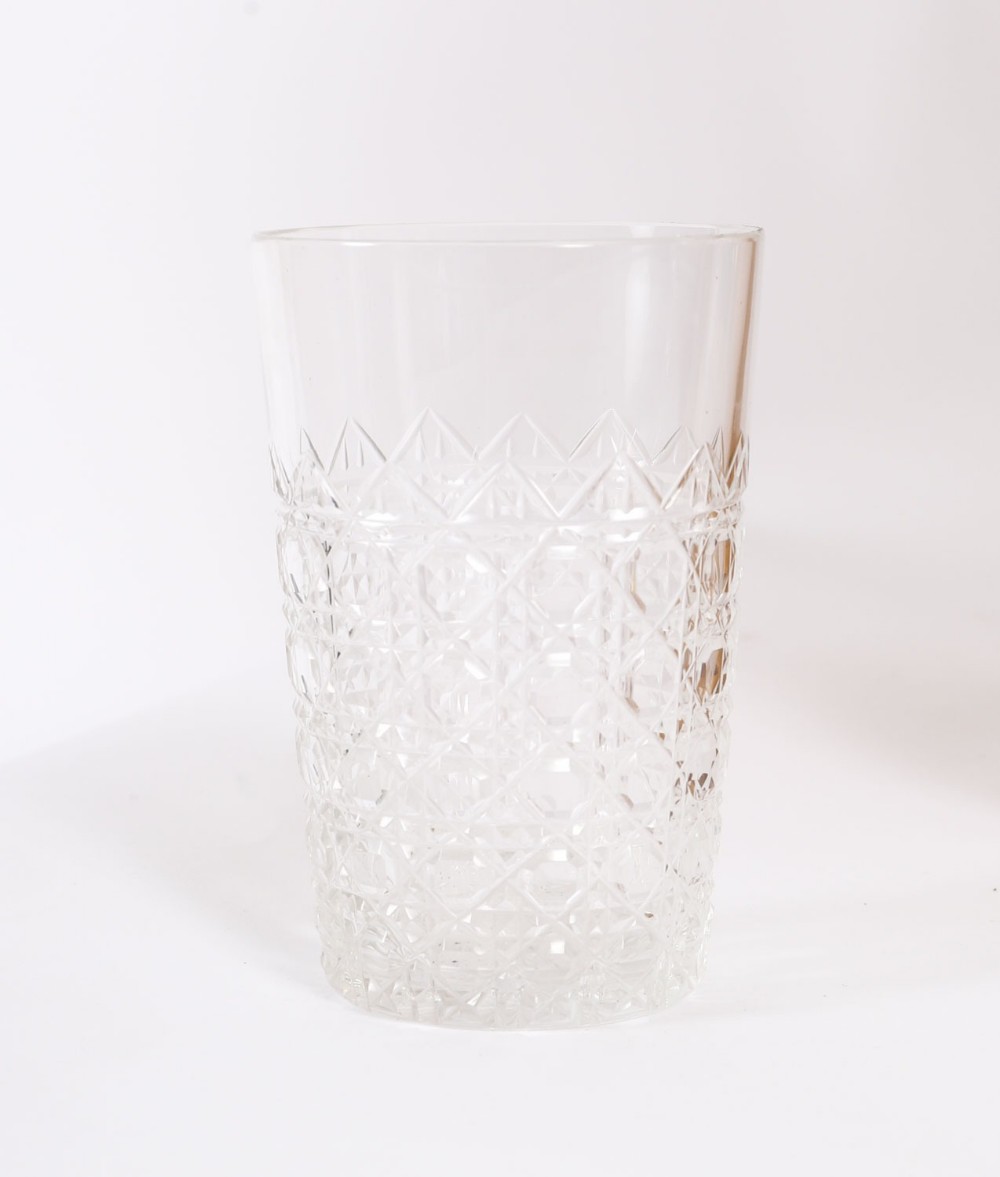
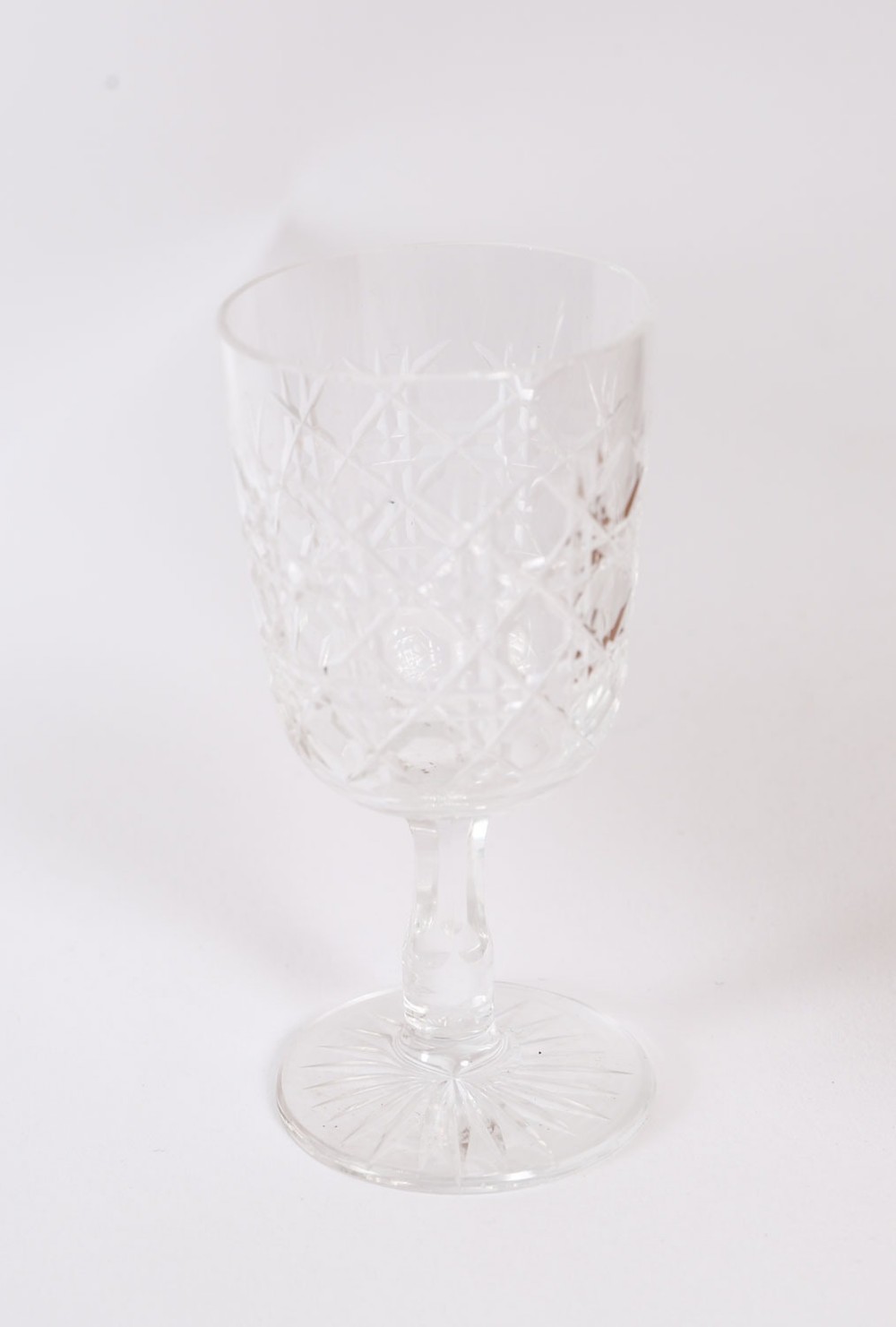
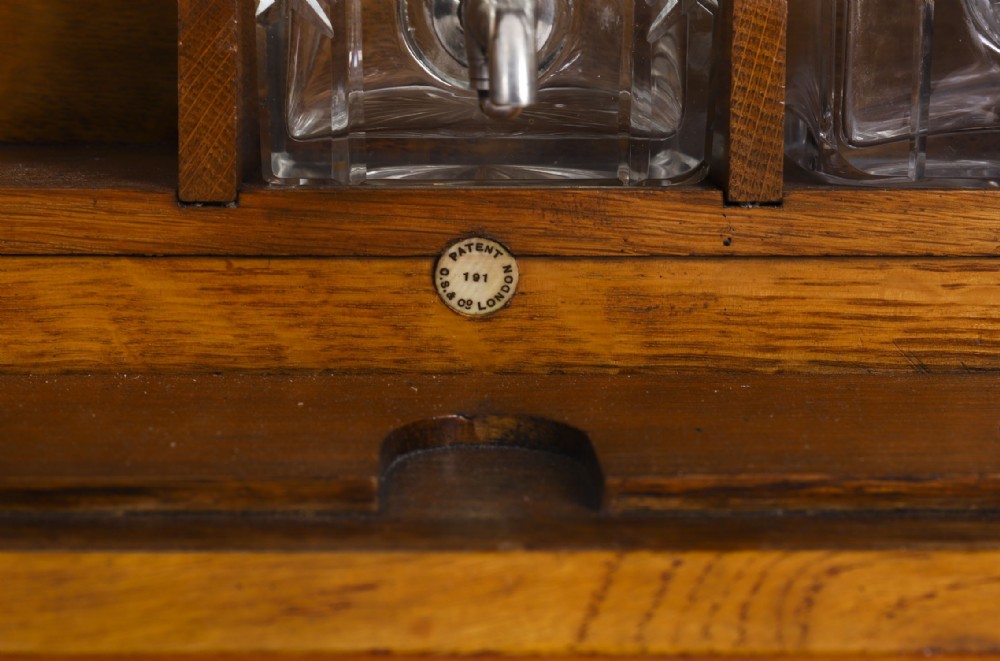
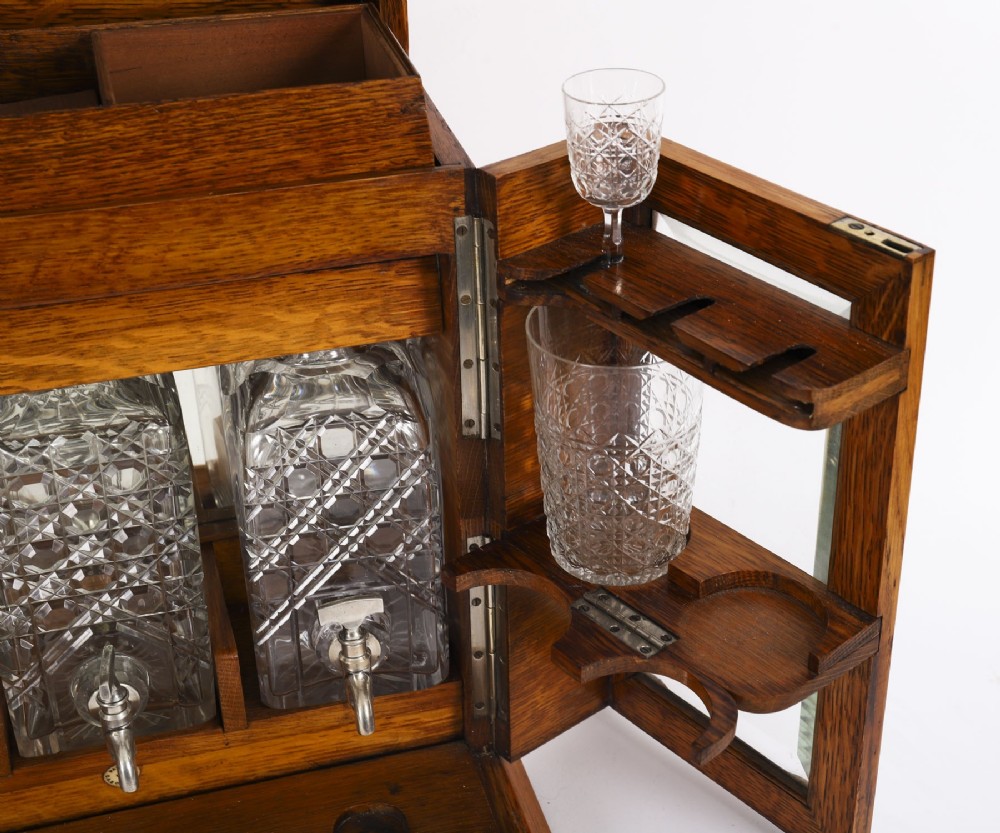
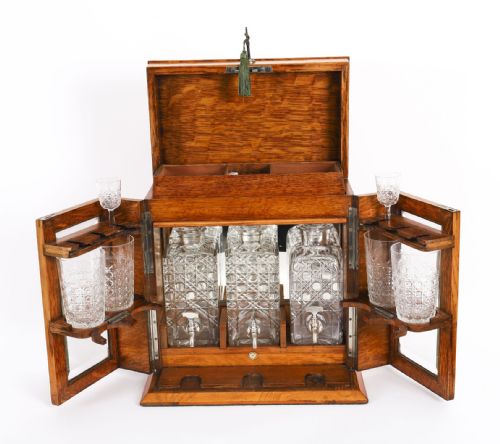
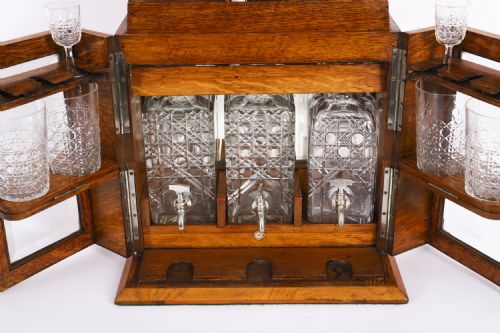
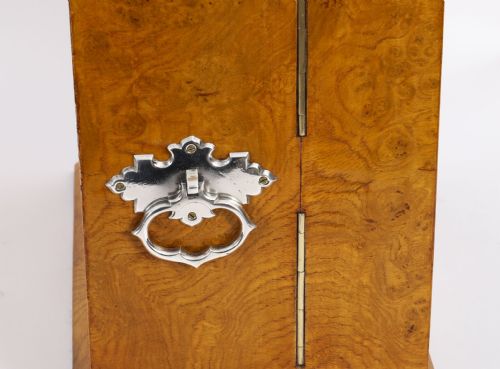
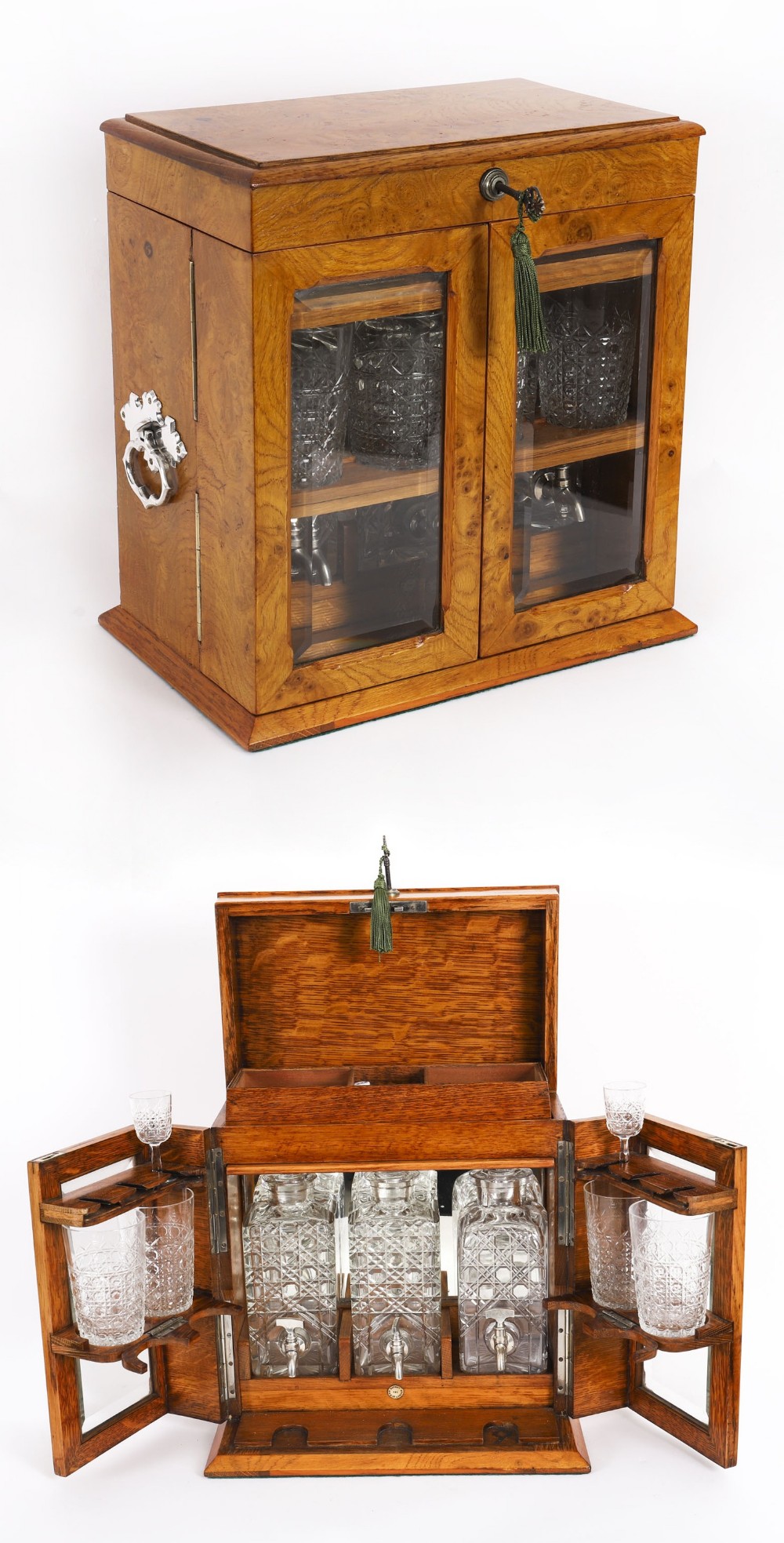
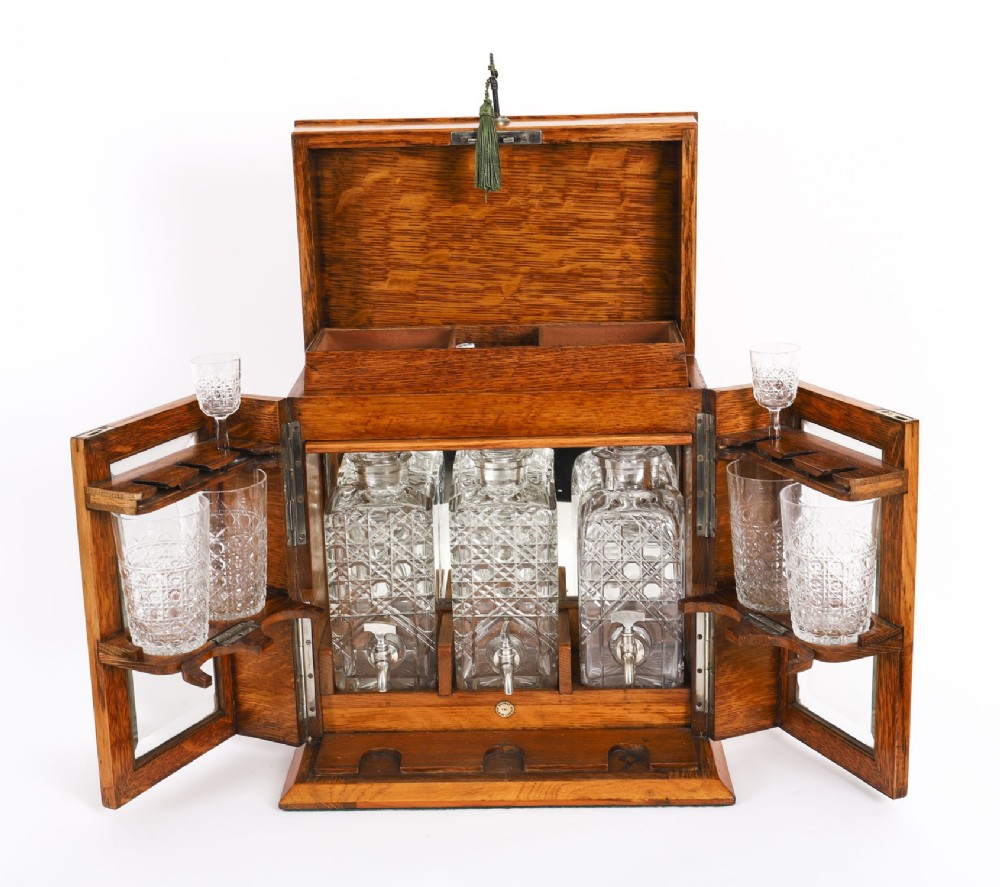
The magnificent tantalus having a hinged lid fitted with a Bramah patent lock with key and a pair of bevel-edged glass doors opening to reveal a fitted tray above three hobnail cut glass decanters with silver plated taps, fitted for and containing four large cut glass tumblers and two small stemmed cut glass liqueur glasses.
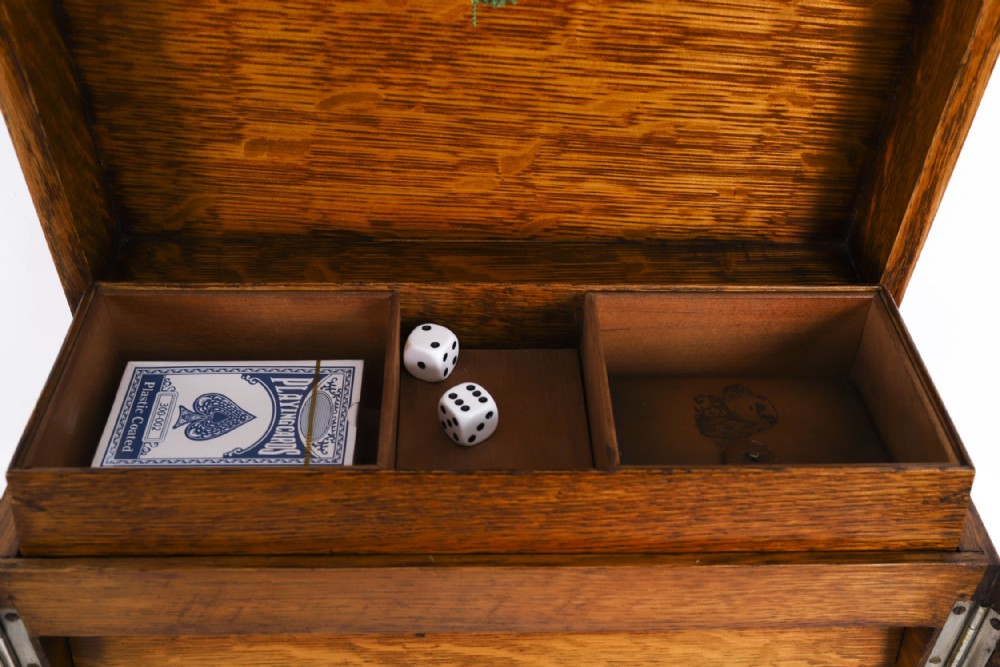
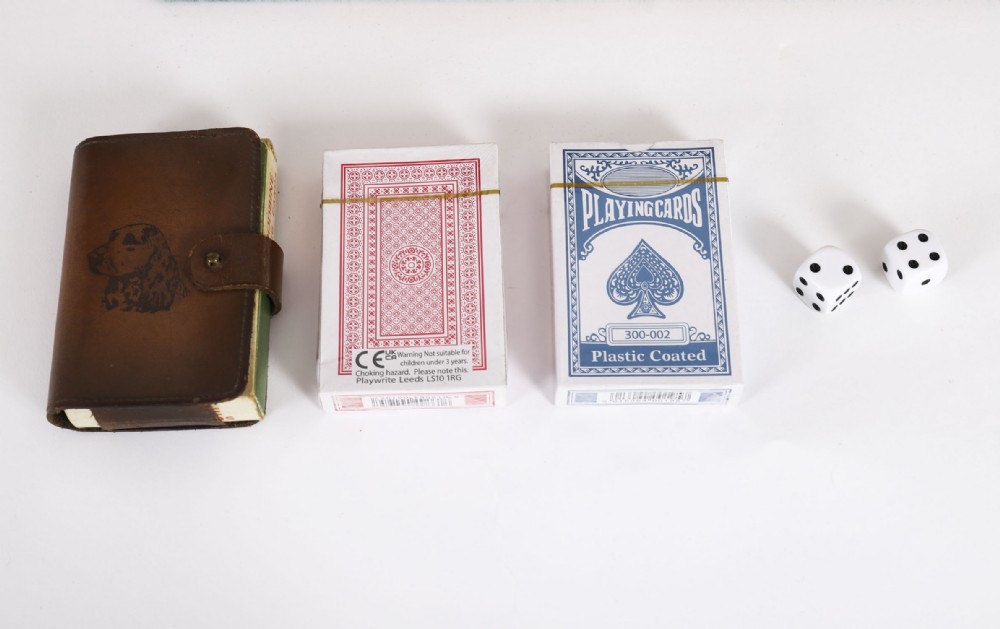
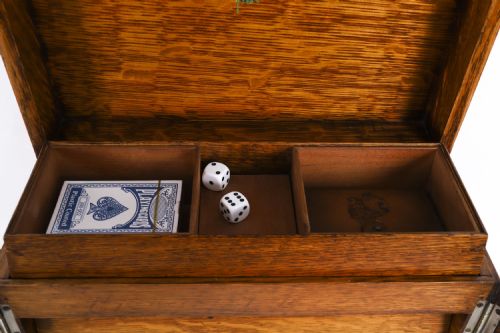
The cedar lined fitted tray above the decanters was used as a humidor for cigars, but is equally useful to keep the packs of playing cards, which are included.

It is a truly decorative piece which is also very practical and would make a lovely gift.

Condition:

In really excellent condition having been beautifully cleaned, polished and waxed in our workshops, please see photos for confirmation.
Dimensions in cm:

Height 36.5 cm x Width 35.5 cm x Depth 22.5 cm

Dimensions in inches:

Height 1 foot, 2 inches x Width 1 foot, 2 inches x Depth 9 inches

Pollard Oak

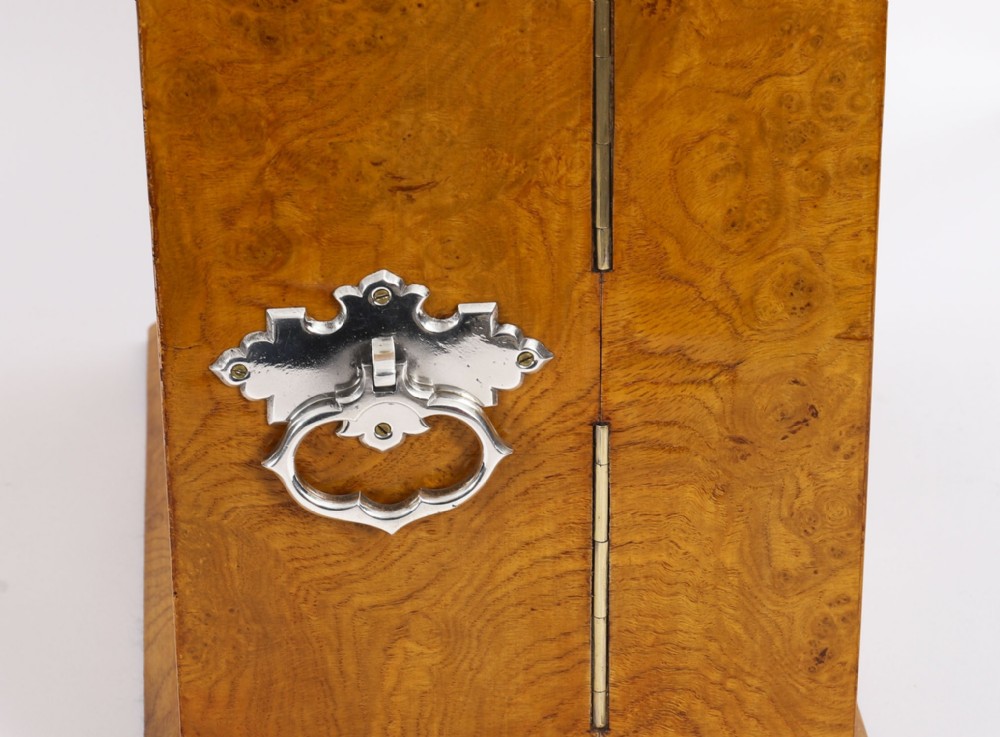
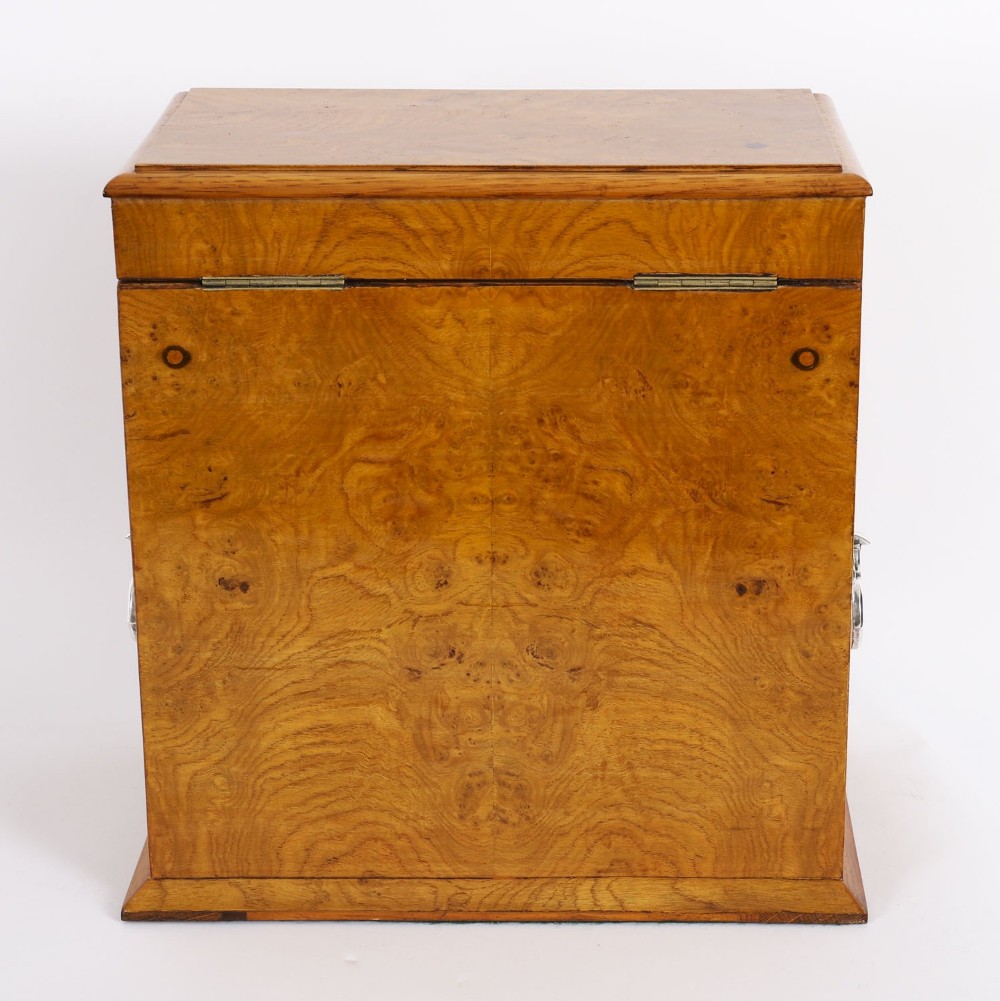
Pollarding is a pruning system in which the upper branches of a tree are removed, promoting a dense head of foliage and branches. It has been common in Europe since medieval times and is practised today in urban areas worldwide, primarily to maintain trees at a predetermined height. The bole of the tree, constantly cut back over a period of years, will eventually form a lump, or ‘burr’, which when sawn for veneer, gives a lovely grained, swirling figure.
The effect is similar to that of burr walnut with its distinctive speckled grain. Burrs, or ‘burls’, are growths which appear on the side of tree trunks, resulting from a tree undergoing some form of stress. They may be caused by an injury, virus or fungus.
During the 19th century great strides were made in the mechanisation of cabinet making. Marc Isambard Brunel [ Isambard Kingdom’s father] built the first steam driven saw mill, and invented a circular saw that could be used to cut veneers thinly and evenly for the first time. He also developed the first hydraulic veneer press. The figured wood cut from burrs and pollards is notoriously difficult to cut and lay: the wild grain which makes it so attractive results in a very delicate, brittle veneer. The new machines enabled the Victorian craftsmen to make the most of these beautiful timbers.
Bramah

is London's oldest security company. Established at 124 Piccadilly, London in 1784, and today based in Marylebone, London and Romford, Essex.

Bramah made their first lock in 1784 and the patent was awarded in 1787. The designer was Joseph Bramah. Joseph Bramah was a leading inventor of the industrial revolution, patenting over 18 new ideas, including a new valve for the water closet (toilet), the hydraulic pump, a fountain pen, and a fire engine.
Bramah also introduced a beer hand pump for use at the bar, to prevent fluid loss when barmen went downstairs to pour a new jug! Due to the quality of his manufacturing, his name became a by-word amongst British Engineers for engineering excellence and many of his inventions are on display in the Science Museum in London. You can find one of his original toilets still working in Osborne House, Queen Victoria's home on the Isle of Wight.
The Bramah lock was unique and advanced property and valuables protection enormously. Indeed it was 50 years ahead of any Chubb lock and 70 years ahead of Yale. Original Bramah locks are most often found on the highest quality homes and furniture.

Our reference: A4089

Physical Dimensions
Height
36.5cm (14.37")
Width
35.5cm (13.98")
Depth
22.5cm (8.86")
Declaration

Regent Antiques has dated this Pollard Oak Decanter Tantalus to the 1880s.

Reference Numbers
Sellingantiques Reference
SA1138980
Dealers Internal Reference
A4089
Description
A superb Victorian pollard oak combined humidor, tantalus and drinks cabinet Circa 1880 in date.

The magnificent tantalus having a hinged lid fitted with a Bramah patent lock with key and a pair of bevel-edged glass doors opening to reveal a fitted tray above three hobnail cut glass decanters with silver plated taps, fitted for and containing four large cut glass tumblers and two small stemmed cut glass liqueur glasses.

The cedar lined fitted tray above the decanters was used as a humidor for cigars, but is equally useful to keep the packs of playing cards, which are included.
Regent Antiques
fig 1. A late 19th-century pollard oak tantalus cabinet with glazed double doors that open to display three cut crystal decanters and glassware racks.
fig 1. Antique Pollard Oak Three Crystal Decanter Tantalus Dry Bar Humidor 19th C

It is a truly decorative piece which is also very practical and would make a lovely gift.

Condition:

In really excellent condition having been beautifully cleaned, polished and waxed in our workshops, please see photos for confirmation.

fig 2. A late 19th-century pollard oak tantalus cabinet with glazed double doors that open to display three cut crystal decanters and glassware racks.
fig 2. Antique Pollard Oak Three Crystal Decanter Tantalus Dry Bar Humidor 19th C

Dimensions in cm:

Height 36.5 cm x Width 35.5 cm x Depth 22.5 cm

Dimensions in inches:

Height 1 foot, 2 inches x Width 1 foot, 2 inches x Depth 9 inches

Pollard Oak

Pollarding is a pruning system in which the upper branches of a tree are removed, promoting a dense head of foliage and branches. It has been common in Europe since medieval times and is practised today in urban areas worldwide, primarily to maintain trees at a predetermined height. The bole of the tree, constantly cut back over a period of years, will eventually form a lump, or ‘burr’, which when sawn for veneer, gives a lovely grained, swirling figure.

fig 3. A late 19th-century pollard oak tantalus cabinet with glazed double doors that open to display three cut crystal decanters and glassware racks.
fig 3. Antique Pollard Oak Three Crystal Decanter Tantalus Dry Bar Humidor 19th C

The effect is similar to that of burr walnut with its distinctive speckled grain. Burrs, or ‘burls’, are growths which appear on the side of tree trunks, resulting from a tree undergoing some form of stress. They may be caused by an injury, virus or fungus.

fig 4. A late 19th-century pollard oak tantalus cabinet with glazed double doors that open to display three cut crystal decanters and glassware racks.
fig 4. Antique Pollard Oak Three Crystal Decanter Tantalus Dry Bar Humidor 19th C

During the 19th century great strides were made in the mechanisation of cabinet making. Marc Isambard Brunel [ Isambard Kingdom’s father] built the first steam driven saw mill, and invented a circular saw that could be used to cut veneers thinly and evenly for the first time. He also developed the first hydraulic veneer press. The figured wood cut from burrs and pollards is notoriously difficult to cut and lay: the wild grain which makes it so attractive results in a very delicate, brittle veneer. The new machines enabled the Victorian craftsmen to make the most of these beautiful timbers.

fig 5. A late 19th-century pollard oak tantalus cabinet with glazed double doors that open to display three cut crystal decanters and glassware racks.
fig 5. Antique Pollard Oak Three Crystal Decanter Tantalus Dry Bar Humidor 19th C

Bramah

is London's oldest security company. Established at 124 Piccadilly, London in 1784, and today based in Marylebone, London and Romford, Essex.

Bramah made their first lock in 1784 and the patent was awarded in 1787. The designer was Joseph Bramah. Joseph Bramah was a leading inventor of the industrial revolution, patenting over 18 new ideas, including a new valve for the water closet (toilet), the hydraulic pump, a fountain pen, and a fire engine.

fig 6. A late 19th-century pollard oak tantalus cabinet with glazed double doors that open to display three cut crystal decanters and glassware racks.
fig 6. Antique Pollard Oak Three Crystal Decanter Tantalus Dry Bar Humidor 19th C

Bramah also introduced a beer hand pump for use at the bar, to prevent fluid loss when barmen went downstairs to pour a new jug! Due to the quality of his manufacturing, his name became a by-word amongst British Engineers for engineering excellence and many of his inventions are on display in the Science Museum in London. You can find one of his original toilets still working in Osborne House, Queen Victoria's home on the Isle of Wight.

fig 7. A late 19th-century pollard oak tantalus cabinet with glazed double doors that open to display three cut crystal decanters and glassware racks.
fig 7. Antique Pollard Oak Three Crystal Decanter Tantalus Dry Bar Humidor 19th C

The Bramah lock was unique and advanced property and valuables protection enormously. Indeed it was 50 years ahead of any Chubb lock and 70 years ahead of Yale. Original Bramah locks are most often found on the highest quality homes and furniture.

Our reference: A4089

Height
36.5cm (14.37")
Width
35.5cm (13.98")
Depth
22.5cm (8.86")
Date of Manufacture

Regent Antiques has dated this Pollard Oak Decanter Tantalus to the 1880s.

Reference Numbers
Sellingantiques Ref
SA1138980
Dealers Internal Ref
A4089
Regent Antiques
Regent Antiques
Sellingantiques verified Since Sep 2016

We specialise in english and continental furniture, silver, porcelain and decorative items.

Dealer Profile

You can view the stock and full dealer information on the Regent Antiques Profile Page

Trade Associations

Regent Antiques is a registered member of LAPADA  CINOA
PDF SHARE
SAVE
A late 19th-century pollard oak tantalus cabinet with glazed double doors that open to display three cut crystal decanters and glassware racks.
1 / 19
Archive I A late 19th-century pollard oak tantalus cabinet with glazed double doors that open to display three cut crystal decanters and glassware racks.

Antique Pollard Oak Three Crystal Decanter Tantalus Dry Bar Humidor 19th C
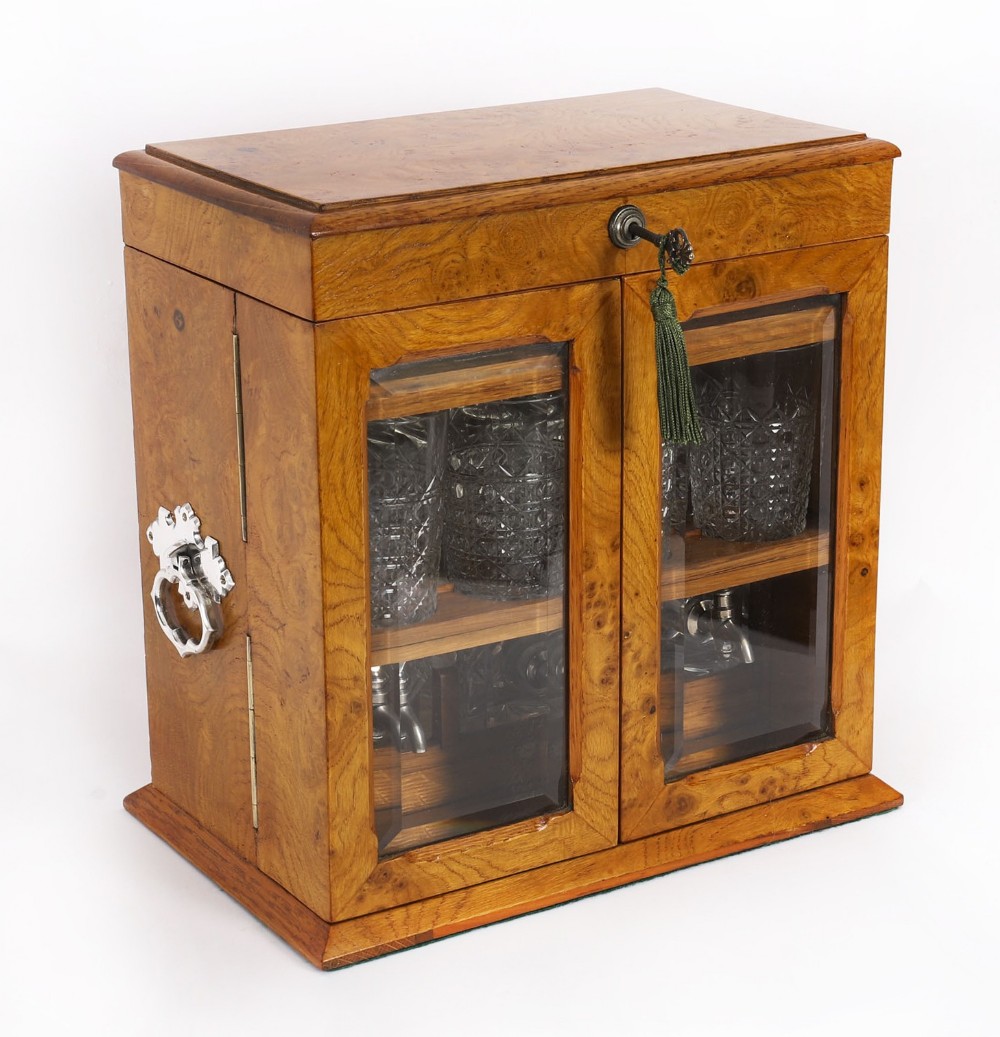
Archive II A late 19th-century pollard oak tantalus cabinet with glazed double doors that open to display three cut crystal decanters and glassware racks. View II
Archive III A late 19th-century pollard oak tantalus cabinet with glazed double doors that open to display three cut crystal decanters and glassware racks. View III
Archive IV A late 19th-century pollard oak tantalus cabinet with glazed double doors that open to display three cut crystal decanters and glassware racks. View IV
Archive V A late 19th-century pollard oak tantalus cabinet with glazed double doors that open to display three cut crystal decanters and glassware racks. View V
Archive VI A late 19th-century pollard oak tantalus cabinet with glazed double doors that open to display three cut crystal decanters and glassware racks. View VI
Archive VII A late 19th-century pollard oak tantalus cabinet with glazed double doors that open to display three cut crystal decanters and glassware racks. View VII
Archive VIII A late 19th-century pollard oak tantalus cabinet with glazed double doors that open to display three cut crystal decanters and glassware racks. View VIII
Archive IX A late 19th-century pollard oak tantalus cabinet with glazed double doors that open to display three cut crystal decanters and glassware racks. View IX
Archive X A late 19th-century pollard oak tantalus cabinet with glazed double doors that open to display three cut crystal decanters and glassware racks. View X
Archive XI A late 19th-century pollard oak tantalus cabinet with glazed double doors that open to display three cut crystal decanters and glassware racks. View XI
Archive XII A late 19th-century pollard oak tantalus cabinet with glazed double doors that open to display three cut crystal decanters and glassware racks. View XII
Archive XIII A late 19th-century pollard oak tantalus cabinet with glazed double doors that open to display three cut crystal decanters and glassware racks. View XIII
Archive XIV A late 19th-century pollard oak tantalus cabinet with glazed double doors that open to display three cut crystal decanters and glassware racks. View XIV
Archive XV A late 19th-century pollard oak tantalus cabinet with glazed double doors that open to display three cut crystal decanters and glassware racks. View XV
Archive XVI A late 19th-century pollard oak tantalus cabinet with glazed double doors that open to display three cut crystal decanters and glassware racks. View XVI
Archive XVII A late 19th-century pollard oak tantalus cabinet with glazed double doors that open to display three cut crystal decanters and glassware racks. View XVII
Archive XVIII A late 19th-century pollard oak tantalus cabinet with glazed double doors that open to display three cut crystal decanters and glassware racks. View XVIII
Archive XIX A late 19th-century pollard oak tantalus cabinet with glazed double doors that open to display three cut crystal decanters and glassware racks. View XIX
Enlarged Archival View
Location
Manor Warehouse
318 Green Lanes
London
N4 1BX
United Kingdom
Verified Since Sep 2016
Items For Sale 647
Items Sold 2,634
Regent Antiques
Regent Antiques
Verified Since Sep 2016
View Dealer Info
Location: Manor Warehouse, 318 Green Lanes, London, N4 1BX, United Kingdom
Verified
Sep 2016
For Sale
647
Sold
2,634
A late 19th-century pollard oak tantalus cabinet with glazed double doors that open to display three cut crystal decanters and glassware racks.
Antique Pollard Oak Three Crystal Decanter Tantalus Dry Bar Humidor 19th C
Ref: SA1138980
A late 19th-century pollard oak tantalus cabinet with glazed double doors that open to display three cut crystal decanters and glassware racks.
Detail View 1
Detail View 2
Detail View 3
Detail View 4
Detail View 5
Detail View 6
Detail View 7
Detail View 8
Detail View 9
Detail View 10
Detail View 11
Detail View 12
Detail View 13
Detail View 14
Detail View 15
Detail View 16
Detail View 17
Detail View 18
Archival Detail
Every single antique dealer on our platform is individually approved by our internal team. We verify their professional trade history, ethical standards, and photographic quality to ensure a secure, high-standard buying environment. Upon joining, every dealer agrees to a strict 9-point code of conduct. While issues can occasionally arise, our dealers typically resolve them swiftly and directly with the buyer. In fact, since our founding in 2002, Sellingantiques has only had to step in to help resolve an issue on roughly five occasions—a true testament to the quality of our dealers and their dedication to your happiness.
Our dealers are highly experienced in packing and shipping fragile, high-value antiques. Because you are in direct contact with the dealer, you will be able to easily go through all available shipping and insurance options together to ensure your item arrives safely.
Antiques are the ultimate green purchase. By choosing historical pieces over newly manufactured goods, you completely eliminate the carbon footprint of modern mass production while preserving exceptional, timeless craftsmanship.

A tantalus cabinet is a 19th-century lockable wooden container designed to secure decanters while keeping their contents visible, preventing unauthorized access to spirits.

These pieces were typically crafted using highly figured woods such as pollard oak, walnut, or mahogany, fitted with silver-plated or brass hardware and mouth-blown cut crystal decanters.

Authentic period examples feature hand-cut joinery, stamped patent brass locks, heavy cut crystal decanters with matching stoppers or integral spigots, and the distinct burred grain of natural pollard oak.

A desktop tantalus serves as a functional focal point when positioned on a dining room sideboard, home office desk, or dedicated bar cart in modern settings.

Dust the timber surfaces with a dry microfiber cloth and treat periodically with beeswax, while hand-washing crystal elements in warm water without harsh abrasive cleaners.
items
Add keywords to the filter
Price
£100
£250000
Era
Movements
Material
Origin
Stock Location
Freshness
Online Payments
Categories