


Oak Decanter Cabinet
These oak decanter cabinets are secure barware housings designed to display and protect crystal bottles during the Victorian and Edwardian eras.
Oak Decanter Cabinet
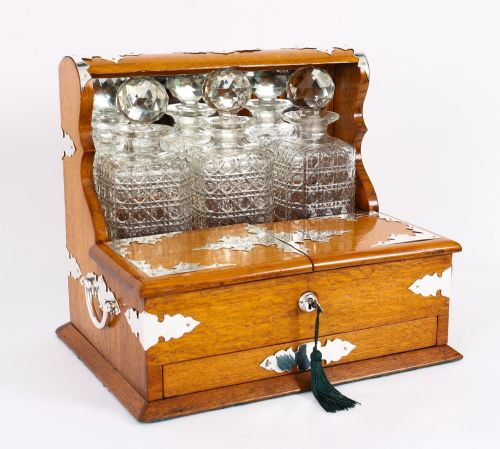
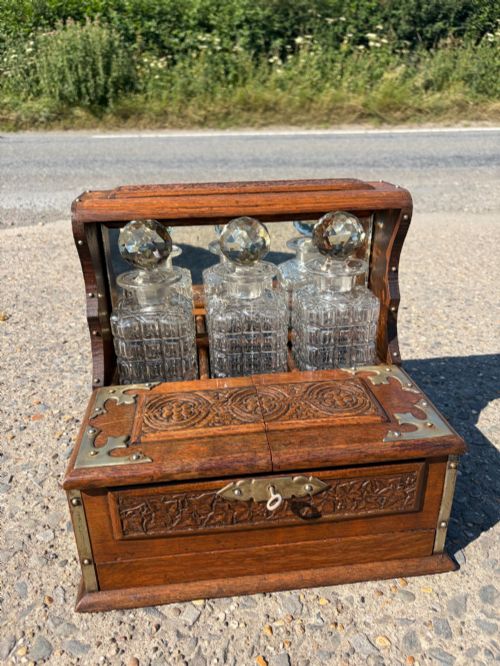
An oak decanter cabinet houses glass bottles within fitted compartments, frequently combining barware storage with games compendiums or dry bars. The pieces on this page span the late nineteenth century and the Edwardian period, encompassing both single bottle holders and large three bottle tantalus designs.
Most examples originate from the Victorian and Edwardian eras, displaying styles typical of 1880 through to 1900. These cabinets range from compact single bottle cases to substantial brass mounted and marquetry strung dry bars.
Materials and construction
Cabinet makers utilised oak, including blonde oak and pollard oak, to build robust enclosures fitted with internal partitions for crystal decanters. Brass mounts provide structural reinforcement and secure locking mechanisms typical of tantalus units.
Interiors often incorporate mirror glass panels and compartments designed to hold games or smoking accessories alongside cut glass and cut crystal decanters.
Listings feature oak, cut glass, brass, and mirror glass across Victorian and Edwardian periods.
Assessing quality and execution
Quality rests in the selection of timber, such as pollard oak or blonde oak, and the precision of decorative details like marquetry stringing. Superior examples integrate complex mechanisms that securely lock the decanters while allowing smooth access to internal compartments.
The refinement of brass hardware and the clarity of the cut crystal or cut glass decanters distinguish standard production items from exceptional domestic barware.
The Oak Decanter Cabinet Glossary
- Tantalus
- A locking drink cabinet that holds decanters securely in place while displaying the contents, preventing unauthorised access without a key.
- Compendium
- A fitted box containing multiple items, such as games, cards, and barware, housed together in a single cabinet.
- Marquetry
- Decorative wood inlay work using contrasting veneers to create patterns on the surface of the cabinet.
- Pollard oak
- Timber taken from trees that have been pollarded, producing a highly figured grain highly prized in cabinet making.
Oak Decanter Cabinet: Frequently Asked Questions
What is an oak decanter cabinet?
An oak decanter cabinet is a secure storage piece designed to hold glass decanters and barware, often featuring a locking mechanism known as a tantalus.
These units frequently double as games compendiums or dry bars, combining social entertainment with secure storage for spirits.
How do I date an oak cabinet?
Dating relies on stylistic markers from periods such as the Victorian and Edwardian eras, typically spanning from 1880 to 1900.
Details such as brass mounting styles, marquetry stringing, and the presence of pollard or blonde oak help establish the timeframe of manufacture.
What is a tantalus mechanism?
A tantalus is a locking bar frame that holds the stoppers of decanters in place, preventing them from being removed when the cabinet is locked.
The name derives from the mythological figure Tantalus, as the drinks are visible yet unreachable.
How were these cabinets used?
Households utilised these cabinets in drawing rooms and studies to serve drinks to guests while keeping expensive spirits secure from servants.
They often integrated compartments for playing cards, dice, and cigars alongside the cut crystal decanters.