





Brass Mounted Letter Box
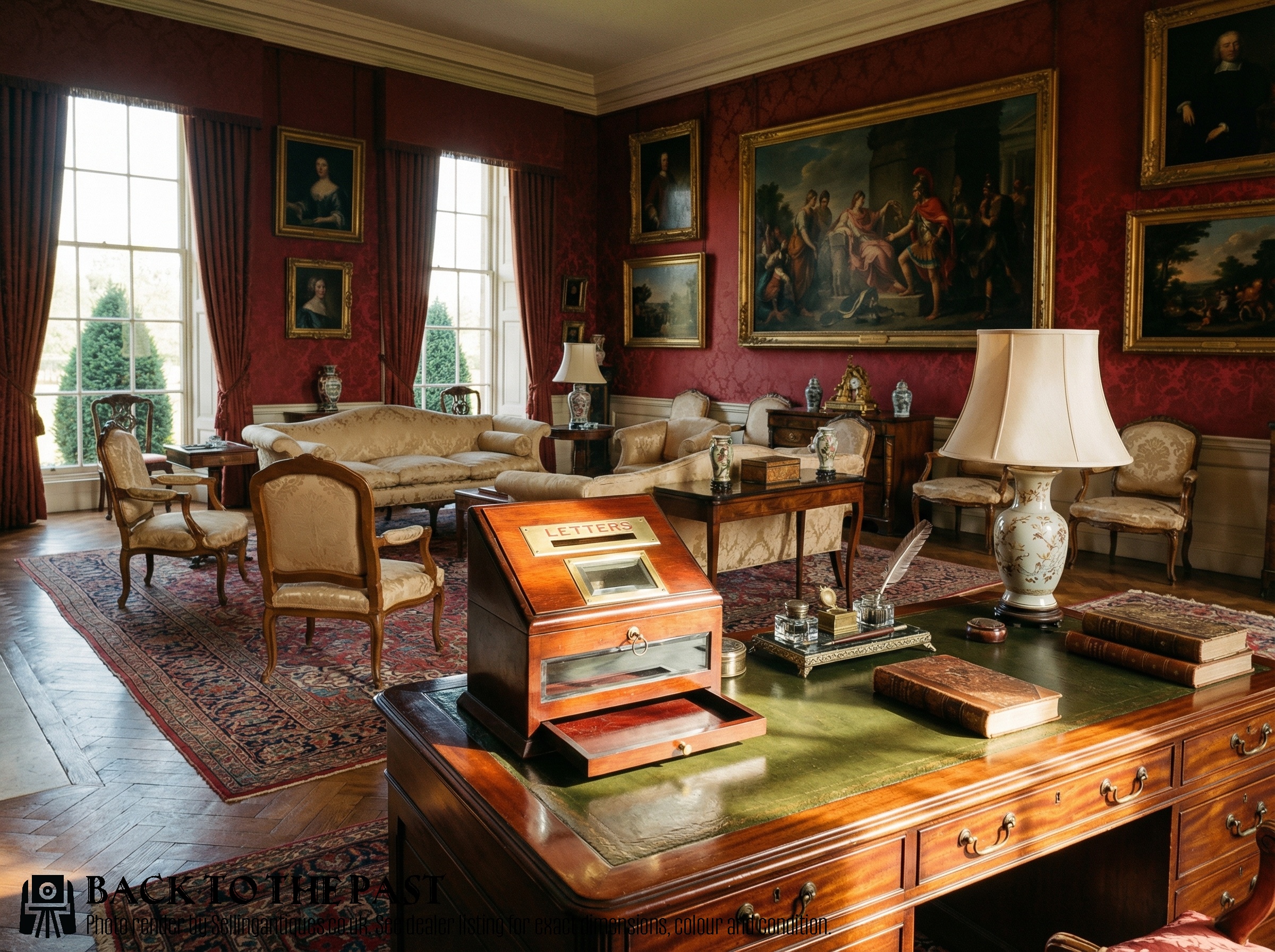
A brass mounted letter box is a desk accessory for organising post, made in woods like walnut and coromandel during the Victorian period.
Brass Mounted Letter Box
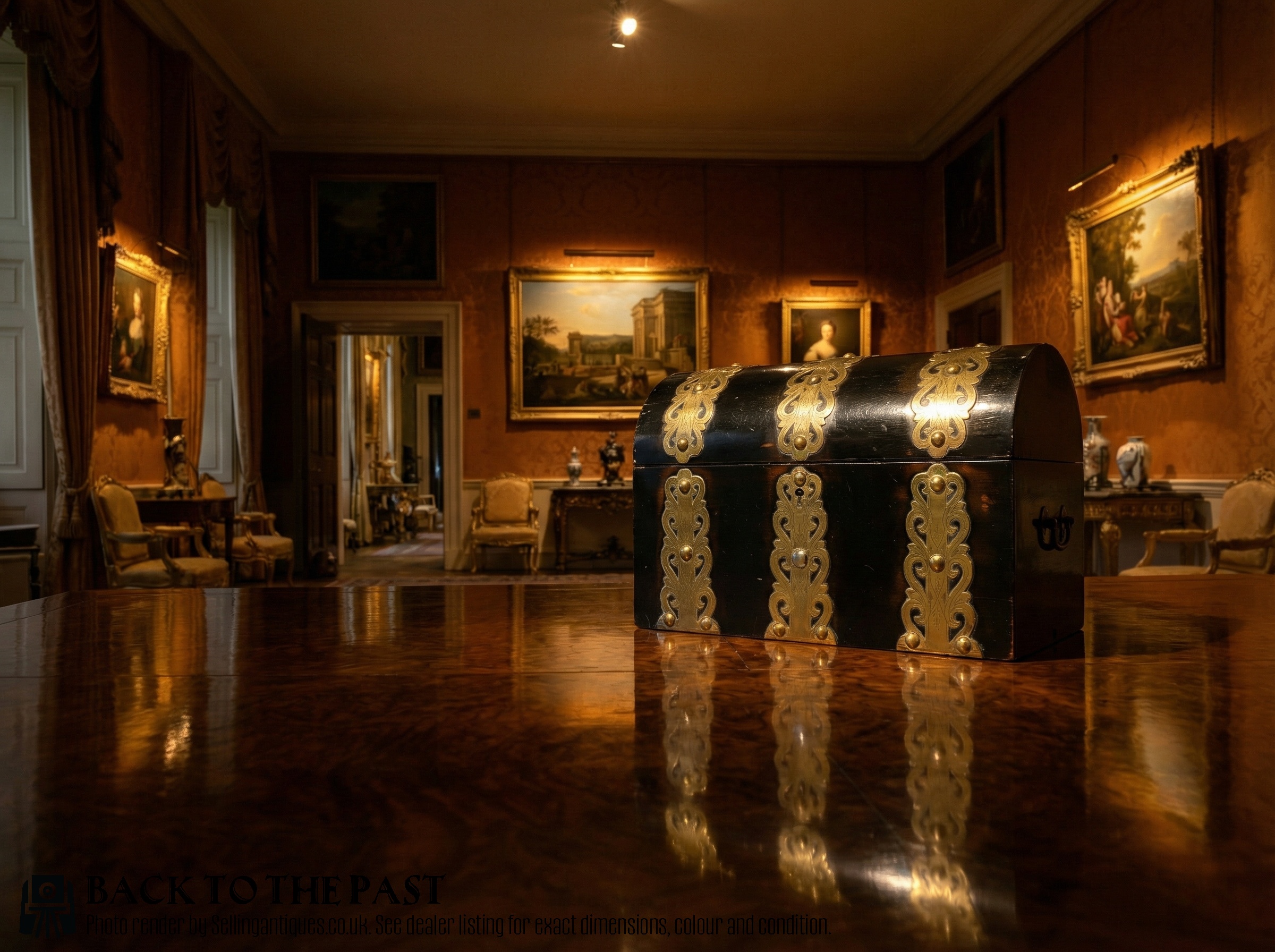
A brass mounted letter box is a desk accessory or stationery cabinet designed to hold correspondence in a country house, hotel or office. When you search for this phrase, you find desk boxes and wall-mounted receptacles made to manage letters.
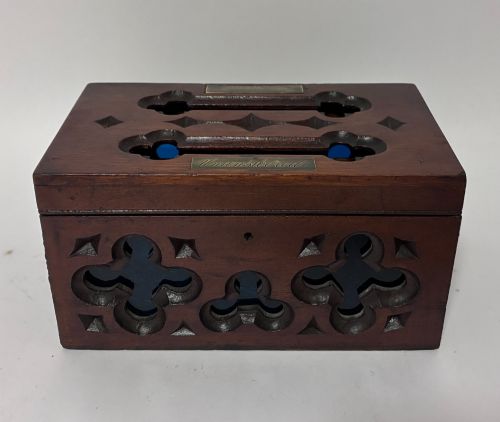
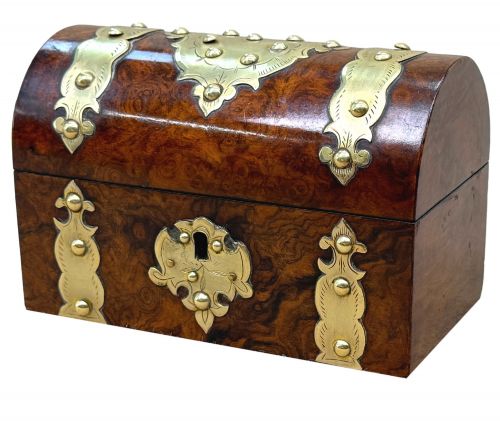
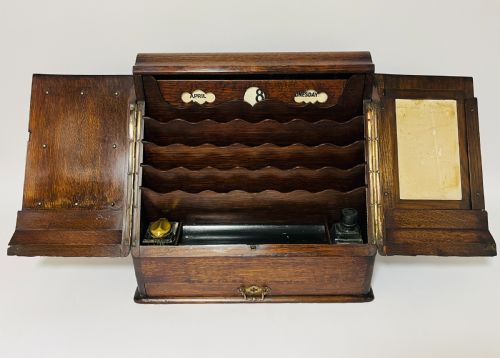
The versions you meet most often on this page date from the Victorian and Edwardian periods. They appear as fall-front boxes, dome-topped caskets and slope-front stationery cabinets.
Many examples combine storage for envelopes with inkstands and pen trays, forming part of a suite of desk furniture. Others are specifically engineered as wall or door post boxes for receiving incoming mail.
Materials and construction
Cabinet makers constructed the carcases from dense timbers such as oak, mahogany, walnut, burr walnut and exotic coromandel wood. These hard woods provided a stable foundation for applied brass straps, mounts and hinges.
Brass work takes two main forms: structural corner brackets and strapwork, or decorative ormolu mounts applied to the exterior. Glass panels, hand-painted porcelain plaques and sloping fall-front doors often complete the construction.
Brass Mounted Letter Box Retail Price Guide 2026
Typical asking prices for brass mounted letter box among the pieces listed under this phrase on Sellingantiques today, from the lower quarter to the upper quarter. They describe what is for sale here now, not the wider market.
Some correspondence boxes hide secret compartments beneath internal stationery trays for truly private letters.
What separates quality
Quality rests in the selection of timber veneers and the precision of the brass mounting. Burr walnut and figured coromandel demonstrate superior material choice compared to plain domestic oak.
Construction detail distinguishes standard workshop output from finer cabinet work. Tight mitres, substantial brass strapwork, and fitted interior partitions with integrated inkwells show the maker's hand.
Briggs 27 Piccadilly London·Houghton and Gunn·Mechi and Bazin·Gillows of Lancaster
The Brass Mounted Letter Box Glossary
- Stationery box
- A desk accessory designed to hold writing paper and envelopes upright in internal wooden dividers. These cabinets usually feature sloping lids or fall fronts.
- Coromandel wood
- A dense, heavily figured timber imported from Asia, highly prized by Victorian cabinet makers for luxury desk furniture. Its dark brown grain displays striking black streaks.
- Gothic Revival
- A nineteenth-century design style drawing on medieval architectural motifs such as pointed arches and strap hinges. It appears frequently on coromandel and oak correspondence boxes.
- Fall front
- A hinged door that drops forward to reveal letter slots, drawers and writing surfaces. This mechanism allows access to the interior while keeping the top surface clean.
Brass Mounted Letter Box: Frequently Asked Questions
What is a brass mounted letter box?
A brass mounted letter box is a wooden desk box or wall-mounted receptacle fitted with brass straps and hinges for storing or receiving post.
These pieces were standard desk accessories in Victorian and Edwardian studies, country houses and hotels.
How were stationery boxes used?
Stationery boxes were used to keep writing paper, envelopes and correspondence organised on a desk or writing table.
Many included slots for letters, small drawers for stamps, and spaces for inkstands.
What woods are typical for these boxes?
The most common timbers found on these pieces are oak, walnut, burr walnut and coromandel wood.
Exotic woods like coromandel and figured walnut indicate higher status pieces made for wealthy households.
How do I date a Victorian letter box?
Dating relies on combining the timber choice, decorative style and construction methods visible on the piece.
Victorian Gothic Revival pieces often date to the mid-nineteenth century, while simpler oak versions frequently point towards the Edwardian era.