

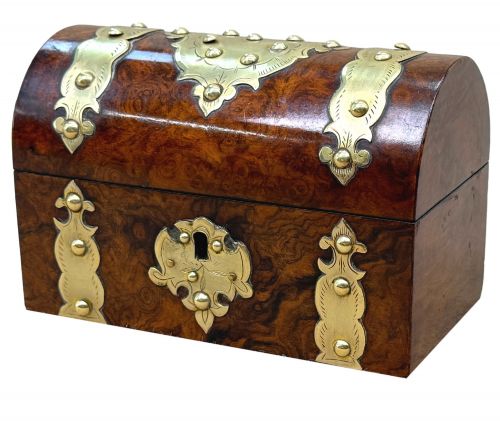


Burr Walnut Desk Box
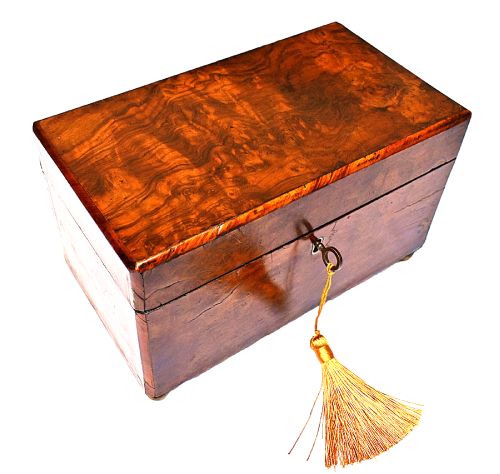
A burr walnut desk box offers a figured timber surface combined with brass mounts, built to organise correspondence in a nineteenth century study.
Burr Walnut Desk Box
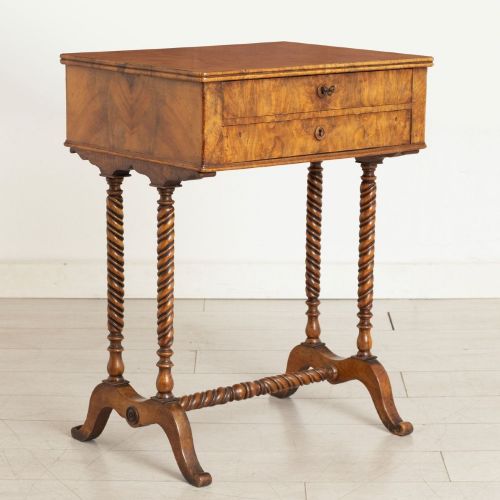
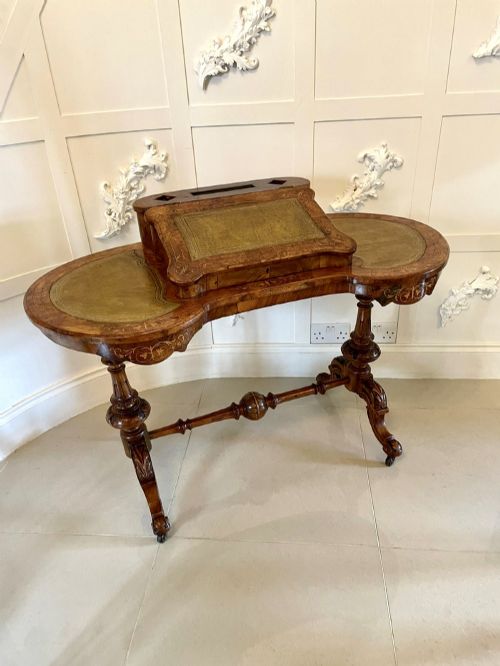
A burr walnut desk box is a solid timber container designed for writing materials, correspondence, and valuables on a desktop. These pieces appear primarily as writing slopes, stationery cabinets, and correspondence boxes from the Victorian period, alongside earlier eighteenth century examples.
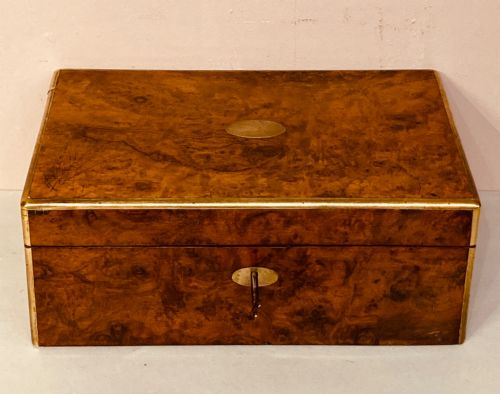
The most common forms on this page are Victorian writing slopes and stationery boxes veneered in figured burr walnut. Many incorporate brass banding, escutcheons, and Bramah locks, reflecting domestic and campaign use across the nineteenth century.
Materials and construction
Cabinet makers applied thin slices of highly figured burr walnut veneer over a stable secondary wood carcass, creating complex grain patterns across the lid and front. This technique allowed workshops to display rich figuring while maintaining structural stability in desktop containers.
Brass mounts, corner brackets, and inlay strips were inset flush into the timber surfaces to protect edges and reinforce joints during daily use or travel. Interiors frequently combined leather writing surfaces, velvet linings, and secret drawers concealed behind sliding partitions.
Burr Walnut Desk Box Retail Price Guide 2026
Typical asking prices for burr walnut desk box among the pieces listed under this phrase on Sellingantiques today, from the lower quarter to the upper quarter. They describe what is for sale here now, not the wider market.
Several boxes include secret drawers, requiring owners to discover hidden spring catches just to find where the stamps went.
Judgments of quality
The quality of a burr walnut desk box rests on the density and symmetry of the timber figuring across matching panels. Superior examples display continuous burr patterns that wrap cleanly around the corners of the box.
George Austin of Dublin·Mappin & Webb·Waring & Gillow
The Burr Walnut Desk Box Glossary
- Burr walnut
- A timber harvested from walnut tree growths or burls, yielding complex, swirling grain patterns highly prized for cabinet veneers.
- Writing slope
- A desktop box with a hinged, slanted lid that folds down to form a sloping surface lined with leather for writing letters.
- Stationery box
- An upright desktop cabinet with tiered compartments designed to hold envelopes, paper, and writing implements.
- Bramah lock
- A patented high security cylindrical lock invented by Joseph Bramah, commonly found on better quality nineteenth century boxes.
- Secret drawers
- Hidden small compartments concealed behind false panels or activated by internal release catches within a desk box.
Burr Walnut Desk Box: Frequently Asked Questions
What is the difference between a writing slope and a stationery box?
A writing slope opens to reveal a slanted desk surface and compartments for ink and pens, intended for active correspondence.
A stationery box stands upright to store paper and envelopes in vertical tiers rather than providing a writing surface.
How do I date a burr walnut desk box?
Dating relies on construction methods, hardware styles, and timber choices, with Victorian examples from the mid to late nineteenth century dominating the period evidence.
Earlier pieces from the eighteenth century typically show simpler hinges and different interior layouts without the heavy brass corner binding seen later.
Were these boxes used for travel?
Campaign versions and lap desks were built with sturdy brass binding and recessed drop handles specifically for transport during journeys.
Stationery cabinets and larger desktop boxes remained stationary on library tables rather than accompanying travellers on the road.
How do I care for burr walnut veneer?
Keep walnut boxes away from direct sunlight and steady heat sources to prevent the thin burr veneer from drying out and lifting.
Apply occasional wax polish suitable for antique timber to nourish the grain and maintain the surface sheen.