
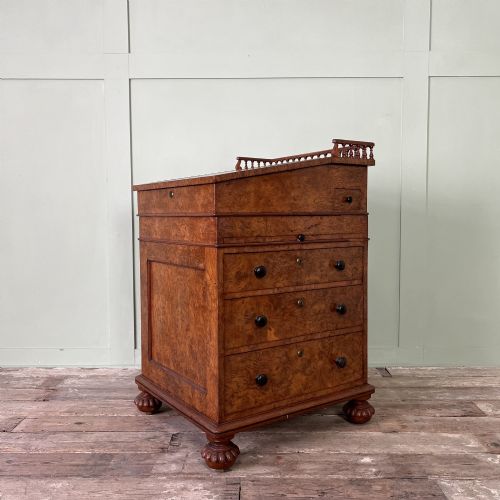


Walnut Stationery Cabinet
A walnut stationery cabinet is a desk accessory designed to organise correspondence, most frequently met here in Victorian burr walnut.
Walnut Stationery Cabinet
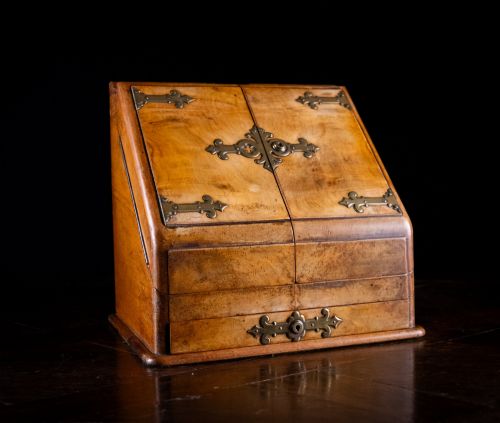
A walnut stationery cabinet provides dedicated storage for writing paper, envelopes and correspondence, appearing across the nineteenth century in various domestic forms. These pieces range from desktop boxes and upright tabletop cabinets to integrated compartments within larger writing furniture.
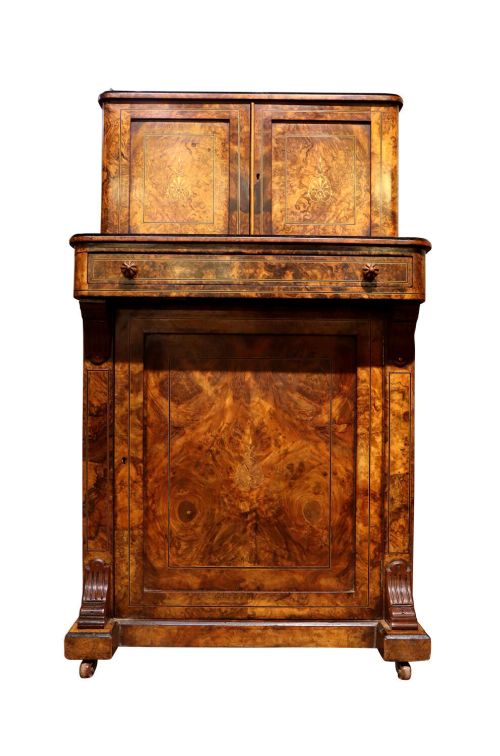
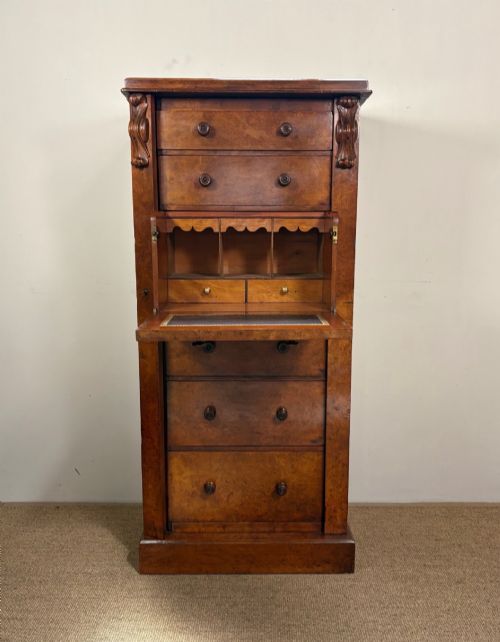
The Victorian period dominates the available selection, though examples stretch from the Regency era through to Edwardian marquetry pieces. Alongside desktop stationery boxes, the evidence includes related writing furniture such as Davenport desks, secretaire chests, and bonheur du jour writing tables.
Desktop stationery cabinets and correspondence chests are the most common configurations on this page, often featuring fall-fronts, sloping lids, or pop-up mechanisms. They serve to keep desks tidy while displaying the rich figuring of walnut timber in a study or drawing room.
How they were made
Cabinet makers utilised solid walnut and burr walnut veneers over secondary timbers, selecting pieces with dramatic grain patterns for the exterior surfaces. Burr walnut yields a mottled, swirling figure that makers prized for principal display panels on boxes and desks.
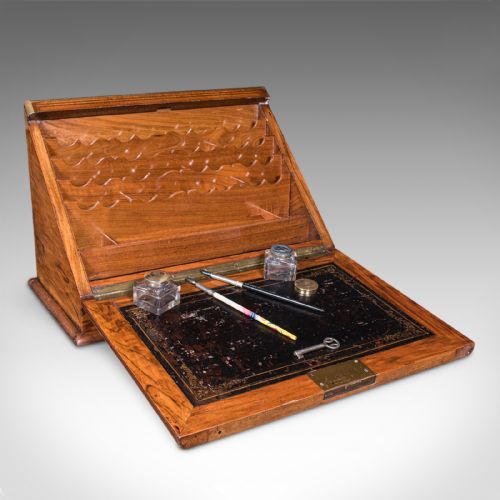
Brass mounts, hinges, escutcheons and carrying handles provide structural reinforcement and functional contrast against the dark timber. Interior fittings frequently incorporate leather writing surfaces, glass inkwells, and delicate boxwood inlay or Tunbridge ware details.
Walnut Stationery Cabinet Retail Price Guide 2026
Typical asking prices for walnut stationery cabinet among the pieces listed under this phrase on Sellingantiques today, from the lower quarter to the upper quarter. They describe what is for sale here now, not the wider market.
Several Victorian writing boxes incorporate hidden secret drawers that require pressing secret springs to release.
What varies in quality
Quality rests principally in the selection and bookmatching of the walnut veneer, alongside the precision of brass mountings and boxwood inlay. Superior examples display continuous, balanced grain across the front panels and fitted interiors lined with quality leather or silk.
Mechanisms also divide standard pieces from finer productions, particularly in pop-up stationery compartments, folding writing slopes, and spring-loaded desk drawers. Maker attribution, through signatures or hardware stamps from firms such as Gillow or Asprey, elevates certain pieces considerably.
Gillow and Co·Waterlow and Sons·Asprey·Halstaff and Hannaford
The Walnut Stationery Cabinet Glossary
- Burr walnut
- A veneer taken from the wart-like growths on walnut trees, prized for its intricate and swirling grain patterns.
- Davenport desk
- A compact Victorian writing desk featuring a sloped writing surface above a pedestal of drawers.
- Bonheur du jour
- A light ladies' writing desk, typically featuring small drawers, shelves, or a cabinet superstructure.
- Tunbridge ware
- A form of decorative woodwork characterised by tiny mosaic tiles forming pictorial or geometric patterns.
- Escutcheon
- A protective brass plate surrounding a keyhole, often shaped and engraved on quality cabinetry.
Walnut Stationery Cabinet: Frequently Asked Questions
What is a walnut stationery cabinet?
A walnut stationery cabinet is a wooden desk accessory built to house writing paper, envelopes, and ink. These boxes keep correspondence organised neatly on a desk or table.
Most surviving examples date from the Victorian era and feature figured walnut veneers mounted with brass hardware.
How were stationery cabinets used?
Victorians used these cabinets to store personal correspondence, postage stamps, and writing implements before the telephone era. Interior slots kept different paper sizes and envelopes separated and ready for use.
Desktop boxes often included calendars, inkwells, and small drawers for sealing wax and nibs.
How do I identify a Victorian piece?
Victorian walnut stationery cabinets display characteristic nineteenth-century construction methods, including hand-cut dovetails and brass locks. The styles draw heavily on Victorian revival tastes and mid-century cabinet-making standards.
Makers frequently incorporated burr walnut veneers, boxwood stringing, and brass carrying handles typical of the period.
Where should I place a stationery cabinet?
These compact cabinets sit well on top of large partner desks, writing tables, or sideboards. Their finished backs often allow them to rest freestanding in a study or library.
Keep them away from direct sunlight and heat sources to protect the antique walnut finish and prevent veneer lifting.