
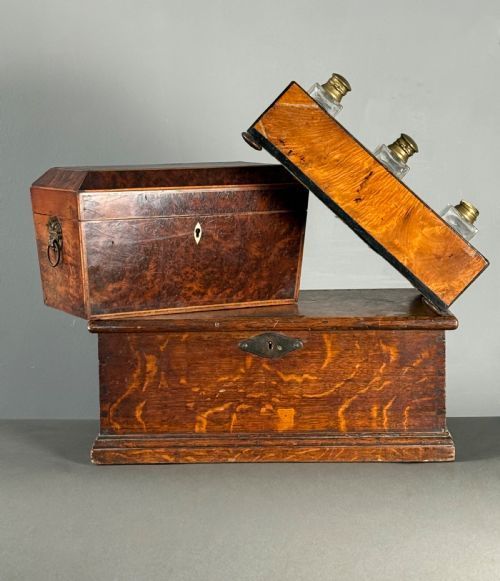
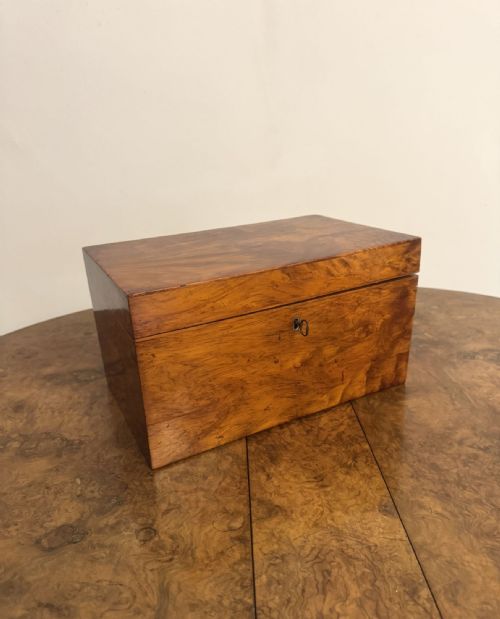


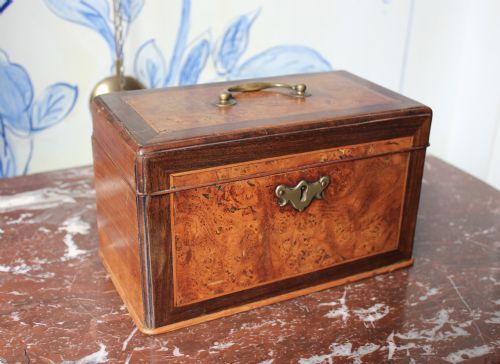


Burr Walnut Tea Chest
These burr walnut tea chests combine rich veneers with period craftsmanship, offering a handsome addition to any room.
Burr Walnut Tea Chest
A burr walnut tea chest is a lidded box designed to store loose tea leaves securely, often featuring internal compartments and mixing bowls. When buyers search for a burr walnut tea chest, they encounter forms ranging from simple lidded boxes to elaborate tea poys and occasional tables.
How they were made
Cabinet makers utilised choice burr walnut veneers applied to secondary woods such as oak and pine to achieve striking grain patterns on the exterior surfaces. Boxwood stringing and brass fittings frequently accent these boxes, highlighting the construction methods of the period.
Internal compartments often feature individual lids for the tea leaves, sometimes accompanied by glass mixing bowls or metal linings. Joinery techniques from the eighteenth and nineteenth centuries ensure the carcasses remain stable despite changes in temperature.
The listings show tea chests utilising burr walnut, oak, boxwood, and brass across Georgian and Victorian periods.
What varies in quality
Quality rests primarily on the choice of burr veneer and how symmetrically the grain figures are matched across the lid and sides. Richness of colour and depth of finish distinguish finer examples from plain or heavily restored specimens.
Interior fittings also dictate worth, with complete mixing bowls, original caddy lids, and working locks with keys elevating a piece. The crispness of inlaid boxwood lines and the integrity of the brass hardware complete the assessment.
The Burr Walnut Tea Chest Glossary
- Burr walnut
- A veneer taken from the wart or growth on a walnut tree, producing swirling, highly figured grain patterns.
- Tea caddy
- A box or chest made specifically for storing tea leaves when tea was an expensive, treasured commodity.
- Tea poy
- A small stand or table on a pillar and claw base, fitted with a tea chest or caddy on top.
- Sarcophagus
- A box shape with a domed or sloping lid tapering downwards, popular for tea caddies during the Regency and Victorian eras.
- Boxwood
- A dense, pale wood frequently used for contrasting stringing and inlay on period furniture and boxes.
Burr Walnut Tea Chest: Frequently Asked Questions
What is a burr walnut tea chest?
A burr walnut tea chest is a decorative container made during the Georgian and Victorian eras to store valuable tea leaves safely under lock and key.
These pieces often feature highly figured wood veneers, internal compartments, and sometimes small glass bowls for blending.
How do I date a tea caddy?
Dating relies on observing the overall style, such as Georgian rectangular shapes or Victorian sarcophagus forms, alongside construction details like hinges and locks.
Timbers and inlay styles also offer strong clues to the decade in which the box was constructed.
Were these chests used for tea?
Yes, tea was an expensive commodity in the eighteenth and nineteenth centuries, requiring secure storage to prevent servants or guests from helping themselves.
The interior was usually divided into sections for different varieties of tea leaves.
How do I care for burr walnut?
Keep burr walnut tea chests away from direct sunlight and radiators to prevent the delicate veneer from drying out or splitting over time.
Occasional dusting with a soft, dry cloth and minimal waxing helps maintain the polished timber surface.