



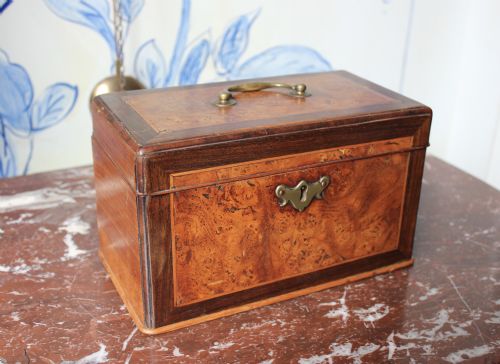

Walnut Wooden Tea Box
A walnut wooden tea box holds the leaves of a costly past, bringing warmth and rich grain to any table.
Walnut Wooden Tea Box
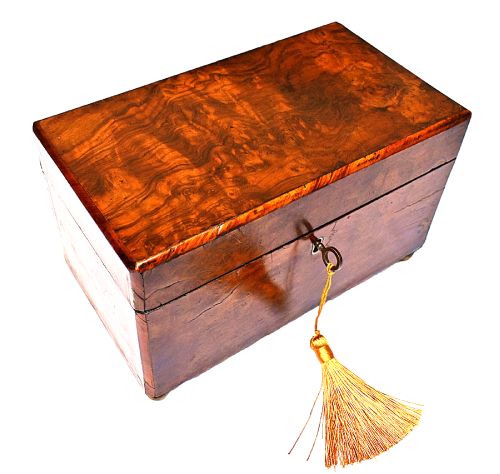
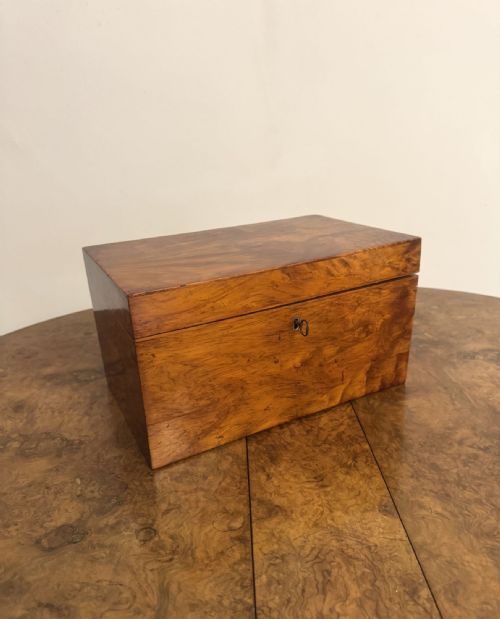
The versions most commonly met on this page feature burr walnut veneers, displaying swirling grain patterns shaped across eighteenth and nineteenth-century workshops. Many include fitted interiors or internal compartments that once separated green tea from black tea.
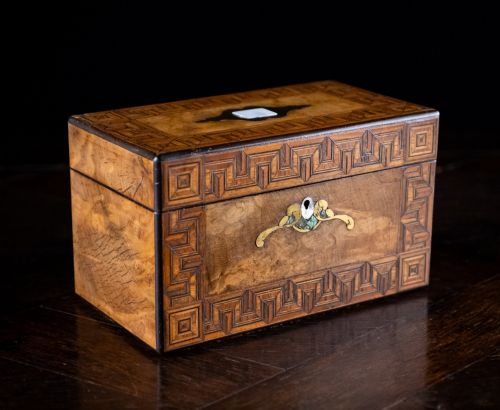
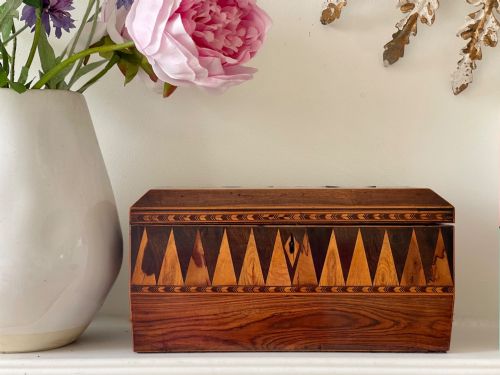
Examples stretch from early eighteenth-century red walnut and burr elm examples to mid-Victorian parquetry and Tunbridge Ware. Makers utilised various timber cuts, often combining walnut with boxwood, oak, and brass fittings.
Materials and construction
Cabinet makers constructed these boxes using solid woods or applied fine burr walnut veneers over secondary timbers such as oak. The distinct figuring comes from slicing the burr growths of the walnut tree, creating complex patterns across the lids and panels.
Decoration often involved intricate inlay work, incorporating boxwood stringing, parquetry geometric patterns, and metal details. Specialised techniques like Tunbridge Ware introduced micro-mosaic wooden tesserae to form detailed pictorial motifs on the surface.
Hardware played a practical role, with brass escutcheons, hinges, and working locks fitted to secure valuable dry goods. Internal compartments frequently retained traces of bone or mother-of-pearl knobs on the tea canister lids.
Walnut Wooden Tea Box Retail Price Guide 2026
Typical asking prices for walnut wooden tea box among the pieces listed under this phrase on Sellingantiques today, from the lower quarter to the upper quarter. They describe what is for sale here now, not the wider market.
Some nineteenth-century makers hid secret drawers inside tea boxes, accessible only by sliding specific wooden panels in the correct sequence.
Distinctions in craftsmanship
The superiority of a piece rests on the choice of timber and the dexterity of the veneer work. Finer boxes display symmetrical burr walnut figures that wrap continuously across the lid and sides without disruption.
Detailing in the secondary materials separates standard items from exceptional work. Precision in boxwood stringing, the crispness of parquetry, and the integration of specialised elements like Tunbridge Ware or mother-of-pearl inlay indicate a higher tier of production.
The preservation of the fitted interior substantially influences the standing of the box. Complete compartments, original mixing bowls, and functioning locks with matching keys reflect careful historical maintenance and superior original manufacture.
Henry Hollamby
The Walnut Wooden Tea Box Glossary
- Burr walnut
- A prized wood veneer harvested from the wart-like growths on walnut trees. It yields irregular, highly decorative swirls and knots across the surface of the box.
- Teapoy
- A pedestal table fitted with a lidded box on top for storing tea. These pieces often stand on a central pillar with carved or splayed legs.
- Tunbridge Ware
- A type of decorative woodworking originating from Kent, utilising thousands of tiny dyed wood blocks to create mosaic pictures. It appears frequently on nineteenth-century caddy lids.
- Parquetry
- Geometric wood inlay forming patterned surfaces resembling tiles. Makers arranged contrasting timbers like boxwood and walnut in precise grid or diagonal designs.
- Sarcophagus
- A box shape featuring a domed or steep-sloping lid that mimics ancient stone tombs. This architectural silhouette gained popularity during the Regency and early Victorian eras.
Walnut Wooden Tea Box: Frequently Asked Questions
What is a tea caddy?
A tea caddy is a small storage container designed to keep precious tea leaves dry and secure under lock and key. In the eighteenth and nineteenth centuries, tea was an expensive commodity handled with great care.
These boxes contained fitted interiors with covered canisters or compartments to separate different varieties of tea. Wealthy households kept them in the parlour or dining room rather than the kitchen.
How do I date a walnut box?
Dating relies on observing the silhouette, construction methods, and decorative styles characteristic of different eras. Georgian examples tend towards restrained rectangular shapes, while Regency and Victorian pieces often introduce sarcophagus forms or elaborate parquetry.
Interior fittings and lock mechanisms also offer clues to the period of manufacture. Hand-cut dovetails and older secondary woods like oak point towards eighteenth-century origins.
How should I clean burr walnut?
Burr walnut requires gentle maintenance using a soft, dry cloth to remove dust. Avoid harsh chemical cleaners or excess moisture, which can damage the delicate veneer and lift the grain.
Occasional application of high-quality furniture wax nourishes the timber and protects the historic finish. Keeping the box away from direct sunlight prevents the walnut from fading over time.