

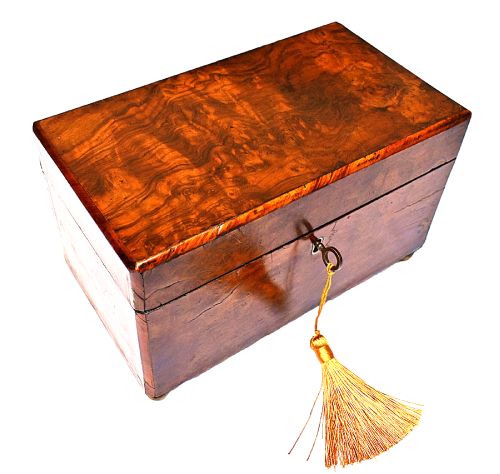


Victorian Lockable Tea Box
A victorian lockable tea box is a timber chest made to safeguard precious leaves, offering secure storage and handsome period presence for the home.
Victorian Lockable Tea Box
When you search for a victorian lockable tea box, you encounter nineteenth-century tea caddies designed with functional brass locks and working keys. These containers range from plain rectangular shapes to elaborate sarcophagus and dome-top forms.
The pieces appearing here stem primarily from the Victorian period, alongside related nineteenth-century examples in William IV and Regency styles. Woods such as rosewood, mahogany, burr walnut, and burr maple dominate the selection.
Most examples function as storage chests with hinged lids protecting internal compartments. Makers constructed these boxes to keep expensive dry tea leaves secure from household servants and damp air.
Materials and construction methods
Cabinetmakers built these boxes using dense tropical hardwoods like rosewood and mahogany as foundational carcasses, often applying decorative veneers of burr walnut, burr maple, or coromandel to the exterior surfaces.
Artisans embellished many examples with inlaid brass stringing, marquetry, and parquetry patterns. Internal compartments frequently incorporate bone fittings and fitted lids to seal individual tea varieties.
Victorian Lockable Tea Box Retail Price Guide 2026
Typical asking prices for victorian lockable tea box among the pieces listed under this phrase on Sellingantiques today, from the lower quarter to the upper quarter. They describe what is for sale here now, not the wider market.
Victorian hosts kept tea under lock and key because the leaves cost more than silver, making these boxes miniature treasure chests.
Assessing quality in period boxes
Superior examples display exceptional timber selection, such as richly figured burr walnut or intensely grained rosewood, paired with precise parquetry and marquetry inlay. Lesser pieces utilise simpler solid timbers without decorative veneers or complex grain patterns.
The refinement of the brass hardware and the presence of a functional key distinguish finer boxes from standard utilitarian versions. Heavier gauge silver or brass mounts indicate superior workshop production during the nineteenth century.
The Victorian Lockable Tea Box Glossary
- Tea caddy
- A small box or chest designed to store dry tea leaves securely. The word derives from catty, a Chinese unit of weight.
- Sarcophagus form
- A box style featuring a stepped, domed lid and sloping sides resembling a classical stone coffin. Cabinetmakers favoured this architectural shape during the Regency and Victorian eras.
- Marquetry
- Decorative woodwork where pieces of contrasting veneer are assembled to form pictorial or geometric designs. Artisans glued these thin decorative sheets onto the primary wood carcass.
- Parquetry
- A geometric mosaic of wood pieces used for decorative surfaces on floors and boxes. It creates repeating patterns like cubes or zigzags.
- Coromandel
- A dense, heavy timber featuring dark brown stripes, prized for fine nineteenth-century cabinetmaking. It is similar in weight and appearance to calamander wood.
Victorian Lockable Tea Box: Frequently Asked Questions
What is a victorian lockable tea box?
A victorian lockable tea box is a nineteenth-century timber container designed to securely store dry tea leaves under lock and key. These pieces functioned as both practical storage and decorative tabletop furnishings in period parlours.
Cabinetmakers constructed them in various forms, including sarcophagus shapes, dome tops, and rectangular boxes. Most retain their original brass locks and internal compartments for different tea varieties.
How were these boxes used?
Households used these boxes to keep expensive black and green teas safe from domestic staff and moisture. Because tea was a costly commodity, the lady of the house typically kept the key herself.
The interior usually featured two or more lidded compartments to separate different leaves, sometimes alongside a central mixing bowl made of glass or metal.
How do I date a tea box?
Dating relies on observing the prevailing styles, timber choices, and construction techniques visible in the piece. Regency and William IV examples often feature heavy sarcophagus proportions, whilst high Victorian pieces frequently showcase burr walnut or elaborate marquetry.
Hardware details like brass escutcheons and lock mechanisms also provide clues to the manufacturing decade. Examining the secondary timbers inside helps confirm the nineteenth-century origin.
Where should I place it at home?
These boxes suit display on sideboards, desks, or occasional tables in living areas and studies. Their rich wood grains and brass details complement both traditional and contemporary interiors.
Keep them away from direct sunlight and strong heat sources to protect the delicate wood veneers and historic finishes from drying out.