


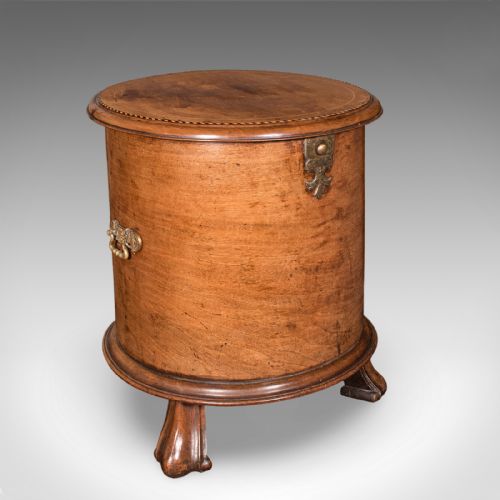


Brown Walnut Caddy
A brown walnut caddy is a timber container made for leaf tea, combining rich grain with brass or wood inlay.
Brown Walnut Caddy
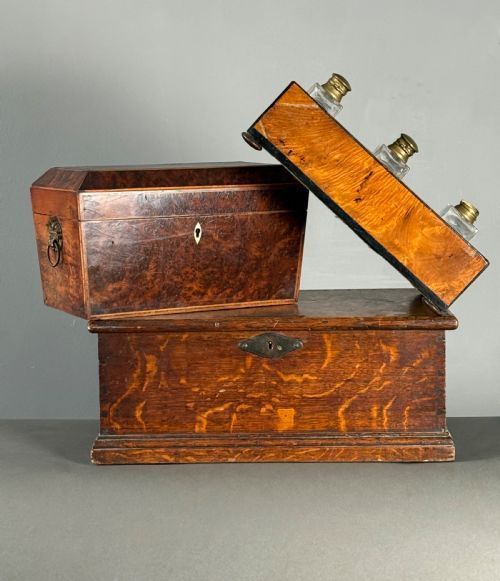
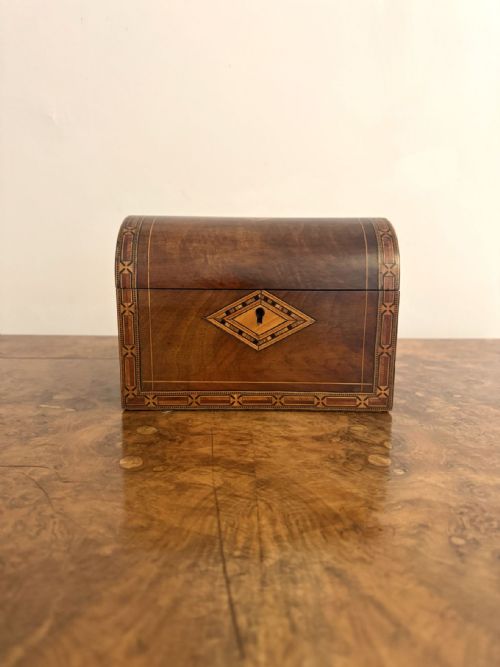
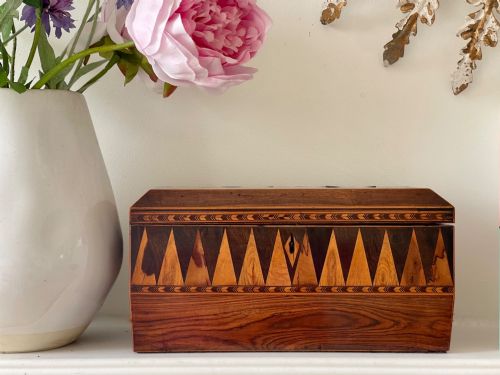
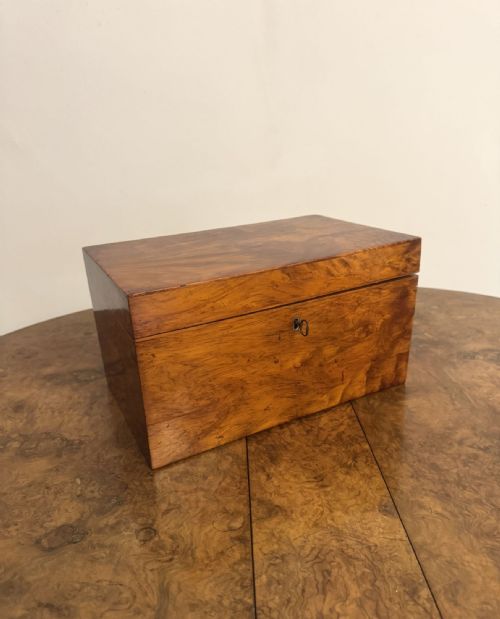
When you search for a brown walnut caddy, you are looking at timber boxes designed for holding and preserving leaf tea during past centuries. These pieces appear in forms such as rectangular containers, sarcophagus shapes, and oval double compartments.
The versions you are most likely to meet on this page span the Georgian, Regency, and Victorian periods, alongside later styles. Makers constructed these items from walnut and burr walnut, sometimes incorporating boxwood or brass mounts.
Beyond standard tea caddies, the listings include related walnut items like cellarettes, stationery boxes, and decorative boxes. Each object reflects the domestic habits of its period, using rich brown timber tones and fine grain patterns.
What varies in quality
The distinction between tiers of quality rests upon the selection of the burr walnut veneer and the precision of the timber inlay. Superior examples display highly figured grain matched symmetrically across the lid and sides.
Internal arrangements also set pieces apart, with better boxes retaining original fitted compartments, mixing bowls, or miniature containers intact. The finesse of the boxwood stringing and the integration of brass mounts indicate the skill of the original maker.
Even a clock sneaks into the walnut box family, dressed up in proper George II style for tea time.
Mappin and Webb
The Brown Walnut Caddy Glossary
- Burr walnut
- A timber taken from the wart or growth on a walnut tree, yielding highly patterned, swirling grain. This material was prized for high-status furniture and decorative boxes.
- Tunbridge inlay
- A method of decorative wood mosaic using many tiny blocks of different coloured woods to form geometric or pictorial scenes. It appears on various 19th-century boxes.
- Sarcophagus caddy
- A tea container shaped like a miniature stone coffin with a domed or peaked lid, resting on bun feet or a plinth. This form gained popularity during the Regency period.
- Tea poy
- A small table specifically designed to support a tea caddy, often featuring a pillar and tripod base or a fitted interior. These pieces served tea in the drawing room.
- Cellarette
- A lockable container or stand used for storing bottles of wine or spirits. In walnut, these often date from the Regency period and feature robust stands.
Brown Walnut Caddy: Frequently Asked Questions
What is a brown walnut caddy?
A brown walnut caddy is a timber box created to store dry tea leaves securely when tea was an expensive commodity.
These pieces use walnut and burr walnut veneers, frequently featuring fitted internal compartments for different tea varieties.
How do I date a walnut caddy?
Dating relies on observing the overall shape, construction methods, and decorative details like inlay or brass mounts.
Georgian and Regency examples tend to feature distinct architectural proportions, while Victorian pieces often adopt heavier sarcophagus or domed forms.
Were all caddies used for tea?
While the primary purpose was tea storage, the category expands to include related table boxes and stationery containers.
Some surviving pieces are adapted as general decorative boxes or cigarette holders during later periods of use.
How should I care for walnut?
Walnut benefits from stable room environments away from direct heat sources and strong sunlight to prevent timber drying.
Applying occasional appropriate wax polish helps maintain the lustre of the grain without building up heavy residues.