



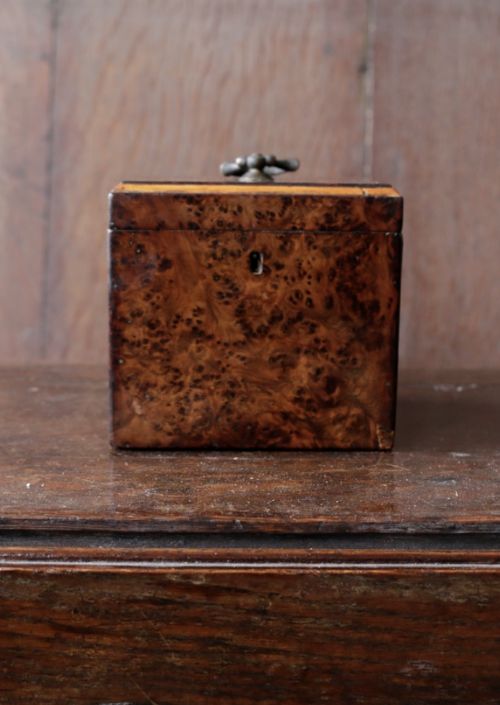


Vintage Wooden Tea Caddy
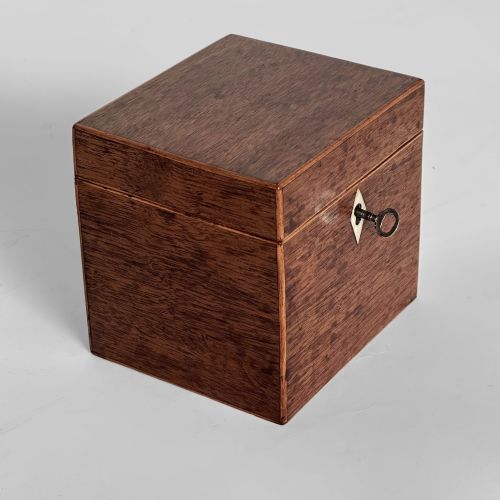
A vintage wooden tea caddy is a small, hinged storage box designed to keep dry leaves secure, bringing tactile warmth and period character to a modern interior.
Vintage Wooden Tea Caddy
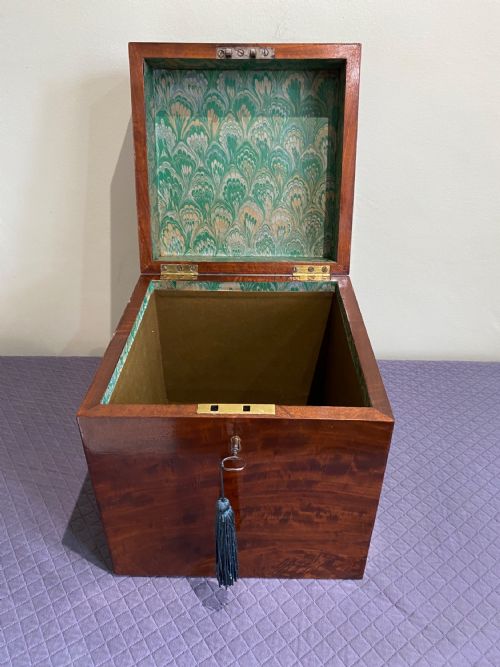
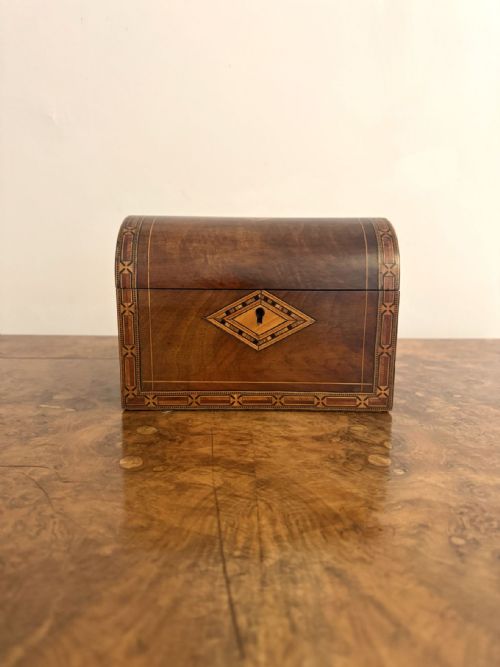
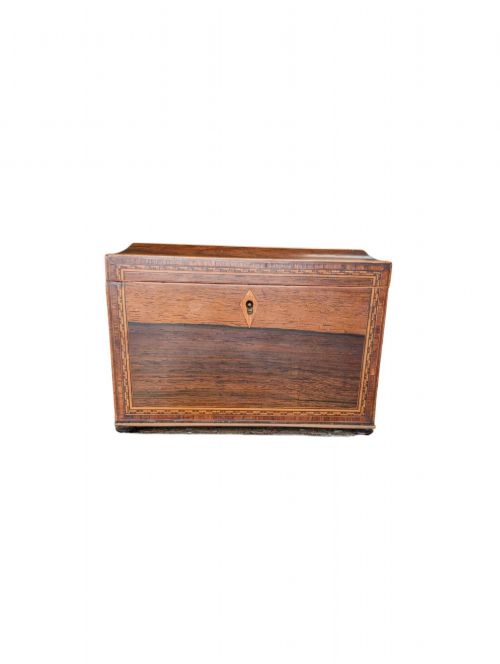
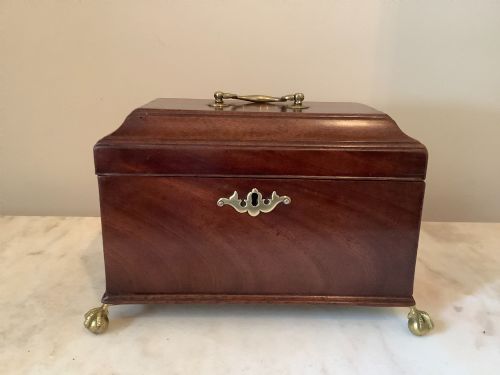
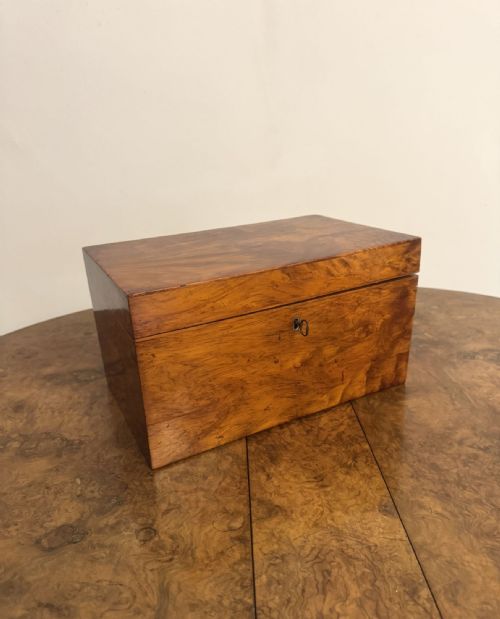
A vintage wooden tea caddy is typically encountered as a mahogany, walnut or rosewood container dating from the Georgian, Regency and Victorian eras. These boxes served to protect expensive tea leaves under lock and key, reflecting the high value placed on the beverage in past centuries.
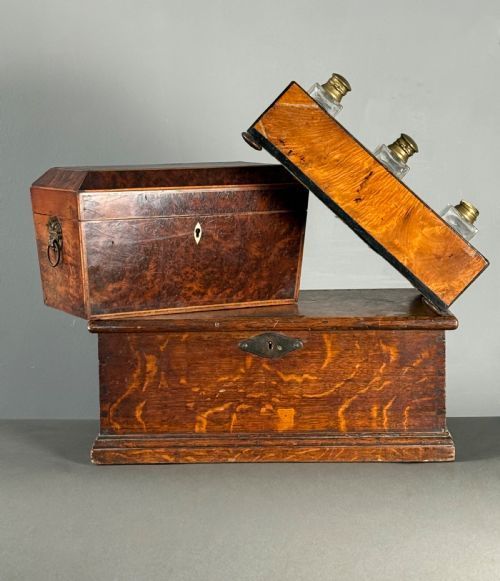
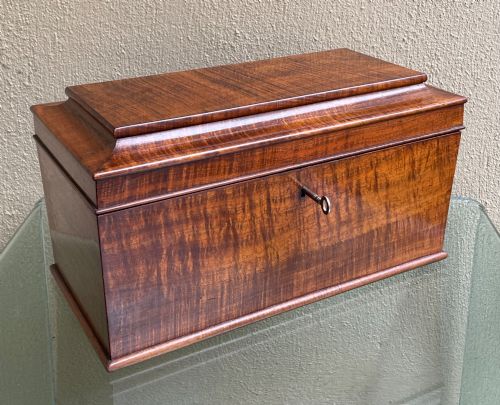
The pieces on this page span rectilinear, oval, octagonal and sarcophagus forms, often featuring internal compartments for distinct leaf varieties. Examples range from compact Georgian mahogany boxes to elaborate Regency and Victorian specimens decorated with Tunbridge inlay or brass banding.
Materials and construction methods
Cabinetmakers utilised dense timbers such as mahogany, walnut, rosewood, satinwood and yew, frequently selecting figured veneers to create striking lid panels and sides. Many pieces incorporate fine wood inlay, stringing and contrasting ebony details to define their geometric forms.
Construction relied on precise joinery, often incorporating internal dividing lids, bone escutcheons and working brass locks with keys. Specialised techniques such as Tunbridge ware surface decoration and coopered staves appear on select regional examples.
Listings feature woods such as mahogany, walnut, rosewood, satinwood, oak, yew and coromandel.
What separates standard pieces from finer ones
Quality in a vintage wooden tea caddy rests on the choice of timber, the crispness of any inlay and the integrity of the original construction. Finer examples display carefully matched grain patterns across the exterior surfaces and retain their internal lids and functioning brass hardware.
Subtleties in proportion, such as a well-balanced sarcophagus silhouette or delicate stringing, distinguish workshop pieces from simpler utilitarian boxes.
The Vintage Wooden Tea Caddy Glossary
- Caddy spoon
- A short-handled spoon specifically sized to measure loose tea leaves, often formed from silver or bone.
- Tunbridge inlay
- A meticulous mosaic woodworking technique creating detailed geometric or pictorial scenes from tiny coloured wood splints.
- Sarcophagus form
- A casket shape with a domed or sloping lid tapering downwards, popular during the Regency period.
- Escutcheon
- A small protective plate surrounding the keyhole, frequently made from brass or bone.
Vintage Wooden Tea Caddy: Frequently Asked Questions
What were tea caddies used for?
These boxes were utilised in the home to store valuable loose leaf tea safely under lock and key. Servants or hosts would dispense the leaves before social brewing.
Today, they adapt easily to store small keepsakes, jewellery or stationery while retaining their historical presence on a side table.
How do I date a wooden tea caddy?
Dating relies on observing the timber species, overall form, construction methods and decorative details. Georgian pieces often show simpler mahogany or satinwood construction, while Regency and Victorian boxes introduce rosewood, elaborate brass inlay and sarcophagus silhouettes.
Hardware styles, such as escutcheons and lock mechanisms, also offer reliable clues to the period of manufacture.
How should I care for my tea caddy?
Maintain the wood by keeping the box away from direct sunlight and sudden temperature shifts that might split old veneers. Occasional gentle dusting and sparing application of appropriate wax will preserve the finish.
Avoid placing damp items inside, as historical linings and interior woods are sensitive to moisture.
Why do some caddies have two compartments?
Dual compartments allowed households to store two distinct varieties of tea, typically a green tea and a black tea, within the same container. A central mixing trough was frequently positioned between them.
This allowed the host to blend leaves to personal taste before service.