
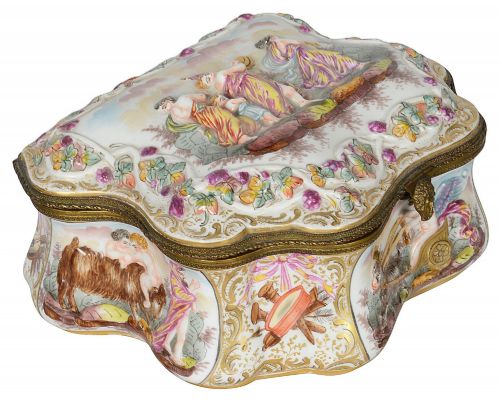


Hand Painted Porcelain Casket
These hand painted porcelain casket pieces are decorative storage vessels combining ceramic artistry and metal mountings, collected for their intricate Victorian craftsmanship.
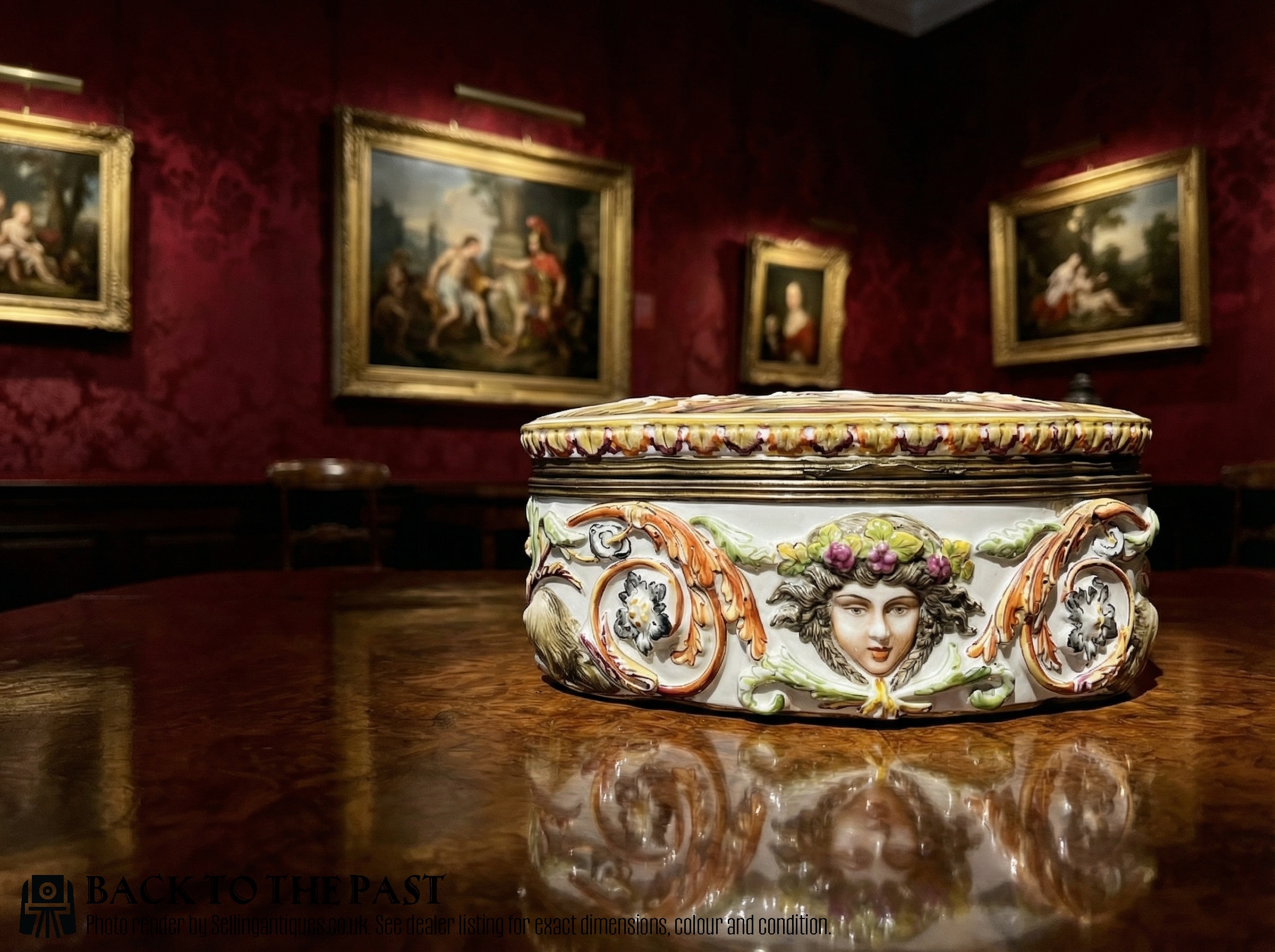
What They Are
When searching for a hand painted porcelain casket, buyers encounter nineteenth-century decorative containers designed for jewellery or stationery. These pieces combine ceramic bodies with metal mounts, reflecting the tastes of the Victorian and Napoleon III eras.
Forms range from large table caskets to specific jewellery and stationery boxes. These items served both practical storage purposes and ornamental roles in nineteenth-century interiors.
How They Were Made
Maker construction methods integrate porcelain bodies with brass, ormolu, and gold leaf mounts. Enamel and hand-painted decoration adorn the ceramic surfaces, often secured by cast metal frames and hinges.
Wooden elements such as burr walnut provide structural housings for porcelain in English stationery boxes. Artisans combined carpentry with ceramic fitting to create secure lidded containers.
Retail Price Guide 2026
Typical UK retail prices for hand painted porcelain casket, calculated from the Sellingantiques database of over a million retail prices indexed since 2003. This retail price guide relies exclusively on Sellingantiques data; no external sources or auction records are used, so the figures do not describe the wider market.
One box combines English burr walnut timber with hand-painted porcelain, proving that even stationery needed a touch of Continental drama.
What Varies in Quality
Quality differences emerge in the execution of the hand-painted decoration and the refinement of the ormolu or brass mountings. Finer pieces demonstrate superior brushwork detail on the porcelain and heavier, more precisely cast metal mounts.
The choice of secondary materials such as burr walnut versus standard porcelain bodies alters the character of the piece. Superior examples maintain crisp casting in their metalwork and well-preserved gilding across the surface.
The Hand Painted Porcelain Casket Glossary
- Ormolu
- Gilded bronze mounts used to frame and support porcelain panels. This technique adds decorative weight and structural definition to nineteenth-century boxes.
- Capodimonte
- Italian porcelain originating from historic manufactories known for relief modelling and painted scenes. Pieces from this tradition often feature prominently on table caskets.
- Sevres
- French porcelain associated with fine decorative arts and painted panels. Such ceramic elements are frequently incorporated into gilt-metal jewellery caskets.
- Burr Walnut
- Figured timber used in nineteenth-century cabinetry. It provides a rich, mottled background for inset porcelain panels on stationery boxes.
- Neoclassical
- A design style drawing on classical antiquity with symmetrical forms and restrained ornamentation. This aesthetic influences the proportions of many Victorian boxes.
Frequently Asked Questions
What were hand painted porcelain caskets used for?
These boxes served as secure containers for valuable personal items such as jewellery, trinkets, or correspondence paper. Wealthy Victorians kept them on dressing tables or writing desks.
Beyond practical storage, they functioned as display pieces in formal reception rooms. Their ornamental designs allowed homeowners to showcase artistic taste to guests.
How do I identify the origin of a casket?
Origin is often indicated by the style of porcelain painting and the framing metalwork. Italian Capodimonte pieces display distinct relief modelling, while French Sevres items favour fine painted panels within ormolu mounts.
English examples frequently incorporate timber such as burr walnut alongside the ceramic plaque. Examining the construction of the hinges and internal linings also provides clues to the workshop tradition.
How should I care for a porcelain casket?
Maintenance requires gentle dusting with a soft, dry cloth to protect the painted surfaces and gilding. Avoid using liquid cleaners or abrasive materials on the ceramic and metal mounts.
Keep the boxes away from direct sunlight and excessive moisture to preserve the wood and enamel. Handle lids and latches carefully to prevent strain on historical hinges.
What periods do these caskets date from?
The available pieces primarily date from the nineteenth century, spanning the eighteen fifties to the eighteen eighties. This period encompasses the Victorian era and the Napoleon III style in France.
Stylistic influences during these decades range from Rococo Revival curves to Neoclassical symmetry. Each piece reflects the prevailing decorative arts of its specific manufacturing decade.