


19th Century Table Casket
A 19th century table casket is a decorative container for valuables, jewels and writing accessories, bringing period craftsmanship directly to a surface.
19th Century Table Casket
When searching for a 19th century table casket, collectors encounter a diverse group of receptacles designed for desktop, dressing table or parlour use. The selection spans formal jewellery boxes, vanity cases, sewing boxes, and trinket boxes originating from England, France, Italy, Germany, Austria and Sweden.
The Victorian period dominates the selection, alongside pieces from the Regency era, the William IV period, and continental workshops. Forms range from simple wood workboxes to elaborate table cabinets mounted with porcelain or enamel.
Most pieces function as storage for personal items, vanity accessories, or letters, combining practical compartments with decorative exterior work suited for prominent display.
Materials and construction methods
Maker workshops utilised dense cabinet timbers including rosewood, walnut, coromandel, satinwood, burr birch, and oak as foundations for these boxes. Surfaces frequently receive decorative treatments such as mother of pearl inlay, gesso decoration, tortoiseshell, japanning, or intricate Tunbridge Ware marquetry.
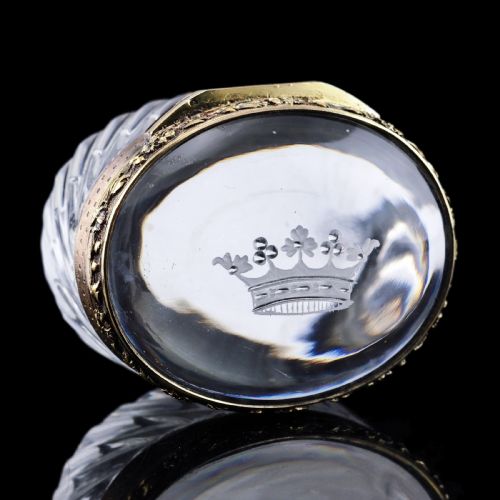
Metal mounts in brass, bronze, silver gilt, and ormolu secure the corners and provide hinges and locks. Many examples incorporate porcelain panels, pietre dure plaques, cut glass, or champleve enamel and cameo appliques into the exterior housing.
One recorded box once held the collection of Belinda Gentle.
Distinctions in construction and ornament
Quality rests in the precision of the cabinetwork and the integration of specialised decorative materials. Finer examples display meticulous internal fittings, such as mirrored lids, silk linings, and partitioned trays, alongside precise parquetry or bone inlay.
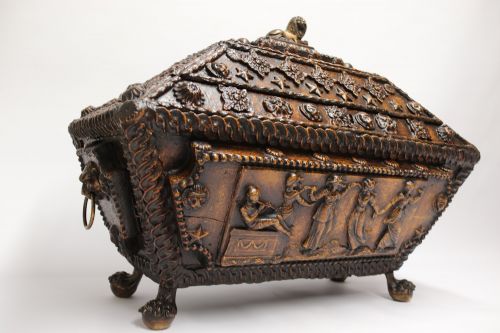
The calibre of the exterior mounts separates standard production from exceptional pieces. Cast bronze, hand-painted porcelain panels, and champleve enamel work executed with depth and clarity elevate the standard of the casket.
Posen of Frankfurt and Berlin·Jennens & Bettridge
The 19th Century Table Casket Glossary
- Coromandel
- A dense, heavily figured southeast Asian timber utilised for high-end Victorian vanity and jewellery boxes. It displays dark brown stripes over a lighter background.
- Champleve enamel
- A technique where troughs are gouged into a metal surface and filled with vitreous enamel powder before firing. This ornamentation appears frequently on French and continental caskets.
- Pietre dura
- An Italian technique of inlaying cut and fitted polished coloured stones to form pictorial designs. These panels decorate the lids of select continental table boxes.
- Tunbridge Ware
- A form of British woodworking originating from Kent, creating detailed mosaic patterns from tiny wood blocks. Boxes bearing this finish show geometric or floral motifs.
- Ormolu
- Gilded bronze applied as decorative mounts, feet, and hinges on 19th century boxes. The process involves coating metal with a mercury-gold amalgam.
19th Century Table Casket: Frequently Asked Questions
What is a table casket used for?
These boxes served primarily to secure and display jewellery, writing implements, sewing gear, and vanity items. Victorian households placed them on desks, dressing tables, and parlour surfaces as both utility objects and decorative furnishings.
Interior layouts often included partitioned trays, velvet or silk linings, and fitted mirrors tailored for specific personal effects.
How do I identify a Regency period box?
Regency pieces often display classical proportions influenced by Neoclassical design, with woods like burr yew or satinwood. Look for clean architectural lines and restrained use of brass stringing or mounts.
Construction from the early 19th century typically prioritises cabinet timbers over heavy applied ornamentation.
What distinguishes coromandel from rosewood?
Coromandel is a heavier, rarer timber featuring dark, near-black grain patterns contrasting with a rich caramel or reddish-brown base. Rosewood tends towards a more uniform dark violet-brown tone with distinct black streaking.
Both woods were favoured by top-tier cabinetmakers for luxury Victorian vanity and dressing boxes.
How should I care for an antique wood box?
Keep wooden caskets away from direct sunlight and extreme humidity fluctuations to prevent warping or splitting of the veneers. Occasional gentle dusting with a dry, soft cloth preserves the polished surface without damaging delicate inlays.
Avoid commercial liquid polishes, which can accumulate in carved details or degrade historic finishes.