


Napoleon III Jewellery Casket
These napoleon iii jewellery casket pieces are decorative French containers lined in silk, holding rings and small treasures securely.
Napoleon III Jewellery Casket
A napoleon iii jewellery casket brings ornamental French design into a room, taking the form of small decorative boxes, trinket boxes, and display boxes. These pieces emerge predominantly from the nineteenth century, carrying the distinct aesthetic of the French Second Empire.
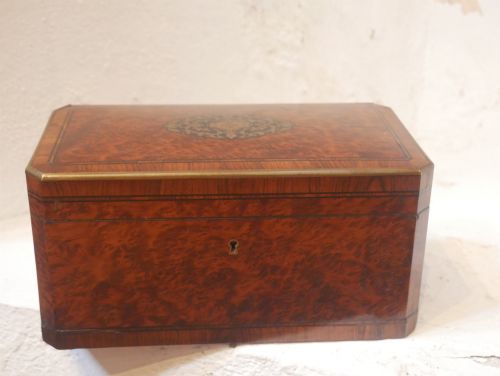
Most examples encountered here are French in origin, showing various timber veneers, mounts, and glass panels. They function as both storage for small valuables and decorative objects for tabletops and mantelpieces.
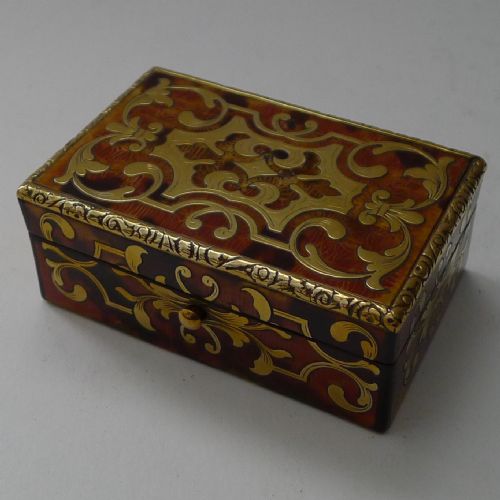
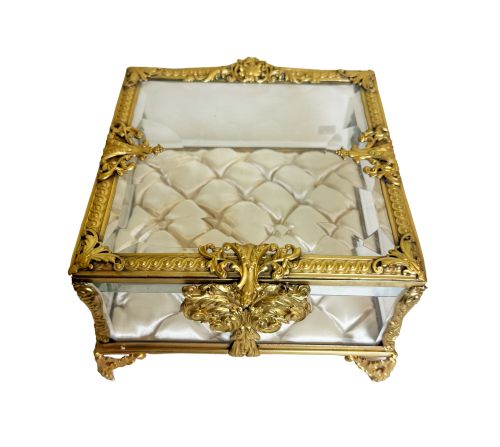
The forms range from glass and ormolu caskets to inlaid wooden table boxes. Buyers find items featuring Sevres porcelain panels, Baccarat glass, and intricate Boulle work.
Materials and construction
Maker workshops utilised exotic timbers such as amboyna, thuya, kingwood, and ebony as foundations for inlaid wooden boxes. These woods provide rich grain patterns that complement the metal mounts.
Ormolu and gilt bronze frames enclose bevelled glass or crystal panels, held together with precise metalwork. Interiors frequently retain their original silk linings, showing the hidden craftsmanship of the period.
Periods represented include Victorian, Regency, and the nineteenth century up to nineteen hundred.
Assessing quality
Quality rests in the crispness of the ormolu casting and the precision of the wood inlay. Finer pieces display deeply chased metal mounts alongside carefully selected timber veneers.
The integration of specialised materials like Sevres porcelain plaques or Baccarat glass elevates a piece above standard production. Survival of original silk linings and operational glass panels further distinguishes superior examples.
Tahan Paris
The Napoleon III Jewellery Casket Glossary
- Ormolu
- Gilt bronze mounted onto furniture and decorative objects. This technique creates a rich gold-coloured finish that defines French nineteenth-century metalwork.
- Boulle
- Marquetry technique utilising tortoiseshell and brass inlay. This method yields intricate metallic patterns across wooden surfaces.
- Amboyna
- Highly figured tropical wood used for luxury veneers. Its swirling grain makes it prized for nineteenth-century table boxes.
- Baccarat
- Renowned French crystal manufacturer. Pieces featuring their glass show exceptional clarity and weight.
Napoleon III Jewellery Casket: Frequently Asked Questions
What are these caskets made from?
These pieces combine cast ormolu and gilt bronze frames with glass, crystal, or exotic wood bodies. Interiors often feature silk linings.
Makers selected materials like amboyna, ebony, and Sevres porcelain to create ornate containers for dressing tables.
How do I date a casket?
Dating relies on stylistic markers and material combinations pointing to the nineteenth century. Victorian and French Second Empire pieces show specific decorative idioms.
Evidence in the listings spans from eighteen-fifty to nineteen-hundred, reflecting the height of French decorative box production.
Where were they made?
France produced the vast majority of these decorative boxes and caskets. Parisian workshops drove the design trends of the era.
French craftsmanship is evident in the ormolu mounts, porcelain plaques, and precise woodwork seen across the pieces.
How should I clean the glass?
Bevelled glass and crystal panels require careful wiping with a dry or slightly damp soft cloth. Moisture must stay away from metal mounts and silk linings.
Harsh chemical cleaners will damage the gilt bronze and the aged wooden surfaces surrounding the glass.