

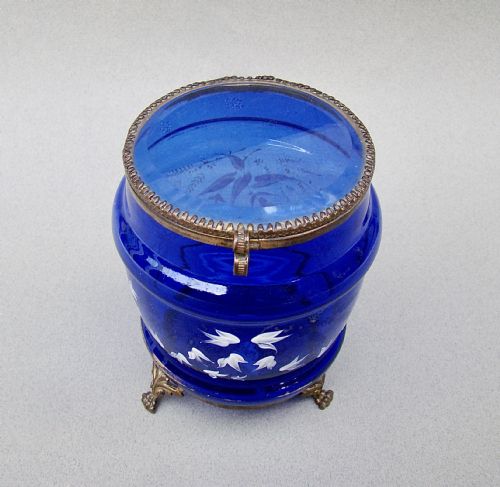


Victorian Ormolu Trinket Box
These Victorian ormolu trinket box pieces combine gilt metal frames with glass, marble, and porcelain to hold small valuables.
Victorian Ormolu Trinket Box
A victorian ormolu trinket box is typically a decorative container designed for dressing tables and desks, uniting metalwork with glass, marble, or porcelain panels. The versions most frequently encountered here originate from nineteenth-century French workshops, often adopting Napoleon III, Second Empire, or Gothic Revival aesthetics.
The objects span varied forms including jewellery caskets, decorative boxes, and smaller receptacles. Materials range from ormolu and gilt bronze to inset porcelain plaques, Bristol blue glass, and pietra dura work.
Materials and construction
Makers constructed these caskets using cast ormolu and gilt bronze to form rigid structural frames, often integrating bevelled glass panels, marble bases, or Sevres and Limoges porcelain plaques. Silk linings frequently fitted the interiors to protect delicate contents.
Assembly relied on mechanical joints, pins, and screws to secure heavy metal mounts around fragile glass or stone inserts, requiring precise metalworking skills.
Victorian Ormolu Trinket Box Retail Price Guide 2026
Typical asking prices for victorian ormolu trinket box among the pieces listed under this phrase on Sellingantiques today, from the lower quarter to the upper quarter. They describe what is for sale here now, not the wider market.
Materials across these listings include ormolu, gilt bronze, enamel, glass, silk, marble, brass, and porcelain.
Quality differences
Quality rests in the crispness of the gilt bronze or ormolu casting, where finer examples display sharp relief and carefully burnished highlights rather than soft, flat surfaces. The weight and thickness of the glass, marble, or porcelain components also signal superior production.
Integration of specialised decorative elements like hand-painted porcelain miniatures, inset pietra dura panels, or intricate hinged mounts distinguishes the more ambitious pieces from standard table boxes.
The Victorian Ormolu Trinket Box Glossary
- Ormolu
- Gilded bronze produced by applying a mercury-gold amalgam to base metal. This technique created a rich, durable surface finish popular in nineteenth-century decorative arts.
- Pietra dura
- An artistic technique using cut and fitted polished coloured stones to create geometric or pictorial images. It appears frequently on inlaid Italian and French caskets.
- Sevres
- A famous French porcelain manufactory known for producing fine decorative plaques. These plaques were often mounted directly into the lids and sides of luxury jewellery boxes.
- Napoleon III
- A nineteenth-century French design style encompassing ornate revivals of earlier periods. Pieces from this era often feature heavy gilt mounts and opulent materials.
Victorian Ormolu Trinket Box: Frequently Asked Questions
What were these boxes used for?
These caskets served as elegant containers for small personal items, rings, and brooches on Victorian dressing tables.
They functioned both as functional storage and as decorative status objects displayed in formal rooms.
How do I date a piece?
Dating relies on stylistic markers, construction methods, and materials recorded across nineteenth-century examples.
Specific design revivals, such as Napoleon III or Gothic Revival, point to particular decades between 1800 and 1890.
Where were they made?
Many surviving examples originate from French workshops following Paris styles.
Italian makers also contributed pieces featuring distinctive stonework like pietra dura.
How do I care for them?
Care involves keeping silk interiors dry and avoiding harsh chemical cleaners on gilt bronze surfaces.
Dusting gently with a soft brush preserves the delicate ormolu and inset glass or porcelain panels.