
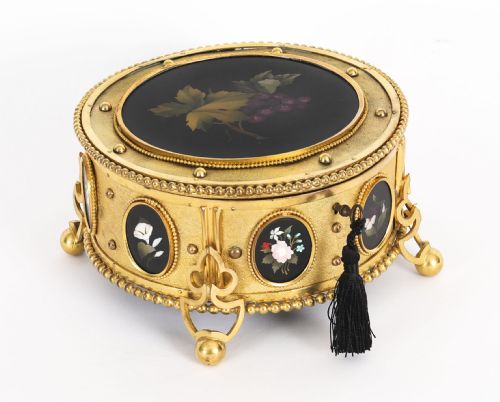


Ormolu Jewellery Casket
An ormolu jewellery casket is a gilded metal box designed to hold precious trinkets, most often encountered in nineteenth-century French and Italian styles.
Ormolu Jewellery Casket
An ormolu jewellery casket satisfies the collector seeking nineteenth-century decorative containers designed for dressing tables and display cabinets. These pieces appear most frequently in nineteenth-century French variants, alongside Italian examples incorporating inlaid stone panels or porcelain plaques.
The selection here encompasses forms ranging from small trinket boxes and display boxes to larger heavy caskets. Makers from the Victorian period onward utilised glazed panels, hinged lids, and secure clasps to create functional receptacles for valuables.
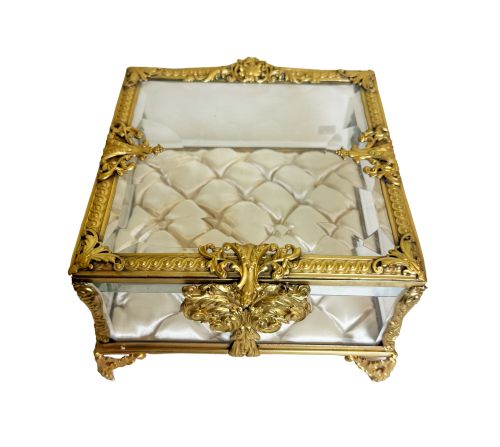
French Second Empire and Napoleon III designs dominate the available forms, reflecting a period of elaborate metalwork and ornamental housing. Buyers encounter boxes mounted with Sevres porcelain, Limoges miniatures, and bevelled glass panels.
How They Were Made
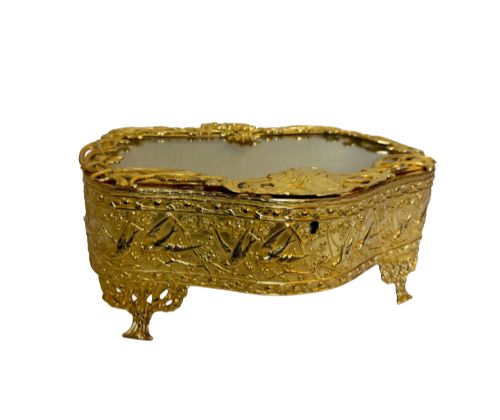
The construction relies heavily on ormolu, or gilt bronze, formed into intricate frames and mounts that secure delicate panels of glass, crystal, or porcelain. Artisans cast the bronze components before applying a fine layer of gold gilding to achieve a bright, enduring finish.
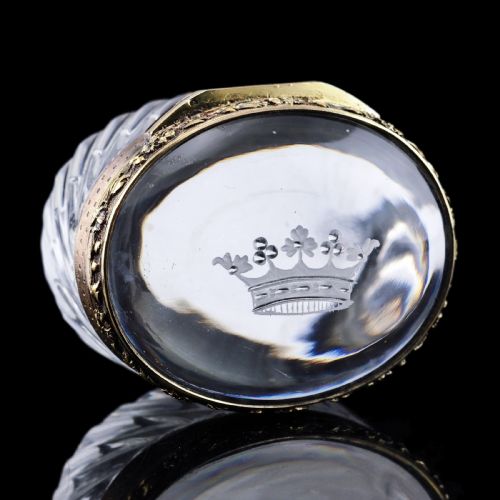
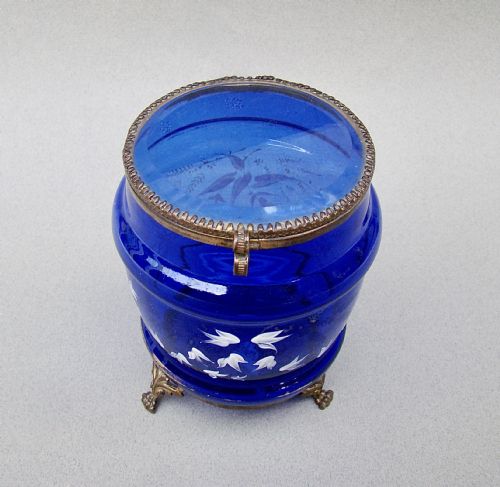
Many boxes integrate cut crystal, Baccarat glass, or Bristol blue glass secured tightly within metal frameworks using pins or screws. Stonework details such as pietra dura require precise inlay techniques, fitting hard stones into marble or slate bases.
Many of these caskets still retain their original faded silk cushions, built to cradle long-lost Victorian rings.
What Varies in Quality
The crispness of the bronze casting dictates the visual impact of an ormolu jewellery casket, separating sharply rendered chased scrollwork from softer, more rounded production. Superior examples retain their original mercury or electroplated gold finish with minimal rubbing across high points.
The integration of materials reveals the standard of workshop execution, seen in how closely glass, porcelain panels, and pietra dura fit within their metal channels. Weight, thickness of the cast bronze, and the complexity of the internal silk lining also separate standard items from superior commissions.
The Ormolu Jewellery Casket Glossary
- Ormolu
- A term denoting gilt bronze, created by applying a gold amalgam or gold leaf to a cast bronze base. This technique protects the metal beneath while providing a rich golden lustre common in nineteenth-century decorative objects.
- Pietra dura
- An artistic technique involving the inlay of cut and fitted polished coloured stones to create pictorial images. Italian workshops frequently employed this method on the lids of nineteenth-century caskets.
- Sevres
- A famous French porcelain manufactory whose painted panels frequently decorated the lids and sides of luxury boxes. These plaques often feature pastoral scenes or royal monograms framed by rich blue grounds.
- Boulle
- A style of marquetry using brass and tortoiseshell inlaid in intricate patterns, named after a famous French cabinetmaker. Pieces featuring this technique are prized for their labour-intensive surface decoration.
- Napoleon III
- A design period spanning the mid-nineteenth century characterised by eclectic revivals of past French royal styles. Furniture and decorative objects from this era often display heavy ormolu mounts and opulent finishes.
Ormolu Jewellery Casket: Frequently Asked Questions
What is an ormolu jewellery casket?
An ormolu jewellery casket is a nineteenth-century decorative box constructed from gilt bronze and materials like glass, porcelain, or marble. These vessels were placed on dressing tables to store rings, necklaces, and small keepsakes.
Craftsmen across France and Italy produced them in various architectural and revivalist styles. They remain sought-after display pieces for their ornate metalwork and painted panels.
How do I date an ormolu jewellery casket?
Dating relies on identifying the prevailing aesthetic, such as Napoleon III, Art Nouveau, or French Rococo Revival. Construction methods, including the type of hinge, screw, and glass bevelling, also point to specific decades in the nineteenth century.
Maker marks, stamped numbers on the bronze frames, and ceramic factory stamps on inset porcelain panels help narrow the chronology further. Comparing the casting quality with documented nineteenth-century examples confirms the period.
Were these boxes used for jewellery?
These boxes served primarily to hold rings, brooches, and delicate trinkets rather than heavy necklaces or tiaras. Many feature original silk or velvet linings designed to cushion fragile items against the hard interior surfaces.
Their decorative presence on a parlour table mattered just as much as their utility. Wealthy owners used them to display their taste and refinement to guests.
How do I clean ormolu metalwork?
Cleaning ormolu requires extreme care to avoid rubbing away the thin layer of gold gilding applied to the bronze base. Dusting with a soft, dry brush removes surface particles without risking abrasion.
Harsh chemical polishes or abrasive cloths will strip the historic gilt surface permanently. Professional conservation advice is recommended if tarnish obscures the original finish.