


Napoleon III Casket
A napoleon iii casket is a decorative French box for jewellery or trinkets, prized for its ornate ormolu mounts and rich woods.
Napoleon III Casket
A napoleon iii casket is a small decorative container designed for jewellery, trinkets, or collectors' items, originating from nineteenth-century France during the Second Empire and Victorian eras. These boxes frequently appear in forms such as jewellery caskets, trinket boxes, and display boxes, reflecting the opulent tastes of the period.
The pieces on this page span several decades of the nineteenth century, including examples from eighteen fifty, eighteen sixty, eighteen seventy, and eighteen ninety. They bridge stylistic categories from French Napoleon III and French Second Empire to Regency and Victorian periods.
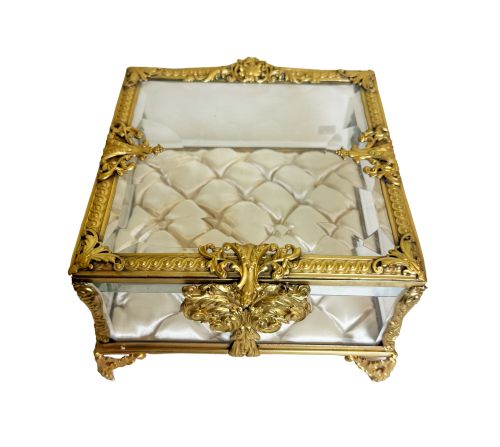
Buyers encountering this selection will find a variety of specific forms, ranging from glass and ormolu caskets to table boxes and inlaid wooden trunks. Each object serves as a tangible remnant of nineteenth-century French craftsmanship and domestic display.
What Varies in Quality
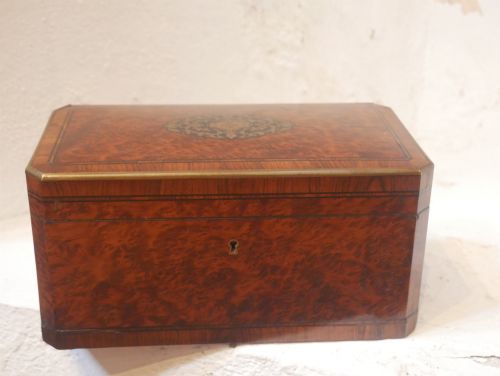
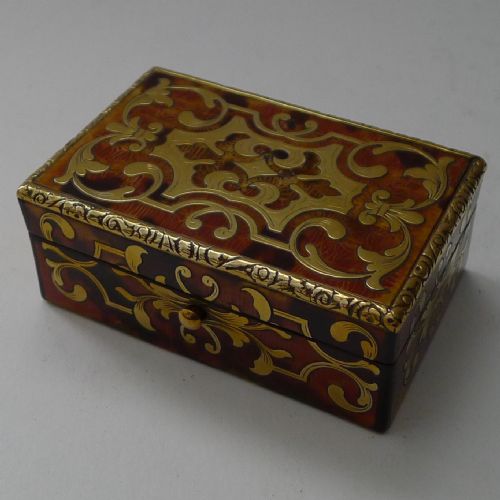
Quality in a napoleon iii casket rests in the precision of the timber inlay and the crispness of the cast bronze or ormolu mounts. Finer examples display meticulous marquetry, such as Boulle work or delicate floral motifs, paired with deeply chased and gilded metalwork.
The choice of primary and secondary materials also distinguishes the range. Pieces utilising luxury hardwoods like ebony, amboyna, or thuya wood, combined with signed elements or fine porcelain plaques, sit at the upper end of the spectrum compared to simpler fruitwood or plain glass iterations.
The integrity of the internal fittings, such as original silk linings and functional hinges, contributes to the overall standard of survival and craftsmanship.
The documented forms range from simple trinket boxes and display caskets to specialised table boxes and perfume trunks originating around eighteen fifty to nineteen hundred.
Tahan Paris
The Napoleon III Casket Glossary
- Ormolu
- Gilded bronze used extensively for decorative mounts on nineteenth-century French furniture and boxes. The technique involves applying a mercury and gold amalgam to cast brass or bronze.
- Boulle
- A form of marquetry consisting of tortoiseshell and brass inlay, named after the famous cabinetmaker Andre-Charles Boulle. It appears on sophisticated nineteenth-century French decorative boxes.
- Sevres
- A famous French porcelain manufactory known for producing high-quality hand-painted ceramic plaques. These plaques are occasionally mounted into the lids of nineteenth-century jewellery caskets.
Napoleon III Casket: Frequently Asked Questions
What were Napoleon III caskets used for?
These caskets served primarily as luxury containers for storing precious jewellery, trinkets, and small personal valuables on dressing tables. Wealthy households also utilised them as decorative objects for display in salons and drawing rooms.
Specific variants, such as perfume boxes and collectors' boxes, catered to specialised storage needs of the nineteenth-century owner. Their ornate exteriors ensured they functioned as status symbols within the domestic interior.
How do I date a French casket?
Dating relies on observing a combination of material choices, construction techniques, and stylistic markers associated with the mid-to-late nineteenth century. Evidence from hallmarks, where present on the bronze or silver plate mounts, can also help narrow the period of production.
Stylist shifts from the heavier architectural forms of eighteen sixty towards the lighter aesthetic of eighteen ninety provide further chronological clues. Examining the type of glass, hinge mechanisms, and wood veneers adds precision to the dating process.
How should I care for an antique wooden box?
Maintenance requires keeping the piece away from direct sunlight and maintaining stable humidity levels to protect delicate wood veneers and historic timbers. Dry dusting with a soft cloth prevents dust accumulation without introducing moisture.
Original silk linings and fragile ormolu mounts should be handled with care and kept free from liquid cleaners. Polishing should be avoided unless necessary, and even then, only specialised products suitable for antique finishes are appropriate.
Are all glass caskets made of crystal?
Glass caskets from this period utilise various compositions, including standard transparent glass, bevelled glass, opaline glass, and high-clarity crystal. Specific makers and higher-tier pieces often incorporated heavy crystal or Baccarat glass secured within bronze frames.
The distinction between standard glass and crystal generally relates to the lead content and clarity of the material used in the construction of the box walls and lids.